


More news on this day
Airspace disruptions across the Middle East are rippling through major hubs, with Riyadh at the center of a new wave of operational turbulence that has led to 89 flight cancellations and 1,002 delays in a single day, affecting thousands of passengers and schedules across the region.
Get the latest news straight to your inbox!
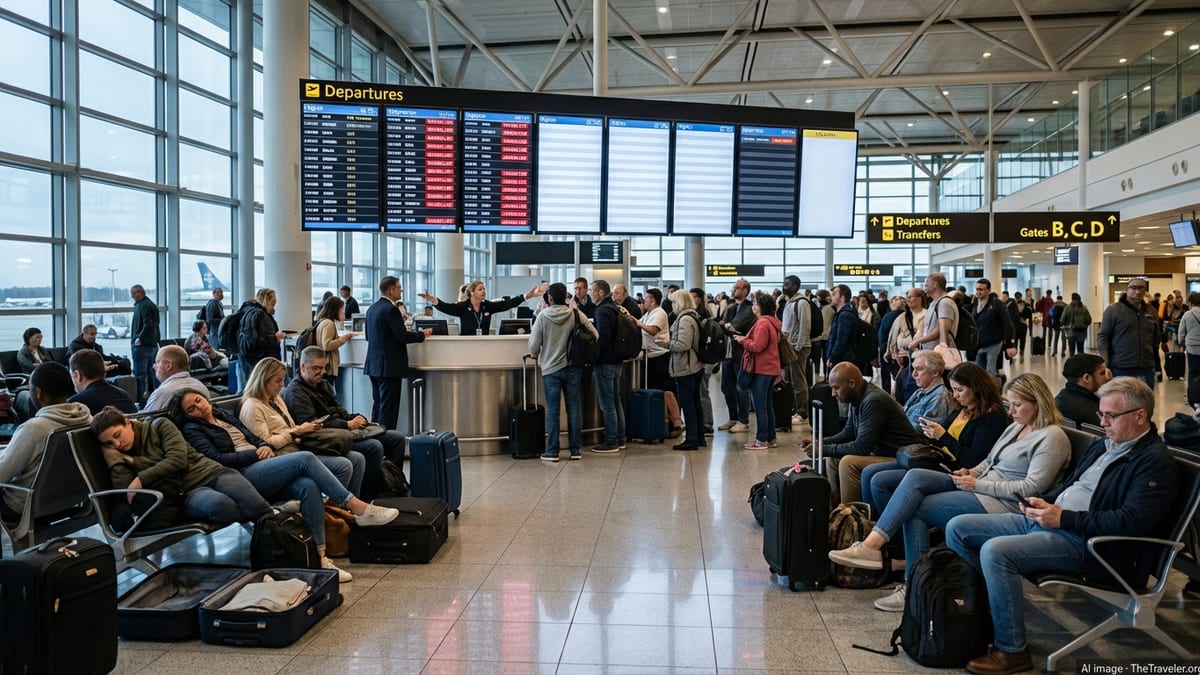
Riyadh Feels The Strain As Regional Disruptions Mount
Riyadh’s King Khalid International Airport has emerged as one of the most affected gateways in the latest round of Middle East travel disruptions, as regional airspace constraints and operational adjustments converge. Publicly available disruption tallies indicate that 89 flights linked to Riyadh were cancelled, while 1,002 services were delayed across a network of connected routes that include key Gulf and Levant hubs. These figures sit within a wider pattern of turbulence for the Saudi capital, which has already recorded more than 250 cancellations during August 2026, with domestic routes to Jizan and Najran among the most disrupted so far this month.
Historical data compiled for August at King Khalid International show 254 cancellations for the month to date, with 105 departing flights and 149 arrivals affected. Saudia services account for the majority of these cancellations, reflecting the airline’s dominant share of domestic and regional traffic through Riyadh and the knock-on impact when rotations are curtailed. Routes to Jizan Regional and Najran Domestic rank among the worst affected, underlining the strain on Saudi Arabia’s southern network, which heavily depends on Riyadh as a primary hub for onward connections.
The latest daily snapshot of 89 cancellations suggests that disruption is intensifying compared with the running August average of around 19 cancellations per active day. For travelers, this translates into higher risks of missed connections, longer ground holds and more frequent rebooking, particularly for those connecting through Riyadh on Saudi domestic services or onward flights to Dubai, Doha, Kuwait City and other Middle East hubs that are also facing elevated disruption levels.
Knock-on Effects Across Middle East Hubs
The challenges facing Riyadh are closely intertwined with operational issues at other major Middle East airports. Regional disruption tracking and traveler reports over recent weeks point to hundreds of services cancelled or delayed at large hubs such as Dubai, Doha, Riyadh and Kuwait City, driven by evolving airspace restrictions, precautionary reroutings and tighter capacity management on certain corridors. One recent disruption summary cited more than 180 cancellations and in excess of 1,200 delays across these airports in a single wave of irregular operations, underscoring how quickly network effects can escalate when multiple hubs are affected simultaneously.
The regional pattern is compounded by airlines’ need to reconfigure schedules at short notice when particular airspace segments become constrained or when routings are lengthened for safety and regulatory reasons. Longer flight times absorb additional aircraft and crew hours, which can make it more difficult to recover punctuality after an initial delay. In such circumstances, carriers often prioritize maintaining core trunk services and consolidating demand on fewer flights, a strategy that can help stabilize operations but also leads to clusters of cancellations on lower-frequency or regional routes.
Industry-facing data on on-time performance for Saudi airports indicates that, under normal conditions, major hubs are capable of sustaining punctuality rates above 80 percent for departure flights. When large-scale disruptions occur, however, this buffer is quickly eroded by cumulative delays stemming from late-arriving aircraft, air traffic flow restrictions and weather or operational constraints at departure or destination airports. The latest spike around Riyadh and neighboring hubs illustrates how regional airspace adjustments can rapidly compress that margin and translate into the elevated delays and cancellations now being observed.
Operational Pressures on Saudi Domestic and Regional Routes
The domestic network within Saudi Arabia is particularly exposed to these disruptions because so many routes depend on Riyadh as a central node for both origin-destination traffic and onward connections. Domestic air traffic reports from the Saudi aviation regulator show strong growth in passenger volumes and flight numbers through 2023 and into 2025, a trend that continued this year as part of the broader aviation expansion under Saudi Vision 2030. As airlines add capacity and new routes, including recently announced services by emerging carriers such as Riyadh Air, day-to-day operations become more sensitive to external shocks that can ripple through tight schedules.
Delay statistics for individual domestic routes linking Riyadh to southern cities such as Abha and Jizan already reveal above-average disruption patterns, with some services recording high proportions of delayed arrivals on certain days. When airspace constraints or regional disruptions layer on top of this baseline, carriers operating these routes face increased complexity in balancing aircraft rotations, crew availability and passenger reaccommodation. This partly explains why a significant share of the 89 cancellations and many of the 1,002 recorded delays are concentrated on domestic and short-haul regional flights, where turnaround times are shorter and there is less slack in the system.
Internationally, Riyadh’s role as a growing long-haul hub also introduces vulnerability. New routes scheduled for the summer 2026 season, including additional services to destinations in South and Southeast Asia and Europe, expand the number of itineraries that rely on smooth operations through the Saudi capital. When irregular operations occur, long-haul services often remain a priority, which can shift disruption toward feeder routes and regional sectors. This dynamic has been visible in other global hubs during periods of airspace or weather-related disruption and is now increasingly evident in the Middle East as traffic volumes climb.
Guidance Emerging From Regulators and Travel Advisories
Aviation and safety regulators in the wider region have begun to issue updated advisories in response to the wave of Middle East airspace disruptions. A recent travel advisory from Malaysia’s Civil Aviation Authority, for example, urged passengers bound for or transiting through Middle Eastern airports to check their flight status directly with airlines before leaving for the airport. The advisory highlighted the possibility of revised departure times, rerouting and disruptions to connecting flights, including cancellations and extended delays, and noted that some airline schedule adjustments could extend into late August, September and October 2026.
Publicly available on-time performance reports from the Saudi General Authority of Civil Aviation also help frame the current disruption against a longer-term background of improving punctuality. Monthly punctuality data for 2025 showed major Saudi airports, including Riyadh, generally meeting or surpassing domestic on-time performance standards when departures and arrivals occurred within 15 minutes of scheduled times. The current spike in cancellations and delays is therefore being interpreted by analysts as an external shock superimposed on an otherwise improving operational base, rather than a simple continuation of past patterns.
Consumer-focused flight tracking and compensation platforms echo this picture by showing elevated levels of delayed and cancelled flights at Riyadh’s King Khalid International this month compared with quieter periods earlier in the year. Some services advise that passengers departing from or arriving at certain international airports may be eligible for compensation under specific regional regulations if delays or cancellations fall within defined criteria and are attributable to airline-controlled causes rather than extraordinary circumstances.
What Travelers Through Riyadh and Regional Hubs Can Expect
For passengers with upcoming itineraries touching Riyadh or neighboring Middle East hubs, current data suggests a heightened risk of schedule changes over the coming days and possibly weeks. Live flight status platforms and airline booking engines indicate that same-day and next-day schedules are subject to rolling adjustments, with short-notice timing changes appearing on some domestic and regional departures. Airlines are using a mix of rerouting, upgauging of aircraft on consolidated services and tactical cancellations to manage capacity and preserve overall network stability.
Travel agencies and online booking platforms consistently advise passengers to monitor their flight numbers through real-time status tools, which draw directly from airline and airport operational feeds. These services typically highlight whether a flight is operating on time, delayed or cancelled and may provide information on terminal and gate changes when available. For disrupted passengers, the most up-to-date options for rebooking or rerouting are generally available through airline customer channels, with some carriers allowing free changes or refunds when significant schedule alterations occur.
As August 2026 progresses, analysts will watch whether the rate of cancellations at Riyadh and other regional hubs begins to normalize toward historical averages or whether continuing airspace constraints extend the current period of irregular operations. For now, the figures of 89 cancellations and 1,002 delays tied to Riyadh and surrounding hubs in a single disruption cycle stand as a stark indicator of how quickly regional travel conditions can shift, and how essential it has become for travelers to stay closely informed before and during their journeys.
Riyadh King Khalid International cancellations, August 2026
King Khalid International Airport open data portal
Middle East airspace disruption travel advisory