


More news on this day
Air travel across Asia is facing another wave of disruption as operational dashboards and flight-tracking data indicate hundreds of cancellations and thousands of delays from the Philippines and India to Saudi Arabia, Indonesia, and China, snarling schedules for carriers such as China Express, AirAsia, SpiceJet, FlyDubai, and several regional partners.
Get the latest news straight to your inbox!
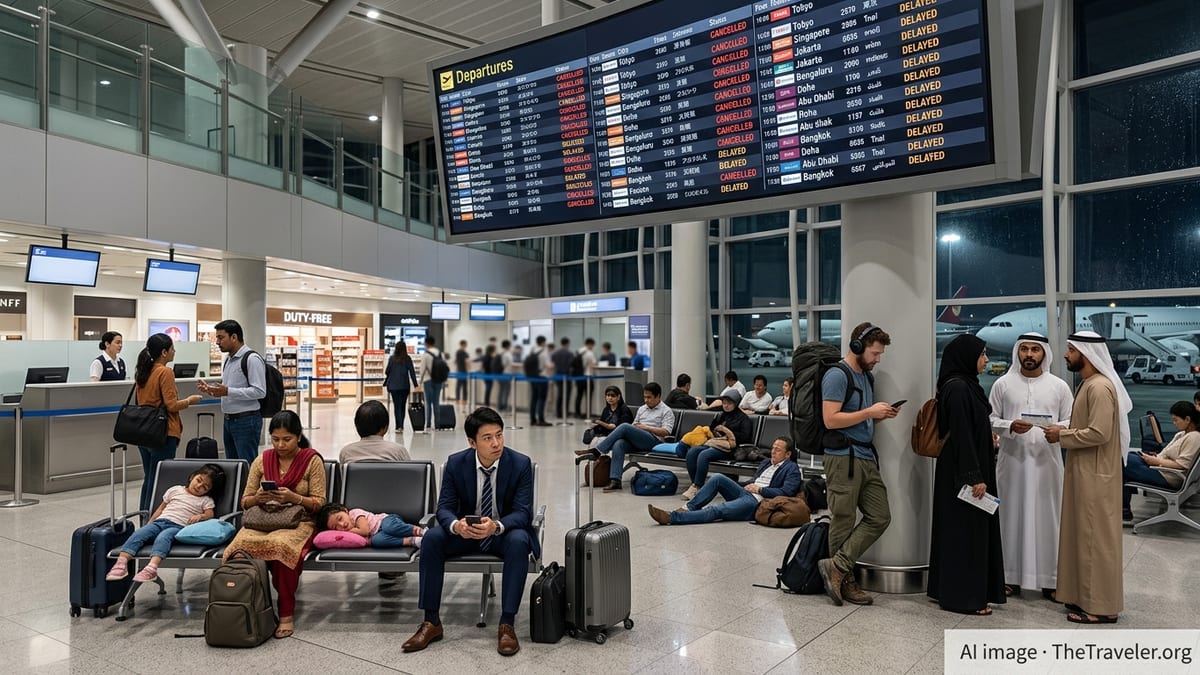
Cluster of Disruptions Across Key Asian Hubs
Publicly available operational snapshots from multiple airports show that at least 491 flights have been cancelled and around 6,400 delayed across the region over recent days, concentrating around hubs in the Philippines, India, Saudi Arabia, Indonesia, and China. These figures reflect rolling totals reported by airport dashboards, flight-status aggregators, and regional aviation trackers rather than a single, time-limited incident.
In China, coverage of domestic operations highlights several hundred delays and dozens of cancellations at major hubs including Guangzhou, Chengdu, Shanghai, and Nanjing, with knock-on effects for regional traffic into Southeast Asia and Japan. Similar patterns of heavy delay clusters appear in tracking data around Shanghai Pudong, where dense banks of regional departures are particularly exposed to schedule disruption.
India’s main gateways, notably New Delhi, have also reported waves of delays and diversions as seasonal storms and congestion intersect with tight aircraft rotations. Recent reports reference inbound flights to the capital being routed to alternate airports during intense weather cells, adding pressure to already stretched schedules and contributing to the broader tally of disrupted services.
To the west, travel coverage focused on the Gulf indicates that Sharjah, a key base for low cost and regional carriers, has been experiencing cancelled and heavily delayed rotations impacting connections to South Asia and Southeast Asia. Flight-status summaries for the past several days show a pattern of isolated cancellations coupled with a double digit share of departures running behind schedule.
Davao, Jakarta, Sharjah, New Delhi, and Shanghai Under Strain
In Southeast Asia, the Philippines and Indonesia are experiencing notable pressure at secondary yet strategically important hubs. In Davao, a major southern Philippine gateway feeding domestic and regional traffic, flight-status boards over the weekend and into this week show clusters of delayed services on key routes to Manila, Cebu, and onward international connections. Even moderate disruption at such a spoke airport can cascade into wider network issues as aircraft and crews arrive late into larger hubs.
Jakarta’s Soekarno Hatta International Airport, one of the region’s busiest, features prominently in disruption summaries compiled by passenger rights organizations and aviation data providers. On some recent high traffic days, thousands of flights across the wider region have been logged as delayed or cancelled, with Jakarta among the hubs showing a high density of schedule changes. These irregularities combine with already demanding peak-hour congestion to generate long queues at check in, security, and immigration.
Sharjah, serving as a crucial link between South Asia, the Gulf, and Southeast Asia, has seen cancellations and delays ripple through its low cost network. Travel reports note that several flights have been scrubbed from departure boards while a significant proportion of remaining services depart late, stranding transit passengers and complicating rebooking efforts to and from cities such as Doha, Karachi, and Hyderabad.
Shanghai and other Chinese hubs are also central to the current pattern of disruption. Operational summaries published over the weekend point to adverse weather episodes and air traffic management restrictions intersecting with aircraft rotation challenges. The result has been concentrated banks of delayed departures and arrivals that slow down recovery and obstruct connections onward to destinations in Japan, Southeast Asia, and within China itself.
China Express, AirAsia, SpiceJet, FlyDubai and Others Feel the Impact
The knock on effects of these disruptions can be seen across a wide spectrum of carriers, from large state backed airlines to nimble low cost operators. Regional players such as China Express, which rely on dense schedules and high aircraft utilization to connect secondary Chinese cities, are particularly exposed when weather or airspace constraints throw off tightly timed rotations between multiple hubs.
Low cost giant AirAsia, with its extensive point to point network from Malaysia, Thailand, Indonesia, and the Philippines into China and around Southeast Asia, is also facing pressure. Passenger accounts and schedule trackers describe a pattern of short notice schedule changes, rolling delays, and selected cancellations on routes linking major hubs like Jakarta and Manila with Chinese and regional destinations, complicating onward travel for budget conscious flyers.
In India, airlines such as SpiceJet, already operating in a challenging cost environment, confront additional strain when clusters of delays emerge at New Delhi and other metros. Domestic disruptions can quickly spill into international operations as aircraft earmarked for regional flights to the Gulf, Southeast Asia, and beyond arrive out of position or require extended ground time.
Carriers based in the Gulf, including FlyDubai, also appear in disruption tallies, particularly where services intersect with weather affected or congestion prone airports in South Asia and Southeast Asia. As these airlines often function as connectors between South Asian cities and onward routes to Europe and Africa, irregular operations at hubs such as Sharjah or traffic hotspots in India can rapidly translate into missed connections and complex rebookings.
Multiple Causes: Weather, Airspace Constraints, and Tight Rotations
Available reporting across the region indicates that there is no single cause behind the current wave of cancellations and delays. Instead, a combination of severe weather, temporary airspace restrictions, and tight aircraft and crew rotations appears to be driving much of the disruption. In China and India, late spring weather brings heavy rain, low visibility, and thunderstorms that periodically shut down runway operations or force wide scale use of holding patterns.
Airspace constraints linked to military exercises, regional tensions, or reroutings around sensitive zones can further complicate flight planning, requiring longer routings or last minute changes that ripple through airline schedules. When these factors coincide with already dense peak travel periods, even small disruptions can quickly compound into hours long delays across multiple flights and aircraft.
Operational data for several major airports in East and Southeast Asia shows that airlines are operating with very high aircraft utilization rates in an attempt to meet strong demand while controlling costs. This leaves minimal buffer in case of unexpected maintenance or weather related groundings. As a result, a late arriving aircraft in Shanghai or Jakarta can easily cause missed departure slots and further delays at connecting airports such as Davao, New Delhi, or Sharjah.
Industry analysts tracking the region note that the mix of high demand, infrastructure constraints, and limited spare capacity means Asia’s aviation system is especially vulnerable to cascading disruption. When multiple hubs experience stress at the same time, as has been the case in the past week, passengers can expect a higher than usual risk of missed connections and overnight stays.
What Travelers Can Expect in the Coming Days
With the region moving toward the mid year travel peak, publicly available commentary from aviation observers suggests that further intermittent disruption is likely, particularly on routes touching China, India, Southeast Asia, and the Gulf. The recent pattern of nearly 500 cancellations and more than 6,000 delays demonstrates how quickly operational stress can spread across interconnected networks when several major hubs are affected at once.
Travelers with upcoming itineraries involving Davao, New Delhi, Sharjah, Jakarta, Shanghai, and other busy Asian gateways are being advised by consumer groups and passenger rights organizations to monitor flight status closely in the 24 to 48 hours before departure. Rechecking booking details directly with airlines, allowing more generous connection times, and considering earlier departures where possible are among the strategies recommended to reduce the risk of missed onward flights.
Some carriers are responding to the pressure by adjusting schedules and temporarily scaling back selected frequencies to create more operational breathing room. Schedule rationalization on long haul and regional routes, particularly those that rely on tight turnaround times at busy hubs, may help restore punctuality but can also limit options for travelers seeking last minute changes.
As Asia’s aviation sector continues its post pandemic growth, the latest wave of cancellations and delays underscores the importance of resilient infrastructure, flexible scheduling, and clear communication with passengers. For now, publicly available data suggests that irregular operations remain elevated across several key hubs, and travelers planning to cross the region in the coming days should be prepared for potential changes to their flight plans.