


More news on this day
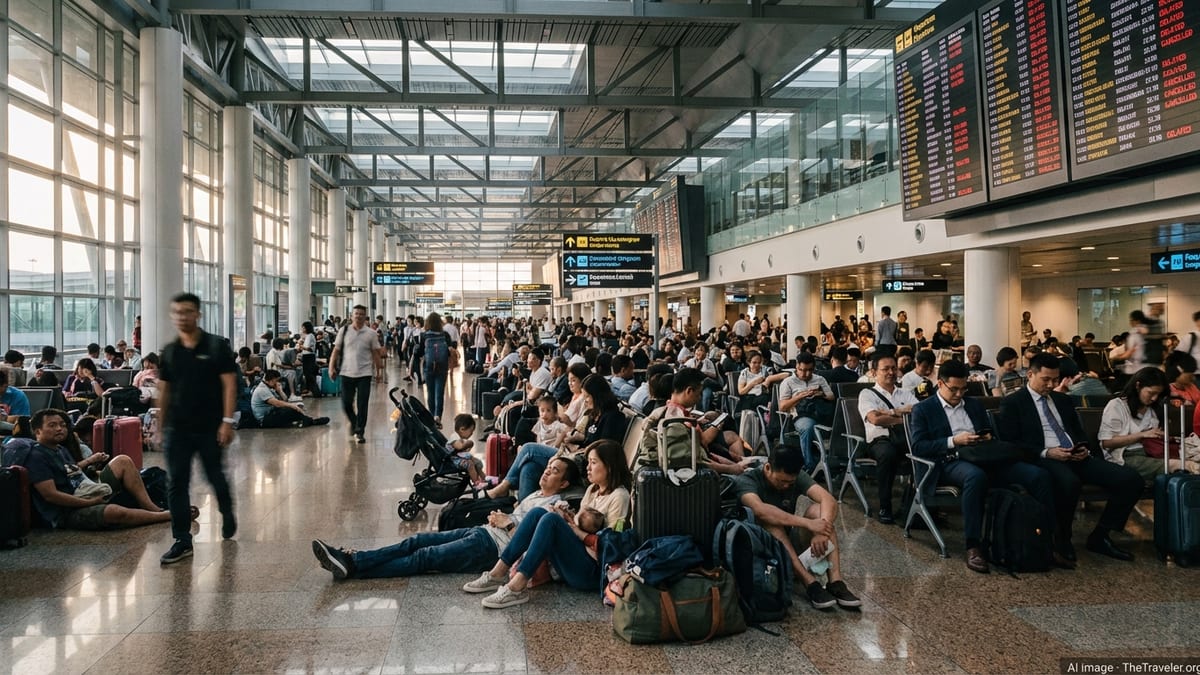
Hundreds of air travelers across Asia have been left stranded in recent weeks as typhoon-related weather, capacity cuts and airport disruptions triggered cascading delays and cancellations at major hubs.
Get the latest news straight to your inbox!
Weather Systems Hit Japan and Regional Routes
Early June saw intense weather systems sweep across parts of East Asia, disrupting carefully timed summer schedules and leaving passengers stuck in terminals overnight. In Japan, Typhoon Jangmi brought heavy rain and strong winds that affected flights serving Tokyo and Osaka, with travel advisories warning of disruptions well into mid-June and urging travelers to monitor airline updates before heading to the airport.
Regional media coverage indicates that the storm led to hundreds of flight cancellations and delays on domestic and international routes, with knock-on effects at connecting hubs throughout Northeast and Southeast Asia. Passengers reported extended waits for rebooking as airlines juggled crew duty limits and aircraft positioning after waves of grounded services.
Elsewhere in the Western Pacific, earlier typhoon damage continued to affect operations. Runway repair work at Saipan International Airport, linked to a recent storm, has kept Philippine Airlines flights to and from Saipan suspended into June, limiting options for travelers in the Northern Mariana Islands and complicating itineraries that rely on Saipan as a regional gateway.
The combination of active typhoon season and lingering infrastructure repairs has effectively removed key links from the regional network, forcing passengers to route through more distant hubs and increasing the risk of missed connections when weather deteriorates.
Operational Issues at Asian Airlines Amplify Disruptions
Beyond weather, several Asia based airlines have announced schedule reductions or operational problems that are intensifying pressure on already crowded routes. In Malaysia, reports from business media describe how state linked carrier AirBorneo grounded its fleet in early June due to technical issues, prompting widespread cancellations and leaving travelers stranded across Sabah and Sarawak. The carrier indicated that disruptions could continue for days as it worked through safety inspections and maintenance checks.
In Thailand, Thai Airways has publicized a series of route suspensions and frequency cuts through June, affecting services from Bangkok to destinations including New Delhi, Sapporo, Tokyo, Osaka and Hong Kong. Aviation focused outlets note that the airline’s revised schedule is meant to respond to weaker low season demand and higher operating costs, but travelers holding tickets on affected routes have faced sudden changes, with some forced to rebook via third countries to keep long planned trips on track.
Low cost operators are also tightening capacity. Thai Lion Air has confirmed temporary reductions or suspensions on more than a dozen routes between June and September, many of them linking Thailand with China, Japan, India, Indonesia, Singapore and Nepal. Industry reporting attributes the adjustments to rising jet fuel prices and softer demand, but passengers booked on lightly served routes now have fewer alternatives if flights are delayed or canceled at short notice.
These operational decisions, while strategic from an airline perspective, are contributing to a broader sense of instability for travelers who depend on tightly timed connections within Asia, particularly those combining regional legs with long haul flights to Europe, North America or Australia.
Airport Congestion and Localized Incidents Snarl Schedules
Major airports across Asia have also faced localized incidents that quickly spread disruption along regional networks. At Guangzhou Baiyun International Airport, reporting from aviation news outlets highlights a day of severe congestion in early June, when more than 400 flights were delayed and at least a dozen were canceled. The bulk of the impact fell on major carriers such as China Southern and Air China, but secondary airlines and codeshare partners around the region also experienced knock on delays as aircraft and crews arrived late from Guangzhou.
Industry analysis suggests that those delays propagated onward to airports such as Beijing Capital, Shanghai Pudong and Chengdu, where missed connections and crew rotation issues forced additional schedule adjustments. Travelers on multi segment itineraries reported spending long hours in terminal queues as airlines attempted to reroute them through alternative hubs with limited spare seats.
In India, a lightning strike on an IndiGo aircraft at Kolkata airport in mid June led to a precautionary deboarding of passengers and a replacement aircraft operation. While the incident itself was contained and did not result in injuries, it added to day of disruptions for travelers at one of eastern India’s busiest gateways and highlighted the vulnerability of tight turnarounds to sudden weather events.
These localized problems, when combined with capacity reductions and weather related constraints, have had an outsized effect on passengers who rely on smooth connections across multiple Asian hubs, especially during the shoulder period leading into peak summer travel.
Geopolitical and Airspace Factors Add Further Strain
Beyond local weather and operational challenges, broader geopolitical and airspace constraints are also weighing on Asia bound and Asia transiting travel. Travel and business publications have documented how airspace restrictions linked to conflicts in the Middle East and surrounding regions have forced airlines to reroute long haul services, lengthening flight times and raising fuel consumption.
Carriers in India and Southeast Asia have responded with schedule rationalizations on certain long haul routes, citing higher operating costs and regulatory limits on overflight permissions. Air India, for example, has adjusted frequencies on several international sectors between June and August, cutting some services while maintaining others at reduced levels. Aviation analysts note that such changes can reduce the buffer capacity airlines normally rely on when disruptions hit, leaving fewer spare seats and aircraft available for last minute recovery operations.
Corporate travel advisories tracking these developments describe a complex environment in which regional congestion at airports in the Gulf, South Asia and parts of Central Asia can ripple into East and Southeast Asian hubs. Travelers using Asia as a bridge between Europe, the Middle East and the Americas may face rebookings or forced overnight stays when rerouted aircraft arrive late or miss designated connection banks.
These pressures contribute to a system where even relatively small incidents, such as a short power interruption at an airport or a temporary runway closure, can trigger significant downstream disruption when combined with already tight schedules and constrained airspace options.
Passengers Confront Long Delays and Limited Remedies
For travelers on the ground, the convergence of weather systems, operational reductions and airspace complications has translated into long queues, uncertain departure times and difficulty securing timely rebookings. Social media posts and travel forums over the past month describe passengers stranded overnight at airports across China, Japan, Southeast Asia and the Western Pacific, often with limited information about when flights might resume.
Consumer advocates point out that compensation and assistance rules vary widely across jurisdictions in Asia, leaving many passengers with fewer formal protections than travelers on certain routes in Europe or North America. In some cases, airlines have provided hotel accommodation, meal vouchers or waivers for itinerary changes, while in others affected passengers have reported covering their own expenses while waiting for new flights.
Travel industry guidance increasingly recommends that passengers build additional buffer time into itineraries involving Asia, particularly when connecting from long haul flights to regional services operated by different carriers. Flexible tickets, comprehensive travel insurance and careful monitoring of airline notifications are being emphasized as practical steps to reduce the risk of being stranded during periods of heightened disruption.
With typhoon season still unfolding and airlines continuing to fine tune schedules in response to cost pressures and demand patterns, analysts expect that periodic waves of disruption are likely to persist across key Asian hubs in the coming weeks, keeping travelers and the wider aviation sector on alert.