


More news on this day
Travelers across Asia faced another wave of disruption on May 8, as more than 60 flights operated by Batik Air, AirAsia, Garuda Indonesia, United Airlines, Saudia and several regional carriers were cancelled across Hong Kong, Taiwan, Malaysia and Indonesia, disrupting onward journeys to major hubs including Singapore, Macau, San Francisco and Jeddah.
Get the latest news straight to your inbox!
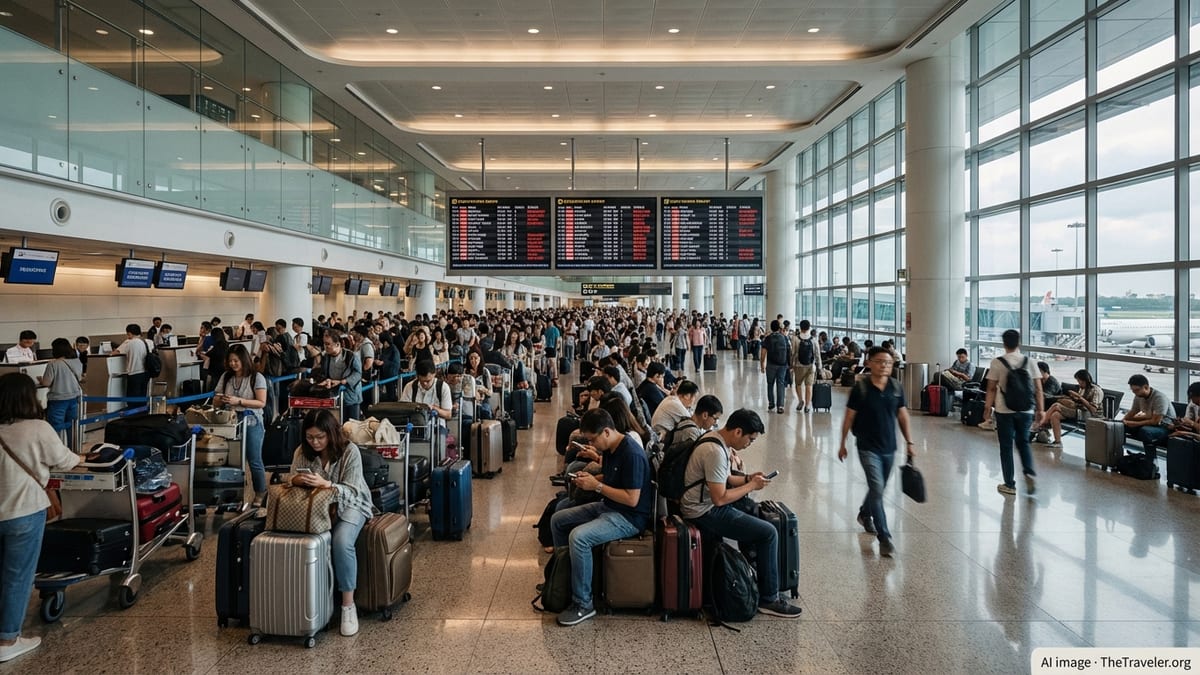
Fresh Cancellations Ripple Across Asian Gateways
Operational data from flight-tracking dashboards and airline notices indicates that the latest round of cancellations began building late on May 7 and continued into the morning of May 8 across key airports in Hong Kong, Taipei, Kuala Lumpur, Jakarta and Bali. The tally across the affected carriers passed 60 same day cancellations by mid morning, with additional flights heavily delayed or re timed.
Routes linking Southeast Asia with major transit points in Singapore and Macau bore much of the impact, alongside long haul services to North America and the Middle East. Publicly available schedules show that several United Airlines departures to and from San Francisco, as well as Saudia flights connecting Jeddah with Asian cities, were among those removed from boards or re listed as cancelled at short notice.
Regional networks also came under strain. Batik Air and Garuda Indonesia scrubbed services on busy Indonesia domestic sectors feeding Jakarta and Bali, while AirAsia removed a mix of regional and medium haul flights from Malaysia and Indonesia to neighboring markets. Travelers arriving at terminals in Kuala Lumpur and Jakarta reported crowded check in halls and long queues at airline service desks as they attempted to secure alternative connections.
The new disruption follows a year of intermittent schedule volatility around Asia, with airlines already adjusting capacity in response to higher fuel prices, geopolitical tensions and earlier airspace restrictions affecting parts of the Middle East.
Impact on Passengers Bound for Major Hubs
The cancellations have hit passengers with onward connections particularly hard, as many of the affected flights were scheduled to feed into larger intercontinental banks at major hubs. Singapore bound services from Indonesian and Malaysian cities saw multiple cancellations and retimings, complicating transfers onto long haul flights to Europe, Australia and North America.
In the Pearl River Delta region, a number of passengers heading for Macau found themselves rerouted via alternative airports or advised to travel overland after short haul links from Southeast Asian cities were withdrawn. At the same time, disrupted flights from Hong Kong and Taiwan reduced options for travelers hoping to connect onward to San Francisco and other United States West Coast destinations.
Middle East connectivity also narrowed. Schedule changes and cancellations on Saudia services to and from Jeddah reduced capacity for religious and labor traffic between Southeast Asia and Saudi Arabia, routes that typically experience strong demand in the late spring and early summer period. Some travelers were reportedly advised via airline apps to rebook on later dates or accept alternative routings through third country hubs.
With many flights pulled less than 24 hours before departure, rebooking options were constrained and remaining seats on unaffected services quickly became expensive. Reports from online booking platforms and traveler forums indicated sharp fare spikes on surviving departures to Singapore, Hong Kong and other nearby gateways.
Airlines Cite Operational and Network Pressures
Publicly available information from airline advisories points to a mix of operational and network planning factors behind the cancellations, rather than a single technical failure or weather system. In recent weeks, AirAsia has been streamlining certain routes and frequencies across its short haul network, while Batik Air and Garuda Indonesia have both adjusted schedules in response to shifting regional demand and earlier airspace issues over parts of the Middle East.
Industry coverage notes that some carriers in Asia have been grappling with aircraft availability and maintenance bottlenecks as fleets return to high utilization levels. Shortages of spare parts and ongoing engine inspections on certain aircraft types have limited scheduling flexibility, making it harder for airlines to recover when individual flights encounter delays or crew constraints.
United Airlines and Saudia have been managing their own sets of pressures on long haul operations, including yield management on transpacific and Middle East Asia sectors. Analysts quoted in recent aviation reports have observed that carriers are increasingly willing to cancel lightly booked flights and consolidate passengers onto fewer services when demand softens, rather than operate multiple departures at lower load factors.
The resulting patchwork of cancellations across different airlines and countries has created a complex picture for travelers, who often only discover their flights have been affected when notifications arrive through airline apps or at airport check in counters.
Hong Kong, Taiwan, Malaysia and Indonesia Feel the Strain
Among the hardest hit on May 8 were airports in Hong Kong and Taiwan, which serve as important transit points between Northeast Asia, Southeast Asia and long haul destinations. Flight boards in Hong Kong showed a cluster of short haul cancellations to Southeast Asian cities, limiting options for same day connections, while Taipei saw several regional departures removed or delayed.
In Malaysia, Kuala Lumpur International Airport again emerged as a focal point of disruption, reflecting its role as a major hub for both full service and low cost carriers. AirAsia and Batik Air Malaysia adjusted a number of departures, affecting passengers traveling to Singapore, Indonesian leisure destinations and other regional cities. Similar patterns were visible in Indonesia, where cancellations on Garuda Indonesia and Batik Air services rippled through domestic networks at Jakarta and Denpasar.
Travel forums and social media posts from affected passengers pointed to a lack of clear, unified information across carriers and airports. While some travelers received advance notifications and were able to change plans before heading to the airport, others described discovering cancellations only after arriving at the terminal, leaving limited time to secure replacement options.
Airport operators in the affected jurisdictions have encouraged passengers to check flight status closer to departure and to allow additional time at the airport in case of further schedule revisions, according to public advisories and local media reports.
What Travelers Can Expect in the Coming Days
Aviation analysts following Asia Pacific schedules indicate that the current wave of cancellations may continue intermittently over the coming days as airlines rebalance capacity, reposition aircraft and work through crew rosters. While the number of same day cancellations may fluctuate, the broader pattern of tighter schedules and limited slack in fleets is expected to persist into the early summer travel period.
Passengers booked on Batik Air, AirAsia, Garuda Indonesia, United Airlines, Saudia or smaller regional operators across Hong Kong, Taiwan, Malaysia and Indonesia are being advised in public guidance to monitor their bookings frequently and use official airline apps or customer portals to track changes. Travel insurance providers and consumer groups also recommend keeping digital copies of receipts and documentation in case of claims for additional accommodation or alternative transport.
For those yet to book travel, industry observers suggest building longer connection times into itineraries involving multiple carriers or tight same day transfers through congested hubs such as Singapore and Hong Kong. Where possible, travelers with fixed schedules are being encouraged to choose itineraries with fewer separate tickets and to avoid last departures of the day on critical sectors.
While airlines across the region continue to publish revised schedules and issue ad hoc advisories, the experience of the latest cancellations underlines how fragile the recovery of Asia Pacific aviation remains. Even modest operational shocks or planning adjustments can quickly cascade across a web of interconnected routes, leaving passengers stranded far from their intended destinations.