


More news on this day
Thousands of passengers across Asia and the Middle East are facing major disruption after a fresh wave of operational pressures triggered 6,951 delays and 472 cancellations at major hubs including Riyadh, Dubai, Shanghai, Delhi and Bangkok, impacting carriers such as Saudia, Akasa Air, Garuda Indonesia and Qatar Airways alongside a host of regional and low cost airlines.
Get the latest news straight to your inbox!
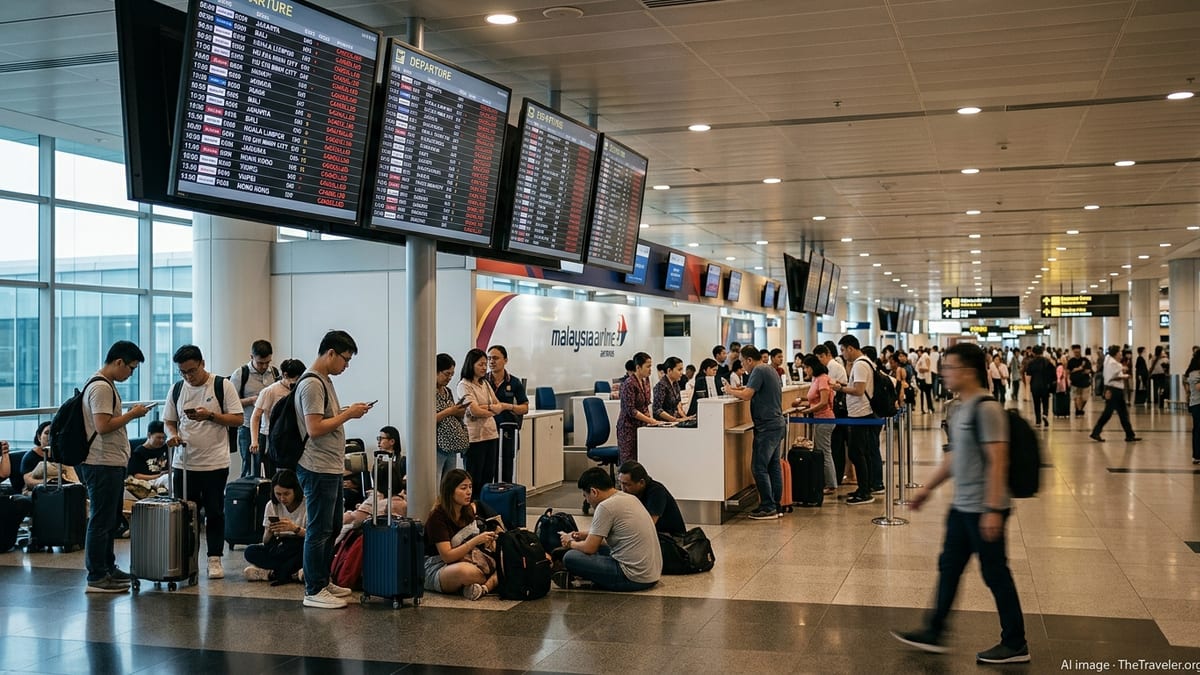
Ripple Effects Across Riyadh, Dubai, Shanghai, Delhi and Bangkok
Publicly available flight tracking data and recent aviation coverage indicate that a combination of weather, airspace restrictions and capacity constraints has pushed several of Asia’s busiest hubs into another week of irregular operations. Riyadh’s King Khalid International, Dubai International, Shanghai Pudong, Delhi’s Indira Gandhi International and Bangkok’s main airports have collectively logged 6,951 delayed movements and 472 outright cancellations over recent days, with knock-on effects across onward connections in Europe, Africa and the wider Asia Pacific region.
These hubs serve as primary transfer points for journeys linking Europe with South and Southeast Asia, meaning that disruption to a single morning or evening bank of flights can quickly cascade into missed connections and aircraft out of position. Aviation analysts note that the current wave of delays is particularly acute on east west trunk routes involving overnight long haul services that feed into dense regional networks the following day.
The concentration of disruption at these airports is amplifying pressure on both full service and low cost carriers. Schedules through Riyadh and Dubai have been repeatedly adjusted in recent weeks in response to changing airspace conditions over parts of the Middle East, while Shanghai and Delhi have struggled with a mix of seasonal storms, slot congestion and air traffic flow control. In Bangkok, a combination of monsoon weather and constrained spare capacity on popular regional routes has further tightened margins.
For travellers, the practical impact is longer than usual ground holds, last minute gate changes and a higher probability that sectors will be re timed or consolidated. Same day reaccommodation options are becoming harder to secure at peak times, particularly for itineraries that involve multiple carriers or separate tickets.
Airlines from Saudia and Qatar Airways to Akasa and Garuda Affected
Carriers based in Saudi Arabia and the Gulf have been among the most exposed to operational shocks, with Saudia and its low cost affiliate flyadeal adjusting services in and out of Riyadh and other Saudi gateways, while Qatar Airways has reported elevated delay levels on routes linking its Doha hub with Asian cities including Delhi, Bangkok and Shanghai. Industry data compiled this month highlights Qatar Airways among the airlines recording the highest number of delayed flights on Asia facing rotations.
In India, rapidly expanding carriers such as Akasa Air have also been drawn into the disruption. Recent delay and cancellation tallies for the domestic and near international network show Akasa managing dozens of affected flights across major Indian metros, with pressure particularly visible at Delhi and Mumbai where slot availability is tight and turnaround buffers are lean. Similar patterns are being seen at other Indian airlines operating dense schedules into weather affected or airspace constrained corridors.
Further east, Garuda Indonesia and regional competitors have faced schedule reliability issues on connections into key Chinese and Thai markets. Operational updates in recent weeks show ongoing adjustments to services linking Jakarta and Denpasar with Shanghai and Bangkok, as carriers juggle demand recovery with irregular air traffic control restrictions and seasonal thunderstorms over southern China and mainland Southeast Asia.
Beyond these headline names, low cost and hybrid airlines across the region are reporting elevated disruption statistics. Thai AirAsia X, for example, has trimmed capacity on certain Bangkok Delhi flights and suspended a Bangkok Shanghai route earlier this year, illustrating how secondary players with thinner fleets have less flexibility when disruption forces aircraft out of rotation or pushes crew close to duty time limits.
Monsoon Weather, Middle East Tensions and Airspace Rerouting
Several overlapping factors sit behind the latest figures on delays and cancellations. In South and Southeast Asia, the July monsoon period is a regular driver of schedule volatility, with heavy rain, low visibility and thunderstorm cells prompting ground stops, diversions and missed slots at airports such as Delhi and Bangkok. Flight tracking summaries for early July point to hundreds of delays at Indian and Thai hubs in single days during the most intense weather systems.
At the same time, carriers operating through the Gulf and western Saudi Arabia continue to navigate a complex airspace environment linked to regional tensions and intermittent restrictions. Reports over the past fortnight describe airlines trimming frequencies to certain Middle East points, rerouting around temporarily closed airspace and occasionally cancelling flights where operational risk or detour times become prohibitive. These measures add minutes to flight times, compress connection windows and ripple through subsequent rotations.
China’s large domestic and international network has also contributed to the broader picture. Recent analyses of Chinese and pan Asian flight data reference more than 10,000 delays and hundreds of cancellations over several days across mainland China, Hong Kong and nearby hubs, with Shanghai Pudong repeatedly cited among the most affected airports. Because many long haul services rely on tight early morning and late night slots in Shanghai, knock on delays can stretch into the next operating day.
The combined effect is that disruptions are no longer isolated to one geography. Instead, they travel along the same corridors as passengers, creating a web of operational stress points from Western Europe through the Gulf to South, East and Southeast Asia. This interconnectedness helps explain how a regional airspace alert or a sequence of monsoon storms can quickly manifest as missed holidays or business meetings several time zones away.
Impact on Travellers: Longer Queues, Tighter Connections and Limited Options
For passengers already en route, the most immediate impact is extended time at airports as flights depart late or are rescheduled. Terminal images and traveller accounts circulating in recent days describe crowded check in halls and transfer desks at several of the affected hubs, with queues forming as passengers seek rebooking assistance or clarification on revised departure times.
Those beginning their journeys are being advised in airline and airport communications to monitor flight status closely, arrive early where possible and factor in additional buffer time for security and immigration. Travel agents and online booking platforms are similarly flagging the possibility of rolling schedule changes, particularly on itineraries involving connections through Dubai, Riyadh, Doha, Shanghai, Delhi or Bangkok.
Same day alternatives are proving scarce on some of the busiest routes, especially where cancellations have followed long sequences of shorter delays that left aircraft and crews out of position. In markets with limited competition, passengers may find that the next available seat is not until the following day or later, even as airlines add spare capacity where they can by upgauging aircraft or consolidating demand on stronger sectors.
Travel insurance policies that cover missed connections, delays and cancellations are coming under closer scrutiny as travellers evaluate their options for recouping costs. Consumer advocates are encouraging passengers to retain boarding passes, receipts and written confirmations of delays or cancellations in case reimbursement or claims are pursued later, noting that documentation requirements vary by jurisdiction and by insurer.
What Airlines and Airports Are Doing to Stabilise Operations
Airlines across the affected region are adjusting networks and ground processes in an effort to restore some stability. Some carriers have reduced overall frequencies on routes most exposed to airspace or weather disruption, trading headline capacity for more robust schedules with longer turnaround times. Others have temporarily suspended specific city pairs, such as certain Bangkok Shanghai and Delhi Shanghai services, to free aircraft for use on more resilient routes.
Operational bulletins and public schedule updates from carriers including Saudia, Qatar Airways, Akasa and Garuda Indonesia show a clear emphasis on protecting core trunk routes while trimming peripheral or lower yielding services. By concentrating aircraft and crew on fewer rotations, airlines aim to reduce the risk that a single delay will cascade through an entire day’s operation.
Airports are simultaneously working with air traffic management authorities and ground handlers to smooth peak hour flows. Measures include flexible use of stands and gates, dynamic reallocation of slots where regulations allow, and contingency staffing at security checkpoints and immigration counters when severe weather or regional alerts are expected. While such interventions cannot eliminate delays caused by storms or external airspace closures, they can reduce secondary disruption linked to congestion on the ground.
Aviation observers note that the current pattern of 6,951 delays and 472 cancellations serves as another stress test for Asia’s rapidly growing aviation market. As demand continues to climb into the Northern Hemisphere summer, both airlines and airports are likely to face further challenges balancing capacity growth with the need for operational resilience across increasingly complex international networks.