


Airport lounges are no longer reserved for business travelers and frequent flyers. Independent brands like Aspire and Plaza Premium have turned lounge access into something almost anyone can buy or unlock with the right credit card or membership. If you are standing in a departures hall wondering whether to book an Aspire Lounge or a Plaza Premium Lounge, the differences are not always obvious at first glance. This guide breaks down how each network operates, what you actually get on the day, and which one is likely to suit different kinds of trips.
Get the latest updates straight to your inbox!
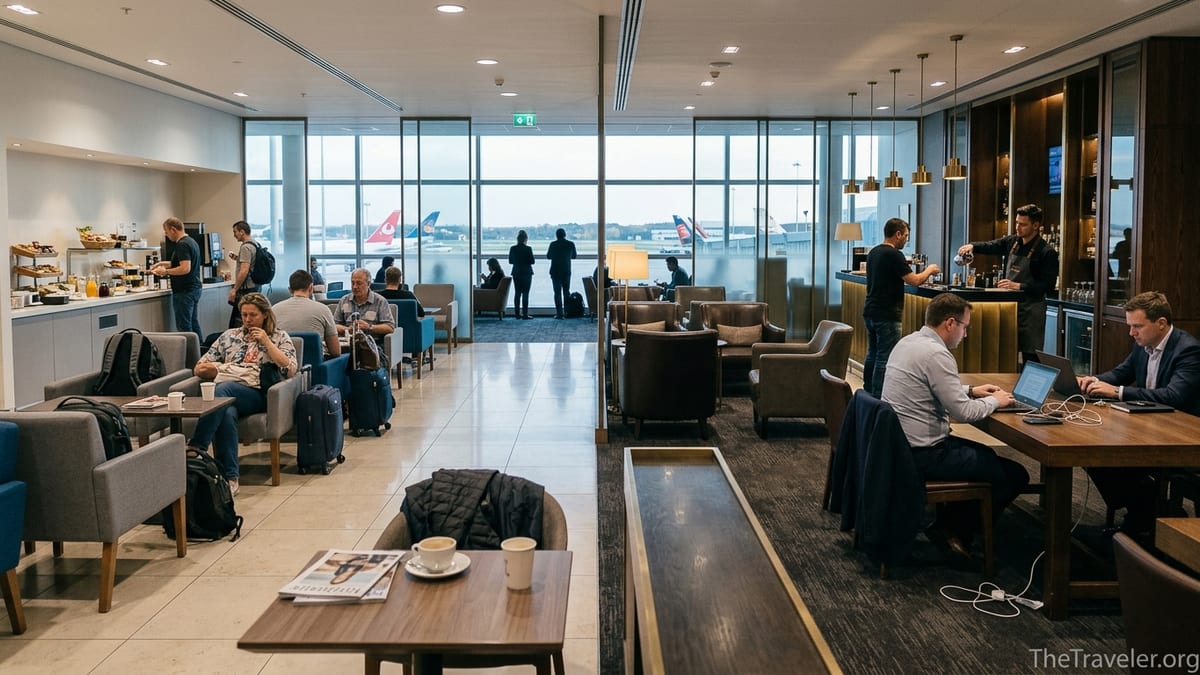
Who Are Aspire and Plaza Premium?
Aspire and Plaza Premium are two of the biggest independent airport lounge networks in the world, but they grew up in different places and play to slightly different strengths. Aspire is operated by Swissport and is best known in the United Kingdom and Europe, with a growing presence in North America and a handful of locations elsewhere. You will see the Aspire name at airports such as London Heathrow, Amsterdam Schiphol, Manchester, Birmingham, Zurich and San Diego, often alongside airline lounges.
Plaza Premium started in Hong Kong in the late 1990s and has expanded across Asia, the Middle East, Europe and North America. Today the Plaza Premium Group runs more than a hundred branded lounges worldwide plus related concepts such as Aerotel airport hotels and “Allways” meet-and-greet services. Its network is especially strong in major Asian hubs like Hong Kong, Kuala Lumpur and Singapore, and in large connecting airports such as London Heathrow, Vancouver and Toronto.
Both brands position themselves as independent, meaning they are not tied to a single airline. Airlines may contract with them to host premium passengers, but any traveler with the right pass, ticket or payment can usually get in. In practice, that means you will often be choosing between Aspire and Plaza Premium in the same terminal, particularly in busy hubs like London Heathrow, where both operate lounges used by a mix of airlines and paying guests.
On paper the two brands look similar. Both offer quiet seating, food and drinks, Wi‑Fi and power outlets. The real differences emerge in where they are strong, how easy it is to get access, and what kind of experience they aim to deliver once you are through the door.
Where You Will Find Each Lounge Network
For many travelers the choice is partly made by the airport they are flying from. Aspire’s core strength remains the UK and parts of continental Europe. At Manchester Airport, for example, Aspire operates lounges in Terminal 2 alongside Escape Lounges, and advance prices for a three‑hour stay typically start in the low to mid‑40 pounds range per adult when booked directly. In Birmingham, Edinburgh and Bristol, Aspire is often one of only one or two independent options in each terminal, so it effectively becomes the default paid lounge.
Plaza Premium, by contrast, is often the main independent option in big global hubs. At London Heathrow Terminal 5, where oneworld airlines like British Airways dominate, Plaza Premium runs a lounge that accepts paying guests and various memberships. In Dallas Fort Worth, Plaza Premium added two new lounges in Terminal D in 2026 alongside its existing Terminal E space, illustrating how it targets major connecting airports frequented by international carriers. In Asia, Plaza Premium has a particularly strong footprint, including lounges in Hong Kong, Kuala Lumpur, Jakarta and key Chinese mainland airports, which makes it attractive if you regularly connect through the region.
There are crossover points where you might literally walk past both brands on the way to your gate. In London Heathrow Terminal 3, travelers with a Priority Pass or DragonPass membership might see signage for both Club Aspire and Plaza Premium lounges. In these situations the decision becomes less about geography and more about what kind of experience and amenities you value most, and what time of day you are traveling.
How Access and Pricing Really Work
Aspire and Plaza Premium both use a mix of entry methods: walk‑up fees, advance online bookings, airline invitations and third‑party programs such as Priority Pass, DragonPass and LoungeKey. The details, however, differ in ways that matter when you are trying to plan a trip or avoid being turned away at the door.
Aspire Lounges are tightly integrated with membership schemes. In Europe and the UK, most Aspire locations accept Priority Pass, DragonPass and LoungeKey, along with card‑based access from partners like Diners Club. If you are a US‑based traveler with a premium credit card that includes a Priority Pass membership, you can often walk into an Aspire lounge in places such as San Diego or Ontario, California without paying an extra fee, though peak‑time capacity restrictions are common. On the paid side, Aspire typically sells access directly through its own website or through airport partners for stays of around three hours, with advance prices at major UK airports often in the 35 to 45 pounds range for adults and slightly less for children.
Plaza Premium also works with a range of partners, but relies more heavily on direct sales and bundled deals with certain credit cards. In North America it sells Plaza Premium Lounge Passes, such as an Americas pass that includes multiple visits at a discounted rate compared with buying a single day pass each time. Individual lounges frequently publish door prices around 70 to 115 US dollars for a two‑ or three‑hour stay in major US airports. Some higher‑end “Plaza Premium First” lounges operate on a fully inclusive model with higher entry fees that cover premium dining and drinks, such as the flagship space in Dallas Fort Worth Terminal D where the walk‑up price for the First side can exceed one hundred dollars per person.
Credit card access is more nuanced with Plaza Premium. Holders of certain premium American Express, Capital One or regional bank cards may receive complimentary access for themselves and, in some cases, guests. However, not every Plaza Premium lounge honors every Priority Pass or bank‑issued membership, particularly in markets where contracts have recently changed. The safest way to treat Plaza Premium is to view direct booking or a clearly stated card benefit as your primary route, rather than assuming any Priority Pass or DragonPass membership will work universally.
What You Actually Get Inside
On a surface level, both Aspire and Plaza Premium promise broadly similar amenities: soft seating, workspaces, Wi‑Fi, food and drink, and in some locations showers or family areas. The differences come down to execution, local partnerships and how much each operator invests in design and catering at a given airport.
Aspire lounges in the UK often deliver a consistent mid‑market experience. In Manchester’s Terminal 2, for example, an Aspire lounge typically offers a self‑serve buffet with hot items such as bacon rolls at breakfast or pasta dishes later in the day, a selection of salads and snacks, and an open bar serving wine, beer and basic spirits. Décor tends toward practical rather than luxurious, with a mix of lounge chairs, dining tables and sometimes a quiet zone separated from the main seating area. Travelers who mainly want reliable Wi‑Fi, a seat, and food that is clearly better value than buying separate meals in the terminal often find Aspire hits the mark without feeling overly formal.
Plaza Premium, especially at newer or flagship locations, aims a notch higher in terms of finishes and menu ambition. In Orlando, for instance, its lounge features a contemporary design with marble counters, a staffed bar and a buffet that can include made‑to‑order items at peak hours. At Dallas Fort Worth’s Plaza Premium First, the concept goes further with table service, a rotating à la carte menu and craft cocktails, creating an experience closer to an upscale hotel lounge than a basic contract space. Even standard Plaza Premium lounges often feature touches like barista coffee, regional dishes, or family corners with play areas that feel more curated than the average independent lounge.
Service levels also vary. Aspire lounges are usually staffed by Swissport employees who split their attention between reception, clearing tables and restocking the buffet. At busy holiday times, guests sometimes report longer waits for plates to be cleared or for hot dishes to be replenished. Plaza Premium often assigns more staff to key touchpoints: reception agents focused solely on check‑in, bartenders behind a dedicated bar and attendants circling the seating areas. That does not guarantee perfection, but in many airports it results in a smoother, more hotel‑like feel once you are inside.
Crowds, Comfort and Time Limits
Capacity and crowding can make a bigger difference to your experience than almost any other factor, and here Aspire and Plaza Premium face different pressures. Aspire’s strong partnerships with mass‑market membership schemes mean that on busy weekends or school holidays some UK lounges reach capacity quickly. In Manchester or Birmingham on a peak summer Saturday, you may see a queue at the door and a notice that walk‑up or membership access is temporarily paused. Advance bookings for cash‑paying guests usually take priority, which means that turning up with a Priority Pass alone can feel uncertain at the busiest times.
Plaza Premium lounges can also be busy, but the combination of higher typical walk‑up prices and more targeted credit card partnerships tends to moderate crowds slightly, especially at the premium end. At Dallas Fort Worth’s Plaza Premium First, for example, entry is restricted to a limited window before departure, helping keep seats available for guests paying triple‑digit entry fees. Standard Plaza Premium lounges in major hubs do fill up before long‑haul evening waves, yet the layout often includes more varied seating zones, from dining areas to quieter corners, giving guests a better shot at finding a comfortable space.
Time limits are another point of comparison. Aspire generally sells three‑hour blocks and, in practice, often allows a soft overstay if the lounge is not at capacity and your departure is slightly delayed. Plaza Premium commonly advertises visits of up to two or three hours depending on the product purchased or the terms attached to a credit card or Plaza Premium Pass. Enforcement varies by location and busyness. In a relatively quiet midday period at a secondary airport, you may find staff are relaxed about timing. At a flagship location in the evening rush, reception can be strict about both arrival times and maximum stays, particularly for walk‑up guests.
For travelers who prioritize certainty over spontaneity, this means Aspire can be attractive if you can pre‑book a paid slot in advance at your home airport, while Plaza Premium may suit those holding a premium card that guarantees access even at higher‑end locations, so long as you are comfortable with the defined time window.
Food, Drinks and Showers: The Quality Question
Many travelers justify lounge fees based on how much they would otherwise spend on airport food and drinks. Here Plaza Premium often has the edge, especially in its newer or renovated lounges. Menu offerings usually include a mix of regional hot dishes, salads and snacks, alongside a staffed bar pouring complimentary standard alcohol and, in some cases, specialty cocktails. In Dallas Fort Worth’s Plaza Premium First, for instance, guests can expect restaurant‑style plated dishes like steak tips or brunch items, with cocktails made to order, instead of a purely buffet‑style setup.
Aspire’s catering is more functional but still represents good value compared with buying separate meals in the terminal. At a typical UK Aspire lounge, breakfast might include scrambled eggs, sausages, pastries and cereals, while lunchtime offers pasta, curries or stew‑style dishes alongside salads and desserts. Alcohol is usually self‑serve from a central station, with a modest selection of wine, beer and basic spirits included in the entry price. While fewer locations offer barista coffee or premium cocktails as standard, travelers who mainly want “something hot and filling” plus free‑flow soft drinks will likely find Aspire perfectly adequate.
Showers are another differentiator. Plaza Premium has invested heavily in shower suites in long‑haul hubs, such as Hong Kong, Vancouver and selected European airports. For a traveler arriving after a red‑eye flight into, say, London or Toronto, having the option to pay for a short Plaza Premium visit that includes a hot shower and a decent breakfast can be a significant quality‑of‑life upgrade. Aspire offers showers in some locations, but coverage is patchier and facilities can be more basic, so if freshening up between flights is a priority, Plaza Premium is more likely to deliver consistently.
Which Lounge Fits Which Traveler?
Thinking in terms of traveler profiles can make the Aspire vs Plaza Premium decision clearer. If you are a leisure traveler from the UK or continental Europe booking a package holiday from Manchester, Birmingham or Edinburgh, Aspire may be the more convenient choice simply because it is often the main independent lounge in those terminals. Advance prices in the 35 to 45 pounds range can be reasonable for a family that would otherwise pay for multiple rounds of food and drink in the public departures area.
If you are a US‑based cardholder with a premium travel credit card that explicitly lists Plaza Premium access, the calculus changes. Heading out of Orlando or Dallas Fort Worth, for example, you might hold a card that gets you complimentary Plaza Premium entry for yourself and perhaps a couple of guests. In that scenario Plaza Premium can represent tremendous value, offering a higher‑end environment than many contract lounges without any extra out‑of‑pocket cost beyond your card’s annual fee.
Business travelers and frequent long‑haul flyers connecting through Asia or the Middle East are also more likely to encounter Plaza Premium. If you routinely change planes in Hong Kong, Kuala Lumpur or Doha on mixed‑airline itineraries, building your routine around Plaza Premium’s network, showers and generally solid food can be more practical than chasing individual airline lounges. In regional European or UK airports, by contrast, Aspire’s denser presence and extensive ties to Priority Pass and DragonPass make it the more familiar brand for many road warriors.
In short, Aspire tends to win on ubiquity and price in certain regions, particularly the UK and smaller European airports. Plaza Premium often wins on overall finish, food and shower availability in global hubs. Your personal mix of home airport, usual routes and card benefits will determine which feels like “your” network over time.
The Takeaway
If you only remember one thing, let it be this: Aspire and Plaza Premium are not direct competitors in every airport, and the “better” option depends heavily on where you are flying and how you access the lounge. Aspire usually offers a solid, no‑nonsense experience at a reasonable advance price, especially in UK and European airports where it may be your most convenient independent option. Plaza Premium often delivers a more polished environment, with stronger food and beverage offerings and better shower coverage, particularly in major international hubs and at its premium “First” locations.
From a value standpoint, Aspire makes a lot of sense if you are paying cash in advance at a regional airport or relying on a broadly issued membership like Priority Pass or DragonPass. Plaza Premium shines when you can unlock it with the right premium credit card or a discounted multi‑visit pass, or when you specifically need nicer amenities, such as a full meal and a shower after a long overnight flight.
When both brands are available in the same terminal, business travelers and long‑haul flyers who care most about food quality, quiet zones and showers may find Plaza Premium the stronger choice, while budget‑minded leisure travelers who mainly want a guaranteed seat, Wi‑Fi and basic food might lean toward Aspire, especially if there is a noticeable difference in walk‑up prices. Either way, treating lounges as part of your trip planning, not an afterthought at the gate, will give you the best chance of turning airport time into something closer to a calm start or finish to your journey.
FAQ
Q1. Is Aspire Lounge cheaper than Plaza Premium Lounge?
In many UK and European airports, Aspire’s advance online prices per adult are often lower than typical walk‑up fees at Plaza Premium in large hubs, but actual costs vary by airport and date.
Q2. Which lounge network has more locations, Aspire or Plaza Premium?
Plaza Premium has a wider global footprint, particularly across Asia, the Middle East and major long‑haul hubs, while Aspire is more concentrated in the UK, parts of Europe and a few North American airports.
Q3. Can I use Priority Pass to access both Aspire and Plaza Premium lounges?
Many Aspire lounges accept Priority Pass, while Plaza Premium access via Priority Pass depends on current agreements and varies by location, so you need to check your membership and the specific lounge before you travel.
Q4. Which is better for long layovers and showers?
Plaza Premium generally has more lounges with dedicated shower suites, especially in long‑haul hubs, making it a stronger choice if you want to freshen up during a layover.
Q5. Are food and drinks included in the lounge entry price?
Yes, both Aspire and Plaza Premium normally include buffet food, soft drinks and standard alcoholic beverages in the entry price, although some premium cocktails or à la carte dishes in higher‑end lounges may carry a surcharge.
Q6. Can families with children use Aspire and Plaza Premium lounges?
Yes, both brands welcome families at most locations, often with discounted child pricing at Aspire and family seating areas at Plaza Premium, though a few premium or adults‑only lounges may have age restrictions.
Q7. Do I need to book in advance, or can I just walk in?
You can usually walk in and pay at both Aspire and Plaza Premium subject to space, but advance bookings are recommended at busy times, particularly for Aspire lounges in UK holiday airports and for flagship Plaza Premium locations in major hubs.
Q8. Which is better for business travelers who need to work?
Both offer Wi‑Fi and power outlets, but Plaza Premium lounges in larger hubs often provide more varied seating, dedicated work zones and slightly quieter spaces that many business travelers find more conducive to working.
Q9. Are Aspire and Plaza Premium lounges only for premium cabin passengers?
No, both are independent lounge networks, so economy passengers can usually buy access directly or enter via eligible credit cards and memberships, regardless of airline or cabin class.
Q10. How should I choose between Aspire and Plaza Premium if both are available?
Compare your access options, prices for your travel date, and what matters most to you, such as food quality, showers or a quiet workspace; if amenities are a priority and prices are similar, Plaza Premium is often the better bet, while Aspire can be ideal when you want a straightforward, good‑value space at a lower advance price.