


More news on this day
Severe flooding in Upper Assam has submerged key railway tracks at Simaluguri in Sivasagar district, prompting the Northeast Frontier Railway to suspend services on crucial sections and prepare special trains to move stranded passengers to safer hubs.
Get the latest news straight to your inbox!
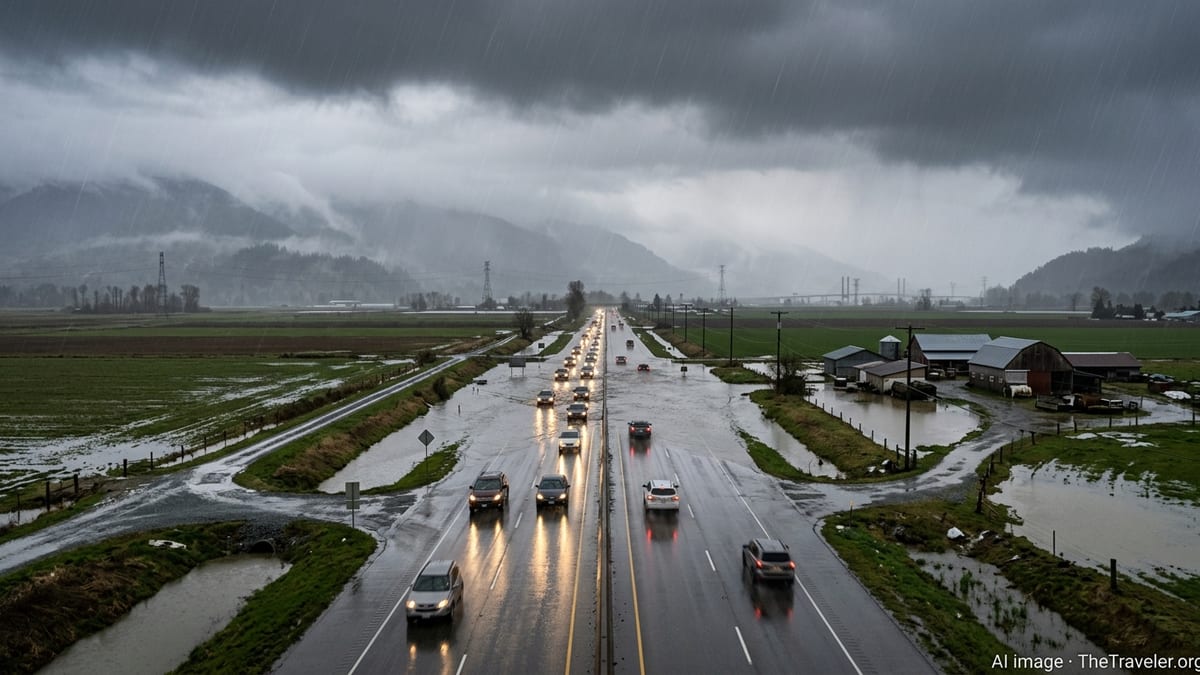
Flooded tracks cut a vital rail artery in Upper Assam
According to published coverage from regional and national outlets on 20 July 2026, floodwaters from the swollen Dikhow River have inundated the Simaluguri railway station yard, adjoining tracks and nearby railway colony areas in Sivasagar district. Images and on-the-ground reports show tracks under water in multiple locations, making normal train operations unsafe.
Publicly available information indicates that the Northeast Frontier Railway has suspended train movement between the Simaluguri–Namtiali and Simaluguri–Selenghat sections until conditions improve. These links form part of an important rail corridor connecting eastern Assam to Dibrugarh, Tinsukia and other Upper Assam destinations, and the shutdown has immediate ripple effects on both local and long-distance services.
News reports detail that water levels rose rapidly after continuous heavy rain in upstream catchments, with the Dikhow River overtopping embankments and spilling onto the rail alignment. Railway infrastructure in and around Simaluguri, including points, signaling equipment and platforms, has been affected by standing water, increasing the risk of damage if regular traffic were to continue.
As a result, several passenger, DEMU and intercity services that usually pass through Simaluguri have been cancelled, diverted or short-terminated. Travel advisories issued through media platforms are urging passengers with plans to transit Upper Assam to check revised timings and temporary terminations before starting their journeys.
Special relief trains planned via Sibsagar Town
With large numbers of passengers left in limbo by the sudden suspension of services, the railway administration is moving to create alternative routes and special services. According to multiple local news reports, the Northeast Frontier Railway is arranging a special train from Sibsagar Town railway station towards Dibrugarh and New Tinsukia to help clear stranded passengers whose trains can no longer traverse the Simaluguri sections.
Published coverage indicates that passengers from disrupted trains are being guided toward Sibsagar Town, which lies on a comparatively safer stretch of track less directly exposed to the Dikhow’s floodwaters. The special service is expected to operate as an unreserved relief train, prioritising capacity over comfort in order to move the maximum number of people toward major junctions in Upper Assam.
These special movements are being coordinated with diversions of long-distance trains, ensuring that passengers disembarking at intermediate stations can reconnect with the wider rail network. Reports suggest that the relief train plan is designed to be flexible, allowing adjustments in timing and composition depending on how quickly water levels recede and what further damage inspections reveal along the flooded route.
Rail observers note that such special services have become a familiar feature of monsoon operations in the Northeast, where intense rainfall and overflowing rivers frequently cut isolated stretches of track. In this instance, the combination of a key junction at Simaluguri and rising river levels has made rapid contingency planning essential.
Road transfers and diversions ease evacuation pressure
Alongside the planned special train, authorities are also leaning on road transport to bridge the gap created by the flooded rail corridor. Regional outlets in Assam report that state-run buses and local vehicles are being deployed at Namtiali and other points to carry passengers to Sibsagar Town, from where rail evacuation can continue.
This combined rail-road strategy is aimed at preventing large crowds from remaining at waterlogged or vulnerable stations. By funnelling passengers quickly toward relatively secure hubs with onward connections, officials hope to reduce both safety risks and logistical challenges associated with prolonged stranding in flood-hit zones.
At the same time, long-distance trains that would normally run through Simaluguri are being re-routed over alternative alignments where track conditions allow. According to travel advisories reproduced in the press, a number of services are either short-terminated before reaching the flood-affected stretch or diverted via other sections of the Northeast Frontier Railway network.
Travel experts cited in media discussions of the disruption point out that diversions can add several hours to journey times but remain preferable to cancellations in a region where rail connectivity is a lifeline. The challenge for operators is to balance safety with the need to keep essential mobility intact for residents, workers and tourists across Assam and adjoining states.
Passengers face uncertainty as cancellations mount
For passengers on the ground, the immediate impact of the Simaluguri shutdown is confusion over timings, routes and availability of seats on remaining services. Lists of cancelled and partially cancelled trains carried by regional news organisations show multiple passenger and intercity services between Tinsukia, Jorhat Town, Lumding, Rangiya, Dibrugarh and Simaluguri affected on 20 July and potentially beyond.
Several trains that had already started their journeys before the scale of flooding became clear have been short-terminated at intermediate stations, according to published timetables and advisories. Passengers on board such services are being advised, through media updates and station announcements, to follow instructions about transfers to buses or special trains wherever arranged.
Prospective travellers are being encouraged by Indian Railways information channels and replicated news reports to monitor official updates for revised schedules, route changes and refund policies. Railway watchers stress that conditions on the ground can evolve quickly during severe monsoon events, making real-time information critical for anyone planning to travel through Upper Assam in the coming days.
The uncertainties are particularly acute for unreserved travellers and those without digital access to booking platforms or advisory channels. Crowding at unaffected stations, last-minute diversions and the pressure on special services can all complicate journeys, underlining the importance of clear public communication and on-site assistance.
Monsoon risk highlights vulnerability of Northeast rail links
The current crisis at Simaluguri underscores the broader vulnerability of rail infrastructure in Assam and the wider Northeast to extreme weather. The region’s rail network often runs parallel to or across rivers that can rise sharply during intense monsoon spells, leaving embankments and bridges exposed to erosion and flooding.
Government and railway documents on recent investment in the Northeast Frontier Railway zone highlight ongoing efforts to upgrade tracks, bridges and signaling to improve resilience. However, the latest episode at Simaluguri shows that even with gradual improvements, sections built on low-lying terrain remain at risk when rivers like the Dikhow overflow.
Climate analysts and disaster-management specialists, writing in recent assessments of the Brahmaputra basin, have warned that heavier and more erratic rainfall patterns are likely to increase the frequency of such disruptions in the years ahead. In response, transport planners and local administrations are being urged in public forums to integrate flood forecasts more deeply into operational planning, including pre-emptive route planning and early identification of relief train requirements.
For now, the priority remains restoring safe operations on the Simaluguri-linked sections once floodwaters recede and inspections are complete. Until then, the special trains and emergency arrangements being assembled across Upper Assam will serve as a critical bridge for thousands of passengers caught in the path of the latest monsoon surge.