


Hilton Grand Vacations Club Maui Bay Villas in Kihei is a modern, all-suite oceanfront resort that feels built for longer, apartment-style stays. Along with the space and full kitchens come a variety of resort charges, taxes and small extras that can nudge your final bill higher than the nightly rate suggests. This guide walks through the key fees and typical out-of-pocket costs guests can expect, using current publicly available information and recent booking examples to keep things grounded in reality.
Get the latest updates straight to your inbox!
Understanding the Daily Resort Charge
Like many Hawaii properties, Hilton Grand Vacations Club Maui Bay Villas adds a mandatory daily resort charge on top of the room rate. Official Hilton materials and recent third-party listings indicate a daily resort fee in the ballpark of 50 to 60 US dollars per night before tax, though the exact amount can change periodically and may vary by booking channel and promotion. For a six-night stay, that means most guests will see an extra roughly 300 to 360 dollars added to the bill just from the resort fee alone.
This daily charge typically covers amenities that might otherwise be billed separately. At Maui Bay Villas, inclusions generally feature standard Wi-Fi access, access to the resort’s pools, fitness areas and common facilities, plus some on-site activities or local phone calls. Guests report that Wi-Fi is treated as part of the resort charge rather than a standalone line item, so you will not usually see an extra daily internet fee listed. However, it is important to understand that even if you do not use these features heavily, the resort fee is not optional on most standard bookings.
Because Hilton Grand Vacations properties often host both timeshare owners and nightly rental guests, the experience with resort fees can differ. Owners staying on points may see the fee structure handled through their ownership charges, while cash-paying guests booking through Hilton, Expedia or similar sites typically see the full per-night resort fee plus tax added at checkout. If you are booking a promotional vacation package or preview stay through Hilton Grand Vacations, the sales representative can often confirm whether the resort fee is discounted, waived, or charged in full for your particular offer.
For practical trip budgeting, a good rule of thumb is to take your pre-tax nightly rate and add roughly 15 to 25 percent to account for the mandatory resort charge plus the state and local taxes applied to that fee. For example, if your promotional rate is 350 dollars per night, it would not be unusual for the combination of resort fee and associated taxes to add around 70 to 90 dollars per night on top of that, depending on the current resort fee level and local tax rates at the time of your stay.
Parking at Maui Bay Villas: What Is Included
One welcome cost advantage at Hilton Grand Vacations Club Maui Bay Villas compared with many Maui resorts is self-parking. Recent listings on Hilton’s own site and major booking engines describe self-parking as included or complimentary for guests, with no separate daily parking fee. For travelers used to paying 40 to 60 dollars per night for parking at large oceanfront hotels in Kaanapali or Wailea, this can represent meaningful savings, especially on longer stays.
In practical terms, this means you can rent a car at Kahului Airport and drive to the resort without worrying about an additional parking line item each night. If you stay seven nights and another Maui resort charges 45 dollars per night for self-parking, you would spend more than 300 dollars on parking alone. At Maui Bay Villas, that money can instead go toward gas for day trips to Haleakala National Park, the Road to Hana, or simple essentials like groceries and restaurant meals in Kihei and Wailea.
Valet parking is not a central feature in the way it might be at a large luxury hotel. Maui Bay Villas has more of a residential, timeshare-style layout with surface parking near the buildings. Guests report being able to park close to their assigned villa or in nearby lots without extra charges. This setup appeals particularly to families and long-stay travelers who are in and out of their car all day for beach hopping, Costco or Safeway runs, and exploring the island without the friction of valet slips or extra tipping expectations.
Because parking policies can evolve, it is still wise to double-check at the time of booking and again in your pre-arrival email or app check-in. As of recent reports, however, including through large travel agencies and guest reviews, self-parking at Maui Bay Villas is generally treated as complimentary, and it is a genuine cost advantage relative to many other Maui beachfront or near-beach properties.
Wi-Fi, Water Bottles and In-Room Basics
Wi-Fi at Hilton Grand Vacations Club Maui Bay Villas is typically included as part of the resort experience rather than billed as a separate daily surcharge. Standard Wi-Fi access is generally covered by the resort fee or bundled into the base product for owners, with an option in some cases to upgrade to premium speeds for an extra nightly charge. For most guests browsing, streaming and checking work emails, the included connection is usually sufficient, and they do not see a separate internet line on the folio.
In-room water is an area where expectations should be set carefully. Some Hawaii hotels provide daily complimentary bottled water, often two bottles per room, as part of the resort or destination fee. At Maui Bay Villas, guests can expect a combination of refillable water stations around the property and, in some cases, a small initial set of bottled waters at check-in or in the villa. However, ongoing bottled water delivery to the room every day is not guaranteed and can vary by season, villa type and current sustainability initiatives.
Practically, many guests handle water like they would in a vacation rental. It is common to pick up a flat of bottled water or a large refillable jug on the way from the airport at a warehouse club or supermarket in Kahului. If the resort provides refill stations in the lobby or near the pool, you can rely on those with reusable bottles instead of buying single-use bottles every day. Expect that if you request extra bottled water from housekeeping or the front desk, you may be charged a small per-bottle fee, similar to the way mini-bar or pantry items are handled at other properties.
Other in-room basics, such as coffee pods, dishwasher tablets and laundry detergent, are typically partially included and partially pay-as-you-go. Villas are usually stocked with an initial set of coffee, tea, and detergents that cover the first few days. If you are staying a full week or longer and doing multiple loads of laundry or frequent dishwashing, you can either buy resort-priced refills from the front desk or gift shop, or purchase bulk supplies at local grocery stores for substantial savings. This hybrid model is common at timeshare resorts all across Hawaii.
Deposits, Holds and How Much to Put on Your Card
At check-in, Hilton Grand Vacations Club Maui Bay Villas places a credit card hold to cover incidentals, resort charges and any potential damage. While the exact hold amount can change over time and may depend on stay length, a typical pattern at comparable Hilton properties is to authorize a combination of the expected remaining room and tax plus an incidental allowance of perhaps 50 to 100 dollars per night. For a seven-night stay, that can easily translate into an authorization of several hundred dollars over the cost of the room and resort fee.
Guests paying cash for the stay or using a debit card should plan ahead for this. An authorization is not an immediate charge, but it does reduce the available balance or credit limit temporarily. If you arrive with a tight spending limit on your debit card, you might find that the hold for Maui Bay Villas plus a rental car deposit strains your usable funds for the first few days. Many repeat Maui travelers choose to use a primary credit card with a higher limit for hotel and car rental holds, and carry a separate debit card for ATM withdrawals and everyday purchases.
Refund timing is another practical detail. After checkout, the resort will finalize your folio, post the final charges, and release any remaining hold amount. Banks typically take anywhere from a few business days to about a week to make those funds fully available again. If you are checking out of Maui Bay Villas and immediately flying on to another island or the mainland for more travel, it is wise not to rely on those held funds being instantly usable as soon as you settle your bill.
For travelers using reward nights, vacation packages or timeshare points, the incidental hold still applies. Even if your base accommodation cost is largely prepaid, the property will want a card on file to cover resort fees, parking damage if any, restaurant or bar charges at the Beach Club, cabana rentals and other on-property purchases. Checking your reservation details in the Hilton app or with the Hilton Grand Vacations reservations team before arrival can help you estimate the likely hold size and plan your credit limit accordingly.
Taxes and Government Fees in Maui
Hawaii has a layered tax structure that affects hotel and timeshare stays, including at Hilton Grand Vacations Club Maui Bay Villas. In addition to the nightly rate and resort fee, guests can expect state general excise tax, transient accommodations tax and, for Maui County, an additional local transient accommodations surcharge. The exact percentages and rules can evolve, especially as Maui County and the state adjust tourism-related revenues, so you should treat any example percentages as illustrative rather than fixed.
In practice, this means that both your room rate and your resort fee are taxed. If the combined tax rate on accommodations and related fees is around the mid-teens in percentage terms, a guest paying a 400 dollar base night plus a 55 dollar resort fee might see total daily taxes in the range of 65 to 70 dollars. Over a week-long stay, those taxes add several hundred dollars to the final bill, and they are not typically negotiable, waived or covered by loyalty status.
Maui Bay Villas also falls within the category of timeshare and vacation ownership accommodations. Hawaii sometimes applies a slightly different tax treatment to timeshare occupancy versus standard hotel stays, particularly for owners rather than renters. However, for a traveler booking a nightly stay on a major travel site or directly through Hilton, the key takeaway is that almost everything on the folio that looks like a room-related charge will have tax applied. This usually includes the resort fee, any nightly upgrade surcharge and many in-resort add-ons linked to the room.
For budgeting purposes, it is helpful to think in terms of an “all-in” nightly cost. Rather than planning around a base rate of, say, 375 dollars, consider that by the time the resort fee and all applicable taxes are added, the real nightly spend may be closer to 475 to 500 dollars. Viewing your stay this way from the outset reduces sticker shock at checkout and makes it easier to compare Maui Bay Villas fairly against other resorts that may quote slightly different combinations of base rates, destination fees, parking costs and inclusions.
Extra Costs Around the Resort: Food, Cabanas and Activities
Once you arrive at Hilton Grand Vacations Club Maui Bay Villas, most additional on-property costs fall into the categories of food and beverage, premium pool experiences, and occasional activities or experiences. The resort’s Beach Club restaurant and bar offers casual meals, snacks and drinks with resort-level pricing. A typical breakfast entree such as a local-style omelet or pancakes might run in the mid-to-high teens in dollars, while poolside cocktails often range from the mid-teens to low twenties before tax and gratuity. For a family of four, a basic lunch at the resort could easily reach 80 to 100 dollars with drinks.
The good news is that the all-suite design with full kitchens gives you a straightforward way to control those costs. Many guests shop at supermarkets or warehouse clubs in Kahului or nearby Kihei for groceries, breakfast items and snacks. Buying cereal, fruit, eggs and coffee for a week’s worth of breakfasts often costs less than a single morning out at a resort restaurant. Likewise, stocking the fridge with local beers, soft drinks and simple snacks can dramatically reduce the temptation to order every drink or snack from the pool bar menu.
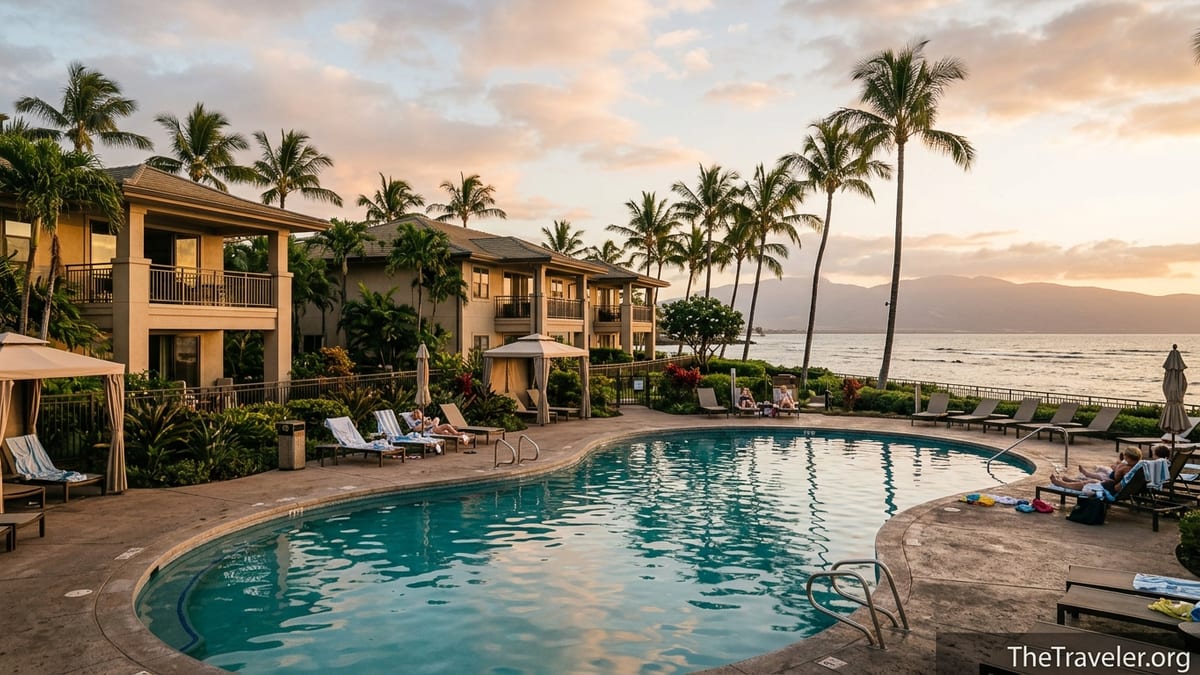
Pool cabanas and premium lounging spaces are another potential extra. Maui Bay Villas features a pool complex with loungers included for all guests, but shaded cabanas or daybeds may be available for a daily rental fee, particularly in busier seasons. Prices vary by demand, but it is common at comparable Maui properties to see cabana rentals priced somewhere between 100 and 250 dollars per day. For couples on a honeymoon or families planning a full pool day, reserving a cabana for one or two days of a week-long stay can provide shade and convenience without turning into a daily expense.
Activities associated with the resort, such as yoga sessions, cultural classes or guided walks, may be included or fee-based depending on the specific offering. Many properties in Hawaii include a rotating schedule of free or low-cost activities funded partially by the resort fee, while charging extra for things like private lessons or specialty experiences. When you check in, ask for the current activities schedule and confirm whether any classes or tours add a charge to your room. This simple step avoids surprise charges later and helps you prioritize the experiences that feel worth paying for.
Saving Money Using the Timeshare Style Layout
Maui Bay Villas is laid out as a timeshare-style resort, with one-, two- and three-bedroom villas featuring full kitchens, washers and dryers, and living and dining areas. This residential setup can be a powerful tool for controlling your overall trip cost. While the nightly rate plus resort fee may appear higher than some standard hotel rooms inland, the ability to cook several meals, wash clothes and share a larger villa among family members or friends often offsets that premium.
For example, two couples traveling together might book a two-bedroom villa instead of two separate hotel rooms at a comparable Maui resort. If each couple would otherwise pay 425 dollars per night plus resort fee and parking, combining into one villa that costs, say, 650 to 700 dollars per night including the resort fee could save both parties money. Splitting grocery costs for breakfasts and a few dinners in the villa kitchen can further reduce per-person spending compared with eating every meal at restaurants in Kihei or Wailea.
The in-room washer and dryer are also a meaningful cost saver, especially for families. Instead of checking extra bags or paying airline fees for additional luggage, guests can pack lighter and do laundry mid-trip. Washing swimsuits and lightweight clothing every few days also means you are less likely to buy extra resort apparel or beach gear simply because you have run out of clean items. Over the course of a ten-day trip, these small savings can add up to enough to cover a rental car upgrade or a special excursion.
Another subtle benefit of the timeshare model is that amenities like beach chairs, basic kitchenware and often starter supplies of dish soap and laundry detergent are already present in the villa. You may still choose to buy your preferred brands or larger quantities, but you are rarely starting entirely from scratch the way you would in a bare-bones vacation rental. This built-in baseline of supplies reduces the risk of multiple small, unexpected purchases on arrival day.
The Takeaway
Hilton Grand Vacations Club Maui Bay Villas offers a modern, spacious base in Kihei with resort-style amenities and the comforts of a furnished apartment. From a cost perspective, the biggest factors to plan for are the mandatory daily resort fee, Hawaii’s layered accommodation taxes and everyday food and beverage spending. Complementing those, the absence of a separate self-parking fee, the inclusion of Wi-Fi, and the ability to cook in your villa all create opportunities to keep your overall bill in check.
To get a realistic sense of what your stay will cost, start with the advertised nightly rate, then add an estimated resort fee and tax layer that can bring the all-in nightly total closer to 20 to 30 percent above the base rate. Factor in a credit card hold at check-in, then think through how often you plan to dine at the Beach Club versus cooking in, whether a cabana day or two fits your budget, and how you want to manage small extras like bottled water and extra coffee pods. With those pieces understood, Maui Bay Villas can deliver a comfortable, predictable financial experience in a destination where costs can otherwise feel opaque.
Most importantly, revisit the official Hilton booking page or your confirmation documents shortly before traveling, as resort fees and inclusions can shift over time. Policies about parking, resort charge amounts and what exactly is covered may be updated periodically in response to local regulations or corporate decisions. A quick pre-trip check, paired with the budgeting framework in this guide, will help ensure that the only surprises on your Maui vacation are the good kind, like spotting turtles just offshore or catching a fiery sunset from your villa’s lanai.
FAQ
Q1. Does Hilton Grand Vacations Club Maui Bay Villas charge a daily resort fee?
The resort typically charges a mandatory daily resort fee that is added to the room rate and taxed. The exact amount can change over time, so always confirm the current fee when you book.
Q2. Is parking free at Maui Bay Villas?
Recent information from Hilton and major booking sites indicates that self-parking is generally complimentary for guests, but it is wise to verify this on your reservation before arrival.
Q3. Is Wi-Fi included in the resort fee?
Standard Wi-Fi is usually included as part of the resort experience and covered by the resort fee or base stay, with optional upgrades to faster tiers sometimes available for an extra charge.
Q4. Are bottled water and snacks complimentary in the villas?
You may find some initial bottled water or basic supplies at check-in, but ongoing bottled water and snacks are not guaranteed and are often treated as extra purchases or something you buy yourself at local shops.
Q5. How much is the credit card hold at check-in?
The hold amount can vary, but it commonly includes the expected remaining room and tax plus a nightly incidental allowance, which can total several hundred dollars for a week-long stay.
Q6. Are resort fees and parking covered on reward stays or timeshare points stays?
Even when you use loyalty points or vacation ownership points, resort fees, certain taxes and incidental charges are typically still your responsibility unless your specific offer explicitly states otherwise.
Q7. What taxes should I expect to pay on my stay?
Guests pay a combination of state and county lodging taxes applied to the room rate and usually to the resort fee, which together can add a significant percentage to the all-in nightly cost.
Q8. Are pool cabanas and activities included in the resort fee?
Standard pool access and many basic activities are included, but private cabanas, premium experiences and some specialty classes or tours may carry an additional daily or per-activity charge.
Q9. Can the full kitchen and laundry in the villa really save money?
Yes. Cooking some meals, packing lighter and doing laundry on-site can reduce restaurant, baggage and clothing expenses compared with staying in a standard hotel room.
Q10. How can I avoid surprise charges at checkout?
Review your reservation for resort fee and parking details, ask about the incidental hold and activity pricing at check-in, monitor your folio in the Hilton app during your stay, and clarify any questions with the front desk before departure.