


Oslo has two headline-making art museums that tempt culture-loving visitors: the waterside Astrup Fearnley Museum of Modern Art and the striking high-rise MUNCH dedicated to Norway’s most famous artist, Edvard Munch. Both offer memorable experiences, but they feel very different in scale, setting and artistic focus. If you only have time or budget for one, understanding those differences will help you pick the museum that fits your style, schedule and interests.
Get the latest updates straight to your inbox!
Getting Your Bearings: Locations, Opening Hours and Practicalities
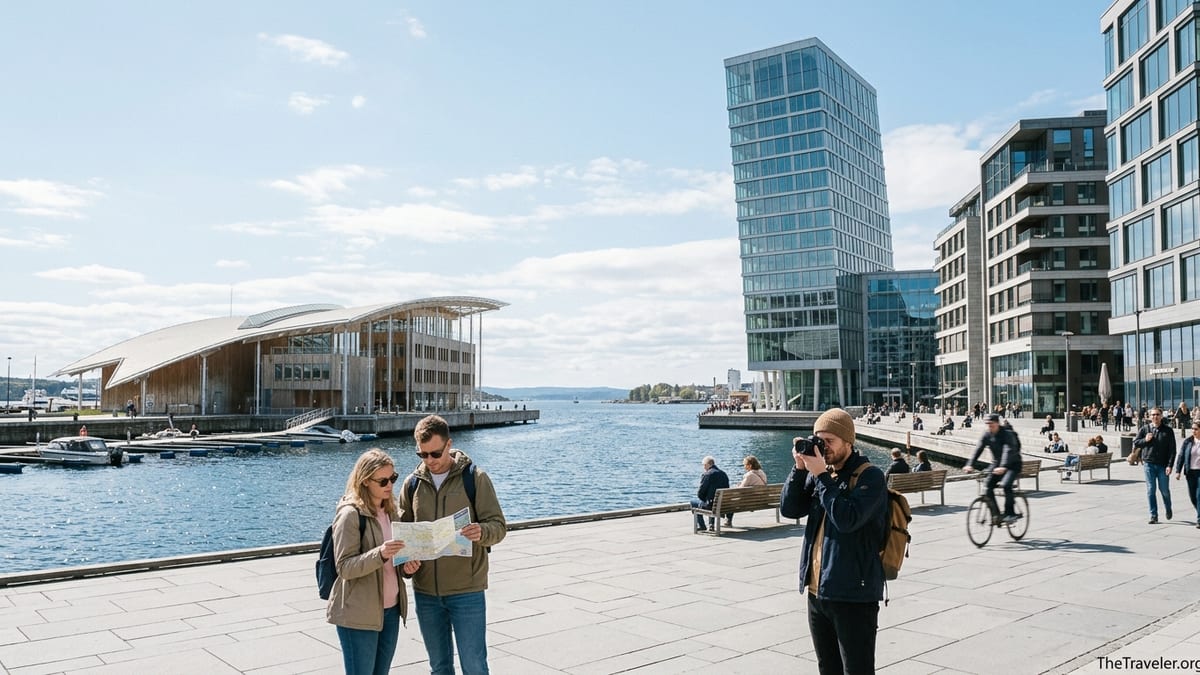
Astrup Fearnley Museum and MUNCH sit about a 25-minute walk apart but anchor very different parts of Oslo’s waterfront. Astrup Fearnley occupies prime real estate on Tjuvholmen, the peninsula at the far end of the fashionable Aker Brygge district. Designed by Renzo Piano, the museum’s glass and timber roofline curves toward the Oslo Fjord, with terraces that spill directly onto a tiny city beach and sculpture-dotted boardwalk. It feels like an art resort at the edge of the water, with sailboats moored just outside and high-end restaurants and design stores steps away.
MUNCH stands in Bjørvika, the redeveloped harbor area east of Oslo Central Station. The 13-story tower leans slightly toward the fjord and forms a trio of contemporary landmarks alongside the Oslo Opera House and Deichman main library. From the entrance plaza at Edvard Munchs plass you look back toward the central station and Barcode business district, with trams and buses dropping you almost at the door. If you are staying near the central station or arriving by train from the airport, MUNCH is the easiest of the two to reach, especially in winter weather.
Opening hours differ in a way that might shape your itinerary. MUNCH typically opens at 10:00 and stays open until 18:00 on Sunday to Tuesday, extending to around 21:00 from Wednesday to Saturday. That makes it a strong choice if you like evening museum visits and want to pair art with a late dinner. Astrup Fearnley operates on a more standard daytime schedule, generally from late morning to late afternoon or early evening depending on the day and season, and is often closed on Mondays. Schedules can shift for holidays and exhibition changeovers, so it is wise to double-check times close to your travel dates.
In practice, each museum comfortably fills half a day if you take time for a coffee, browse the shop and enjoy the surroundings. Budget roughly two to three hours inside at MUNCH if you want to see both the permanent Munch collection and at least one temporary show, and around two hours at Astrup Fearnley to wander the private collection and any current exhibition, then add time for a stroll along the water.
Tickets, Costs and Oslo Pass Value
Oslo is an expensive city by most standards, and museum tickets are no exception, though both institutions price themselves within a typical Scandinavian range. As of 2026, adult tickets at MUNCH are usually in the mid-200 NOK range, with discounts for students, seniors and children. Families can trim costs by using family tickets or visiting during occasional free or reduced-price evenings tied to city-wide cultural events. Importantly for budget-conscious travelers, the Oslo Pass often includes free entry to MUNCH, which can turn the museum into very good value if you are also riding public transport and visiting several attractions in a single day.
Astrup Fearnley also charges an adult entry fee typically a little below or around the level of MUNCH. Students and seniors enjoy reduced rates, and children under a certain age sometimes enter for free. Astrup Fearnley is not always included in the same discount schemes as the big municipal museums, so if you are relying on an Oslo Pass, check whether it covers entry or only offers a reduction. If it does not, you may end up spending almost the same on one ticket here as you would on a 24-hour pass that includes other attractions.
For travelers trying to stretch their budget, the area outside both museums offers free pleasures that can soften the cost. At Astrup Fearnley, you can walk the sculpture park and Tjuvholmen shoreline at no charge, photograph the Renzo Piano rooflines and even dip your toes in the small public beach in summer. Around MUNCH, you can wander the Opera House roof, watch paddleboarders and harbor ferries, or sit on the steps overlooking the fjord without spending anything. If funds are tight, a realistic strategy is to pay admission for the museum that aligns more closely with your interests and then treat the other neighborhood as a scenic walk.
One more budget consideration is how much you care about shops and cafes. Both museums have attractive cafes and design-forward stores, but MUNCH’s large gift shop with Munch-themed posters, scarves and books is more likely to tempt souvenir hunters. Prices reflect Norwegian design standards, so allowing a little room in your budget will keep that experience enjoyable rather than stressful.
What You Actually See: Collections and Exhibitions
The core artistic experiences at Astrup Fearnley and MUNCH could hardly be more different. MUNCH holds the world’s largest collection of works by Edvard Munch, including multiple versions of his most famous motifs. You are not guaranteed to see The Scream on every visit because only one version is displayed at a time in a protective cabinet that opens for limited periods each hour, but you can almost always see at least one iconic painting such as Madonna, The Sick Child or Vampire, alongside large canvases like The Sun or monumental mural studies. The permanent displays are arranged in themes that trace Munch’s fascination with love, anxiety, illness and nature over decades.
Alongside the Munch collection, MUNCH runs a busy program of temporary exhibitions that connect his legacy to contemporary and historical artists. Recent and upcoming shows include broad surveys of international painters, multimedia installations and the MUNCH Triennale, which looks at how digital culture and new media are shifting our sense of reality. This means that a visit in 2026 might combine classic expressionist works on one floor with experimental video, sound or gaming-inspired installations on another, giving the museum a dynamic atmosphere even for travelers who are not already Munch enthusiasts.
Astrup Fearnley, by contrast, is built around a private collection of international contemporary art assembled since the 1960s. Highlights often include eye-catching works by artists such as Jeff Koons, Damien Hirst and Anselm Kiefer, displayed in high-ceilinged galleries washed with natural light from the glass roof. The collection leans into bold, sometimes provocative pieces: shiny balloon-like sculptures, installations that explore the body and mortality, and large-scale paintings that reward slow looking. Many visitors arrive recognizing a name or two, then leave with new favorites they had never heard of before.
Temporary exhibitions at Astrup Fearnley typically spotlight a single artist or a focused theme, often in collaboration with international institutions. For example, a spring show might be dedicated to a conceptual artist whose installations fill the entire main hall, while summer could bring a photography exhibition that spills onto the terraces. The smaller scale compared with MUNCH means you can realistically see everything on offer in one visit without feeling rushed, which appeals to travelers who want a concentrated hit of cutting-edge art rather than a sprawling museum marathon.
Atmosphere and Architecture: How Each Visit Feels
If you care as much about the building and surroundings as the art itself, the choice between Astrup Fearnley and MUNCH is especially interesting. Astrup Fearnley’s trio of low, curved structures are all glass, wood, and brushed metal, with a sail-like roof that covers both the museum and its outside walkway. Inside, the galleries are airy and calm, with polished wood floors and views of the water appearing between walls. On sunny days, you can step directly from the exhibition spaces onto terraces overlooking the fjord, creating a fluid experience where contemporary art and seascape blur together.
Outside, Tjuvholmen feels almost Mediterranean on a warm day. Locals sit on the steps of the boardwalk with soft-serve ice cream from nearby kiosks, swimmers jump from the edge of the pier, and yachts glide past at close range. If your idea of the perfect museum day includes long pauses in the sun and a glass of wine by the water after your visit, Astrup Fearnley delivers that holiday feeling. It is at its most atmospheric in late spring and summer when Oslo’s evenings stay light and the outdoor sculptures catch the golden low-angle sun.
MUNCH offers a very different architectural drama. From the outside, the leaning tower clad in metal panels has become a controversial but undeniably distinctive part of Oslo’s skyline. Inside, tall atriums, escalators and picture windows create strong vertical movement. When you ride the elevator up to the top-floor bar or viewing area, you understand why many locals say the best thing about the building is the view: you get a sweeping panorama over the Opera House, fjord islands and the city’s hills. Even if you are not normally drawn to modern architecture, that vantage point can be worth the trip.
The interior galleries at MUNCH range from intimate rooms suitable for fragile works on paper to large halls capable of holding multi-story installations. Some spaces are deliberately kept dark to protect the art, while others are flooded with light from floor-to-ceiling windows. The atmosphere can shift markedly from quiet, almost hushed on weekday mornings to lively and busy on weekends, when families, tour groups and concertgoers share the building. Compared with Astrup Fearnley, MUNCH feels more like a cultural complex than a single museum, which may appeal if you enjoy that buzz of activity.
Who Will Love Which Museum? Matching Experiences to Traveler Types
For many visitors, the best choice comes down to personality and priorities. If you are the kind of traveler who wants to connect with the place you are visiting through its most famous figures, MUNCH is hard to skip. Edvard Munch is to Oslo what Gaudí is to Barcelona or Van Gogh is to Amsterdam: an artist whose story is deeply woven into the city’s identity. Seeing his works in the city where he lived, walked and painted adds a layer of meaning you simply do not get from reproductions. Even travelers who arrived only knowing The Scream often find themselves unexpectedly moved by works like The Sick Child or The Sun once they encounter them at scale.
If, on the other hand, you already visit a lot of large museums in other cities and you are craving something more intimate and contemporary, Astrup Fearnley may fit better. The combination of a manageable size, high-impact individual works and a resort-like waterfront setting makes it a favorite among travelers who describe themselves as “museum curious but easily overwhelmed.” It is also an excellent choice if you are traveling with someone who is not passionate about art but loves design, architecture or photography, because the building and surroundings supply plenty of visual interest even when the artworks are challenging.
Families with children might lean toward MUNCH, not only because of the name recognition but also thanks to its family-friendly programming. Specific floors often include interactive elements, drawing stations and playful installations, and the museum regularly organizes workshops and themed activities. That said, sensitive kids may find some of Munch’s darker themes unsettling, so parents often balance their visit with lighter exhibits, generous breaks and time in the bright top-floor spaces. Astrup Fearnley can also work with older children or teens who appreciate bold, sometimes quirky installations, but it is generally more suitable for those comfortable with conceptual and occasionally provocative contemporary art.
Solo travelers and couples on short city breaks might consider how each museum fits into a larger day. A morning at MUNCH pairs easily with lunch in Bjørvika and an afternoon walk on the Opera House roof or a ferry ride to the nearby islands. Astrup Fearnley pairs naturally with a stroll through Aker Brygge, a harbor-side dinner and, in summer, a sunset walk back along the waterfront promenade toward the city center. Thinking in terms of these complete day itineraries will often make your decision much clearer than focusing on the museums in isolation.
Time of Year, Weather and Crowd Considerations
Oslo’s seasons can change how each museum feels. In winter, when daylight is scarce and temperatures can sit below freezing, MUNCH’s central location near the station and tram lines is particularly convenient. You can step off a train from the airport, drop your luggage at a nearby hotel, and be inside the museum’s warm galleries within minutes. The dramatic interior lighting and views of the snowy city from the upper floors can be a highlight of a cold-weather trip.
Astrup Fearnley is at its most magical in good weather. On a clear May or June afternoon, the sunlight sparkles off the water, people sit on the wooden decks or stone jetties, and the museum’s glass facade glows. The short walk along the Aker Brygge promenade becomes part of the experience, with street musicians, food trucks and Oslo locals lounging by the water. On a rainy November day, by contrast, the exposed waterfront walk can feel long and windswept, and you may appreciate the fact that MUNCH is closer to public transport and more integrated into the city’s indoor cultural cluster.
Crowd levels can also influence your experience. MUNCH, thanks to its blockbuster name and large capacity, attracts tour groups and school visits. Mornings on weekdays often feel calmer, while weekend afternoons can be busy in the most famous rooms and around The Scream display. Pre-booking a timed ticket during peak seasons, if available, reduces waiting times and ensures entry during your preferred slot. Astrup Fearnley rarely feels as crowded, but special exhibitions or event days can draw more locals, especially in summer when the outdoor areas are popular. If you prefer quiet galleries, aiming for the first opening hour on a weekday is a safe bet for both museums.
Both institutions host evening events, talks and, in the case of MUNCH, increasingly popular concerts. These can be fantastic if you want a nightlife twist on your museum visit, but they may also mean certain galleries close earlier or remain busier. Checking the event calendar shortly before your visit lets you decide whether to join that extra layer of activity or choose a calmer time.
How to Choose If You Only Have Time or Budget for One
When travelers write after their trips saying they struggled to decide, their final choices often trace back to a couple of simple questions. The first is how much you care about seeing Edvard Munch’s work in Oslo. If standing in front of The Scream in the city where it was created feels important to you, that alone can justify prioritizing MUNCH, even if you are usually more drawn to contemporary art. Pair your visit with a walk through the nearby neighborhoods that inspired some of his motifs and you will leave with a deeper sense of Oslo’s artistic history.
The second question is how central the waterfront setting is to your enjoyment. If your heart lifts at the idea of modern architecture directly on the fjord, outdoor sculptures, and lingering in a cafe where you can watch boats glide by, Astrup Fearnley has the edge. Even travelers who arrive skeptical about contemporary art often end up rating this museum highly because the overall experience feels like a short coastal escape within the city.
Budget and logistics then provide a final filter. If you have an Oslo Pass that includes free entry to MUNCH and discounts at other attractions, choosing MUNCH might make the most financial sense, freeing up cash for a good dinner or a fjord ferry ride. If you are staying in a hotel near Aker Brygge or attending meetings in the nearby business district, Astrup Fearnley might be the museum you can realistically fit into a spare afternoon without a cross-city trek.
For travelers with two full days in Oslo and a strong interest in art, the best answer is often simply “both.” Start with MUNCH to anchor yourself in Norwegian art history and Munch’s emotional landscapes, then visit Astrup Fearnley the next day for a contrasting look at global contemporary art. Experiencing the two back to back highlights not only the diversity of Oslo’s cultural scene but also the way the city has reinvented its waterfront as a living gallery of architecture, sculpture and public life.
The Takeaway
Choosing between Astrup Fearnley Museum of Modern Art and MUNCH is less about which is objectively better and more about which matches your travel style. MUNCH offers depth, national identity and a full-scale encounter with one of the world’s most influential painters inside a major cultural complex. Astrup Fearnley delivers a focused dose of international contemporary art in a luminous, human-scaled building placed right at the edge of the fjord.
If you are a first-time visitor to Oslo and want a museum that feels quintessentially Norwegian, MUNCH is the stronger candidate. If you are returning to the city, already familiar with Munch, or simply drawn to cutting-edge art in an elegant waterside setting, Astrup Fearnley may surprise you in the best possible way. In either case, planning your visit with the neighborhood, time of day and season in mind will turn a good museum stop into one of the anchor experiences of your Oslo trip.
FAQ
Q1. If I only have one day in Oslo, should I choose Astrup Fearnley or MUNCH?
If you are visiting Oslo for the first time and want a museum that feels closely tied to Norwegian identity, MUNCH is usually the better single choice. You will see world-famous works by Edvard Munch, learn about his life in Oslo and enjoy panoramic views over the city. If your interests lean more toward international contemporary art and leisurely waterfront strolling, Astrup Fearnley is a strong alternative.
Q2. Can I see The Scream at MUNCH on any visit?
MUNCH owns several versions of The Scream but typically displays only one at a time in a special cabinet, which opens for limited periods each hour to protect the fragile work. While the museum generally ensures that at least one version or a related key work is on view, it never guarantees a specific painting for specific dates, so you should be prepared for the possibility that your visit will focus on other major pieces.
Q3. Which museum is better for families with children?
MUNCH is often more family-friendly, with dedicated spaces, interactive elements and frequent workshops that appeal to children. However, some of Munch’s themes, such as illness and anxiety, can be intense, so parents may want to balance the visit with lighter exhibits and generous breaks. Astrup Fearnley can be engaging for older children and teens interested in bold, unusual artworks and architecture, but it has fewer dedicated family activities.
Q4. Is either museum free with the Oslo Pass?
MUNCH is commonly included in the Oslo Pass, allowing pass holders free entry and making it very good value if you are also using the pass for public transport and other attractions. Astrup Fearnley’s participation can be more limited or change over time, so you should check how, or if, your pass applies to its tickets when planning your budget.
Q5. Which museum is easier to reach by public transport?
MUNCH is easier to access by public transport because it stands only a short walk from Oslo Central Station, several bus routes and tram lines in Bjørvika. Astrup Fearnley is also reachable by tram or bus followed by a 10 to 15-minute walk through Aker Brygge and along the waterfront, which is pleasant in good weather but less convenient in rain or snow.
Q6. How much time should I plan for each museum?
For MUNCH, most visitors should plan on at least two to three hours to see the main Munch collection, one temporary exhibition and the upper-floor views without feeling rushed. Astrup Fearnley is smaller and more focused, so around two hours is usually enough to explore both the permanent collection and any current show, leaving time for a stroll around Tjuvholmen.
Q7. Which museum has better views over Oslo and the fjord?
MUNCH offers the higher vantage point, with its upper floors and bar area providing sweeping views over the Opera House, city center and islands of the Oslo Fjord. Astrup Fearnley sits directly at water level, so while you do not get a bird’s-eye view, you are right beside the fjord, watching boats and swimmers at close range, which many visitors find equally memorable.
Q8. Are the museums suitable for visitors who are not serious art fans?
Yes. At MUNCH, even travelers who do not typically visit art museums often enjoy connecting the famous image of The Scream with its creator and exploring the dramatic architecture and views. At Astrup Fearnley, the combination of striking building design, spectacular waterfront setting and visually bold contemporary works can captivate visitors who mainly come for photography or architecture. Choosing the museum whose building and location appeal to you is often a smart strategy if you are unsure about the art itself.
Q9. Can I combine both museums in one day?
It is possible to visit both in a single day if you are efficient and comfortable with a full schedule. A realistic plan might be to start at MUNCH when it opens, spend around three hours there, have lunch nearby, then walk or take public transport to Aker Brygge and visit Astrup Fearnley in the afternoon. However, some travelers find that focusing on one museum and using the rest of the day to enjoy its surrounding neighborhood leads to a more relaxed experience.
Q10. Which museum is better if I want to take photographs?
Both museums and their neighborhoods are highly photogenic, though interior photography rules may vary by exhibition and should always be respected. MUNCH gives you dramatic interior shots of tall atriums, escalators and panoramic windows, plus skyline views from the upper floors. Astrup Fearnley offers elegant architectural lines by Renzo Piano, reflections on glass and water, outdoor sculptures and lively waterfront scenes. If your main interest is architectural and urban photography, MUNCH’s height and Bjørvika’s skyline are hard to beat, while Astrup Fearnley excels at intimate fjord-level scenes.