


Walk north from central Oslo, cross the Akerselva river, and the city’s polished business district quickly gives way to something looser and more lived-in. In Grünerløkka, morning flat whites, thrift-store finds, pop-up food trucks, and late-night vinyl bars all share the same few blocks. The former workers’ district has quietly become Oslo’s coolest neighborhood for food culture and street life, drawing chefs, baristas, artists, and travelers who want a taste of the city beyond the fjordfront postcards.
Get the latest updates straight to your inbox!
From Industrial Outskirts to Creative Hotspot
Grünerløkka’s reputation as Oslo’s buzziest neighborhood is relatively new when you consider its history. The area grew up in the 19th century as a working-class district built around factories and mills along the Akerselva river. Tenement blocks housed laborers who worked in textile mills and other industries that once made this the industrial engine of the city. Walking the river path today, you still see brick warehouses, iron bridges, and old factory buildings that hint at this past, even as they now host design studios, bars, and co-working spaces.
The turning point came in the late 20th century, when industry moved out and artists, students, and young families moved in. Rents were lower than in central Oslo, and the large, slightly worn apartments in late-19th-century buildings were ideal for people with more creativity than cash. Over the 1990s and early 2000s, the district’s image shifted from rough to alternative, as galleries opened in former workshops and small bars appeared on streets like Thorvald Meyers gate and Markveien. That slow-burn gentrification laid the groundwork for the food and street culture visitors now travel to experience.
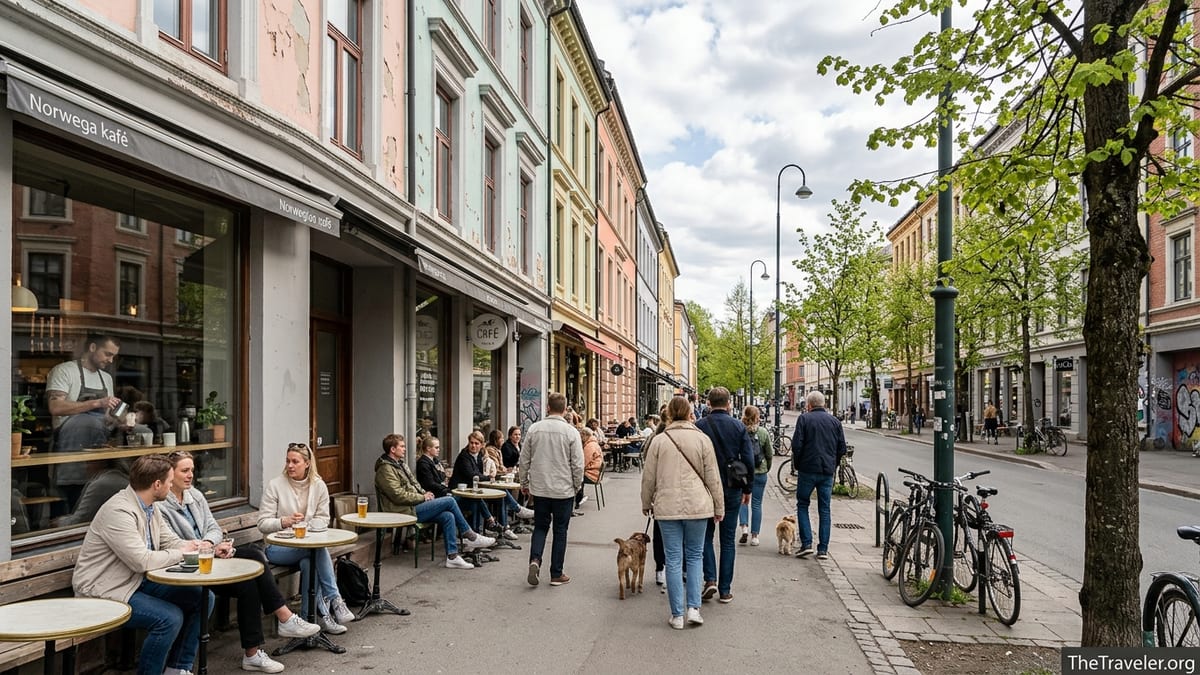
Today, the same streets that once funneled factory workers to the mills are where Oslo residents head for brunch, natural wine, and street food. The tram still rattles along Thorvald Meyers gate, but what you notice now are the overflowing café terraces, bicycles chained to lampposts, and crowds drifting between indie shops and food halls. The physical bones of an industrial neighborhood remain, but the energy has been completely rewired.
Crucially, Grünerløkka’s rise has not been driven by big chains or glossy malls. Much of its character comes from small, owner-run businesses that grew organically. That independent streak allows the neighborhood to feel lived-in rather than curated, even as it has undeniably become trendy and more expensive. Travelers sense that mix of grit and polish as soon as they leave the downtown grid and step into “Løkka,” as locals call it.
Coffee Culture That Put Løkka on the Map
Oslo as a whole has a serious specialty coffee scene, but Grünerløkka is where many visitors first taste just how far the city has taken its love of light-roast beans. On a weekday morning, Thorvald Meyers gate and the side streets around Olaf Ryes plass hum with people grabbing cappuccinos to go, parents pushing strollers into cozy corner cafés, and laptop workers staking out window seats.
One of the best-known names here is Tim Wendelboe, the World Barista Champion whose compact espresso bar and roastery near the river helped define Nordic coffee style for an international audience. Inside, the menu is short and serious: hand-brewed filter coffee, precise espressos, and maybe a cinnamon bun or two. Prices reflect Oslo’s cost of living, with a basic black coffee often around the equivalent of 40–50 kroner, but travelers regularly describe it as a must-try stop for anyone curious about third-wave coffee.
Not far away, Supreme Roastworks shows a slightly looser side of the same obsession. With bags of beans stacked near the counter and locals perched on high stools, it doubles as a community hangout and a roastery. On a cold afternoon, you might see office workers in beanies lingering over flat whites while someone tunes a guitar before an intimate evening performance. Along Markveien and the surrounding streets, smaller spots like Trekanten or neighborhood bakeries with in-house espresso machines make it easy to stumble into a good cup without hunting online for reviews.
What makes Grünerløkka’s coffee culture special is less about one superstar café and more about density and variety. Within a ten-minute walk you move from minimalist specialty bars to more relaxed “brown cafés” with vintage furniture and mismatched cups. A traveler staying nearby can comfortably rotate between espresso bars in the morning, a quieter corner café for afternoon reading, and then an all-day spot that morphs into a wine bar at night. Coffee is not just a drink here but part of the daily choreography of the streets.
Street Food, Food Halls, and Flavors From Everywhere
If coffee first put Grünerløkka on the global map, food has cemented its status as Oslo’s coolest neighborhood. The district’s dining scene is fueled by a mix of immigrant-run kitchens, experimental pop-ups, and casual bistros that keep things playful rather than formal. Many visitors start at Vulkan, a redeveloped industrial area by the river, where the Mathallen food hall gathers dozens of vendors under one roof. Here you might snack on Norwegian cheeses and cured meats at one counter, then move to another for tacos, ramen, or local craft beer, all in the same converted warehouse.
Beyond Mathallen, the streets are dotted with globally inspired spots that feel distinctly local. Indian street food at places like Theka brings bright flavors and neon colors to previously quiet corners, serving chaat and sharing plates alongside cocktails that draw a young after-work crowd. A short stroll away, a Korean fried chicken stand at Vulkan has become a cult favorite for crispy wings that are ideal with a local IPA. Vietnamese, Middle Eastern, and Ethiopian restaurants sit comfortably alongside Nordic bakeries, reflecting the neighborhood’s diverse population.
Price-wise, travelers should expect Oslo levels rather than backpacker bargains, but there are ways to eat relatively affordably. A hearty toastie or grilled cheese from a toast bar, a bowl of noodles at a small canteen-style place, or a midday plate from a vendor inside Mathallen often costs less than a formal restaurant main course in the city center. During summer, food trucks occasionally set up near parks and riverside lawns, turning casual meals into outdoor picnics with a view of the old brick chimneys.
For many locals, the appeal of Grünerløkka’s food culture lies in how easy it is to graze. You might start with a coffee and pastry, wander through a food hall for a small snack and a beer, share a few plates at a street-food style bar in the evening, and then finish with ice cream from a gelato counter on the way home. The neighborhood encourages this relaxed, multi-stop way of eating, which feels particularly inviting for visitors who want to sample a lot in a short stay.
Bars, Vinyl, and Late-Night Løkka
When the sun dips, Grünerløkka’s streets stay busy as residents shift from coffee to cocktails and craft beer. The neighborhood’s nightlife is more about atmosphere than big clubs. Think small bars with candlelit tables, natural wine spots that open for long lunches and stay lively late, and music venues where you might catch a local band or a DJ spinning until closing time.
Craft beer fans gravitate toward places like Grünerløkka Brygghus, a brewpub where homegrown beers are poured for a mixed crowd of students, tech workers, and off-duty chefs. On a Friday evening, groups huddle at wooden tables inside while the outdoor benches fill up quickly in mild weather. Taste flights give newcomers a way to sample several styles without committing to a full pint of each, useful given Norwegian beer prices. Smaller, more intimate cellars in nearby buildings serve sours, stouts, and guest taps from other Nordic breweries.
The area also has a strong culture of hybrid spaces that blur the line between café and bar. Former industrial buildings house venues where you can work on your laptop during the afternoon, listen to jazz or experimental music at night, and order everything from espresso to natural wine at the same counter. Some, like listening bars and vinyl-focused hangouts, emphasize sound quality and deep record collections. Here, ordering a drink might feel secondary to choosing whether you want to sit near the speakers or sink into a corner sofa.
For travelers, the manageable scale of Grünerløkka makes bar-hopping easy. You can move from a riverside biergarten to a cocktail bar on Thorvald Meyers gate and then to a late-night pizza slice within a ten or fifteen-minute walk. Solo visitors often mention feeling comfortable nursing a glass of wine at the bar, with staff accustomed to chatting in English and answering questions about local beers or neighborhood events. Compared with downtown’s more corporate-feeling venues, Løkka at night feels informal, social, and very local.
Street Life: Parks, River Paths, and Outdoor Living
Part of what sets Grünerløkka apart from newer waterfront developments is how much of daily life spills into parks, squares, and the riverbanks. Olaf Ryes plass, the main square, acts as a living room for the neighborhood. On a sunny afternoon, the lawns are dotted with picnic blankets, families chase children around the fountain, and students lean against tree trunks with takeaway coffees. Food and drink from surrounding cafés inevitably migrate onto the grass, especially in summer, when daylight stretches late into the evening.
Just west, the Akerselva river becomes a natural corridor where joggers, dog walkers, and couples stroll past old mills now filled with restaurants and studios. Wooden benches look out over waterfalls and brick facades, providing some of the most atmospheric urban picnic spots in Oslo. Travelers often grab sandwiches or pastries and escape to the river path for a budget-friendly meal, watching locals grill on disposable barbecues in designated areas or plunge into the water during heatwaves.
The neighborhood’s many small parks and courtyards encourage a relaxed, outdoor style of socializing. In summer, pop-up beer gardens and seasonal outdoor bars appear, filling reclaimed lots with long tables, string lights, and potted plants. Locals might meet at a place like a biergarten on the edge of Løkka before heading downhill toward other districts, while travelers find that these open-air spots offer easy conversation with Oslo residents keen to recommend their favorite bar or swimming pier.
Even in colder months, Grünerløkka’s street life does not vanish entirely. Café terraces sprout awnings and outdoor heaters, with blankets draped over chairs so people can still sit outside nursing hot chocolate or mulled wine. The habit of being outdoors feels baked into the neighborhood’s identity. For visitors, that means there is nearly always somewhere to linger and people-watch, no matter the season.
Vintage Shops, Street Art, and Everyday Creativity
What happens between meals in Grünerløkka is as important as the food itself. The district’s side streets are thick with second-hand and vintage shops, independent design boutiques, and small galleries. Stores selling 1970s jackets, vinyl records, or mid-century lamps rub shoulders with concept shops showcasing Norwegian ceramics and minimalist clothing brands. Travelers who enjoy browsing more than buying can easily lose an afternoon dipping in and out of these spaces, punctuating their explorations with coffee breaks.
Street art adds another layer to the area’s appeal. Large-scale murals brighten the sides of brick buildings, underpasses, and the edges of parking lots, while smaller stencils and paste-ups appear on doors and utility boxes. Unlike the sleek glass towers closer to the harbor, Løkka’s older building stock provides textured canvases that change regularly as new works appear. A simple walk up Thorvald Meyers gate and along adjacent side streets often turns into an informal art tour, with travelers pausing to photograph a new piece or compare it to images they have seen in guidebooks.
This visible creativity spills over into the way businesses present themselves. A bakery might design its own playful packaging, a bar may commission local artists for murals and menu illustrations, and some fashion boutiques double as exhibition spaces for painters and photographers. Seasonal markets in small squares and indoor venues give local makers the chance to sell handmade jewelry, natural skincare products, or limited-run prints, making it easy for visitors to take home something genuinely local rather than a generic souvenir.
All of this contributes to a feeling that Grünerløkka is a neighborhood where experimentation is encouraged. New concepts pop up regularly: a café focusing on non-alcoholic cocktails, a tiny ramen bar with only a handful of seats, or a gallery that doubles as a supper club. While not every project survives long term, the constant churn keeps the streets feeling fresh and gives repeat visitors something new to discover each time they return.
How to Experience Grünerløkka Like a Local
For travelers, Grünerløkka is not a single attraction but an atmosphere best absorbed slowly. One of the easiest ways to get oriented is to take the tram from central Oslo and hop off near Thorvald Meyers gate, then simply walk north. Begin the morning with coffee from a specialty café, then wander along Markveien to browse vintage shops and design stores. Many open late by international standards, so arriving mid-morning rather than at 9 a.m. avoids closed doors.
Around lunchtime, head toward Vulkan and the river. At Mathallen or one of the smaller restaurants nearby, assemble a casual meal from several vendors: perhaps a small plate of Norwegian cured meats, a bowl of noodles, then a local beer or non-alcoholic craft soda. After eating, stroll along the Akerselva, crossing from bank to bank via old footbridges and pausing at waterfalls or quiet benches beneath the trees. This short loop gives a tangible sense of how the area has transformed from industrial corridor to creative playground.
In the afternoon, claim a patch of grass at Olaf Ryes plass or another small park with a takeaway pastry and coffee. People-watching here reveals the mix of residents that give Løkka its character: families with kids, students on bicycles, office workers cutting across the square. If the weather turns, duck into a cozy café with couches and bring a book instead. Many places are used to solo guests staying for a while, especially between the lunch and after-work rushes.
As evening approaches, consider a casual bar crawl. Start with a beer at a local brewpub, then move on to a bar known for natural wine or craft cocktails. Finish with a late-night snack from a street-food stall or a pizza slice counter. Travelers on a budget can moderate costs by focusing on earlier hours, when some venues offer slightly lower prices, or by alternating alcoholic drinks with alcohol-free options that are common in Oslo. The key is not to chase a checklist of “must-sees” but to let the neighborhood’s rhythm guide you.
The Takeaway
Grünerløkka’s rise as Oslo’s coolest neighborhood for food culture and street life is no accident. It is the product of history, geography, and a steady influx of creative residents who turned an aging industrial district into a laboratory for cafés, kitchens, and cultural experiments. The old brick mills and tenement blocks along the Akerselva now shelter some of the city’s most interesting coffee bars, food halls, wine spots, and indie shops, while parks and squares ensure that much of the action unfolds outdoors.
For visitors, the appeal lies in how approachable it all feels. You do not need reservations at Michelin-starred restaurants or a deep knowledge of Norwegian cuisine to enjoy Løkka. A day spent wandering between bakeries, food stalls, riverside benches, and candlelit bars is enough to understand why so many locals choose to live and linger here. In a compact area, Grünerløkka offers a concentrated taste of contemporary Oslo: international yet grounded, stylish yet unpretentious, and always humming with everyday life.
FAQ
Q1. How do I get to Grünerløkka from central Oslo?
Take the tram from the city center toward routes that pass Thorvald Meyers gate or Olaf Ryes plass; the ride typically takes around 10 to 15 minutes.
Q2. Is Grünerløkka safe to walk around at night?
Grünerløkka is generally considered safe, and many locals walk between bars and cafés late into the evening, though normal big-city awareness is still sensible.
Q3. What is the best time of day to experience the neighborhood?
Late morning to early evening shows Løkka at its liveliest, with cafés busy, shops open, and parks full, but summer nights can also be particularly atmospheric.
Q4. Are there budget-friendly food options in Grünerløkka?
Yes, while Oslo is expensive, you can save by eating at food hall counters, grabbing street food, sharing plates, or choosing bakeries and toast bars for lighter meals.
Q5. Do I need reservations for restaurants in Grünerløkka?
Popular places can fill up on weekends, but many venues keep bar seating or outdoor tables for walk-ins, especially if you arrive early in the evening.
Q6. Is Grünerløkka suitable for families with children?
Yes, the area’s parks, riverside paths, and relaxed cafés make it family-friendly, and many places offer high chairs, stroller space, and kid-appropriate dishes.
Q7. What should I wear for a day in Grünerløkka?
Comfortable shoes and layered clothing work best, as you will likely walk between cafés, parks, and the river, and Oslo’s weather can change quickly.
Q8. Can I pay with cash in cafés and bars?
Cards and mobile payments are the norm, and some places are effectively cashless, so having a contactless card or payment app is the most practical option.
Q9. Are there vegetarian and vegan options in the neighborhood?
Most modern cafés and restaurants offer vegetarian dishes, and many have vegan options, particularly in food halls and street-food style venues.
Q10. How much time should I plan to explore Grünerløkka?
You can get a feel for the area in half a day, but a full day or two evenings allow you to experience both the daytime café culture and the nighttime bar scene.