


More news on this day
Virgin Australia faces mounting industrial pressure from airport and customer service staff represented by the Australian Services Union, which is demanding higher pay and better conditions in current enterprise bargaining talks and warning that the airline could avert looming industrial action by making an improved offer.
Get the latest news straight to your inbox!
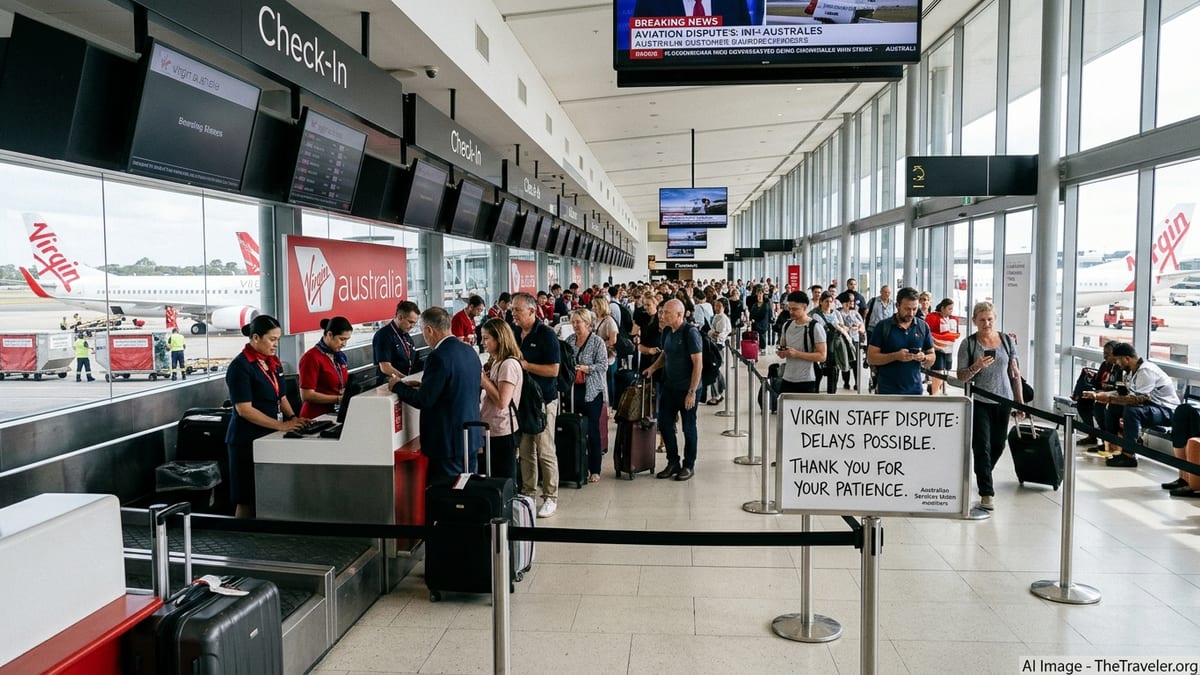
What the current dispute is about
The Australian Services Union is in enterprise bargaining negotiations with Virgin Australia on behalf of airport-based customer service and ground operations staff, including check-in teams, guest services staff and some back-office roles that directly support airport operations. At issue are pay rises that the union argues fall short of cost-of-living increases, rostering and classification arrangements, and protections around outsourcing and job security. The ASU has publicly framed the dispute as a fight to secure “fair pay and conditions” for some of the airline’s lower-paid workers, pointing to years of wage restraint through administration, pandemic impacts and the carrier’s subsequent return to profitability.
While the detailed clauses under discussion are confidential to the bargaining table and formal filings, material published by the union indicates that members are seeking pay increases that at least keep pace with inflation, more predictable rosters and stronger safeguards on the use of contractors in airport roles. Virgin Australia has acknowledged in previous public statements that it is engaged in “constructive discussions” with unions over new agreements, but it has not publicly released a full breakdown of its current offer for these staff. As a result, many of the dollar figures cited in union bulletins remain claims or bargaining positions rather than independently verified facts.
The ASU has argued that airport workers covered by the negotiations helped rebuild the airline’s schedule and customer base after voluntary administration and border closures, yet have not, in its view, shared fairly in the financial recovery. For travelers, the outcome of this bargaining round matters because it covers frontline staff who handle check-in, boarding, disruptions and customer issues at airports across Virgin’s domestic network.
From ballot to potential industrial action
In October 2026, the Fair Work Commission granted Virgin Australia airport staff, ground workers and customer service operators represented by the ASU the right to hold a protected action ballot. The ballot is a formal step in Australia’s industrial relations system that allows union members to vote on whether to authorise industrial action such as limited-duration work stoppages, overtime bans or, in some scenarios, full strike action. The Commission’s approval does not itself trigger a strike but creates a legal pathway if workers decide to escalate the dispute.
According to coverage at the time, the ASU said its Virgin members would lodge their votes shortly after the Commission’s decision, with the ballot outcome determining what forms of protected action, if any, they could lawfully take. The union has since used public messaging to increase pressure on the airline, emphasising that Virgin management could prevent disruption by improving its pay and conditions offer. While the exact wording varies across statements, the underlying message is that the airline has the ability to resolve the dispute at the bargaining table before any airport action occurs.
At the time of writing, there is no publicly available evidence that full-scale, indefinite strike action by these Virgin Australia airport workers has actually commenced. Instead, the situation remains fluid. The parties are still formally in bargaining, and any industrial action would need to be notified in advance and comply with Fair Work Commission requirements, including limits on duration and the types of work bans that can be used. Travelers considering Virgin flights should therefore treat talk of strikes as a live possibility rather than a confirmed schedule of stoppages.
How we got here: years of tension over Virgin pay and conditions
The current dispute sits on top of a longer-running pattern of contested pay outcomes and industrial friction between Virgin Australia and its unions. The Australian Services Union and associated state branches have previously taken matters involving Virgin airport staff to the Fair Work Commission, including disputes over backpay and the interpretation of enterprise agreement clauses. In 2024, a Commission recommendation in an ASU case clarified how certain salary components should be treated for backpay purposes under an existing Virgin agreement, illustrating how technical wording can have material impacts on workers’ earnings.
Earlier union bulletins and media reports, dating back to the post-pandemic recovery in 2022 and 2023, describe Virgin offering modest base pay increases to airport and call centre workers at a time of elevated inflation. The ASU criticised some of these offers as amounting to “effective wage cuts” in real terms once higher living costs were taken into account. Virgin, for its part, has previously highlighted one-off payments and award-related increases, and has argued that its proposals need to be balanced against the airline’s broader financial position and competitive pressures in the domestic market.
Industrial issues at Virgin have not been confined to ASU-represented staff. Ground operations employees represented by the Transport Workers Union have also been through bargaining over pay and conditions, culminating in a Virgin Australia & TWU Pit Crew Enterprise Agreement registered in early 2024. Virgin’s narrow-body pilots have been engaged in a separate enterprise agreement process with their unions, which has required Fair Work Commission involvement at various points. Taken together, these negotiations underscore how multiple workgroups that underpin Virgin’s flight schedule have been pressing for improved terms as the airline rebuilds capacity and prepares for an eventual relisting on the share market.
What disruption could look like for travelers
At this stage, it is not possible to say with certainty whether or when Virgin Australia airport staff will undertake industrial action, or what form it might take. Under Australian law, any protected industrial action that proceeds must be notified in advance and typically occurs in limited blocks, such as short work stoppages or bans on particular duties. In previous aviation disputes involving other employers, such actions have caused delays, reduced baggage handling capacity or prompted schedule adjustments, but they have rarely resulted in complete shutdowns of all flights for extended periods.
Virgin Australia’s own planning documents, released in other industrial cases involving different unions, indicate that the airline conducts contingency planning for industrial action by key workgroups. Possible measures can include reassigning management staff to front-line roles, consolidating flights, reprotecting passengers onto alternative services, or restricting baggage throughput to keep aircraft moving. However, the effectiveness of such measures depends on the scope, duration and timing of any action, as well as the availability of trained staff and contractors at each airport.
Travelers booked on Virgin flights during any notified industrial action window could face longer check-in and bag-drop queues, slower boarding, or delays in resolving disrupted or misconnected itineraries. International journeys that start or end on Virgin domestic sectors may be particularly sensitive to knock-on effects if bags or passengers are misaligned. That said, consumer protection rules and Virgin’s own conditions of carriage will continue to apply, so rebooking options or credits are likely to be available in the event of significant schedule changes caused by lawful strikes or work bans.
Broader industrial backdrop at Australian airports
The Virgin airport pay dispute is playing out against a wider backdrop of industrial activity in Australia’s aviation sector. In recent years there have been high-profile conflicts at other carriers and service providers, including litigation over Qantas’s outsourcing of ground handling, stoppages by refuellers and ground staff employed by contractors, and threatened strikes by airport firefighters. Each of these disputes has raised questions about how cost pressures, outsourcing strategies and post-pandemic rebuilding interact with worker expectations for secure, well-paid jobs.
Virgin’s operations depend not only on directly employed staff but also on a complex web of third-party suppliers providing catering, refuelling, airport security and some specialist ground handling functions. Several of those suppliers have been involved in their own enterprise bargaining rounds, sometimes resulting in industrial action that indirectly affects airlines they service. For passengers, the practical effect is that airport disruptions do not always originate with the airline selling the ticket, but can still significantly impact check-in times, baggage handling and on-time performance.
Regulators and airport operators have highlighted labour stability as a key risk factor for the reliability of Australia’s aviation network. Prospectuses and financial disclosures from airlines and airports frequently warn that industrial disputes, whether at airlines themselves or among suppliers, could lead to schedule disruptions, increased costs or reputational damage. This risk backdrop is one reason why unions are emphasising that early resolution of the Virgin dispute through improved offers could avoid broader knock-on effects during peak travel periods.
What travelers should monitor next
The immediate next steps in the Virgin airport pay dispute are largely procedural but crucial for assessing disruption risk. First, the outcome of the protected action ballot, if it has not already been finalised and publicised, will determine whether ASU-represented staff at Virgin have an active mandate to undertake industrial action. Second, the union and the airline are expected to continue bargaining, potentially with the assistance of the Fair Work Commission if either side seeks conciliation or recommendations to break any deadlock.
For travelers, the most practical approach is to monitor official communications from Virgin Australia and any travel alerts issued by airports or government agencies. If protected industrial action is formally notified, Virgin is likely to specify the dates, times and nature of the impact, for example identifying particular airports, time windows or workgroups affected. Passengers booked to travel in those windows should check their booking status frequently in the days leading up to departure and consider allowing extra time at the airport.
Until any specific industrial action is confirmed and scheduled, flights on Virgin Australia continue to operate as timetabled. The situation remains subject to change, particularly if either party decides that public pressure points, such as holiday peaks, warrant a firmer stance. Travelers booking new trips may wish to familiarise themselves with Virgin’s fare rules, change policies and any travel insurance provisions that apply to delays or cancellations related to industrial disputes, so that they can respond quickly if the negotiations break down or, conversely, if a last-minute agreement averts strike action.