


More news on this day
A senior Atlanta fire captain has provided new details on a pre-dawn collision between a freight train and a semi-truck in southwest Atlanta, describing a rapid firefighting operation that unfolded beneath an elevated MARTA line and left investigators searching for the truck’s driver.
Get the latest news straight to your inbox!
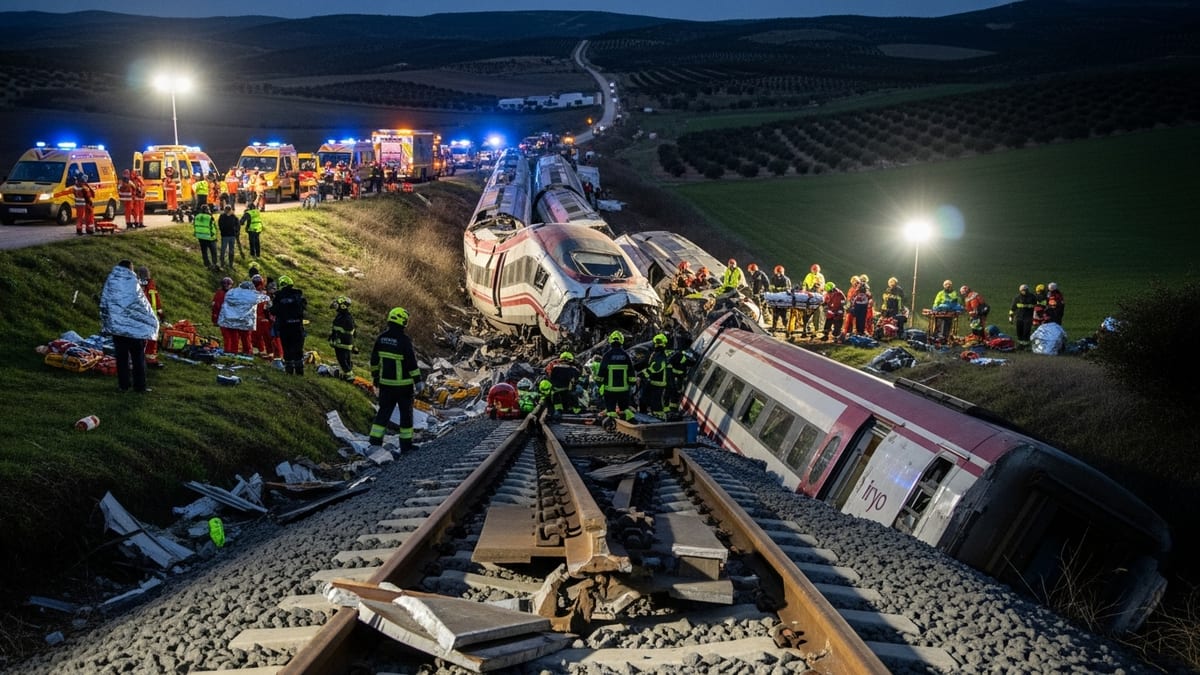
Fiery collision under MARTA tracks jolts southwest Atlanta
According to local broadcast coverage and city incident reports, the crash occurred around 3:40 a.m. on Friday near the intersection of Lee Street and Sylvan Road on Atlanta’s southwest side. A freight train traveling through the corridor struck a tractor-trailer that was positioned on or near the tracks, triggering a fire that quickly engulfed the truck’s cab and trailer.
Images from the scene show the mangled semi wedged along the rail line directly beneath an elevated section of MARTA track between the West End and Oakland City stations. Flames burned close to concrete columns and overhead infrastructure before firefighters brought the blaze under control.
Rail traffic through the area stopped as emergency crews arrived, and nearby streets were cordoned off as hoses, ladder trucks, and additional support units lined the roadway. Publicly available information indicates that the freight consist remained upright, with damage concentrated on the truck and debris scattered along the right of way.
Early reports from transportation agencies indicate that the collision involved a CSX freight train moving through a busy rail corridor that also carries MARTA’s Red and Gold lines. Passenger trains were halted for part of the morning while safety checks were completed on the elevated guideway.
Fire captain details aggressive attack and search challenges
In televised remarks following the incident, an Atlanta fire captain described how arriving crews found the semi-truck fully involved, with heavy fire consuming both the cab and trailer and threatening nearby structures. Firefighters initiated what was characterized as an aggressive attack, deploying multiple hose lines to knock down the flames and prevent extension to the rail infrastructure above.
The captain’s update indicated that the heat and limited access under the elevated tracks complicated the operation. Crews had to work around rail equipment, concrete columns, and lingering smoke while ensuring the freight cars remained stable and posed no additional hazard to responders.
Publicly shared comments from the captain also underscored the difficulty of accounting for the truck driver. Initial sweeps of the immediate crash area and the burned-out cab did not locate a driver, and available information suggests that no one matching that description was transported from the scene during the early stages of the response.
As the fire was brought under control, teams shifted focus from suppression to methodical searches of the wreckage and surrounding right of way. The captain’s description of operations emphasized the need to balance rapid search efforts with structural safety concerns under the elevated rail structure.
Passenger disruptions and freight movements affected
The collision and resulting fire rippled quickly through Atlanta’s transportation network. According to published coverage from local outlets, MARTA rail service between West End and Oakland City stations was temporarily suspended while inspectors evaluated both the tracks and the concrete supports that run directly over the crash site.
Shuttle buses were deployed to move commuters around the affected span, and riders encountered delays through the early morning rush. Social media updates from transit-watch accounts and regional newsrooms noted that the disruption added pressure to already busy southside roadways as drivers diverted from the rail corridor.
Freight operations were also impacted. Reports indicate that the train involved in the collision remained stopped at the scene for several hours while crews assessed damage and awaited the arrival of railroad investigators. Subsequent freight movements through the corridor appeared to be routed at reduced speeds or held outside the city until the scene was declared safe.
Nearby businesses and industrial facilities that depend on both rail and truck deliveries experienced short-term access issues as police blocked intersections and emergency vehicles occupied traffic lanes. Morning deliveries were postponed while tow and cleanup crews worked to clear debris from the crossing area.
Questions remain over driver’s whereabouts and cause
Even as fire crews wrapped up their on-scene work, uncertainty over the truck driver’s fate remained a central question. Coverage from regional transportation and trucking news outlets notes that, as of Friday afternoon, the driver had not been publicly accounted for, prompting concern within the freight community.
Search efforts extended beyond the immediate wreckage, with responders and investigators checking nearby lots, adjacent streets, and accessible stretches of the rail corridor. Publicly available information indicates that no injuries among train crew members or firefighters were reported in the initial aftermath.
The cause of the collision has not yet been detailed in official investigative summaries. Early reporting does not clarify whether the truck became stuck on the tracks, attempted to cross during an oncoming train movement, or was otherwise immobilized at the crossing. Factors such as visibility at the intersection, signaling equipment, and the timing of crossing gates are expected to form part of the review by rail and roadway investigators.
Local coverage has also highlighted wider concerns about the vulnerability of at-grade crossings where heavy truck traffic intersects with busy freight and passenger rail corridors, particularly in dense urban neighborhoods on Atlanta’s south and west sides.
Safety focus on urban rail crossings and truck routes
The Atlanta collision adds to a series of high-profile train and truck incidents nationally that have ignited debate over safety at rail crossings. Transportation specialists frequently point to complex urban intersections, where freight lines, commuter rail, and high volumes of commercial trucks converge, as among the most challenging locations to secure.
Advocates for rail and roadway safety often push for grade separation, more robust warning systems, and clearer truck routing to keep heavy vehicles away from the most constrained crossings. In the southwest Atlanta corridor, community organizations and planners have periodically raised questions about how freight, transit, and neighborhood traffic interact in and around the narrow rail underpasses and overpasses that crisscross the area.
Published commentary following the crash suggests that the latest incident could renew pressure for infrastructure upgrades around the Lee Street and Sylvan Road junction, including improved signage, restrictions on certain truck movements, or longer term engineering solutions.
For travelers, commuters, and freight operators moving through Atlanta, the fire captain’s update underscores how quickly a single misstep at a rail crossing can cascade into a citywide transportation disruption. As investigators sift through debris and data from the freight consist, attention is likely to remain fixed on whether future changes to routing, warning systems, or crossing design can reduce the risk of another pre-dawn emergency of this kind.