


More news on this day
A rare combination of a major solar eclipse, peak meteor activity and heightened auroral forecasts is turning 2026 into one of the most anticipated years for skywatchers, driving a surge of interest in travel to some of the darkest and most remote corners of the United States.
Get the latest news straight to your inbox!
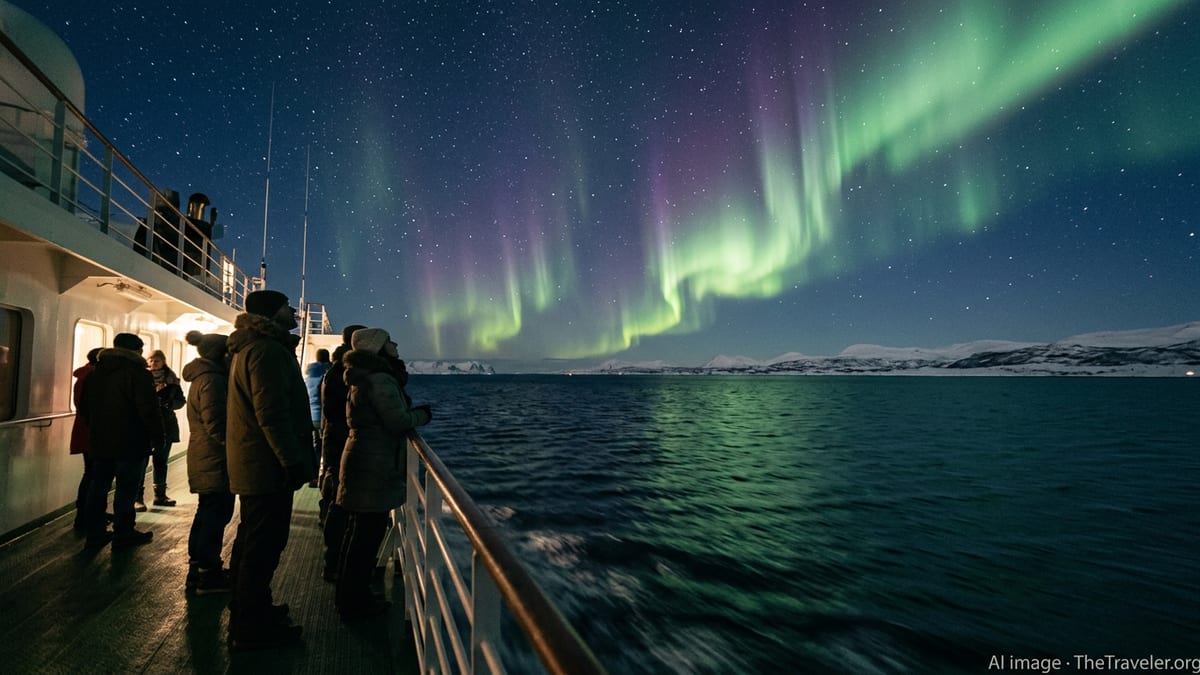
Astronomy’s Big Year: Eclipses, Meteors and Aurora Potential
Publicly available forecasts from agencies and observatories describe 2026 as an unusually packed year for sky events, with overlapping eclipses, strong meteor showers and the continued peak of the current solar cycle all favoring North American observers. NASA and other science outlets highlight a busy celestial calendar that includes a total solar eclipse on August 12, multiple lunar eclipses and several high-profile meteor showers, notably the Perseids in August and the Geminids in December.
The August window is drawing the most attention. Astronomical calendars show that the August 12 total solar eclipse over the North Atlantic and parts of Europe and Greenland will be followed within hours by the peak of the Perseid meteor shower, which is expected to unfold under dark skies thanks to a new Moon. While the path of totality misses the continental United States, much of northern North America, including parts of Alaska and northern states, is expected to see a substantial partial eclipse combined with elevated meteor rates later that night.
At the same time, space weather monitoring centers report that the Sun remains near the peak of Solar Cycle 25, raising the odds of geomagnetic storms that can trigger vivid auroras. Scientific summaries from U.S. and international agencies note that recent years have already produced unusually strong storms with auroras visible deep into the lower 48 states, and models indicate that elevated activity is likely to persist through 2026. That combination of eclipse dimming, meteors and potential northern lights is helping to frame this period as a rare skywatching opportunity.
U.S. Hotspots: From Alaska to the High Plains
Although the August 12 totality track arcs across the North Atlantic, Greenland, Iceland and parts of Spain and Russia, visibility maps and eclipse tables indicate that a wide swath of northern North America, including Alaska and parts of northern Canada, will experience a deep partial solar eclipse. U.S. travelers looking to stay within national borders are increasingly eyeing Alaska as a prime vantage point, with local tourism boards promoting the combination of a substantial partial eclipse, long twilight views and potential aurora activity later in the season.
Within the contiguous United States, the eclipse itself will be more modest, but meteor and aurora prospects are driving interest in well known dark-sky regions. Travel and astronomy guides point to the high deserts of the Southwest, the Colorado Plateau and the Northern Plains as standout locations for the Perseid meteor shower, thanks to their typically clear August skies, low humidity and vast horizons. National parks and designated dark-sky preserves in Utah, Arizona, New Mexico, Colorado, Wyoming and Montana are prominently featured in 2026 skywatching recommendations.
Farther east, rural areas of the Upper Midwest and northern New England are being highlighted for their balance of accessibility and darkness. Reports on recent auroral storms describe vibrant displays seen as far south as states like Wisconsin, Michigan, Minnesota and upstate New York, strengthening the perception that these regions could again offer strong chances of seeing the northern lights if geomagnetic conditions cooperate in 2026. Combined with the August meteor peak, that possibility is drawing renewed attention from travelers within driving distance of major U.S. cities.
Perseid Meteor Shower Takes Center Stage
For many American stargazers, the headline event will be the Perseid meteor shower, expected to peak on the night of August 12 into the early hours of August 13. Astronomical references describe the 2026 Perseids as especially favorable because the Moon will be new, eliminating lunar glare that often washes out fainter meteors. Under dark, clear skies, observers in the United States are being advised to anticipate dozens of visible meteors per hour, with higher rates possible in rural locations far from artificial light.
The Perseids originate from debris shed by Comet Swift Tuttle, which Earth encounters every August along its orbit. Guides from observatories and astronomy organizations emphasize that the 2026 shower will be active for several weeks on either side of the peak, but that the hours after midnight on the peak night typically offer the best combination of meteor rates and sky darkness. Because the radiant is high in the northern sky, the best viewing is generally in the Northern Hemisphere, favoring much of the United States.
Tourism and stargazing groups are encouraging travelers to treat the event as a multi night experience rather than a single evening spectacle. Recommendations highlight remote campgrounds, high elevation pullouts and coastal viewpoints where wide, unobstructed skies improve the chances of spotting long, bright meteor trails. Some dark-sky parks have already indicated plans to host educational programming, subject to weather and capacity, further signaling how central the Perseids have become to 2026 travel planning.
Aurora Watching Moves South as Solar Cycle Peaks
Potential aurora activity is another major factor behind the growing interest in 2026 sky travel. Reports from the U.S. Geological Survey and space weather centers document several recent geomagnetic storms that produced auroras visible far from the Arctic, including over much of the continental United States in late 2025. Scientists attribute these displays to a highly active Sun, characterized by intense solar flares and coronal mass ejections that disturb Earth’s magnetic field.
Forecasts for Solar Cycle 25 suggest that elevated solar activity will likely continue through at least 2026, maintaining a higher baseline probability of strong storms. While exact aurora events cannot be predicted far in advance, public space weather outlooks describe the present cycle as one of the more active in recent decades, raising expectations among photographers and skywatchers hoping for repeat displays. This backdrop is encouraging travelers to consider northern latitude destinations such as Alaska, northern Minnesota, North Dakota and northern New England, where even modest geomagnetic activity can yield visible auroral curtains.
Travel publications and photography outlets are also emphasizing the logistical side of aurora trips, advising flexible itineraries that allow visitors to change locations within a region as cloud forecasts evolve. Many of the same dark-sky sites popular for meteor watching, including remote lakeshores, tundra plateaus and prairie preserves, double as suitable aurora vantage points, adding value for travelers trying to maximize their chances of witnessing multiple sky phenomena in a single journey.
Travel Industry Sees a Boom in Astro Tourism
The clustering of high profile sky events in 2026 is reinforcing a broader trend toward astro tourism, in which travelers plan trips around celestial phenomena. Coverage from travel industry analysts notes that the total solar eclipse over North America in April 2024 produced surges in hotel bookings, campground reservations and special charter trips along the path of totality. That experience appears to be informing new offerings centered on the 2026 calendar, even though the year’s headline eclipse passes mostly over the North Atlantic and Europe.
In the United States, dark-sky towns and gateway communities near national parks are beginning to promote stargazing themed packages that combine lodging with guided night sky programs, astrophotography workshops or shuttle services to remote viewpoints. Publicly available event calendars from astronomy clubs and park partners suggest an uptick in scheduled star parties and meteor shower gatherings for August and later in the year, particularly around the Perseids and the December Geminids.
Transportation providers are also responding. Airlines serving Alaska and northern hub cities have highlighted the appeal of combining wilderness tourism with eclipse viewing and, later in the season, aurora chasing. Rental car companies and RV outfitters in the Mountain West and Southwest report increased early inquiries tied to 2026 sky events, as travelers look for flexible, mobile bases that allow them to escape local cloud cover.
Even urban centers are adapting to the renewed enthusiasm for the night sky. Several U.S. cities are promoting observatory open houses, rooftop viewing sessions and public lectures keyed to the 2026 celestial schedule. While these locations cannot match the pristine darkness of remote parks, they lower the barrier to participation for residents who may then choose to venture farther afield for future events, reinforcing the longer term growth of astro focused travel across the country.