


Auckland Airport is the main international gateway to New Zealand and, for many visitors, the first real test of local transport. Taxis and rideshares are plentiful, but understanding exactly where to meet your driver, what a fair price to the city looks like, and how things work after midnight can save both money and stress. This guide walks you through taxi pickup zones, CBD fare expectations, pre-booked meeting points, late arrival strategies, and when a taxi is the smarter choice than public transport.
Get the latest updates straight to your inbox!
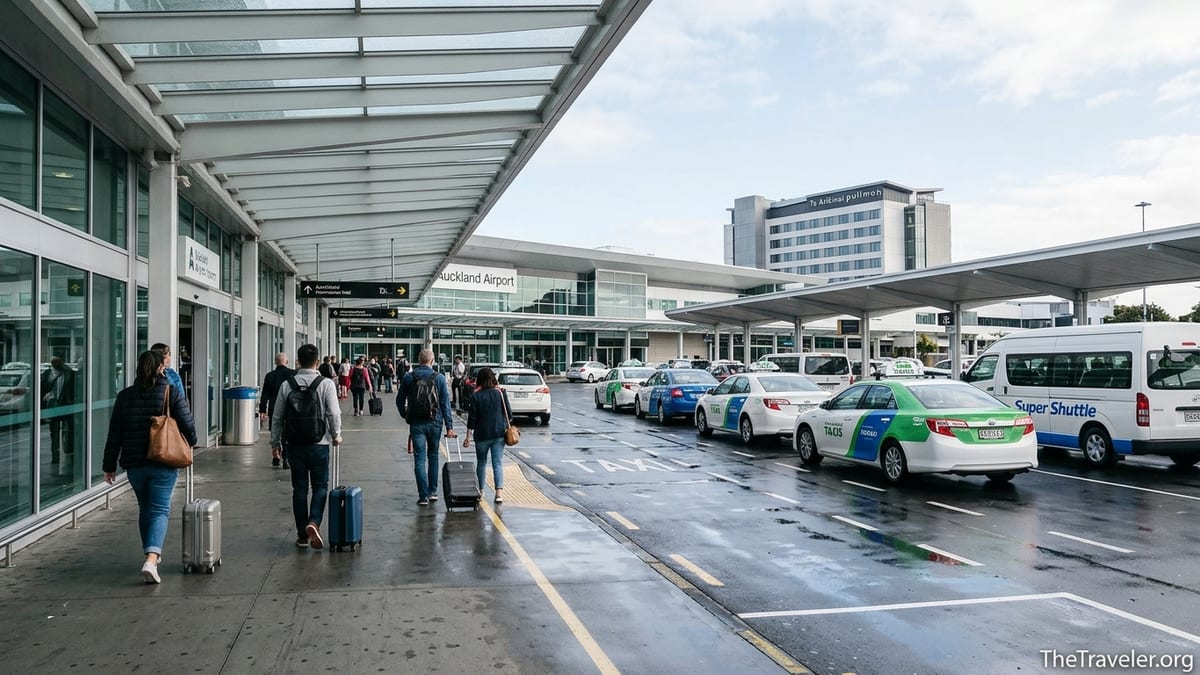
Understanding Auckland Airport’s Layout and Taxi Options
Auckland Airport sits in the suburb of Māngere, roughly 20 kilometers south of downtown Auckland. International and domestic flights now operate from one integrated precinct, but many signs and local advice still refer to “international” and “domestic” areas, which matters for where you meet a taxi. The terminals are within a short walking and shuttle distance of each other, so if your flight details mention a different zone than you see on arrival, do not panic. Staff and wayfinding signs are geared toward helping arriving passengers find transport zones quickly.
The airport licenses specific taxi and shuttle companies, which are allowed to use the official taxi ranks and display pricing information for trips such as the central city. You will typically see vehicles from operators like Alert Taxis, Auckland Co-op Taxis, Cheap Cabs and Corporate Cabs queued outside. Alongside these, app-based rideshares operate from designated pickup points, separate from the main taxi rank. This separation reduces congestion and means you must pay attention to the signage telling you which lane and zone to use.
Beyond on-demand taxis, you can also pre-book door to door shuttles. Super Shuttle, for example, offers shared rides to CBD hotels and inner suburbs, with a per person fare that is often lower than a standard taxi for solo travelers. These shuttles use a different lane within the same transport pickup area, so it is worth confirming during booking exactly what the meeting point is called and which lane your driver will use.
The key takeaway for first timers is that you will not walk out of arrivals straight into city traffic. Instead, you will move through a clearly signed transport hub that separates regular taxis, rideshares, shuttles and off site transfers into different lanes and zones. Once you understand those zones, meeting your ride is straightforward.
Taxi Pickup Zones and Pre-booked Meeting Points
When you exit the international arrivals area, look for signs to the “Transport Pick up Zone.” This is the main outdoor area for licensed taxis, rideshares and Super Shuttle. It is only a short one to two minute walk from the terminal doors. You typically walk out through door 11 or another numbered exit, follow the covered walkway and then cross into lanes clearly marked for taxis, shuttles and rideshares. If you simply want the next available cab, you join the queue at the taxi rank in lane one.
For pre-booked taxis, the process is slightly different. Auckland Airport designates an indoor meeting point inside arrivals for drivers with bookings. If you have arranged a pick up with a company such as Auckland Co-op Taxis or Corporate Cabs, the confirmation usually states that your driver will meet you inside the terminal holding a sign or waiting near the official “pre-booked transport” meeting area. This is useful if you are new to the country, anxious about finding your way, or arriving with elderly relatives who may not want to walk out to the lane and search for number plates.
Off site shuttles and some hotel courtesy vans use a separate “Off-site Transfer zone” behind the Te Arikinui Pullman hotel, a short five to seven minute walk north of the main transport hub. If your motel near the airport offers a free shuttle, this is often where they will meet you. You will follow signs past the transport hub toward the hotel and into clearly marked lanes reserved for off site operators. It is important not to assume that every shuttle at the main taxi lane is going to your motel. Always check the company name on the van against your booking.
On the domestic side, the taxi and rideshare pickup points sit in front of the terminal in the domestic forecourt. Pre-booked taxis may have a specific signed meeting spot, often near a particular door number, and off airport pickups use marked blue zones further along the forecourt. If you are connecting from a domestic flight to an international departure and using a taxi in between, build in a few extra minutes to find the correct lane, as the domestic forecourt can be busy at peak morning and evening times.
What a Taxi to the CBD Costs and How Long It Takes
For most visitors, the key question is what a taxi from Auckland Airport to the central city should cost. The airport publishes guideline fixed fares to the CBD for the taxi companies it licenses. As of mid 2026, typical advertised fixed fares to downtown Auckland are around 60 to 75 New Zealand dollars with cheaper operators and up to around 100 to 105 dollars with premium companies. For example, a budget focused provider might display a fixed CBD fare in the low 60s, while a corporate style service with late model sedans and suited drivers may list something just above 100 dollars. These amounts generally include the airport pickup fee that taxis pay to access the forecourt.
Real world traveler experiences broadly match these ranges. A couple landing around 10 pm and taking a standard taxi to a central hotel near SkyCity can expect to pay somewhere in the 70 to 90 dollar range, depending on traffic and whether they choose a fixed fare or a metered fare. App based rideshares like Uber and similar services often quote around 60 to 70 dollars for an off peak night trip to the Viaduct Harbour or Britomart area, though surge pricing and major events can push that higher. In heavy weekday afternoon traffic or when motorway incidents slow the route, a metered taxi may cost more than the fixed price displayed on the vehicle.
Journey time between the airport and the CBD is typically 25 to 35 minutes outside peak, using State Highway 20 and the Southwestern Motorway. At 3 pm on a rainy Thursday, it could stretch to 40 minutes or more as traffic thickens near the city. After 10 pm, when the roads are relatively empty, you may reach a central hotel in 20 to 25 minutes. If you are catching a morning international flight and leaving from a CBD hotel, it is wise to ask the concierge what the traffic has been like that week. Many locals now plan for a 35 to 45 minute taxi journey plus extra time at the airport itself for security and border formalities.
If you prefer predictable costs, ask the driver before departure whether they are offering a fixed fare to the CBD and what that amount is. You can compare this to the table displayed on the taxi rank signage or on the door of the car. If you have very light traffic, a metered ride could come out slightly cheaper than the fixed price, but if there are delays the meter can quickly overtake the guideline fare. For first time visitors, a fixed fare is usually a safer option.
Choosing Taxis vs Public Transport and Shuttles
Auckland’s airport public transport has improved in recent years, but it still does not offer a simple 24 hour train or bus link like some major international hubs. The main public option from the terminals is an orange AirportLink bus that connects the airport to Puhinui Station and Manukau Bus Station. From Puhinui, you can transfer to frequent train services that run into the city. The bus typically operates from around 4.30 am to about 12.40 am, every ten minutes or so. This makes it a good choice for daytime and evening arrivals when you are comfortable handling your own luggage and do not mind a transfer.
For visitors staying at CBD hotels such as the Cordis, the Grand by SkyCity or the M Social on Quay Street, shuttle services can be a middle ground. Super Shuttle, for instance, runs shared vans that pick you up from the airport transport zone and drop you at your hotel. The published guide fare for a shared shuttle to the CBD often starts around the low 20s per person when two people travel together, with a higher per head cost if you travel alone but still below a typical private taxi. The trade off is time. A shuttle may drop off several passengers on the way, so a run that would be 30 minutes by taxi could take an hour or more.
There are also express buses such as SkyDrive, operated by Ritchies, which link the airport to SkyCity in the centre of town. These buses run at set intervals during the day and evening, often every 30 minutes. A one way adult fare is typically much cheaper than a taxi and can be attractive if your hotel is within walking distance of SkyCity or a short city taxi hop away. The downside is that these services do not usually operate through the small hours, so they are not an option for flights landing after midnight or leaving very early in the morning.
In practice, taxis and rideshares become the default choice in several situations. If you land at 1 am, public buses are not running. If you are traveling with two large checked suitcases per person, a stroller and carry ons, juggling them on and off buses and trains is not appealing. If you are arriving after a long haul flight from North America or Europe and heading to a hotel on the Auckland waterfront, paying 70 to 80 dollars for a direct taxi can be worth it simply for the ability to sit back and be delivered to the front door.
Late Arrivals, Early Departures and Safety Considerations
Many long haul flights into Auckland land in the early morning or late at night, and some regional connections depart before dawn. Between roughly 1 am and 4.30 am, public transport options are very limited. If your flight is scheduled to land at 12.45 am from Sydney and you clear immigration closer to 1.30 am, you should plan on using a taxi, rideshare or pre-booked shuttle to reach the city or an airport hotel. Licensed taxis operate 24 hours a day and there will typically be vehicles waiting even during the quietest night hours, though the queues are shorter and service may not be as frequent as at 6 pm.
Travelers who like certainty often pre-book a taxi or private transfer for late arrivals. For example, a solo traveler arriving from Los Angeles at 5 am might arrange a car through a corporate taxi service, whose driver meets them inside arrivals and walks them out to the vehicle. The fare to a CBD hotel will be at the upper end of the typical range, but the trade off is peace of mind. Others prefer to rely on rideshare apps that allow them to request a car as soon as they connect to airport Wi Fi or insert a local SIM card. Real world reports suggest that an app based ride to the CBD at 2 am can cost around 60 to 70 dollars, compared to perhaps 90 or more with a meter based taxi.
Safety at Auckland Airport during late hours is generally good, but the terminals can feel very quiet. Stick to official pickup zones immediately outside the terminal or in the signed transport hub rather than wandering into distant car parks. Ignore anyone inside the building offering unsolicited rides. Legitimate taxi and shuttle drivers either wait at the official rank, park in a marked lane with their company name clearly displayed, or meet pre-booked passengers with identification. If you are traveling alone, it can be reassuring to take a photo of the taxi number and share it with a friend before you depart.
For very early departures, such as a 7 am international flight, many regular buses will not get you to the airport three hours in advance. In that case, arranging a taxi from your hotel around 3.45 to 4.15 am is a common local strategy. A traveler staying near Karangahape Road, for instance, might ask the hotel to book a cab for 4 am, allowing 40 minutes for the drive and extra time to clear security. At that hour, the motorway is usually clear and the main bottlenecks are check in and border control, not the road.
Luggage, Group Travel and Accessible Taxis
Standard Auckland taxis are typically sedans or station wagons with enough boot space for two large suitcases and a couple of smaller bags. If your party has skis, surfboards or several oversized suitcases, it is worth requesting a wagon or van when you book, or selecting an XL option in your rideshare app. For example, a family of four arriving from Singapore with four large checked bags, carry ons and a stroller will be more comfortable in a people mover style van, even if it costs a little more than a standard sedan.
Door to door shuttles can be a cost effective option for small groups with lots of luggage. Super Shuttle and similar companies run minibuses with trailers that are designed to cope with cruise sized baggage or sports equipment. A group of five heading from the airport to a serviced apartment near the Viaduct Harbour might pay a per person rate that comes out lower than booking two separate taxis, while still enjoying a direct drop off at their door. The trade off, again, is that the shuttle may make additional stops in the city before reaching your address.
For travelers with mobility needs, several licensed taxi and shuttle companies participate in New Zealand’s Total Mobility scheme and offer vehicles with wheelchair hoists. If you use a wheelchair or need extra assistance, it is essential to pre-book so that an appropriate vehicle is waiting. On arrival, you will usually be met either at the pre-booked transport point inside the terminal or at a marked accessibility pickup area close to the doors. Airport staff can also assist you to reach the transport zones if you arrange special assistance through your airline.
If you are changing terminals with luggage before or after taking a taxi, look for the green terminal transfer bus or the signposted walkway. The bus is free and runs between the domestic and international areas, making it easier to connect between a short haul flight and a long haul departure without needing a taxi for that short link. Many travelers simply roll their suitcase along the walkway, but if you are jet lagged or mobility is limited, the shuttle can save energy.
Smart Payment, Tipping and Avoiding Surprises
Most Auckland taxis accept major credit and debit cards, including contactless payments, but it is sensible to carry some New Zealand dollars in case card terminals are offline. ATMs are available in the arrivals areas. When using an app based rideshare, payment is handled through the app in the usual way. If your card is foreign, check with your bank about overseas fees. A 3 percent international transaction charge on an 80 dollar fare is not huge, but it can add up over several trips.
Tipping is not a strong custom in New Zealand, and taxi fares are not expected to be topped up with large percentages. Locals might round a 68 dollar fare up to 70 dollars or add a few dollars for helpful service, especially if the driver assists with heavy bags or provides useful advice, but a 15 to 20 percent tip is unusual. If the driver has gone out of their way to help, such as waiting while you sort out a lost bag at the carousel, a more generous tip is appreciated but entirely discretionary.
To avoid fare surprises, always confirm whether the fare will be fixed or metered before the vehicle departs the airport. Look at the door or window where the company should display its indicative fares to popular destinations like the CBD, Takapuna or Newmarket. If you are taking a taxi to an address slightly outside the central core, ask how that affects the price. For instance, a ride to a Ponsonby boutique hotel a little west of the commercial CBD might be a few dollars more than a ride to a hotel by SkyCity.
With rideshares, check the pickup zone information in the app carefully. Some providers have moved their pickup point closer to the terminal, while others still use a slightly more distant lane to reduce congestion. If you request a ride while you are still walking from the arrivals hall, your driver could arrive before you do, so consider waiting until you reach the transport hub. This reduces the risk of cancellation fees and ensures the car is waiting in the correct lane.
The Takeaway
Using taxis and rideshares at Auckland Airport is generally straightforward once you understand the layout of the transport hub and the difference between the taxi rank, rideshare lanes and off site transfer zones. For visitors heading to CBD hotels, a realistic expectation is to pay somewhere around the mid 60s to 90 dollars for a standard taxi or app based ride, with higher costs for premium cars and slightly lower per person rates if you use a shared shuttle.
When deciding between a taxi and public transport, consider your arrival time, luggage load and energy levels. In broad daylight with a backpack and a mid range budget, the AirportLink bus and connecting train or an express bus to SkyCity can be perfectly manageable. At 1 am with two jet lagged children, a licensed taxi waiting outside arrivals is almost always the lesser stress.
Whichever option you choose, stick to the official pickup zones, confirm fares or app estimates before you depart, and keep an eye on your flight time and traffic conditions for the journey back to the airport. With a small amount of planning, getting between Auckland Airport and the city by taxi can be one of the easiest parts of your New Zealand trip, not a source of last minute anxiety.
FAQ
Q1. Where exactly do I find taxis when I arrive at Auckland Airport?
The main taxi rank is in the Transport Pick up Zone just outside the arrivals area. Follow signs from the terminal doors and you will reach clearly marked taxi lanes within a couple of minutes.
Q2. How much should I expect to pay for a taxi from Auckland Airport to the CBD?
Typical fares are around 60 to 75 New Zealand dollars with cheaper operators and up to about 100 dollars with premium taxi services, depending on traffic and whether you choose a fixed fare.
Q3. Is it cheaper to take a shuttle than a taxi to central Auckland?
For solo travelers or couples, a shared shuttle such as Super Shuttle can be cheaper per person, especially if you are not in a hurry and do not mind extra stops on the way.
Q4. Do taxis and rideshares operate late at night and early in the morning?
Yes. Licensed taxis and app based rideshares operate 24 hours a day. Even after midnight there are usually vehicles available, though wait times can be longer than during the day.
Q5. Should I pre-book a taxi if my flight lands after midnight?
Pre-booking is a good idea for arrivals after midnight, particularly if you are unfamiliar with the airport, traveling alone or arriving with children and want the certainty of a driver waiting for you.
Q6. Can I use public transport from the airport instead of a taxi?
During the day and evening you can use the AirportLink bus to connect to Puhinui Station and trains or take an express bus to SkyCity, but these services do not generally run in the small hours.
Q7. Do taxis at Auckland Airport accept credit cards?
Yes. Most licensed taxis accept major cards and contactless payments, and rideshare payments are handled through the app, though carrying some cash as backup is sensible.
Q8. Is tipping taxi drivers expected in Auckland?
Tipping is not expected. Locals often just pay the metered or fixed fare, sometimes rounding up a small amount or adding a few dollars for particularly helpful service.
Q9. What if I have a lot of luggage or oversized items?
If you have multiple large bags or items like surfboards, request a wagon, van or XL rideshare. Shared shuttles with trailers are also well suited to luggage heavy groups.
Q10. How long does a taxi from the airport to the CBD usually take?
Outside peak hours the journey is typically 25 to 35 minutes. In heavy traffic it can stretch to 40 minutes or more, so allow extra time for flights, especially in the morning and late afternoon.