


More news on this day
Hundreds of flights across Australia and New Zealand have been disrupted as a fresh wave of delays ripples through Sydney, Melbourne, Brisbane and Auckland, with data indicating 437 services affected in a single day and travellers facing long queues, missed connections and mounting costs.
Get the latest news straight to your inbox!
Major Hubs Struggle Under New Wave of Disruptions
The latest disruption across Australia and New Zealand’s busiest hubs adds to a growing pattern of flight reliability issues through early and mid 2026. Operational data and industry reporting indicate that a combined 437 flight delays were concentrated on routes in and out of Sydney, Melbourne, Brisbane and Auckland within a 24-hour period, with knock-on effects across the wider trans-Tasman network.
Sydney and Melbourne, already among the region’s most delay-prone airports during peak periods, again accounted for a significant share of the late departures and arrivals. Published coverage shows Melbourne regularly emerging as a delay hotspot in recent months, while Sydney continues to experience congestion whenever weather or crew-availability issues arise. Auckland, the main international gateway for New Zealand, has been drawn into the same pattern, especially on long-haul and connecting services.
Brisbane’s role as a busy domestic and international hub meant that disruptions there quickly cascaded onto connections to and from other Australian capitals and New Zealand cities. The combined effect of delays at these four airports left many passengers stranded mid-journey, rebooked onto later flights or facing overnight stays they had not budgeted for.
The volume of affected flights underscores how sensitive the current network is to relatively small operational shocks. With aircraft and crew schedules running tight after a rapid post-pandemic demand rebound, a cluster of delayed departures at one airport can quickly radiate across the entire region.
Part of a Broader Pattern of 2026 Turbulence
The 437-delay episode is not an isolated incident. In the first half of 2026, several large-scale disruption days have been recorded across Australia and New Zealand, with different datasets and news outlets highlighting repeated spikes in delays and cancellations at the same airports.
In one widely covered case, industry analysis in early July documented more than 800 combined delays and dozens of cancellations across major Australian and New Zealand airports on a single day, centered on Melbourne, Sydney and Auckland. Earlier in the year, other tallies pointed to several hundred delays in combination with dozens of cancellations across hubs including Brisbane, Sydney, Melbourne, Auckland and Christchurch, affecting both domestic and international operations.
Together, these events suggest that the region’s aviation system is operating with little slack. Airlines have restored most of their pre-pandemic schedules, but staffing constraints, aircraft maintenance requirements and occasional air traffic control restrictions continue to limit flexibility. When weather or technical issues occur, airlines and airports have fewer options for quickly absorbing the shock, which helps explain why so many flights can be pushed into delay status on the same day.
Government on-time performance statistics from both countries also point to elevated delay levels on some international routes, particularly those linking Australian capitals with New Zealand gateways. While many flights still depart and arrive within scheduled windows, the share of services running late has risen enough for consumer groups and travel platforms to flag ongoing reliability concerns.
Travellers Face Missed Connections and Extra Costs
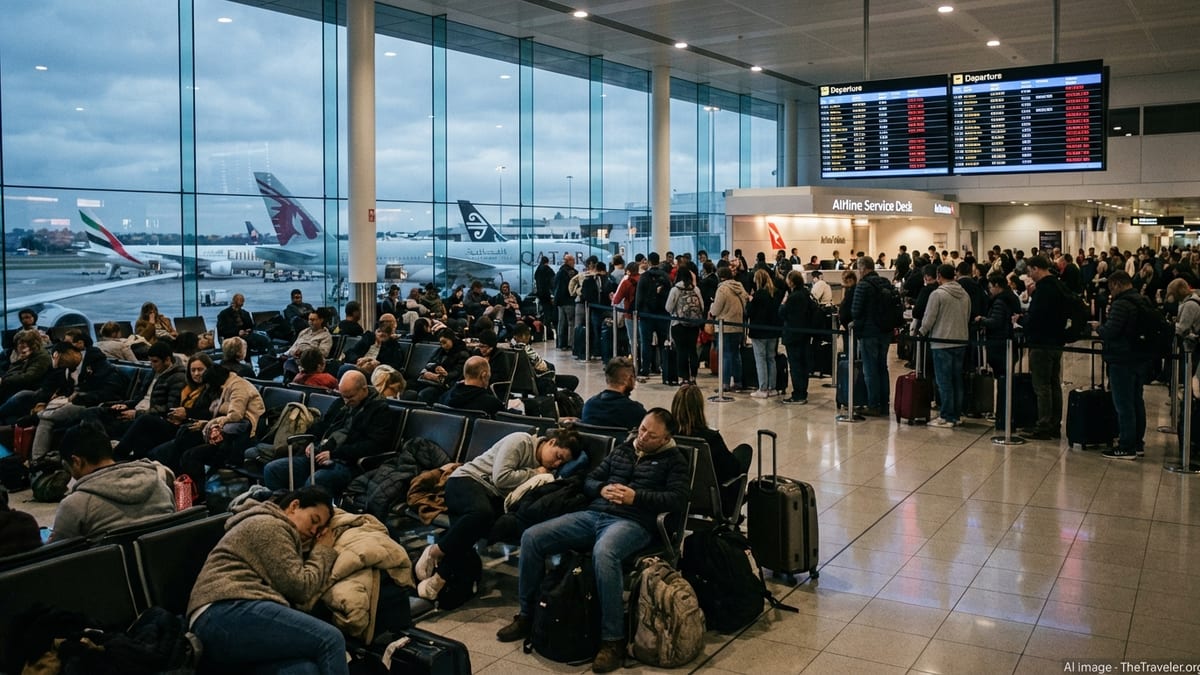
For passengers, the practical consequences of 437 delayed flights are immediate and tangible. Reports from recent disruption days in the region describe long lines at check-in and customer service counters, busy airport lounges, and departure boards filled with rolling time changes. Many travellers have missed connections to onward domestic flights, long-haul services to Asia, North America and Europe, or crucial cruises and events.
Publicly available reports from previous disruption waves in 2026 show that when large numbers of flights run late, some passengers end up sleeping in terminals or scrambling to arrange last-minute accommodation. Others incur unplanned expenses for meals, rebooked ground transport or additional childcare and pet-care costs back home. In some cases, the financial impact of a missed connection can exceed the price of the original ticket, especially when replacement flights during busy seasons are significantly more expensive.
Frequent travellers have noted that tight connection windows, especially at hubs where international and domestic terminals are separated, magnify the risk that even modest delays turn into missed onward flights. Travel forums and social media posts have increasingly recommended longer layovers on trans-Tasman itineraries, particularly when connecting in Sydney or Brisbane, where passengers may need additional time to transfer between terminals.
Families traveling during school holidays are often the most exposed, as they tend to book popular midday and evening departures that are also the likeliest to feel the impact of earlier delays accumulating through the day. When those services run late or are re-timed, entire family itineraries may need to be reworked at short notice.
What Is Causing the Disruptions?
The precise mix of causes behind the most recent 437 delays varies by route and airline, but several common factors keep emerging in regional data and coverage. Weather remains a leading driver, particularly fog, wind and storms around Sydney and Auckland that push back arrival and departure slots. When conditions deteriorate, air traffic control can restrict movements for safety reasons, which in turn slows down the entire schedule.
Aircraft availability and maintenance requirements also play a role. With fleets working hard to meet strong demand across domestic and international markets, unscheduled technical checks or delayed maintenance windows can force last-minute aircraft swaps or groundings. Because many flights are tightly interconnected, the late arrival of an incoming aircraft from another city can immediately delay the next leg of its journey.
Crew scheduling has been another pressure point. Aviation recovery after the pandemic relied on rebuilding pilot, cabin crew and ground staff rosters, but training pipelines take time. When illness, fatigue rules or unexpected absences occur on a day with already busy schedules, some flights can be held while airlines search for replacement crew within regulatory limits.
Finally, some analysts highlight structural congestion at major airports, especially during morning and evening peaks. Runway capacity, gate availability and baggage-handling throughput can all create bottlenecks. When multiple carriers schedule departures within the same narrow window, even small delays cascade quickly, leaving little opportunity to recover on the same day.
How Passengers Can Navigate Ongoing Uncertainty
For travellers planning trips through Sydney, Melbourne, Brisbane and Auckland in the coming weeks, the latest disruption serves as a reminder to build flexibility into itineraries. Consumer advocates and travel specialists generally recommend booking longer connection times between domestic and international flights, especially when changing terminals or airlines.
Passengers are also encouraged to monitor their flight status closely through airline apps and airport information boards, particularly in the 24 hours before departure. When significant delays begin to appear across the network, being among the first to rebook can increase the chances of securing a seat on the next available service.
Travel insurance that specifically covers delays, missed connections and additional accommodation costs may help mitigate some of the financial impact, although coverage varies widely by policy. Publicly available guidance from compensation and passenger-rights platforms notes that, while Australia and New Zealand do not have identical frameworks to those seen in parts of Europe, airlines often provide care and assistance in cases of long delays, especially when disruptions are within their control.
Ultimately, the cluster of 437 delays across Sydney, Melbourne, Brisbane and Auckland highlights the need for continued investment in staffing, infrastructure and contingency planning across the region’s aviation network. Until those underlying pressures ease, travellers can expect periodic flare-ups of disruption and should plan their journeys with that risk in mind.