


More news on this day
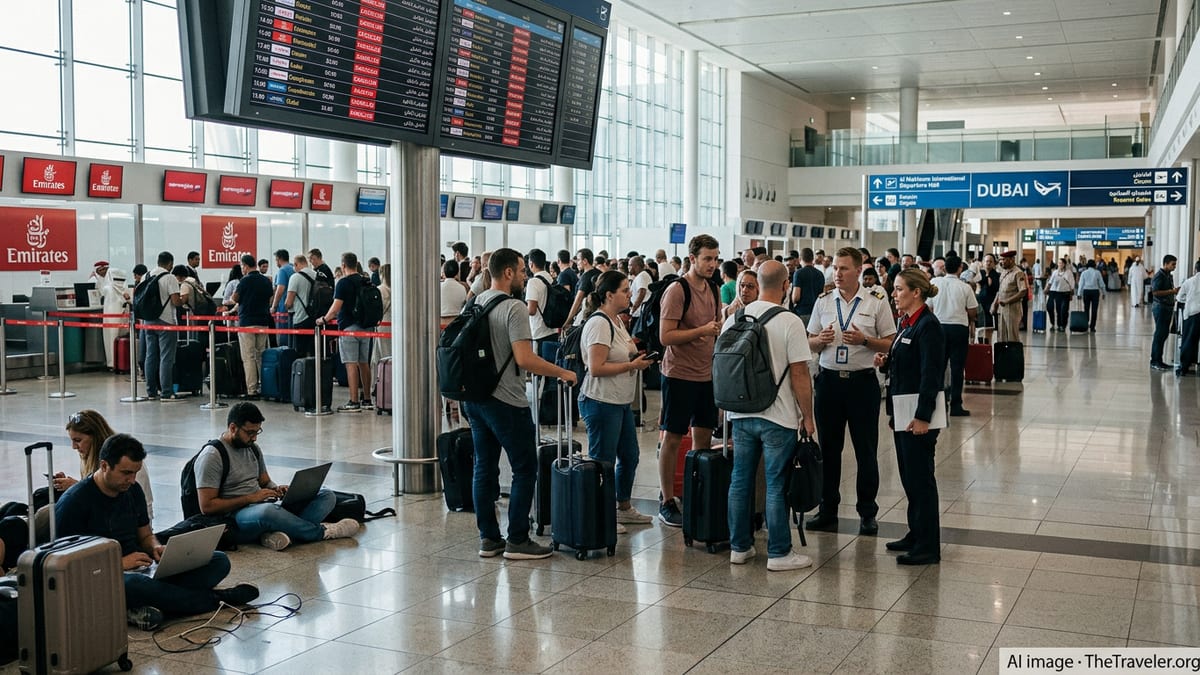
Airlines across the Gulf are reassessing routes and contingency plans for Dubai and wider Middle East operations after United States President Donald Trump said the fragile ceasefire with Iran is “over”, reviving concerns about airspace safety and possible disruption to one of the world’s busiest aviation corridors.
Get the latest news straight to your inbox!
US Iran tensions flare again over Strait of Hormuz
Trump’s comments on 8 July came after fresh US strikes on targets in Iran following new attacks on commercial shipping in the Strait of Hormuz, a key chokepoint for global oil flows and Gulf air traffic. Public reports describe more than 80 Iranian sites being hit overnight, followed by retaliatory strikes on American facilities in the region. The latest escalation ends weeks of strained calm under a ceasefire framework agreed earlier this year.
Published coverage from major US and European outlets indicates that Washington is also reimposing tighter oil sanctions and reinforcing its naval presence around Hormuz. Tanker operators are reported to be diverting or delaying transits, and crude prices have jumped sharply in early trading. The same narrow waterway sits directly beneath some of the busiest long haul flight paths linking Europe with the Gulf, India and Southeast Asia.
Travel industry analysts note that while missiles and drones are primarily targeting military and energy infrastructure, any perception of higher risk around Hormuz tends to spill quickly into aviation. Insurers review premiums, carriers reconsider overflight routes and demand from some passenger segments softens, especially for discretionary trips.
The new volatility also lands at a sensitive moment for Gulf governments, which have sought to market the region as open for business after months of instability linked to the wider US Iran conflict and earlier fighting in Lebanon. Officials across the region are seeking to balance security considerations with the economic importance of keeping airports and airspace functioning normally.
Dubai’s aviation hub watches warily
Dubai International Airport, consistently ranked among the world’s busiest for international passengers, sits less than 200 kilometres from Iranian airspace and has already lived through multiple security scares since the conflict began in February. Earlier this year, a drone incident near the airport temporarily halted operations and triggered renewed scrutiny of air defences and contingency planning, according to regional media reports.
Since then, public information indicates that the United Arab Emirates has progressively restored full air operations after a period of heightened restrictions and reroutings. Airlines based in Dubai and Abu Dhabi have used alternative tracks to avoid specific risk zones when necessary, adding modest time to some flights but maintaining global connectivity.
With Trump now declaring the ceasefire “over”, aviation specialists say Dubai’s hub status again faces a test. Any sustained military campaign around Hormuz or deeper into Iran could prompt regulators, insurers or carriers themselves to restrict overflights or impose new routing requirements. Even small changes to airspace access can ripple across hub schedules, given the tight banked connections that underpin Dubai’s long haul model.
For the moment, publicly available flight tracking data still shows a steady stream of arrivals and departures at Dubai, and there have been no widespread reports of cancellations on the scale seen in previous regional crises. Industry observers caution, however, that the situation could change rapidly if missile strikes, drone launches or electronic warfare activity creep closer to established air corridors.
Airlines weigh rerouting, delays and higher costs
Major Gulf carriers, including those based in the United Arab Emirates, Qatar and Saudi Arabia, operate dozens of daily services between Europe, North America, Asia and Africa that typically run near or over the Gulf’s conflict zones. In recent years, operators have demonstrated their ability to pivot quickly around closed airspace in Ukraine, parts of the Middle East and the Red Sea, but such adjustments usually come at a cost.
Rerouting long haul flights to avoid sections of Iranian airspace or the Strait of Hormuz can add flight time, fuel burn and crew hours. Aviation consultancies note that even an additional 20 to 40 minutes on a busy trunk route can meaningfully erode margins when multiplied across a fleet. Carriers sometimes respond with higher fares, schedule changes or slightly reduced frequencies on marginal routes.
Travel agents in key outbound markets for Dubai report early signs of uncertainty among leisure travellers, particularly families and tour groups planning winter holidays. Corporate travel managers, by contrast, tend to focus on carrier safety records and adherence to international guidance, and historically have resumed Gulf flying quickly once airlines and regulators deem routes acceptable.
Low cost and regional airlines using Dubai’s second airport, Al Maktoum International, and other UAE hubs are also watching developments. Their point to point customer base can be more price sensitive and more likely to postpone non essential trips if media images of missile strikes and burning tankers dominate the news cycle.
Regional airspace already fragmented by overlapping crises
The renewed US Iran hostilities come on top of an already patchwork airspace map across the broader Middle East. Parts of Iraq, Syria, Yemen and Israel remain subject to varying levels of flight advisories, forcing airlines to string together narrow safe corridors between active conflict zones. The Red Sea has also seen interruptions to shipping and occasional security incidents affecting aviation routing.
According to recent analyses by independent flight safety bodies, the number of commercially usable waypoints through the region has shrunk compared with pre conflict years, even as demand for long haul travel through Gulf hubs rebounds. This has concentrated traffic into fewer high density corridors, increasing congestion and leaving airlines with less flexibility when sudden flare ups occur.
In this context, any further degradation of access to Iranian airspace or the skies above the Strait of Hormuz would be particularly challenging. Carriers might be forced to send more Europe Asia traffic on longer detours over Turkey and Central Asia or south over the Arabian Sea, adding time and complexity. For time sensitive cargo such as pharmaceuticals, electronics and high value perishables, those extra hours can strain supply chains already coping with Red Sea shipping disruptions.
Airport operators from Dubai to Doha and Riyadh have invested heavily in terminal expansions and new runways to capture this east west traffic. Their business models depend on maintaining predictable, high frequency connections that rely on a stable regional airspace environment, something that fresh fighting between Washington and Tehran now calls into question.
What travellers should expect in the coming days
For passengers with tickets to or through Dubai and neighbouring hubs, travel advisers recommend monitoring airline communications closely but avoiding premature changes while flights continue to operate broadly on schedule. Historically, major Gulf carriers have offered rebooking flexibility or alternative routings when security developments significantly affect specific destinations or corridors.
Analysts expect airlines to prioritise safety by following guidance from international aviation bodies and their own risk assessments when deciding whether to use particular airways. If conflict activity intensifies near key routes, travellers may see longer flight times, schedule retimings or aircraft swaps rather than immediate mass cancellations. Premium cabin customers and those on flexible corporate tickets are generally first in line for re-accommodation when disruptions occur.
Travel insurance may play a greater role for some passengers, though policies vary widely in how they treat war and terrorism related disruption. Consumer advocates encourage travellers to read the fine print on coverage for missed connections, schedule changes and airspace closures, and to keep documentation of any changes imposed by airlines.
Ultimately, the trajectory of US Iran relations in the coming days will shape how deep and prolonged any impact on Dubai and wider Middle East aviation becomes. If military strikes give way again to negotiations, airlines could continue threading routes through a tense but manageable environment. A broader escalation, by contrast, would likely bring a new round of diversions, schedule upheaval and higher fares across one of the world’s most important aviation crossroads.