


More news on this day
Rail traffic is slowly restarting through Repentigny, Quebec, after a major freight derailment sent dozens of cars off the tracks near a residential neighborhood and halted movements along a busy rail corridor northeast of Montreal.
Get the latest news straight to your inbox!
Gradual reopening on key Montreal–Repentigny corridor
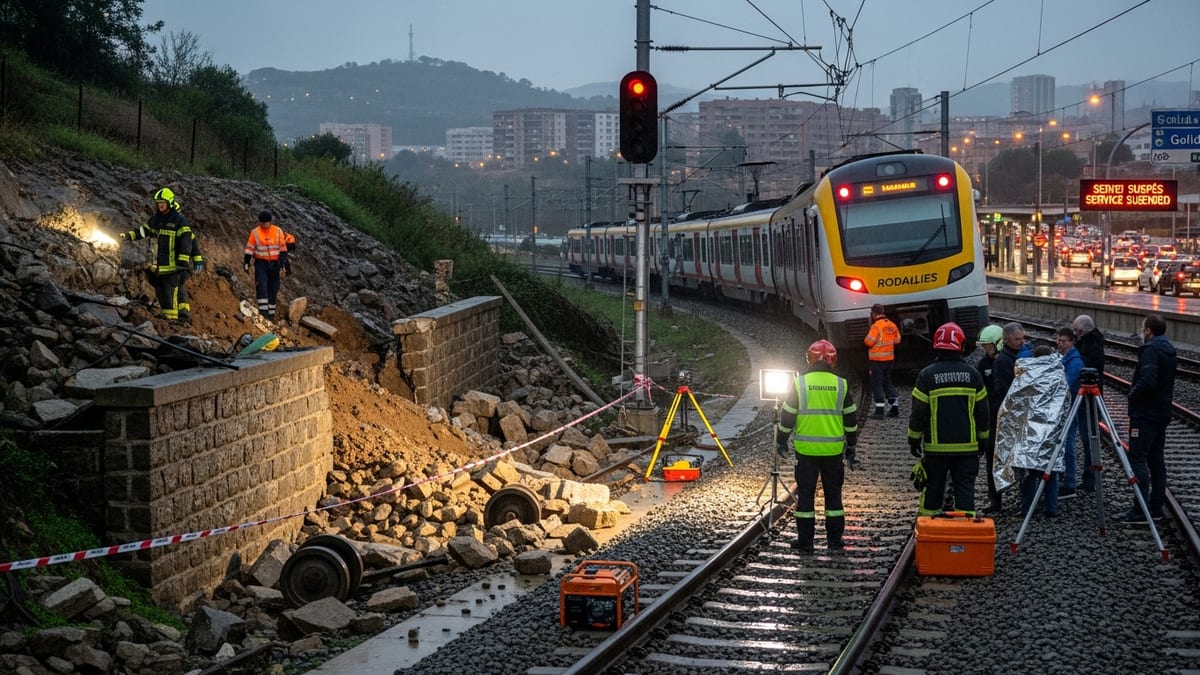
According to publicly available information, the derailment occurred on Sunday, July 5, when a Canadian National freight train traveling south from Joliette left the tracks in Repentigny’s Le Gardeur sector, at the edge of a residential district. Roughly 49 railcars derailed, scattering across multiple tracks and forcing an immediate shutdown of the line while emergency crews secured the site and evaluated the damage.
Reports from Quebec and national outlets indicate that rail operations were suspended on the affected section for more than a day as teams worked to clear debris and rebuild damaged infrastructure. Crews concentrated first on stabilizing the site and moving overturned cars away from the right of way so that a limited number of tracks could be restored to service.
By midweek, publicly available coverage suggests that a reduced level of freight traffic had begun to move again through the Repentigny corridor, with priority given to essential cargo and time sensitive shipments. Full capacity has not yet been restored, and some trains continue to be rerouted or held as the reconstruction progresses.
For travelers and residents, the gradual reopening has reduced visible congestion around level crossings and nearby road detours. However, intermittent closures and the presence of heavy equipment along the line are still affecting local mobility, making the corridor an ongoing construction zone rather than a fully normalized transport artery.
No injuries or hazardous materials release reported
Transportation Safety Board of Canada deployment notices and Canadian media coverage state that there were no injuries associated with the derailment, despite its proximity to homes and the scale of the incident. Dozens of cars piled up near backyards and local streets, but current reporting does not indicate structural damage to nearby houses.
Publicly available information also indicates that none of the derailed freight cars released dangerous goods. Investigators have reported that the train was carrying mixed cargo, but early assessments suggest that tank cars and other potentially hazardous loads remained intact.
For residents of Le Gardeur, the absence of a hazardous materials leak limited the duration and scope of evacuations. Reports suggest that more than 200 people were temporarily asked to leave their homes on Sunday evening as a precaution, with most able to return once emergency teams confirmed that the air and surrounding area were safe.
Environmental monitoring is expected to continue as a routine part of the investigation. At this stage, no significant contamination of soil or nearby waterways has been reported in publicly accessible updates, a key factor in allowing rail operations to resume more quickly than they might have after a spill.
Investigation focuses on track conditions and train handling
A team from the Transportation Safety Board is on site in Repentigny, collecting data on track conditions, train handling and equipment performance in the minutes leading up to the derailment. According to official deployment summaries, the investigation includes examination of the track structure, switches and signaling equipment, as well as detailed inspections of the derailed cars and locomotives.
Investigators are analyzing recordings from locomotive voice and video systems, along with event data recorders that log speed, braking, throttle and other operating parameters. This information is expected to help reconstruct the train’s movements as it approached the curve where the derailment occurred and to determine whether human factors, mechanical issues or infrastructure defects played a role.
Municipal communications referenced in local coverage note that maintenance work had taken place on the same stretch of track in recent weeks. At this time, there is no confirmed link between that work and the derailment, and published reports emphasize that the investigation remains in its early stages.
The Transportation Safety Board typically takes months to publish final findings on similar events, particularly when multiple factors are involved. Interim updates, if released, could influence how railway operations are managed through densely populated areas and may inform any longer term speed restrictions or infrastructure upgrades on the Repentigny corridor.
Travel and logistics impacts across the Montreal region
While the derailment did not occur on a dedicated passenger line, freight disruptions have knock on effects for travelers throughout the Montreal region. Freight trains share parts of the network with regional and intercity passenger services, and priority freight movements during a constrained reopening period can contribute to delays elsewhere on the grid.
According to transportation reporting in Quebec, rail operators have adjusted schedules and, where possible, rerouted some trains around the damaged section. These maneuvers help keep goods moving between northern Quebec, the Montreal area and onward connections, but they also lengthen travel times and increase congestion on parallel routes.
For the tourism and travel sector, the immediate impact is most visible on supply chains that support hotels, restaurants and attractions rather than on passenger rail timetables themselves. Delays in freight deliveries can affect everything from food and beverage shipments to construction materials for tourism related projects, especially when the incident occurs on a heavily used freight corridor.
Regional planners and industry observers are watching how quickly the Repentigny line returns to full capacity, viewing it as a test of resilience for one of the Montreal area’s key rail approaches. A swift, safe restoration of service could reassure both residents and visitors that the network can absorb shocks without prolonged disruption.
Renewed attention on rail safety near residential neighborhoods
The Repentigny derailment took place one day before the thirteenth anniversary of the Lac Mégantic rail disaster, a coincidence widely noted in Canadian media coverage. That earlier tragedy, involving a runaway crude oil train that exploded in the center of a Quebec town, remains a reference point in national discussions of rail safety.
In Repentigny, the absence of fire, explosion or injuries has been described in coverage as a fortunate outcome, given that backyards back directly onto the tracks in the Le Gardeur sector. The sight of mangled railcars only a short distance from homes has nonetheless reignited debate over acceptable risk levels where heavy freight traffic runs through residential areas.
Published commentary from labor organizations and local stakeholders points to the need for ongoing investment in track maintenance, modern signaling and better route planning to reduce exposure in densely populated neighborhoods. There is also renewed scrutiny on how quickly aging infrastructure is upgraded in suburban areas that have seen significant growth in recent decades.
As rail operations continue to ramp up through Repentigny, residents and travelers alike are likely to keep a close eye on the line. The progress of the cleanup, the transparency of the investigation and any future safety recommendations are expected to shape public confidence in one of Quebec’s most important freight corridors.