


More news on this day
Persistent disruption in the U.S. air travel system entered Day 99 on July 8 as PSA Airlines emerged among the hardest-hit regional operators, with hundreds of cancellations contributing to mounting delays at major Northeast and Southeast hubs including Boston Logan, Hartsfield-Jackson Atlanta and Washington’s Reagan National.
Get the latest news straight to your inbox!
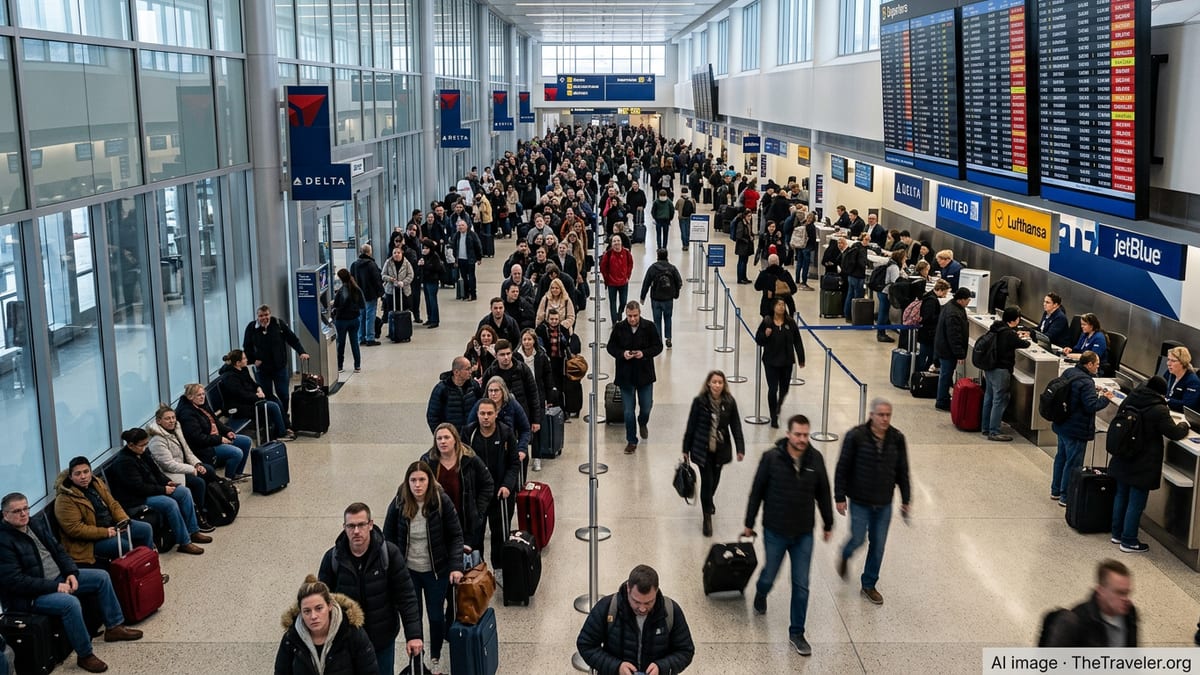
PSA Airlines Tops Carrier Disruption Tables
Operational data compiled from U.S. airports on July 8 indicate that regional carrier PSA Airlines is recording one of the highest cancellation tallies in the country, with hundreds of flights scrubbed or heavily delayed across its network. PSA, which operates American Eagle services for American Airlines, feeds traffic into major hubs along the East Coast and Midwest, turning localized disruptions into wider schedule challenges for mainline operations.
Industry-focused coverage notes that roughly 424 flights were cancelled across the United States on July 8, alongside more than 2,700 delays, with PSA’s regional schedule particularly affected. While some reports emphasize that PSA has not formally suspended operations at any airport, the combination of cancellations and rolling delays is straining its role as a connector between smaller cities and American’s central hubs.
The disruption is unfolding against a backdrop of heightened scrutiny of regional airlines, which are often the first to adjust schedules in response to poor weather, staffing limitations or air traffic control constraints. Aviation observers point out that because PSA operates a dense schedule of short-haul routes, even modest disruptions early in the day can cascade into widespread cancellations by evening.
Recent commentary from frequent flyers and aviation analysts highlights growing concern over the reliability of regional operations. Publicly available discussions describe patterns of extended departure holds followed by same-day cancellations, especially on routes linking smaller markets with major American Airlines hubs.
Boston Logan Feels Ripple Effects of Regional Turmoil
Boston Logan International Airport is among the facilities reporting elevated disruption levels, with cancellations and delays affecting both mainline and regional flights. Operational snapshots show that Boston is part of a broader cluster of affected airports in the Northeast, alongside New York’s John F. Kennedy and LaGuardia, as well as Washington-area facilities.
Because Boston relies heavily on regional services to connect to mid-sized cities across the eastern United States, PSA disruptions have an outsized impact on passenger flows. When feeder flights operated by American Eagle are cancelled, travelers often lose onward connections from Boston to other domestic or transatlantic destinations, forcing rebookings and overnight stays.
Travel-industry coverage indicates that Logan has seen repeated waves of regional cancellations over recent months, particularly during periods of adverse weather or congestion at connecting hubs. Observers note that even on days when long-haul and mainline flights largely depart as scheduled, regional cancellations can leave gaps in the network that are difficult to fill at short notice.
Passenger accounts shared online describe long queues at service desks and scrambling for alternative routings when regional services are pulled late in the day. Travelers with itineraries touching Boston are being advised by consumer advocates and travel outlets to monitor flight status closely and consider earlier departures when possible to preserve connection buffers.
Atlanta Operations Strain Under Weather and Congestion
Hartsfield-Jackson Atlanta International Airport, one of the world’s busiest hubs, is also contending with the nationwide turbulence. Published data for July 8 list more than a thousand scheduled flights at Atlanta, a volume that leaves carriers with limited room to absorb unexpected disruptions.
Reports indicate that regional flights to and from Atlanta, including those operated under American Eagle branding, have been particularly vulnerable to schedule changes. When thunderstorms or low ceilings move across the Southeast, airlines frequently pare back shorter feeder segments first in order to protect long-haul operations and maintain gate and crew rotations.
Travel analysis pieces note that this strategy, while stabilizing the overall schedule, tends to concentrate cancellations among regional operators like PSA. For travelers, that can mean last-minute changes on routes between Atlanta and smaller cities, as well as missed connections for those using Atlanta as a bridge to other parts of the country.
Industry guides advising passengers on disrupted travel recommend that anyone heading through Atlanta build in extra time for connections, verify their flight’s operating carrier and consider carrying on luggage when possible to make rapid rebooking easier.
Reagan National and the Mid-Atlantic Corridor Disrupted
Washington’s Ronald Reagan National Airport is another focal point of the current disruption cycle, with regional operations deeply intertwined with government and business travel along the Northeast Corridor. Publicly available flight boards and operational summaries show that cancellations and delays at Reagan National are affecting flights to and from nearby hubs, including Philadelphia and Charlotte, where PSA has a significant presence.
Because of airspace constraints and slot controls at Reagan National, airlines have limited flexibility to add extra flights when earlier services are cancelled. Aviation analysts explain that this makes it harder for carriers to recover quickly from a burst of disruptions, often leading to prolonged knock-on effects for passengers across the Mid-Atlantic and into the Southeast.
Regional jets operating into Reagan National are commonly used by commuters and day-trip travelers, meaning cancellations can have immediate business and personal consequences. Recent travel commentary has highlighted cases where travelers faced multiple rebookings or were routed through alternate airports such as Baltimore/Washington or Dulles to complete their journeys.
As with Boston and Atlanta, observers point out that the disruption at Reagan National underscores the interconnected nature of regional and mainline operations. A cancelled PSA flight into Washington can ripple outward, affecting seat availability on later departures operated by different carriers and limiting options for stranded passengers.
Day 99 of US Flight Chaos Tests Traveler Patience
The July 8 disruption comes on what travel outlets are characterizing as Day 99 of an extended period of U.S. flight instability, marked by recurring waves of cancellations and delays across multiple carriers. While the specific drivers vary from day to day, a combination of summer weather, tight crew scheduling, aircraft availability and air traffic control initiatives continues to strain operations.
Reports tracking daily performance show that today’s 424 cancellations and nearly 3,000 delays place the system under sustained pressure but not at the extreme levels seen during historic meltdown events. Nevertheless, for affected travelers, the experience can be comparably disruptive, especially when cancellations strike at short notice or strand passengers overnight away from home.
Travel experts and consumer advocates are reiterating standard advice: check flight status repeatedly in the 24 hours before departure, enroll in airline notifications, and consider booking the first flight of the day on routes known for afternoon thunderstorms or congestion. Some guidance also encourages building in longer layovers when connecting through weather-prone hubs such as Atlanta or heavily slot-controlled airports like Reagan National.
As PSA Airlines and other regional operators work through today’s operational challenges, attention within the travel industry is turning to whether carriers can build more resilience into regional schedules. Analysts suggest that without additional staffing and aircraft flexibility, similar episodes of concentrated disruption at regional airlines may persist throughout the peak summer travel period.