


Welcome Pickups has become a popular option for travelers who want a pre-booked, English-speaking driver waiting at the airport, especially in busy hubs like Athens, Rome, Paris, and San Francisco. The service generally reviews well and can be far less stressful than hunting for a cab after a long-haul flight. Yet many of the complaints that do appear come down to the same avoidable mistakes: not reading the cancellation rules, misunderstanding what "flight monitoring" really means, or assuming the price works like a local metered taxi. Before you lock in your transfer, it pays to understand how Welcome Pickups actually operates and where travelers most often get caught out.
Get the latest updates straight to your inbox!
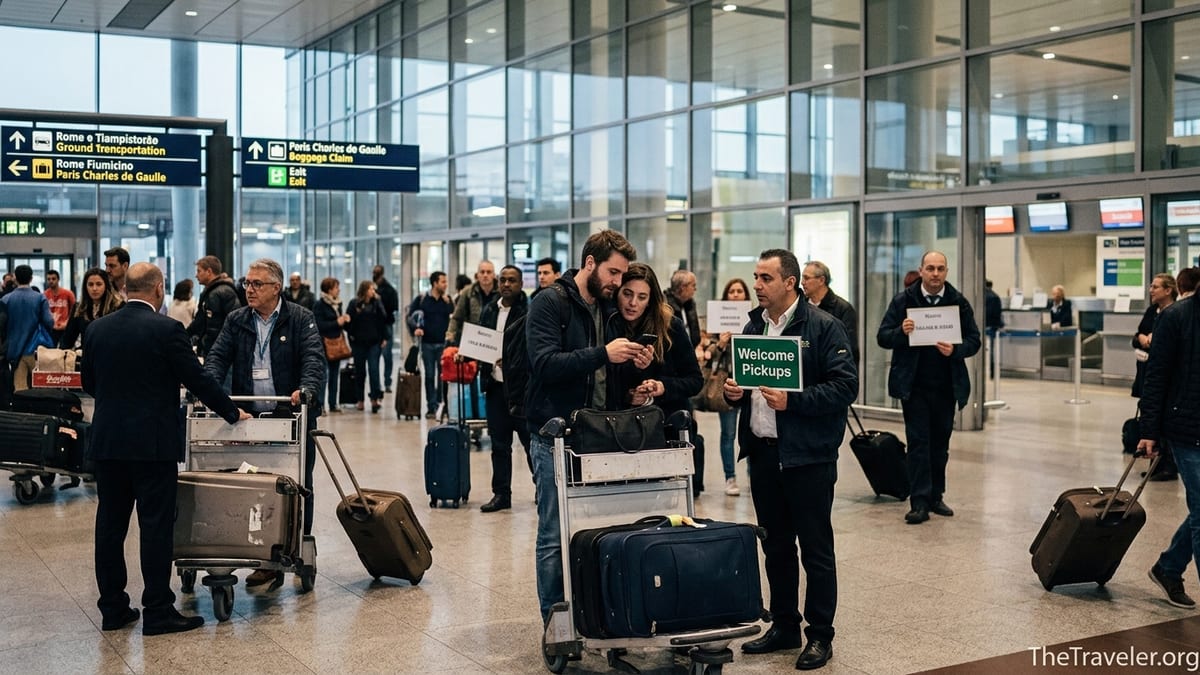
Understand What Welcome Pickups Is (and Is Not)
Welcome Pickups is not a traditional taxi company. It is a platform that connects travelers with local professional drivers and small transfer companies in more than 100 destinations worldwide. You book and pay through Welcome, but the ride itself is operated by a third-party driver who uses the Welcome app to accept and manage your transfer. In practice, this means your contract and refund rights sit with Welcome as an intermediary, while the on-the-ground experience can vary slightly from city to city.
On the official terms of use, Welcome describes itself as an intermediary platform through which travelers can book “transport services” provided by drivers with private or public use vehicles. That distinction matters for expectations. For example, in Rome or Paris, the same driver might also work for other ride platforms or accept local taxi jobs when they are not on a Welcome assignment. If you expect a fully branded, uniformed fleet similar to a hotel car service, you may be surprised to find a standard black sedan with only a small Welcome sign at arrivals.
Another common confusion is service scope. Many people assume Welcome is only for airport transfers, because that is how hotels and travel blogs often describe it. In reality, the company also offers port pickups, train station transfers, point-to-point city rides, and some long-distance trips such as Tampa Airport to Clearwater Beach or Siesta Key. In San Francisco, for instance, you can pre-book a ride from the airport to downtown, but also arrange a later pick-up back to SFO. Knowing this broader scope can help you compare prices more accurately instead of assuming it is “just an airport shuttle.”
The key mistake is treating Welcome like a generic taxi. A local cab in Rome charging the fixed 55 euro fare from Fiumicino Airport to central Rome runs under strict municipal rules. Welcome, on the other hand, sells a pre-arranged transfer at a pre-agreed price, with its own cancellation terms and waiting-time rules. Those rules might be stricter than what you are used to with a metered taxi that you hail on arrival.
Misreading Pricing and Comparing Poorly With Local Taxis
One of the most frequent sources of frustration is price comparison done after the fact. Travelers land, notice what local taxis or ride-hail apps charge, then decide that their Welcome Pickups ride was overpriced. In Fiumicino, for example, the official white taxi flat fare to central Rome is typically around 55 euros each way. Yet travelers report paying significantly more through Welcome for the same route, sometimes close to double when booked via partner channels. The trade-off is convenience, English-speaking support, and a named driver meeting you in the arrivals hall.
To avoid disappointment, check local official pricing before you book. Paris Charles de Gaulle to central Paris by standard taxi has a published flat fare band, and trains like the RER B can be much cheaper still. In Athens, a yellow taxi from the airport into the city can undercut private transfers at certain times of day. In contrast, in destinations with weaker taxi regulation or language barriers, like Antalya or some Latin American cities, a pre-booked Welcome Pickups transfer may actually feel like good value compared with haggling with curbside drivers.
Another mistake is misunderstanding what is included. Welcome sells fixed-price transfers, but extras such as baby seats or larger vehicles for groups can push the total up. In Tampa, for instance, you can request a minivan or baby seat when booking from Tampa International Airport to Downtown or Clearwater Beach. The price you are quoted upfront already accounts for vehicle type and distance; it is not dynamically metered like an Uber trip. If you later change your drop-off point to somewhere farther away or ask for a major detour en route, you should expect either an additional fee or a refusal from the driver.
Finally, remember that taxes, tolls, and airport fees vary by city. Some destinations bundle these into the flat price; others add tolls on top. Because Welcome’s quote is per route, you will not see a detailed line-by-line breakdown of municipal surcharges the way you might on a local taxi receipt. If transparent itemization matters to you, this platform may not be the best fit, especially in places where official taxis already provide regulated flat fares.
Ignoring Cancellation Rules and “Last-Minute” Fees
Welcome’s cancellation policy is clear on paper but often misunderstood in practice. According to recently updated terms, if the company receives your cancellation less than 24 hours before the scheduled pickup time, it is considered a last-minute, non-refundable cancellation with a 100 percent cancellation fee. Travelers who assume they can cancel on the day, as they might with some hotel bookings, often find themselves out the entire fare.
In the help center, the internal policy explains how drivers are compensated if you cancel within 6 hours of pickup, with sliding percentages of the driver’s share depending on how close you cancel to the pick-up time. That back-end detail is less important for you than the headline outcome: under 24 hours, you should expect to lose your money. In real-world terms, if your Athens to airport transfer is scheduled for 8 a.m. on Tuesday and your flight changes Monday night, canceling at 10 p.m. Monday will almost certainly be “too late” for a refund.
This can sting especially when airline disruptions are at fault. Travelers have reported instances where flights were significantly delayed or rescheduled and Welcome treated a cancellation within 24 hours as non-refundable, even though the traveler never had control over the airline schedule. Some reviewers describe losing a full Rome airport fare after a last-minute flight change, then being surprised when Welcome declined to offer credit, citing its published terms.
The practical way to protect yourself is to treat your transfer like a non-refundable ticket inside 24 hours. If your trip involves winter weather, tight connections, or airlines with a reputation for delays, consider whether you are comfortable taking that risk. In cities with easy taxi or train options, waiting to arrange ground transport on arrival might be less stressful than gambling on a non-refundable prepaid ride.
Misunderstanding Flight Monitoring and Waiting-Time Limits
Welcome advertises that drivers monitor flights and adjust pickup times accordingly, a key selling point for anxious travelers. The fine print, however, introduces important limits. Flight monitoring works best for straightforward delays on the same flight number, not for missed connections, last-minute reroutes, or passengers who linger excessively in duty free after landing. The platform also applies strict complementary waiting-time rules and a detailed no-show policy.
Under current policies, if you are not at the pickup location by the end of the complimentary waiting time, or any extra waiting time that has been agreed and paid for, you can be marked as a Traveler No-Show. Complementary waiting time typically covers a short buffer after your scheduled pickup, such as 60 minutes for airport arrivals and 15 minutes for city pickups, though the exact figures can vary by route and are spelled out in the confirmation email. If you arrive later than that without arranging extra waiting time, the driver is allowed to leave and the transfer can be charged in full.
Extra waiting time is possible but not free. Help center articles explain that travelers can request additional waiting at set rates, for example around 6 euros per 15 minutes for a sedan, 9 euros for a minivan, and 12 euros for a minibus, payable directly to the driver in cash or via card. That money is a separate transaction between you and the driver, outside the original Welcome fare. If the driver cannot wait because of another job, they may decline your request, and Welcome will not necessarily be able to send a replacement.
Problems arise when travelers take the “we monitor your flight” promise too literally. On forums and review sites, there are reports of drivers leaving Charles de Gaulle after a long immigration queue, despite messages from Welcome reassuring the traveler that delays were being monitored. In such cases, if you emerge past the defined waiting window without having arranged billed extra time, the system can classify you as a no-show, and the booking is not refunded. To avoid this, set your pickup time for 30 to 40 minutes after landing in airports known for slow processing, like Paris CDG or some US hubs, and use in-app messaging as soon as you realize you will be late.
Overlooking Details When Booking Through Partners
Another subtle mistake is assuming that the rules are different or more flexible when you book Welcome Pickups through a partner such as a hotel, Airbnb integration, airline, or online travel agency. In reality, the core policies on waiting time, no-shows, and cancellations still come from Welcome’s own terms, even if the reservation was initiated on another platform. What often changes is how clearly those rules are communicated to you.
For example, travelers in Rome have described booking airport transfers via links in the Airbnb app or through their hotel concierge, only to see a much higher fare than the official city taxi flat rate. Because they never visited the main Welcome site, they were not exposed to the full help center explanations on refunds, tipping, or extra waiting time. When a flight delay or timing change occurred, they were surprised to learn that the partner could not waive Welcome’s 24-hour cancellation rule.
Another real-world example comes from hotel-arranged transfers in Paris. One traveler who stayed in a central boutique hotel reported that the property’s standard airport transfer “partner” was Welcome Pickups. They accepted the arrangement without questioning the cost or terms, then faced an early-morning pick-up time adjustment fee when they tried to shift their departure by an hour. When they looked up the official taxi fare after the fact, they realized a regular cab would have been substantially cheaper and far more flexible.
To avoid this kind of shock, insist on seeing the exact company name and fare before you agree to any hotel or Airbnb-organized transfer. If the service is Welcome Pickups under the hood, you can cross-check directly on Welcome’s website or app to understand the direct-booking price and the applicable conditions. Sometimes partners add their own mark-ups or restrictions. Booking directly can give you better visibility and, in some cases, a lower fare.
Not Preparing for Communication Issues on the Day
Even when everything has been booked correctly, small communication missteps on the day of travel can snowball into bigger issues. Welcome generally provides your driver’s name, vehicle type, and phone number in advance. Many drivers will also message you via the app or text when they arrive. Travelers who ignore these messages or do not have roaming data enabled can find themselves difficult to locate, especially in busy airports like Istanbul, Paris, or Mexico City.
Real-world complaints often involve missed connections in the arrivals hall. A traveler might stand outside one exit while the driver waits at another, both insisting they were “on time.” At Charles de Gaulle, for instance, different terminals and exits spill into multiple meeting points. If you do not follow the exact meeting instructions in your confirmation, you might burn through your complementary waiting time just trying to find each other. When that time expires, the driver may leave, and the booking is charged as a no-show even though you feel you “were there.”
Language barriers can also play a role. While Welcome markets English-speaking drivers, the level of fluency varies between destinations. A driver in Antalya or Cusco might be perfectly capable behind the wheel but struggle with complex English phone conversations about changed terminals or gate numbers. In such cases, short, simple written messages through the app often work better than repeated voice calls.
To reduce the risk, make sure your phone can receive SMS or data the moment you land, take a screenshot of your driver details in case the app will not load on airport Wi-Fi, and agree on an easily recognizable landmark in the arrivals area if the app allows messaging ahead of time. If your flight is badly delayed or your baggage is taking longer than expected, send a message early rather than assuming the driver knows exactly what is happening on your side.
The Takeaway
Welcome Pickups can be a very comfortable way to start or end a trip. Countless travelers report friendly drivers in places like Athens, Valencia, Tampa, and Antalya, with smooth hotel drop-offs and helpful local tips en route. The platform’s overall review scores remain high in many destinations, often around 4.8 out of 5, which suggests that when expectations are set correctly, the service generally works as advertised.
Most of the serious complaints cluster around a handful of avoidable blind spots: assuming generous hotel-style cancellation rights, taking “flight monitoring” as a guarantee rather than a best-effort service, overlooking strict waiting-time limits, and failing to compare prices with regulated local taxis before paying. Travelers also run into trouble when bookings are made indirectly through hotels or partner apps, where the underlying terms are less clearly presented.
If you decide to book with Welcome Pickups, slow down long enough to read the confirmation email in full, note the waiting-time policy, and set a realistic pickup time that accounts for immigration and baggage in that particular airport. Check what a standard taxi or train would cost on the same route so that you are comfortable with the premium you are paying for convenience. And be ready to communicate quickly with your driver if anything changes.
Handled this way, Welcome Pickups can be exactly what it promises: a smooth, pre-arranged ride that lets you step off the plane and into a car without stress. Ignored, the fine print can turn a supposedly seamless transfer into an expensive lesson in how modern travel platforms really work.
FAQ
Q1. Is Welcome Pickups cheaper than taking a regular taxi from the airport?
Not necessarily. In cities with regulated flat taxi fares, like Rome or Paris, a regular taxi is often cheaper. Welcome Pickups usually charges a premium for pre-booking, English-speaking support, and a named driver meeting you in arrivals. In destinations with less regulated taxi markets, the price difference may be smaller and the convenience may justify the cost.
Q2. What happens if my flight is delayed?
Welcome Pickups states that drivers monitor flights and adjust pickup times where possible, and there is usually a complementary waiting period after landing. However, if delays cause you to arrive beyond that defined waiting window and no extra waiting time has been arranged, the driver can leave and the ride may be treated as a no-show. It is safer to set your pickup time with a realistic buffer for immigration and baggage, and to message your driver as soon as you see a major delay.
Q3. Can I cancel my Welcome Pickups ride on the same day and get a refund?
In most cases, no. Current terms treat cancellations received less than 24 hours before pickup as last-minute and non-refundable, with a 100 percent cancellation fee. You can usually cancel without penalty up to 24 hours in advance, but inside that window you should expect to lose the fare, even if a flight change is the reason.
Q4. How much extra does it cost if the driver has to wait longer for me?
Extra waiting time beyond the complimentary period is charged separately, typically in 15-minute blocks paid directly to the driver. Indicative figures shared in the help center mention roughly 6 euros per 15 minutes for a sedan, 9 euros for a minivan, and 12 euros for a minibus, though exact fees can vary by destination. If the driver cannot wait, they may decline extra time, and the ride can eventually be marked as a no-show.
Q5. Is tipping included in the Welcome Pickups price?
Tips are generally not included in the quoted fare. In many destinations, Welcome notes that tipping is optional and entirely at your discretion. If you are happy with the service, offering a modest cash tip similar to what you would give a local taxi driver is customary, but there is no requirement to tip on top of the pre-paid amount.
Q6. Are baby seats and special vehicles available?
Yes, in many cities you can request baby seats, larger vehicles like minivans, or occasionally wheelchair-accessible options during booking. These requests should be made in advance and may increase the overall price. If you need a specific configuration, such as two child seats or space for bulky sports gear, confirm the details in your booking and check the vehicle description carefully.
Q7. Is it better to book Welcome Pickups directly or through my hotel or Airbnb?
Booking directly through the Welcome Pickups website or app usually gives you the clearest view of pricing, cancellation terms, and waiting-time policies. When you book through a hotel, Airbnb integration, or other partner, the same core rules generally apply, but they may not be explained as clearly, and the fare can occasionally be higher due to added mark-ups. If a hotel suggests a transfer, ask which company they use and compare the direct-booking price yourself.
Q8. How do I avoid being marked as a no-show?
Read your confirmation email and note the exact meeting point and complimentary waiting time for your route. Set a pickup time that accounts for likely delays at that particular airport, make sure your phone is on and able to receive messages, and contact your driver via app or SMS if baggage claim or immigration is moving slowly. If you realize you will be very late, ask about paying for extra waiting time rather than assuming the driver will wait indefinitely.
Q9. Are Welcome Pickups drivers always private to me, or can they pick up other passengers?
Welcome Pickups markets its rides as private transfers, so you should not be sharing with strangers. However, isolated reports from travelers on other services show that some platforms occasionally batch passengers. If privacy matters to you, confirm in the booking that your ride is private and contact support immediately if your driver tries to add unrelated passengers.
Q10. When does using Welcome Pickups make the most sense?
Welcome Pickups tends to work best when you value certainty more than the absolute lowest price: late-night arrivals when local public transport is limited, airports where you do not speak the language, trips with small children or lots of luggage, or busy holiday periods when taxi queues can be long. If you are traveling light, speak the local language, and are comfortable navigating trains or regulated taxis, you may find that a walk-up option is cheaper and flexible enough for your needs.