


More news on this day
Short, deeply personalized getaways are emerging as the latest answer to American summer burnout, with custom-trip platform Baboo Travel positioning micro-cations as a faster, smarter way to reset without the cost and complexity of a traditional long vacation.
Get the latest news straight to your inbox!
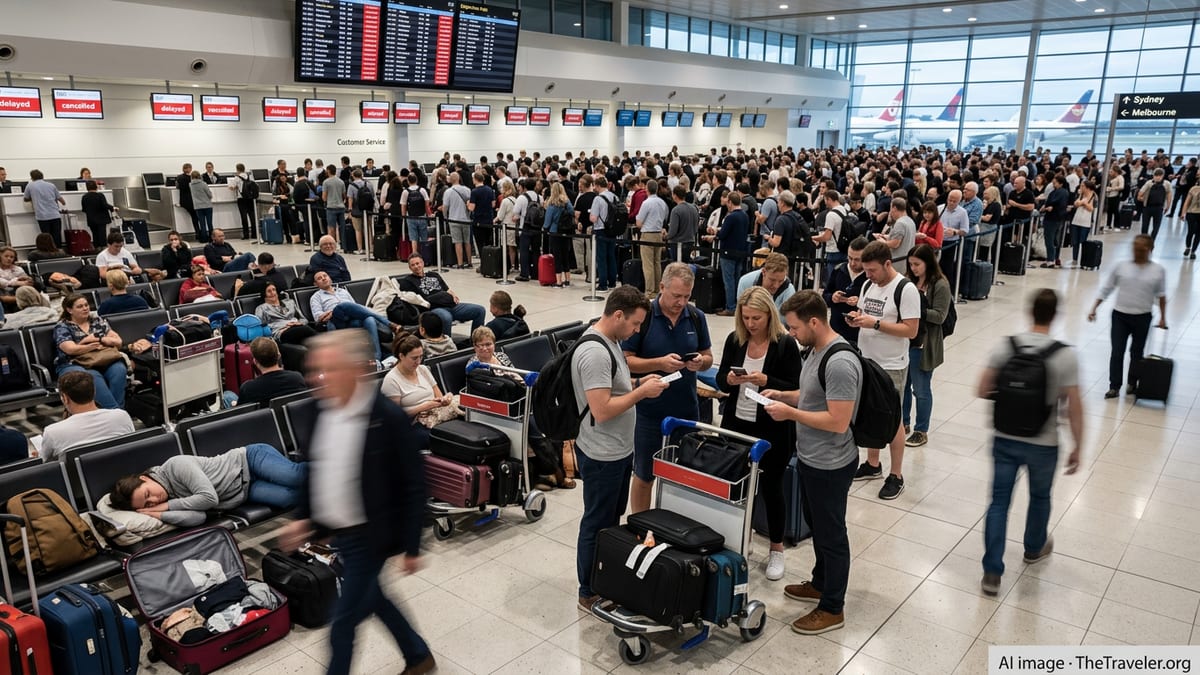
Micro-cations Gain Momentum Among Stressed US Travelers
After several years of volatile airfares, crowded hubs and rising living costs, many US travelers are shrinking their summer holidays rather than giving them up entirely. Industry surveys on consumer sentiment indicate that Americans are still eager to travel, but are increasingly favoring shorter, carefully planned trips that deliver maximum value and minimal logistical strain.
Micro-cations, typically defined as trips of three to five days, are gaining traction as workers juggle limited paid time off, budget pressures and a desire to avoid the exhaustion that sometimes follows long, complex vacations. Publicly available research on travel patterns suggests that quick domestic or near‑international getaways now account for a growing share of summer plans, especially among younger professionals and families with school‑age children.
Travel analysts describe these condensed journeys as a response to a wider culture of overwork and hyper‑connected routines. Rather than a single, once‑a‑year escape, many Americans are experimenting with multiple shorter breaks that can be fitted around work projects, childcare and other commitments, in the hope of preserving energy rather than returning from holiday more fatigued than before.
This shift is creating space for platforms that can assemble detailed itineraries on tight timelines, matching travelers with experiences that feel restorative, efficient and tailored to specific interests. It is within this context that Baboo Travel is seeking to differentiate its model for the 2026 summer season.
Baboo Travel’s AI-Assisted, Human-Led Model
Baboo Travel operates as a custom-trip platform that connects travelers with vetted local destination experts who design fully personalized itineraries. Company information and third‑party descriptions indicate that Baboo combines an online trip‑builder interface with an AI‑driven matching system that pairs users with specialists based on their stated preferences and travel style.
Once matched, travelers work with in‑destination experts to shape the details of a journey, from hotel selection and local transport to lesser‑known experiences that might not appear on standard package tours. Baboo’s materials emphasize that itineraries are built from the ground up rather than pulled from pre‑set templates, aiming to align pace, activities and budget with each traveler’s expectations.
The platform’s positioning highlights a blend of technology and human insight. Automated tools help collect preferences and streamline initial planning, while local experts, who live and work in the destination, handle on‑the‑ground nuance such as seasonal conditions, neighborhood dynamics and crowd patterns. This hybrid approach is presented as particularly suitable for shorter getaways where time is limited and missteps are costly.
Publicly visible customer reviews on independent platforms describe detailed planning support, frequent communication and adjustments for last‑minute changes, suggesting that the service is being used both for long, complex trips and more compact escapes. Baboo’s recent press materials also point to an emphasis on responsible and community‑oriented travel, including claims of over‑offsetting trip emissions and prioritizing local suppliers.
Micro-cations as a “Smart Escape” From Summer Burnout
As the 2026 peak travel period approaches, Baboo is increasingly framing micro-cations as a strategic antidote to workplace fatigue and seasonal overload. Marketing narratives and press coverage portray these short breaks as “smart escapes” that can be slotted between deadlines, school calendars and family obligations, offering a reset without the disruption of a two‑week absence.
In this framing, a micro‑cation is less about racing through as many sights as possible and more about curating a tight sequence of high‑impact experiences, interspersed with deliberate downtime. Baboo’s localized expertise allows itineraries to skip congested attractions in favor of off‑peak visits, neighborhood‑level dining and outdoor activities close to major gateways, reducing transit time and decision fatigue.
Industry observers note that this approach aligns with a broader move toward “quality over quantity” in leisure travel. For many American workers exposed to long hours and constant digital connectivity, the objective is to return home calmer and more focused rather than ticking off a list of must‑see landmarks. Micro‑cations designed with this in mind often emphasize easy transfers, centrally located stays and fewer hotel changes.
Reports on recent Baboo campaigns suggest that the company is tailoring messaging to US travelers who have postponed bigger international journeys or split them into two shorter segments. By emphasizing shorter lead times, transparent pricing and guidance from local experts, the platform is positioning micro‑cations as a lower‑risk way to travel even when economic or workplace conditions feel uncertain.
US Hotspots and Emerging Micro-cation Patterns
Micro‑cation demand linked to Baboo’s model appears to cluster around destinations that are reachable within half a day of travel from major US hubs. Publicly available information on sample itineraries shows a focus on experiences in Europe, Latin America, Africa and Asia, but the company also highlights options that begin or end in key US cities, encouraging Americans to combine short international hops with domestic recovery time.
Travel trade coverage indicates that destinations such as Greece, Italy and Japan remain popular for tightly planned, long‑weekend‑style itineraries for US travelers who are willing to cross time zones for a brief but intensive cultural immersion. At the same time, interest in nature‑rich escapes such as Costa Rica and selected African safari regions is feeding demand for micro‑cations that prioritize wildlife, outdoor activities and eco‑focused lodging.
Within the United States, publicly shared Baboo content points to growing attention on coastal stays, wine regions and national‑park‑adjacent towns that can be reached via a single flight and short transfer. These settings lend themselves to three‑ or four‑night stays centered on walking‑friendly neighborhoods, locally run guesthouses and guided day trips that make the most of limited time.
Analysts suggest that this pattern reflects a practical calculus: if travelers can avoid multiple layovers and long transfers at the start and end of a break, they gain additional usable hours on the ground. Platforms that can orchestrate door‑to‑door logistics around these parameters are likely to appeal to Americans who are wary of flight disruptions and jet lag but still want a sense of distance from everyday life.
Workplace Wellness, Budgets and the Future of Short Breaks
The rise of Baboo’s micro‑cation messaging intersects with broader conversations about workplace wellness and the sustainability of current work rhythms in the United States. Surveys by consulting and professional services firms over recent seasons consistently highlight burnout, financial pressure and limited time off as major constraints on summer travel decisions.
Within this environment, shorter, more intentional trips can function as a compromise between the desire to travel and the realities of employment and cost of living. By outsourcing complex planning to a platform that pairs AI tools with human experts, some travelers may feel more confident that even a three‑night trip will deliver a sense of novelty, rest and perspective.
Travel commentators caution that micro‑cations are not a complete answer to structural issues such as inadequate vacation policies or the mental‑health impacts of overwork. However, they note that services like Baboo’s custom itineraries respond to a clear demand: if Americans are going to carve out only a few days at a time, those days need to be carefully curated.
As the 2026 summer season unfolds, micro‑cations are likely to remain a prominent feature of the US travel landscape. Baboo Travel’s bet is that by blending technology, local expertise and an emphasis on responsible experiences, it can turn these short breaks into a repeatable, “smart” escape for travelers seeking relief from the country’s mounting summer burnout.