


More news on this day
Airlines and travelers using Bahrain and wider Gulf hubs face renewed uncertainty in July 2026, as fresh aviation security advisories highlight increased risks to civil flights amid escalating tensions with Iran.
Get the latest news straight to your inbox!
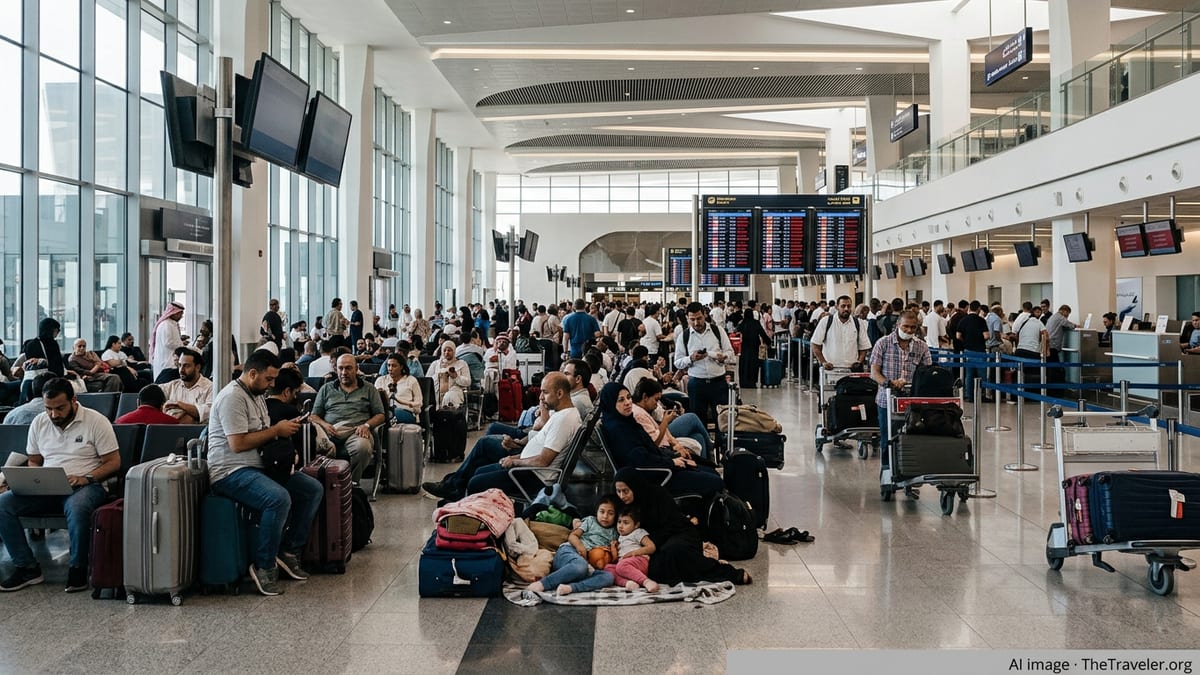
Heightened Conflict Zone Warnings Over Bahrain FIR
The latest conflict zone bulletins for the Middle East place Bahrain’s airspace squarely in focus, with European regulators now advising airlines to avoid the Bahrain Flight Information Region at all altitudes. Recent analysis on specialist aviation risk platforms notes that the Bahrain FIR has been repeatedly closed and partially reopened since early 2026, reflecting fluctuating assessments of missile and drone activity in the wider Gulf.
Conflict Zone Information Bulletins issued by the European Union Aviation Safety Agency extend earlier cautionary advice into a more explicit avoidance recommendation for operators transiting Bahrain, Kuwait, Qatar and the United Arab Emirates. Publicly available material describing the notices stresses that military action can occur with little warning in relatively confined airspace, limiting the time available for rerouting and heightening the risk of miscalculation involving civil aircraft.
Industry-focused operational briefings report that Bahrain has temporarily reconfigured some overflight tracks in recent weeks in an effort to keep key east-west corridors open while routing traffic away from higher-risk sectors. However, these measures are framed as short-term mitigations rather than a return to pre-crisis normality, underscoring the fragile status of the country’s role as a reliable aviation bridge between Europe and Asia.
For passengers, the shift from “caution” to “avoid” in formal guidance translates into a growing likelihood that flights will either bypass Bahrain’s airspace entirely or be subject to last-minute time and routing changes, even if airports in the kingdom remain technically open.
Iran–Gulf Tensions Drive New Security Messaging
The aviation warnings are closely tied to the broader security picture in the Gulf, where hostilities between Iran and the United States, along with reported Iranian strikes on neighboring states, have intensified since late February 2026. Publicly available reporting from regional outlets describes a series of attacks on energy, port and airport infrastructure across the Gulf, including sites in Bahrain and Kuwait, which officials in the region have characterized as a serious threat to civil aviation safety.
Travel advisories published by several governments now explicitly link the risk of drone and missile attacks from Iran to likely disruptions of commercial air services. Updated guidance for Bahrain urges travelers to keep departure plans under frequent review, citing previous occasions in 2026 when simultaneous airspace closures and border restrictions left travelers with few immediate options to leave by air or land.
Analyses of Iran’s tactics in the current confrontation highlight the use of long-range drones and ballistic missiles capable of crossing busy air corridors over the Gulf. Aviation safety commentators warn that even when such weapons are not specifically aimed at aircraft, their presence in crowded skies complicates air traffic management and increases the potential for misidentification, debris hazards and emergency diversions.
Against this backdrop, Bahrain’s own public statements regarding regional security risks have become more pointed. Coverage in Gulf-focused media notes that the kingdom has catalogued hundreds of attacks attributed to Iran on civilian and infrastructure targets across the region in recent years, framing the pattern as a cumulative challenge to Gulf stability and to the safe operation of air transport.
Knock-On Effects for Airlines and Passenger Itineraries
For airlines, the immediate operational question is how to maintain viable schedules between Europe, Asia and Africa without traversing airspace currently rated as high risk. Trade publications focusing on route planning and network strategy report that some European carriers have already shifted long-haul services away from traditional Gulf hubs, opting for longer northern or southern routings that add flight time and fuel costs.
Business aviation and general aviation operators face particular complexity because their smaller fleets and more bespoke routings offer fewer opportunities to spread the operational impact of detours. Specialist operations briefings describe a “compression” of usable airspace over the Middle East, as carriers simultaneously seek to avoid Iran, Iraq and Lebanon alongside Bahrain and portions of the Gulf of Oman. The result is crowded alternative corridors over safer regions, putting additional pressure on air traffic control resources there.
For travelers transiting through Bahrain or neighboring hubs, these shifts can manifest as extended journey times, missed connections and short-notice schedule changes. Industry advisories aimed at passengers emphasize that an airport’s open status does not guarantee that every advertised flight will operate, especially when foreign regulators urge carriers from their jurisdictions to avoid certain flight information regions altogether.
Some Gulf-based airlines are attempting to preserve connectivity by retiming departures and threading narrow “safe corridors” coordinated with regional air navigation service providers. Publicly available routing data suggests that departures from certain Gulf airports are performing unusual loops or arcs to gain altitude away from sensitive borders before turning onto long-haul tracks, a pattern that reflects operational attempts to balance safety considerations with commercial imperatives.
Government Advisories and Traveler Risk Calculus in 2026
Government travel advisories for Bahrain in mid-2026 present a more cautious landscape than in previous years, even as the country remains an important regional hub. Updated notices from Western governments generally stop short of advising citizens to avoid Bahrain entirely, but they do flag the potential for rapid deterioration in the security environment and for sudden disruption of air links.
Official guidance directed at travelers frequently recommends monitoring airline communications closely, having flexible onward travel plans and preparing for the possibility that exit routes could be restricted at short notice. These advisories also point to the distinct roles of aviation regulators and foreign ministries: while safety agencies assess the technical risk to aircraft in flight, foreign ministries and consular services focus on broader security issues such as missile threats, protests and infrastructure vulnerability.
For individuals planning trips through Bahrain International Airport, the practical impact of these layered warnings is a more complex risk calculation. Travelers may find that insurers treat transits through certain conflict-affected airspaces as higher risk, potentially affecting coverage. At the same time, aviation oversight bodies reiterate that local civil aviation authorities in Bahrain continue to meet international standards for safety oversight, highlighting the distinction between systemic safety performance and elevated external security threats.
In this environment, analysts suggest that 2026 will be remembered as a year when Gulf aviation relied heavily on real-time risk assessment, contingency routing and rapid regulatory coordination. With the conflict between Iran and its adversaries still unresolved, the status of Bahrain’s skies remains a barometer of wider regional security concerns, and a critical factor for the global travel industry’s efforts to maintain reliable east–west connectivity.