


More news on this day
Bahrain’s push to deepen air and tourism links with neighbors such as Qatar, Saudi Arabia and Lebanon is unfolding against a volatile regional backdrop, as Switzerland issues urgent travel cautions highlighting the risks that persist despite a fragile mid‑June ceasefire on the Lebanon front.
Get the latest news straight to your inbox!
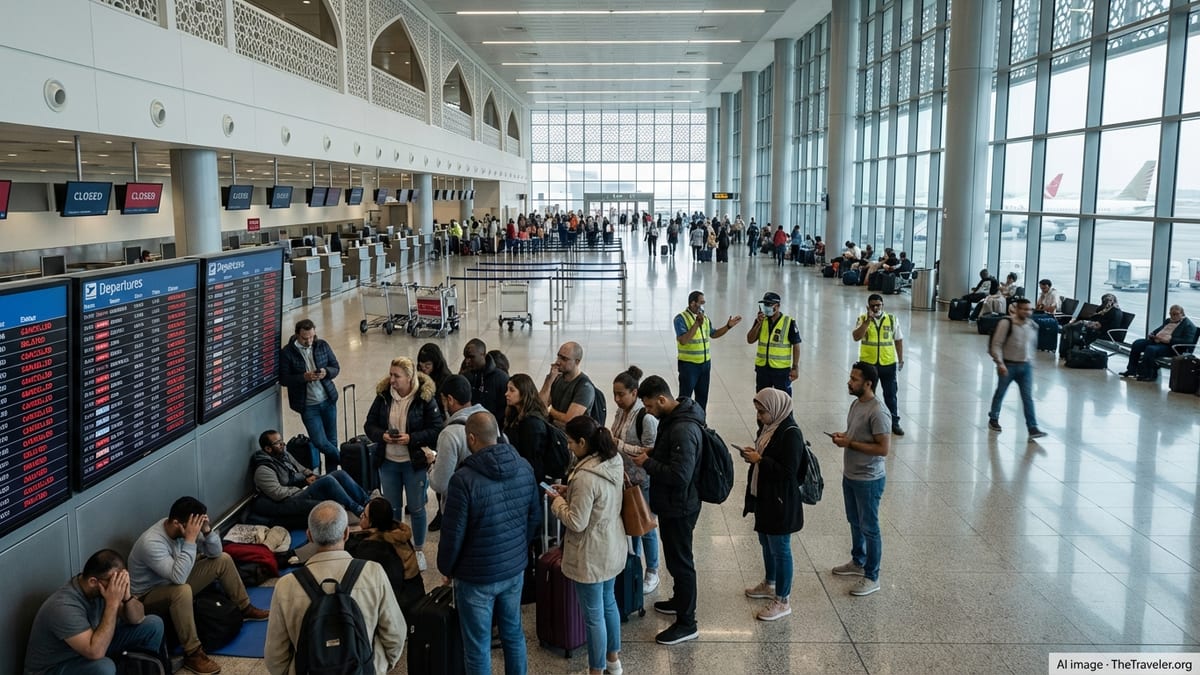
Bahrain Expands Gulf Connectivity Amid Regional Volatility
Publicly available aviation and tourism data show Bahrain positioning itself as a key connector in the Gulf, with expanded air services to Qatar and Saudi Arabia and marketing campaigns aimed at keeping visitor flows resilient despite conflict-related headwinds. Recent network updates by leading Gulf carriers indicate that Bahrain is again firmly embedded in regional schedules, with daily services knitting Manama into a dense web of routes across Doha, Riyadh and other hubs.
These developments are part of a broader strategy by Bahrain to reinforce its role as a transit and short-break destination for regional travelers. Industry reporting notes steady investment in airport infrastructure, new hotel inventory and cruise facilities intended to capture pent-up demand from Gulf residents once conditions allow more confident travel planning.
However, the timing of this connectivity push coincides with an unsettled security picture along key corridors to the north and west. While direct services between Bahrain and the main conflict zones remain limited or heavily regulated, the country’s growing reliance on regional links exposes its aviation and tourism sectors to sudden shifts in risk assessments and traveler sentiment.
Travel companies active in the Gulf describe a landscape where booking patterns can change quickly in response to headlines, even when the immediate destination is considered relatively stable. Bahrain’s challenge is to keep strengthening physical links with its neighbors while reassuring travelers that it is insulated, as far as possible, from flashpoints elsewhere in the Middle East.
Fragile Ceasefire Reshapes Risk Calculus in Lebanon
The regional picture was jolted in mid June by a renewed ceasefire arrangement on the Lebanon front following months of intense hostilities between Israel and Hezbollah. International coverage indicates that the truce, brokered with the involvement of outside powers, was designed to halt cross-border fire and stabilize southern Lebanon after heavy casualties and large-scale displacement.
Despite the announcement, reports from humanitarian agencies and news outlets describe a ceasefire that remains incomplete and vulnerable. Skirmishes, alleged violations and continuing military posturing on both sides have been documented since the mid June understanding took effect, underlining that the agreement is more a pause in open conflict than a definitive settlement.
For travelers and the tourism industry, Lebanon’s situation is particularly complex. Long known for its cultural attractions, cuisine and coastline, the country has seen international visitor numbers plunge as the war, economic crisis and infrastructure damage have converged. Even with fighting reduced in some areas, the risk of sudden escalation, road closures and disruptions to basic services remains significant.
Industry analysts observe that airlines, cruise operators and tour companies are reluctant to restore capacity or marketing in Lebanon until there is sustained evidence of calm on the ground. The mid June ceasefire has so far not met that threshold, keeping Lebanon in a holding pattern where its tourism potential is constrained by security and political uncertainty.
Switzerland Issues Heightened Travel Cautions Across the Middle East
Against this backdrop, Switzerland has sharpened its travel advisories for parts of the Middle East, including Lebanon and neighboring conflict-affected areas. Updated guidance from the Federal Department of Foreign Affairs highlights what it describes as an unstable and unpredictable security environment, referencing ongoing hostilities, sporadic ceasefire breaches and the risk of further regional spillover.
The Swiss advice underscores that, despite formal ceasefire announcements, conditions on the ground can deteriorate rapidly, particularly along borders and in areas hosting armed groups. Travelers are urged to avoid non-essential trips to certain countries or specific regions and to remain prepared for abrupt changes to flight schedules, local movement restrictions or communications outages.
Publicly available Swiss documentation also points to a deteriorating humanitarian picture in several Middle Eastern states affected by the broader conflict cycle, including Lebanon, Syria and Yemen. Damage to health facilities, roads and power networks is cited as an additional factor complicating any potential leisure or business travel, as it can affect access to medical care, evacuation options and basic services.
Although each European government frames its warnings differently, Switzerland’s detailed risk assessments are closely watched by tour operators, insurance providers and multinational companies. Stricter guidance from Bern can influence corporate travel policies, premiums for coverage in high-risk zones and the broader perception of Middle Eastern destinations among European travelers.
Gulf Travel Hubs Balance Growth With Precaution
For Gulf states such as Bahrain and Qatar, the current phase of the Middle East crisis is testing how far ambitious connectivity plans can proceed alongside elevated security concerns. Aviation intelligence and capacity data show carriers in the region steadily rebuilding and re-routing networks, often favoring intra-Gulf and Asia-bound services while maintaining a cautious stance toward routes that touch conflict-affected airspace.
Industry observers note that Bahrain’s links with Qatar and Saudi Arabia are benefiting from this recalibration, as travelers look for itineraries that avoid known hotspots while still accessing family, business and religious travel markets. At the same time, airlines must contend with longer flight paths, airspace restrictions and higher operating costs associated with detours around contested zones.
Insurance and risk management considerations add another layer of complexity. Underwriters and corporate security teams closely follow government advisories such as those issued by Switzerland when determining whether to approve travel, charter flights or events in the region. A single high-profile incident, even if geographically distant from Bahrain, can trigger tighter rules that affect ticket sales and route profitability.
To navigate this environment, Gulf tourism boards have increasingly emphasized safety protocols, crisis preparedness and the relative distance of their destinations from active fronts. Bahrain’s marketing materials, conference bids and cruise pitches now routinely highlight its infrastructure and perceived stability, while acknowledging that traveler confidence is heavily influenced by developments well beyond its borders.
Outlook: Opportunity Tempered by Persistent Uncertainty
Looking ahead, analysts see a Middle East travel landscape defined by sharp contrasts. On one side stand destinations such as Bahrain and parts of Saudi Arabia that are investing heavily in connectivity and tourism diversification. On the other stand conflict-affected countries, including Lebanon, where security conditions and reconstruction needs remain formidable obstacles to recovery.
The mid June ceasefire and subsequent diplomatic efforts around Lebanon are being watched closely for signs that a more durable arrangement could take hold. If violence diminishes and reconstruction plans gain traction, airlines and tour operators may gradually reassess the viability of limited services or niche itineraries. For now, however, most forecasts suggest that mainstream tourism to Lebanon will remain highly constrained.
European travel advisories, including the latest Swiss guidance, will be a critical barometer for how quickly sentiment might improve. Any future relaxation of restrictions would likely signal a broader perception of reduced risk and could open the door to carefully managed returns of cultural tourism, business events and diaspora visits.
Until then, Bahrain’s expanding links with regional partners underline how the Gulf’s better-positioned hubs are absorbing demand that might once have flowed more widely across the Middle East. The region’s travel map is being redrawn not by distance alone, but by the shifting balance between opportunity and security in an era of fragile truces and evolving conflict dynamics.