


More news on this day
New investigative findings into the fatal Bedford rail collision indicate that the driver of a London-bound passenger service passed a red signal shortly before his train struck the rear of another East Midlands Railway service, killing him and injuring more than 100 people.
Get the latest news straight to your inbox!
Preliminary Findings Highlight Signal Passed at Danger
According to publicly available information from the Rail Accident Investigation Branch, data from railway systems and on-board recorders indicates that the southbound East Midlands Railway service driven by 60-year-old Shaun Burton passed a red signal before colliding with a stationary train near Bedford on 19 June 2026. The incident occurred on the busy Midland Main Line during the evening peak, on a section of track where both trains were heading towards London St Pancras.
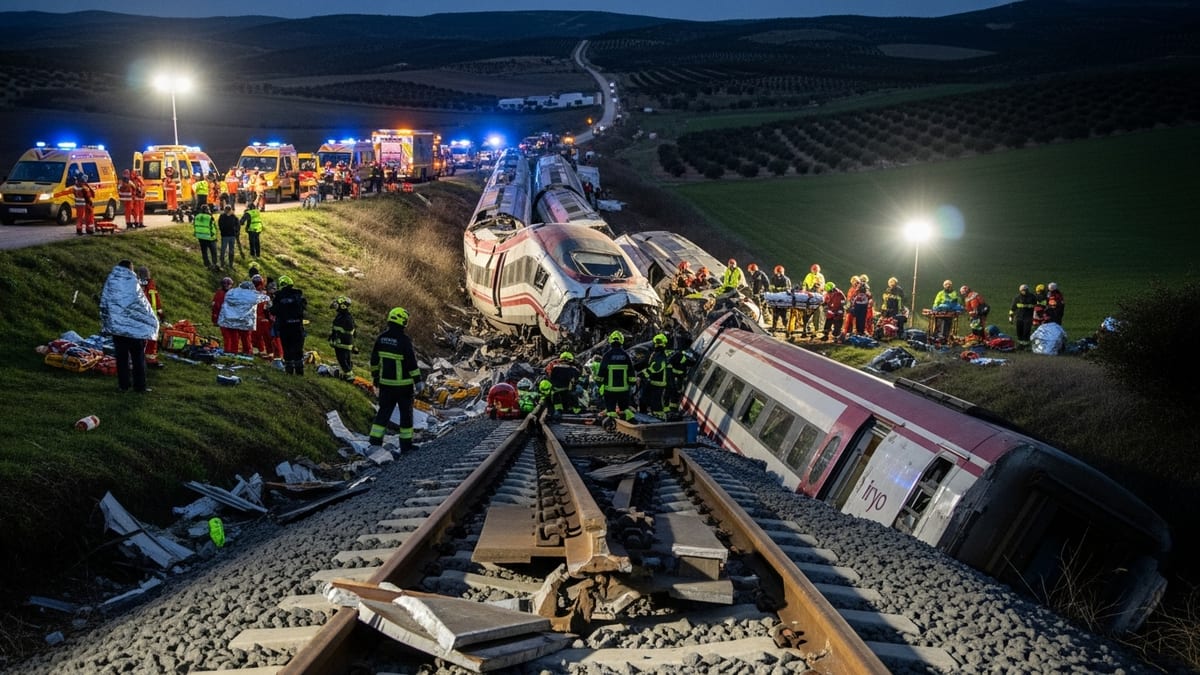
Published coverage states that the London-bound service driven by Burton had departed Bedford station and continued along the Up Slow line when it passed a signal that was showing red, a situation known in the rail industry as a signal passed at danger. Moments later, the train ran into the back of another East Midlands Railway service that had halted further down the line. The impact crushed the leading cab of the moving train and caused extensive damage to several carriages.
Investigators have emphasized that the current findings are preliminary and focus primarily on clarifying the sequence of events rather than assigning responsibility. The full investigation is expected to examine the interaction between the signalling system, on-board safety equipment and the actions taken in the cab in the seconds between the red signal being passed and the collision.
Casualties, Scale of Injuries and Passenger Accounts
Reports indicate that the collision led to the death of Burton, a veteran driver and former union representative, and left around 100 passengers needing medical treatment. Emergency services reported multiple serious and very serious injuries, including fractures and head wounds, as passengers were thrown from seats and into internal fittings at the moment of impact.
Accounts compiled in British media describe carriages strewn with luggage and shattered glass, with some passengers assisting others as they waited to be evacuated. Several witnesses have spoken of bloodied faces and people rendered temporarily unable to move, underlining the force of the rear-end impact despite both trains traveling in the same direction on the same line.
Passenger narratives also highlight the confusion that followed, with some individuals initially unsure of the cause of the sudden jolt and others describing how the train lighting flickered as carriages twisted on the track. These accounts are likely to form part of the wider picture considered by investigators as they reconstruct the exact conditions inside the train at the time of the crash.
Focus on Safety Systems and Signalling Protections
The Bedford collision has intensified scrutiny of how modern signalling and train protection systems function on one of the country’s key intercity corridors. Published analysis explains that, on routes like the Midland Main Line, drivers are usually protected by multiple layers of safety measures designed to prevent collisions when a signal turns red ahead of a stopped train.
These defences typically include lineside colour-light signals, an Automatic Warning System, and more recent train protection technologies that automatically apply the brakes if a red signal is passed without proper acknowledgement in the cab. Investigators are expected to examine how these systems were configured on the approach to the signal involved in the Bedford crash, whether any technical anomalies occurred, and how quickly warning information was transmitted once the leading train came to a halt.
Railway specialists quoted in national coverage note that serious passenger rail crashes have become relatively rare events in Britain, which makes a fatal rear-end collision between two mainline passenger services particularly significant. The Bedford findings are expected to be studied closely by industry experts and government bodies for any lessons on human factors, technology and operational rules that could reduce the risk of similar incidents.
Disruption for Travelers and Recovery of the Line
The crash took place just south of Bedford, on a stretch of track that carries frequent services connecting the East Midlands and northern England with central London. In the days that followed, travelers on East Midlands Railway and other operators experienced substantial disruption as engineers worked to stabilize the site, remove damaged carriages and repair the infrastructure.
Reports describe a complex recovery operation, with overhead power lines taken down, heavy rail-mounted cranes brought in to lift wrecked vehicles, and a temporary access road built across farmland to allow plant and equipment to reach the site. Timetables on the route were heavily curtailed, replacement buses were deployed, and journey times lengthened as trains were diverted or turned short of normal destinations.
Network Rail has characterized the event in public statements as a tragic, isolated incident while cautioning that detailed conclusions must await the final investigation reports. For regular users of the line, however, the collision has meant days of altered journeys and uncertainty, underlining how a single high-impact event can ripple across one of the busiest intercity corridors in the country.
Implications for Rail Safety and Public Confidence
The revelation that the driver passed a red signal before the collision is likely to shape public debate about how Britain’s railways manage risk at a time of growing passenger demand. Commentaries in national newspapers suggest that the Bedford crash will sit alongside previous serious incidents of the past decade in framing questions about how to balance investment in new safety technologies with the realities of operating an aging, heavily used network.
Observers expect the Rail Accident Investigation Branch to look closely at a range of potential contributing factors, including the driver’s workload and route familiarity, the clarity and sequencing of signal aspects on the approach to Bedford, and the performance of automatic train protection systems. Attention is also likely to fall on how quickly warning messages were sent to following trains once the earlier London-bound service came to a stop.
For travelers, the tragedy reinforces both the rarity and the impact of serious mainline accidents. While statistical evidence continues to show that rail remains among the safest modes of long-distance transport, the Bedford collision serves as a stark reminder that the margin for error on high-speed, high-density routes is slim and that any failure in the chain of defences can have devastating consequences for staff and passengers alike.