


More news on this day
Rail communication to and from Chattogram was disrupted for several hours after a locomotive failure and a separate derailment in Cumilla severed key intercity routes, leaving hundreds of passengers stranded on one of Bangladesh’s busiest rail corridors.
Get the latest news straight to your inbox!
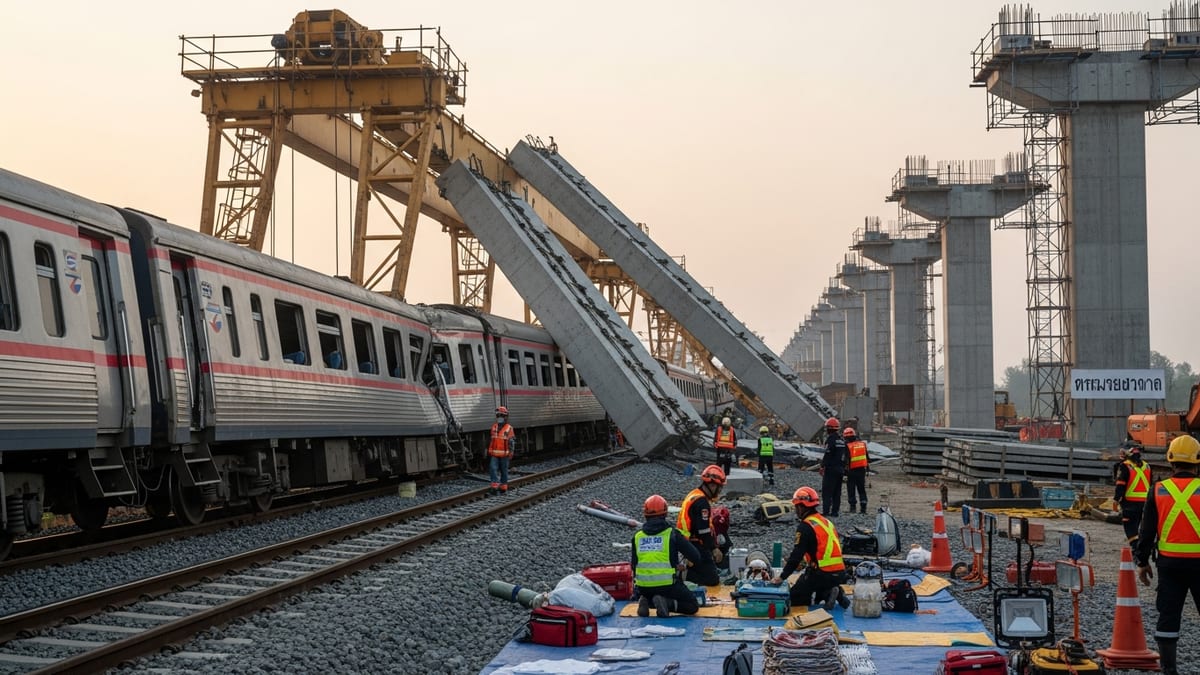
Twin incidents halt trains on key Cumilla sections
According to published coverage from national outlets, rail links serving Chattogram were interrupted when the engine of one train failed near Hasanpur Station in Nangalkot upazila of Cumilla, while another service derailed on a separate stretch of track in the Gunabati area of Chauddagram upazila. The disruptions occurred within a short time window, effectively bringing traffic to a standstill on segments that serve as vital connectors between Chattogram, Dhaka and other major cities.
Reports indicate that the broken-down locomotive came to a halt close to a station, blocking one of the main lines and forcing following trains to stop or be held at preceding stations. Around the same period, four coaches of another train derailed on a nearby section, cutting capacity on the alternate route. Together, the two incidents snapped rail communication with Chattogram for several hours and created a backlog of delayed trains across the eastern network.
Initial information suggests that both trains were regular intercity passenger services carrying significant numbers of travelers. The affected sections lie within Cumilla district, a recurring bottleneck point where multiple routes converge on the way to and from the port city.
Local media coverage notes that such simultaneous disruptions are uncommon but highly impactful, given that this corridor handles a large share of daily long distance passenger movements between Chattogram and the rest of the country.
Passengers stranded and services diverted
Publicly available information shows that the suspension of operations left many passengers stranded both onboard trains and at intermediate stations. Trains already in motion toward Chattogram were forced to stop en route, while those yet to depart Dhaka and other origins were held back until there was clarity on line availability.
Images and descriptions carried in local reports describe crowded platforms where travelers waited through the afternoon and evening for announcements, some seeking alternative transport by road. Intercity services that could not proceed on schedule were either cancelled, turned back short of destination, or delayed for several hours while the rail authority organized recovery efforts.
In some cases, passengers were reported to have remained in carriages for extended periods while the damaged engine and derailed coaches were cleared. Vendors and staff at station facilities faced increased pressure as people waited in hot and humid conditions, with little certainty about departure times.
The disruption also affected connecting journeys, as travelers who had planned to change trains at junctions such as Laksham or Cumilla needed to rework itineraries or postpone trips entirely. For many, the incident underscored the vulnerability of relying on a single main corridor without robust contingency capacity.
Recovery trains, technical inspections and resumption of traffic
Reports indicate that a dedicated relief or recovery train was dispatched from Chattogram to the affected sections to remove the failed locomotive and re rail the derailed coaches. Heavy lifting equipment and engineering crews worked along the blocked stretches to clear rolling stock and inspect the condition of sleepers, ballast and rails.
Once the damaged engine was detached and moved away, limited traffic reportedly resumed at restricted speed on the section where the failure occurred. On the derailed segment, services only restarted after the coaches were lifted back onto the track and emergency repairs were completed. Initial resumption took place on one line while checks continued on the parallel track.
Published coverage suggests that full capacity was restored gradually over several hours, with priority given to long distance intercity trains carrying large numbers of passengers. Even after the formal reopening, delays continued as dispatchers worked through a queue of halted trains and adjusted timetables to accommodate missed paths.
Railway engineers were cited in earlier Cumilla incidents as warning that repeated thermal stress, high axle loads and tight schedules can accelerate wear on aging infrastructure. In the latest disruptions, the exact technical causes of the engine failure and derailment are still being examined, but the events have renewed scrutiny of rolling stock maintenance and track condition on this busy route.
Pattern of rail disruptions on the Dhaka–Chattogram corridor
The latest stoppage fits into a broader pattern of rail incidents affecting Chattogram bound services in recent years. Previous derailments in Cumilla district, including those involving intercity trains such as the Bijoy Express and Mahanagar Express, have repeatedly severed rail communication between Chattogram and the capital for many hours at a time, according to earlier news reports.
Those earlier events damaged significant lengths of track and required extensive recovery operations, highlighting the fragility of a corridor where even one accident can ripple across multiple routes. The recurrence of incidents in and around Nangalkot and other Cumilla upazilas has led transport analysts cited in local coverage to call for a more systematic program of track renewal, signaling upgrades and stricter enforcement of speed limits on vulnerable stretches.
In addition to derailments, engine failures have also emerged as a frequent cause of disruption on the eastern network. Published information on past cases points to mechanical breakdowns that leave locomotives stranded on open track, forcing temporary suspensions while rescue trains are organized.
Together, these patterns raise questions about the resilience of the Dhaka Chattogram main line. For travelers and businesses that depend on punctual rail services, even a few hours of interruption can mean missed appointments, supply chain delays and extra costs for road transport alternatives.
Calls for investment and safety focused reforms
Following the latest engine failure and derailment in Cumilla, commentary in national media has again drawn attention to the need for sustained investment in Bangladesh’s rail infrastructure. Analysts and transport specialists quoted in previous derailment coverage have emphasized that sections of track on the key corridor are carrying more traffic than they were originally designed for, while maintenance budgets and technical capacity remain under pressure.
Proposals highlighted in open sources include accelerating double tracking where it is incomplete, modernizing signaling to reduce the risk of collision and derailment, and expanding the fleet of modern locomotives with improved safety systems. Advocates also point to the importance of rigorous periodic inspections of rails, sleepers and fastenings, especially in areas exposed to high temperatures, heavy freight trains or frequent service.
For passengers, recent disruptions have reinforced the importance of timely and transparent communication about delays, cancellations and expected restoration times. Some commentators have suggested that clearer updates via station announcements, mobile messages and media briefings could ease uncertainty and allow travelers to adjust plans more effectively during major incidents.
As train movements on the affected sections gradually normalize, attention is likely to focus on the official findings of the technical investigations and on whether any longer term remedial measures are adopted. The latest interruption of Chattogram’s rail links adds urgency to ongoing debates about how to make the country’s busiest passenger corridor safer and more reliable for the growing number of people who depend on it.