


Vigeland Sculpture Park in Oslo appears in almost every guidebook as a must see, yet many travelers treat it as a fast photo stop between museums and fjord views. What they often miss is that this is not just a collection of statues but a carefully designed installation inside Frogner Park, with its own rhythms, local habits, and unspoken rules. Understanding these before you go can turn a 30 minute detour into one of the most memorable experiences of a trip to Norway.
Get the latest updates straight to your inbox!
Know What You Are Actually Visiting
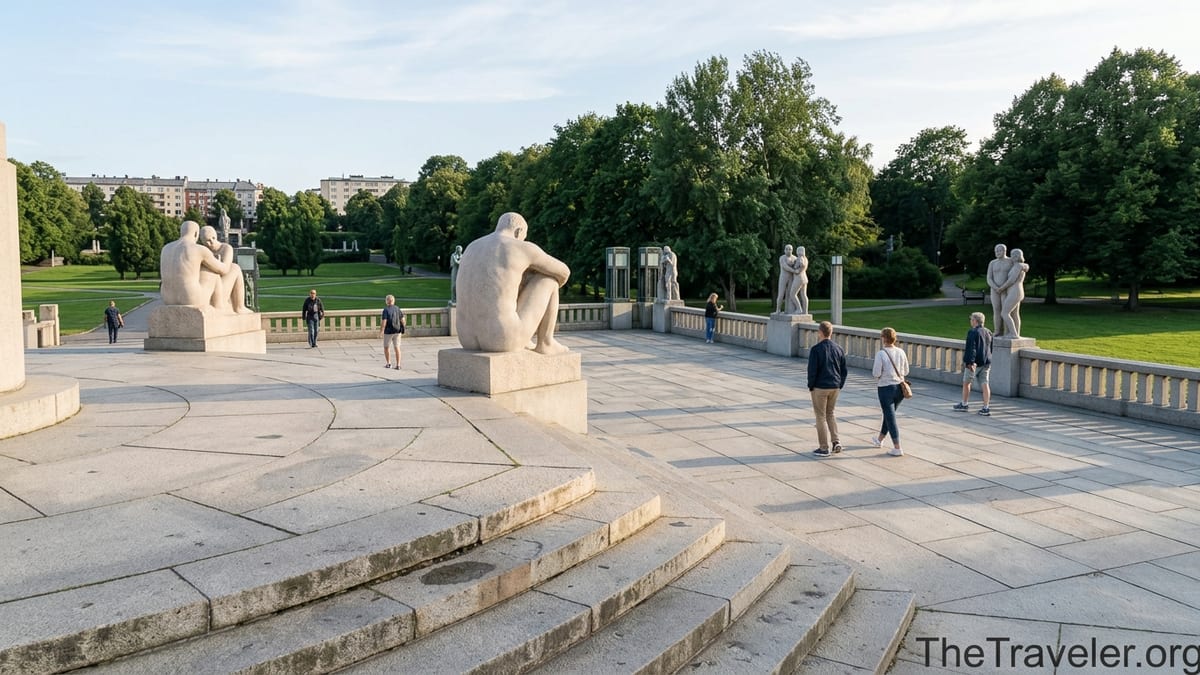
One of the first things most visitors miss is the name and nature of the place itself. Strictly speaking, there is no official “Vigeland Park.” The sculptures are part of the Vigeland installation inside Frogner Park, a large historic green space a few kilometers west of central Oslo that locals simply call Frognerparken. The entire park, together with the installation, is protected as a cultural heritage site, which means it is managed less like an outdoor theme park and more like a living monument within a neighborhood.
This matters because it changes how you experience it. If you arrive expecting a fenced attraction with a ticket gate, you may be surprised to find people jogging past granite figures, pushing prams over cobbled bridges, or sunbathing on the lawns near the Monolith plateau. For Oslo residents, this is their local park first and a major attraction second. Approaching it with that mindset helps you blend in and appreciate how the art is woven into daily life.
Many guidebook descriptions focus on a handful of famous works such as the Monolith, the Wheel of Life and the small bronze Angry Boy. In reality, the installation includes more than 200 sculptures in bronze, granite and wrought iron arranged along a central axis from the main gate to the highest point of the park. The progression is deliberate. Rather than rushing straight to the Monolith for a quick selfie, giving yourself time to walk that axis slowly turns the visit into a narrative about the stages of human life, which is how Gustav Vigeland intended it to be seen.
It is also important to understand that the park is always open and always free. There are no timed tickets or entry queues. The only part that charges admission is the adjacent Vigeland Museum, housed in the sculptor’s former studio east of the park. Many visitors never realize the museum exists or that it holds models, drawings and early versions of pieces they just saw outdoors, which can be particularly valuable on a rainy day when wandering the lawns is less appealing.
Getting There Without Wasting Time or Money
Because maps and hotel concierges often refer to “Vigeland Park” as if it were far from everything, some travelers spend more time getting there than they need to. In fact, the park sits only a few kilometers west of central Oslo. On a mild day, it is roughly a 30 to 40 minute walk from the area around Oslo Central Station if you take a direct route through the city center and past the Royal Palace, though hills and weather can make this feel longer for some visitors.
Public transport is usually the most efficient option. Local tram lines stop at Vigelandsparken and at nearby Frogner plass, both a short walk from the main gate. Travelers staying in central areas such as Jernbanetorget, Nationaltheatret or Aker Brygge can normally reach the park in about 15 to 20 minutes by taking a tram that passes west through the city’s core and into the Frogner district. Regular city buses also serve stops around the park, including routes that run along the ring road skirting its northern edge.
For many first time visitors, the Oslo Pass can be a practical choice if they plan to combine Vigeland with other attractions on the same day. The pass typically covers city trams, buses, metro and local trains within the central zones and offers free or discounted admission to numerous museums. While the park itself does not require a ticket, the pass can include the Vigeland Museum and nearby sites such as the Norwegian Museum of Cultural History and the Viking Ship Museum area on the Bygdøy peninsula, making a combined day of culture and outdoor time straightforward.
Taxis and ride hailing services are widely available, though they are rarely necessary solely for the park. A taxi from the central station area will usually take around ten minutes in light traffic but can be significantly more expensive than a short tram ride. Unless you have mobility issues or are traveling late at night when tram service is reduced, public transport tends to be the better value, and stops are clearly marked with digital screens detailing departure times.
Timing Your Visit for Light, Crowds and Weather
Many people drop by Vigeland in the middle of a busy sightseeing day, often around late morning to early afternoon. This is precisely when tour groups and cruise ship buses are most likely to arrive. The result can be crowded steps around the Monolith, lines of people waiting to pose next to the Angry Boy, and tour leaders raising umbrellas to keep their groups together. If your schedule allows, it is worth planning around this pattern.
Locals and guides often recommend early morning or late afternoon, and for good reason. In the quieter first hour after breakfast, the park can feel almost contemplative. Joggers use the main paths, gardeners tend to flower beds and the bronze and granite appear softer in the low sun. On long summer days, late evening can be magical. In June and July, Oslo enjoys very extended daylight, and it is possible to wander the park in gentle light even after many indoor attractions have closed.
Weather is also a bigger factor than many travelers expect. In winter, snow and ice can transform the sculptures into something stark and dramatic, but also make some paths slippery and require warmer clothing than you might have packed for urban sightseeing. A typical January or February afternoon can feel very different from an August evening when families spread out on the grass with picnic blankets. Checking the forecast the day before you plan to go and dressing for wind and temperature will make lingering around the open plateau or the central fountain much more comfortable.
Photography is another element where timing matters. Midday sun, especially on clear summer days, can cast harsh shadows across the faces of the statues and make it difficult to capture both detail and sky. Flexible visitors who arrive in the first or last two hours of daylight often find softer light, fewer people stepping into their frame, and more freedom to move around popular pieces like the wheel of intertwined bodies on the Monolith plateau.
Reading the Park: Context That Most Tours Skip
Without preparation, it is easy to wander the Vigeland installation and see it simply as a collection of curious, sometimes playful human figures. Yet the park is full of symbols and patterns that guidebooks and quick tours only briefly mention. One of the most helpful things you can do before visiting is to read a short overview of Gustav Vigeland’s life and his collaboration with the city of Oslo, then think of the park as a single artwork about the human condition rather than a set of independent pieces.
The main axis is laid out almost like a life story. As you pass through the wrought iron main gate and walk across the bridge, you meet figures representing childhood, play, and family life. Closer to the fountain and Monolith plateau, the tone shifts to scenes of struggle, aging and loss. The Monolith itself, carved from a single block of granite, shows intertwined bodies climbing and falling, a dense column of humanity that has sparked many interpretations, from spiritual striving to the repetition of generations.
Some individual works have become informal landmarks. The small bronze Angry Boy, with his clenched fists and furious face, has achieved such popularity that his hand has been polished shiny by generations of visitors who touch it for luck or simply for a photograph. Nearby, tablets explain basic facts about the sculptures, but many visitors never pause long enough to connect what they see with the broader theme of relationships, vulnerability and resilience that runs throughout the park.
If you enjoy audio explanations, consider downloading an audio guide or podcast episode about the park before your trip, as onsite interpretation is relatively minimal. Alternatively, joining a local walking or cycling tour that includes Vigeland can provide context that you might not gain just by following the crowds. Some guides lead small groups through the grounds, pointing out details like the shift in facial expressions across stages of life or the way the same motifs repeat in the ironwork, stone and bronze.
Local Etiquette, Unspoken Rules and Safety
Because Frogner Park is both a neighborhood park and a major attraction, visitors are often unsure how relaxed they can be. In practice, everyday Norwegian park etiquette applies. Sitting on the grass, reading on a bench and enjoying a picnic around the outer lawns are all common and accepted, especially on warm days. At the same time, there is a strong expectation that people respect the sculptures, plantings and roped off areas.
Climbing on statues is not allowed, even if you see children doing so briefly for a family snapshot. The surfaces can be surprisingly smooth and slippery, especially when wet or icy. Similarly, stepping over low chains or onto flower beds for a better angle is frowned upon and may draw a gentle warning from staff. Dogs are welcome in much of the park but should be kept on a leash except in clearly marked off leash zones, and owners are expected to clean up after their pets.
Alcohol rules can catch visitors off guard. Norway has strict regulations on public drinking, and while you might see small groups quietly sharing wine on picnic blankets, it is safer to assume that obvious or rowdy drinking is not permitted. If you wish to enjoy a drink, nearby cafes, bars and restaurant terraces in the Frogner district are a better choice than bringing bottles into the park. Smoking is generally allowed outdoors but visitors typically move away from crowded spots like the Monolith steps out of consideration for others.
On the question of safety, Vigeland and Frogner Park are usually considered very safe by big city standards. Families with young children, runners and older locals share the paths even in the early morning or later in the evening in summer. As in any urban park, it is wise to stay aware of your belongings, especially around popular photo spots where people are distracted, and to avoid secluded corners after dark if you are alone. Basic precautions such as wearing a small crossbody bag rather than leaving items on a bench while you step away will usually suffice.
Planning Around Facilities, Food and Nearby Sights
Because there is no ticketed entrance, some visitors assume there will be limited facilities inside the park. In reality, Frogner Park has several practical amenities, though they may be more dispersed than at a conventional attraction. Public toilets are available near key areas, but it is sensible to note their locations before you start wandering. In the warmer months, small kiosks and seasonal stands often sell ice cream, coffee and simple snacks near the main gates and along popular paths.
For more substantial meals, most options lie just outside the park in the surrounding Frogner neighborhood. Within a five to ten minute walk, you can find cafes serving open faced sandwiches, espresso bars, and relaxed bistros with outdoor seating when the weather allows. Some travelers bring their own picnic supplies instead, picking up bread, cheese and fruit from supermarkets near central tram stops before heading west. On quiet weekdays, you might see office workers in shirtsleeves sharing lunch on the grass among dog walkers and students.
Travelers with limited time often overlook how well Vigeland can be combined with other sights. The Vigeland Museum sits a short walk from the southern edge of the park and offers an indoor counterpart to the open air sculptures, including plaster models and works that did not make it into the final installation. Further afield but still within easy reach are the museums on Bygdøy, the Royal Palace grounds, and residential streets lined with early twentieth century townhouses that give a sense of Oslo’s quieter side.
If you are traveling with children, it is worth knowing that Frogner Park also includes large playgrounds and open lawns away from the densest sculpture areas. These spaces allow children to run and play without the pressure of staying off plinths and stone railings. Planning your route to alternate between art focused sections and more relaxed green spaces can keep younger travelers engaged and avoid constant reminders not to touch or climb.
Common Visitor Mistakes and How to Avoid Them
One of the most frequent missteps is treating Vigeland as a quick stop that can be “done” in twenty minutes on the way somewhere else. While you can walk from the main gate to the Monolith plateau and back in a short time, you will miss much of what makes the installation special. Allocating at least an hour, and ideally ninety minutes to two hours if you include the museum or a coffee break, allows time to notice repeating motifs, subtle facial expressions and the way the mood shifts as you move through the park.
Another common mistake is not dressing or planning for the elements. Even in summer, the plateau around the Monolith and the bridge across the central axis are exposed to wind, and the temperature can feel several degrees cooler than in sheltered city streets. Travelers in lightweight city shoes sometimes find the combination of cobblestones, gravel and occasional puddles surprisingly tiring. Comfortable walking shoes, an extra layer and a compact umbrella can turn a damp visit into something atmospheric rather than uncomfortable.
A more subtle mistake is focusing only on the most photographed pieces. While the Angry Boy and the Monolith are iconic, some of the most affecting works are tucked along side paths or on the far side of the fountain terrace. Couples embracing, parents playing with children, and figures resting alone on benches or rocks capture a range of emotions that reward slow looking. Simply stepping one or two terraces away from the main flow of visitors can open up quieter vantage points and unexpected details.
Finally, many travelers do not realize how easy it is to return at a different time of day. If you are spending several days in Oslo, consider visiting once in bright conditions and again near dusk or after a fresh snowfall, depending on the season. Because there is no entry fee or fixed schedule, the park can become a familiar anchor in your stay, a place you drop into between other activities rather than a single box to tick.
The Takeaway
Vigeland Sculpture Park is often introduced as a list of numbers: more than 200 sculptures, one monumental granite column, several hectares of lawns and paths. What those numbers do not convey is how deeply the installation is woven into the daily life of Oslo and how much your experience depends on small choices about timing, route and attitude. Approaching the park as a neighborhood landscape that also happens to hold a major work of art opens up far richer possibilities than simply following the nearest tour group.
By understanding that you are visiting Frogner Park with the Vigeland installation at its heart, planning a simple route on public transport, timing your arrival for the kind of light and crowds you prefer, observing local etiquette and giving yourself enough time to wander, you transform a standard sightseeing stop into something more personal. The park becomes not just a backdrop for photos but a stage where you can observe families, friends and solitary walkers moving among timeless figures in stone and bronze.
In a city where museums, fjord ferries and new waterfront districts compete for attention, Vigeland offers a slower way to understand Oslo. You step into a space where art, history and everyday living meet, at any hour, in any season, free of charge. Knowing what most travelers miss before you go means you will likely walk away with not just images on your camera, but a lasting sense of how Norwegians use and value their shared public spaces.
FAQ
Q1. Is there an entrance fee to Vigeland Sculpture Park?
There is no entrance fee to the Vigeland installation or Frogner Park. Access is free at all hours, all year. Only the nearby Vigeland Museum charges admission.
Q2. How much time should I plan for a visit?
Most visitors are happier when they allow at least one to two hours for the park itself, plus additional time if they also want to visit the Vigeland Museum or stop for a drink or snack nearby.
Q3. What is the easiest way to get there from central Oslo?
The most convenient option for most travelers is to take a city tram from central stops such as Jernbanetorget or Nationaltheatret to the Vigelandsparken or nearby stops in the Frogner district, then walk a few minutes to the main gate.
Q4. Is the park open in winter and is it worth visiting then?
Yes, the park is open all year, including winter. Snow, low sun and bare trees create a stark, atmospheric setting that many visitors find memorable, though you should wear warm clothing and shoes with good grip.
Q5. Are there toilets, food and drink available inside the park?
There are public toilets and seasonal kiosks in and around the park, but they are not concentrated in a single visitor center. For full meals, most people walk a few minutes into the surrounding Frogner neighborhood to cafes and restaurants.
Q6. Can I climb on the sculptures or touch them for photos?
Climbing on the sculptures is not allowed and can be dangerous. Lightly touching some bronze pieces has become a habit for many visitors, but you should always follow posted signs and respect barriers or staff instructions.
Q7. Is Vigeland Sculpture Park suitable for children?
Yes, many families visit with children. There are open lawns and playgrounds in Frogner Park, although parents should supervise closely near sculptures and terraces where climbing is not permitted.
Q8. Is it safe to visit early in the morning or in the evening?
The park is generally considered safe, especially during daylight and in summer when it stays light late. As in any city, it is wise to stay on main paths, keep an eye on your belongings and avoid isolated areas after dark if you are alone.
Q9. Do I need a guided tour to understand the sculptures?
You do not need a guide, but some visitors find that a guided walking or cycling tour, or a downloaded audio guide, helps them notice recurring themes and symbols that might otherwise be overlooked.
Q10. Is the park accessible for wheelchairs and strollers?
Many of the main paths are paved or have firm surfaces suitable for wheelchairs and strollers, though some slopes and cobblestone sections around terraces can be a bit challenging. Planning a route along the main central axis usually offers the easiest access.