


More news on this day
Ben Gurion International Airport is facing widespread delays at the height of the summer travel rush, as surging passenger numbers converge with military traffic and lingering capacity constraints to strain Israel’s primary international hub.
Get the latest news straight to your inbox!
Record Passenger Volumes Meet Reduced Capacity
The current wave of disruption comes as Ben Gurion enters one of its busiest summer periods in recent years. Passenger volumes are climbing back toward, and in some cases surpassing, pre-pandemic levels, with local media coverage indicating daily traffic forecasts above 90,000 travelers later in July and early August. Airlines have scheduled dense peak-period operations, leaving limited margin to absorb operational shocks.
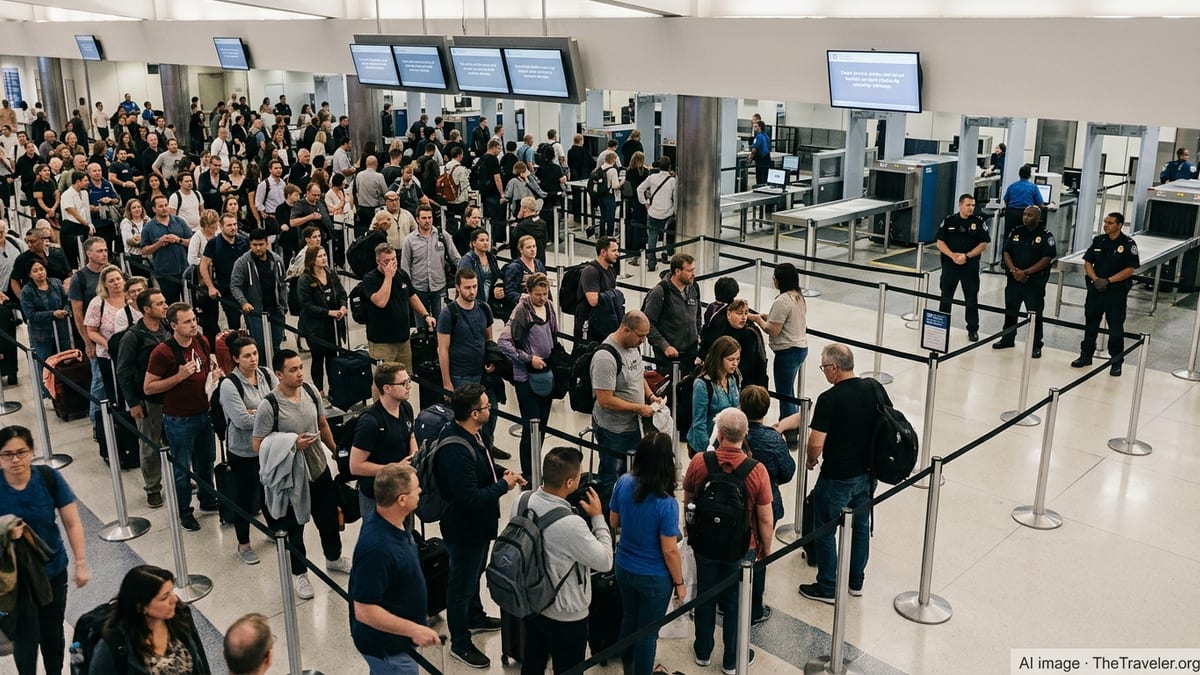
At the same time, the airport is not operating at its usual capacity. Publicly available information over recent months has described Ben Gurion functioning well below its designed throughput because of security-related constraints and evolving route structures. For passengers, this has translated into longer queues at check-in and security, more crowded departure halls and a heightened risk that any disruption quickly cascades into knock-on delays across the schedule.
Recent punctuality data for July point to a visible deterioration in on-time performance, with local flight-statistics reporting showing thousands of movements and an elevated share of flights departing late, often by an hour or more. For travelers, that means missed connections on onward itineraries, tighter turnaround times on organized tours and mounting pressure on airlines to rebook and re-accommodate affected passengers.
The reactivation of Terminal 1 for both domestic and selected international traffic was intended to relieve some of this pressure. The facility, which had been partially closed during earlier phases of the regional conflict, is being brought back into fuller use to distribute traffic more evenly across the airport. However, the benefits of that move are being partly offset by other operational constraints now affecting the airfield.
Military Refueling Planes Crowd Critical Airfield Space
A key driver of the current strain is the continued presence and periodic rotation of United States military aerial refueling aircraft at Ben Gurion. These large tankers occupy valuable apron and taxiway space, narrowing the options for positioning and maneuvering commercial jets. Published coverage in recent weeks has detailed how dozens of such aircraft have been parked at the airport at various times, effectively reducing the space available for civilian operations.
Earlier assessments from aviation and airport executives, reported in international and Israeli media, suggested that the field had been operating at around one third of its normal capacity during periods when the military footprint was at its peak. Although some refueling planes have since been relocated and an arrangement struck to limit their number on the ground, the residual presence continues to limit operational flexibility just as the busiest holiday season begins.
The issue has prompted an increasingly public debate about the trade-off between strategic requirements and civilian mobility. According to news reports, Israeli transport officials have signaled that they are pressing to safeguard commercial schedules, while international coverage has described U.S. planners seeking to maintain proximity for regional operations. The result is an airport operating at the edge of its capabilities, with civilian flights slotted around military needs on already congested taxiways and runways.
In mid-July, local outlets reported that the Israel Airports Authority had temporarily instructed air traffic control to avoid approving additional landings by U.S. refueling aircraft during the busiest daytime periods, citing capacity concerns. The step highlighted the extent to which ground congestion had become more than a theoretical risk, and underscored the pressure to prioritize summer travelers in the face of mounting public frustration.
Summer Surge Turns Small Delays Into Systemwide Disruptions
Beyond the specific constraints at Ben Gurion, the airport’s difficulties are unfolding against a broader backdrop of strained summer aviation networks across multiple regions. Academic work on delay propagation and recent industry analysis both point to the same pattern: when airports run close to saturation, even small disruptions in departure or arrival flows tend to snowball into wider schedule breakdowns.
At Ben Gurion, that dynamic is being amplified by tight turnarounds, full flights and limited spare capacity. A minor late arrival in the early morning can cause a departure to push back behind schedule, which then forces adjustments in runway sequencing during a busy takeoff wave. Subsequent arrivals may face holding patterns or ground delays, further compressing the time available for baggage handling, refueling and boarding. Over the course of a day, these compounding effects can transform modest operational challenges into widespread late departures and arrivals.
Travelers passing through the airport in recent weeks have described, in publicly visible forums, long waits at security screening, extended time spent on aircraft awaiting pushback clearance and last-minute gate changes as controllers attempt to juggle competing demands on scarce stands. While some flights still depart broadly on time, the inconsistency itself complicates planning for airlines and passengers alike, particularly for those with tight onward connections.
Weather has so far played a relatively minor role in the current disruption compared with operational limitations. However, any adverse conditions affecting approach corridors or regional airspace could quickly worsen the situation, given how little slack the system currently has. Aviation analysts note that when airfields are this close to their effective limits, schedule resilience tends to be low, and recovery from a bad operational day can spill into the following morning’s bank of departures.
Government and Industry Scramble for Short-Term Fixes
In response to the mounting delays and the prospect of more severe disruptions in August, Israeli transport authorities and aviation stakeholders have embarked on what recent coverage characterizes as an intensive effort to avert mass cancellations. Transport Ministry representatives have held situational assessments with airport management and military counterparts, seeking ways to both accommodate essential defense operations and preserve scheduled passenger services.
One focus has been on fine-tuning the number and rotation pattern of refueling aircraft allowed to park at Ben Gurion at any given time. International and local reports indicate that Washington has already agreed to reduce the footprint compared with earlier in the year, with some aircraft shifted to alternative bases or placed on a more transient rotation to free up space. Israeli aviation officials, however, have continued to warn publicly that even a trimmed presence can threaten tens of thousands of summer itineraries if not carefully managed.
Another area of emphasis has been on optimizing the use of Terminal 1 and rebalancing traffic flows between terminals for low-cost and legacy carriers. By redistributing flights and adjusting peak-hour slots, the airport is attempting to smooth demand curves that would otherwise lead to acute congestion in certain time windows. Industry observers also point to incremental measures such as extended staffing, streamlined security procedures where allowed by regulation and closer real-time coordination between airlines and ground handlers as part of the short-term toolkit.
Despite these steps, the operating environment remains fragile. Several airlines have already adjusted flight times, reduced frequencies or upgauged aircraft in an attempt to consolidate demand and create modest buffers in their schedules. Travelers may see late-notice itinerary changes as carriers react to evolving slot allocations and operational advisories, highlighting the extent to which even proactive measures are, at best, mitigating rather than eliminating disruption.
What Travelers Using Ben Gurion Should Expect
For passengers planning to fly through Ben Gurion over the coming weeks, the practical impact of the current situation is most visible in longer waits, higher uncertainty and the need for greater personal flexibility. With the airport handling near-record daily passenger volumes while operating under tightened capacity, travelers are being advised by airlines and travel providers to arrive significantly earlier than usual and to build generous buffers into their plans.
Published travel updates and airline advisories increasingly recommend that outbound passengers allow additional time for check-in and security, particularly for early morning and late-night waves when many long-haul flights depart. Those connecting onward from Tel Aviv are being urged to avoid tight transfer windows where possible, given the elevated risk of departure delays and the difficulty of rebooking at short notice during peak season.
Holidaymakers and business travelers alike are also being encouraged to monitor their flight status closely in the days and hours before departure, as schedule adjustments, aircraft swaps and gate changes have become more frequent. While large-scale cancellations have so far been largely avoided, the pattern of rolling delays and tactical rescheduling can be disruptive in its own right, especially for families traveling with children or for those linking to cruises, tours or time-sensitive events.
The experience at Ben Gurion this summer is likely to feed into longer-term debates about Israel’s aviation infrastructure, including questions around additional runway capacity, alternative international gateways and clearer separation between military and civilian operations. For now, however, the priority for airlines, regulators and passengers remains immediate: keeping as many flights operating as possible, even if they are no longer running on time.