


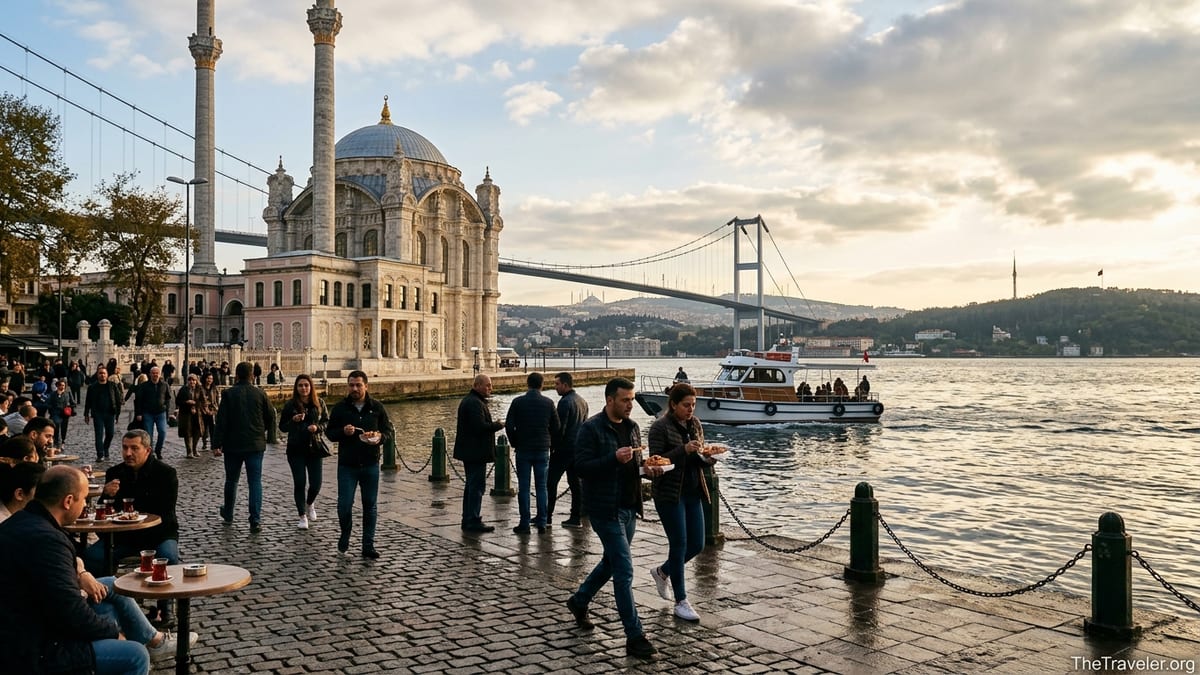
On Istanbul’s European shore, Ortaköy is where the city’s love affair with the Bosphorus is distilled into one compact square. The Baroque silhouette of Ortaköy Mosque, the sweep of the Bosphorus Bridge overhead, the smoke from kumpir stalls and the hum of waterfront cafés all converge here. Coming from nearby Beşiktaş, it makes an easy half-day or evening outing that feels both postcard-perfect and distinctly local.
Get the latest updates straight to your inbox!
Getting from Beşiktaş to Ortaköy
For most visitors, the simplest way to reach Ortaköy from Beşiktaş is by bus along the coast road. From the Beşiktaş ferry docks and square, local IETT buses such as the 22, 22RE, 25E or 40T typically run toward Ortaköy and beyond, following the waterfront. The ride is short, often around 10 to 15 minutes outside rush hour, and you tap in with an Istanbulkart. As of mid 2026, a single city bus ride usually costs the equivalent of only a few euros or dollars, making this one of the most budget friendly transfers you will make in Istanbul.
Another option is to walk. If you are comfortable with a 30 to 40 minute stroll, heading north from Beşiktaş along Çırağan Caddesi lets you trace the shoreline past the grand gates of Dolmabahçe Palace and the luxury hotels that now occupy former Ottoman waterside mansions. This route is especially pleasant in the late afternoon when the light softens on the water. The final stretch brings you under the Bosphorus Bridge and straight into Ortaköy’s compact central square.
Taxis cover the same route but can be slower than expected during peak traffic on weekday mornings and late afternoons. If you do choose a taxi from Beşiktaş, agree on using the meter, expect the short journey to be relatively inexpensive by international standards, and factor in possible congestion at the approach to the bridge. There is no direct public ferry between Beşiktaş and Ortaköy pier, so buses, taxis or your own feet are the most realistic choices.
Whichever way you come, aim to arrive outside the tightest rush-hour windows. Late morning after 10:00, or late afternoon leading into sunset, usually strikes the best balance between manageable crowds and atmospheric light over the strait.
Ortaköy Mosque and the Iconic Bosphorus Backdrop
Ortaköy Mosque, officially known as the Büyük Mecidiye Camii, is the neighborhood’s visual anchor. Completed in the mid 19th century under Sultan Abdülmecid, it represents the ornate Ottoman Baroque style, with sculpted stone, high arched windows and twin slender minarets. What makes it unforgettable is less its size and more its siting: the building seems to float at the very edge of the Bosphorus, with water lapping close to its foundations and boats passing constantly in front.
Step into the small courtyard and you will notice how the mosque’s white and pale pink stone catches the shifting Bosphorus light. Inside, the prayer hall is relatively intimate, with a high dome, elaborate calligraphy and chandeliers that frame views out toward the sea. Non Muslim visitors are generally welcome outside prayer times; dress modestly, bring a scarf to cover your head if you are a woman, and be ready to remove your shoes at the entrance. Visiting between the main prayer times in the late morning or mid afternoon tends to feel calmer.
Outside the mosque, the square opens to a classic postcard view: the mosque in the foreground, the graceful curve of the Bosphorus Bridge (officially the 15 July Martyrs Bridge) arching across the background, and ferries criss crossing the water. On clear days you can see the Asian shore and the wooded slopes of Kuzguncuk and Beylerbeyi across the strait. Late afternoon and sunset are ideal for photography, when the sky softens and the mosque’s façade picks up warm tones, while the bridge begins to glow with lights.
Because the square is compact, even small changes in position produce different compositions. Many photographers like to stand slightly back from the water, near the low chain fence and bollards, to include cobblestones and foreground figures in their frame. Others step closer to the pier edge, using a wider lens to capture both mosque and bridge. The fact that this is also a working neighborhood, with locals heading to prayer, children playing near the waterfront and vendors calling out, gives even the most composed shot a lived in quality.
Kumpir, Waffles and Street Food Culture
Ortaköy is synonymous in Istanbul with kumpir, the city’s indulgent take on baked potatoes. Along the edge of the main square, facing the water and mosque, you will see a row of nearly identical kumpir counters, each with mounds of toppings displayed in chilled metal trays. A typical experience starts with a staff member pulling a steaming potato from the oven, slicing it open, working in a generous amount of butter and kaşar cheese, then asking you to choose your mix of additions.
Common toppings include sweetcorn, Russian salad, pickled red cabbage, sliced olives, sausages, mushrooms and spicy ezme. You point and build your combination, which is then piled into the potato until it becomes a small mountain. Recent visitors often pay a moderately priced fee that is still very accessible by Western standards, especially given the size. One kumpir can easily feed a hungry traveler on its own, or be shared if you simply want to taste the Ortaköy ritual before moving on to other dishes elsewhere.
Behind and beside the kumpir stalls, waffle stands add another layer of sweetness to the square. Here, thin Belgian style waffles are griddled to order, spread with hazelnut chocolate or pistachio cream and then loaded with sliced bananas, strawberries, crushed nuts and colorful candies. It is not traditional Ottoman pastry, but it is undeniably popular, particularly with younger locals and visiting families. A waffle and a shared kumpir make a classic Ortaköy snack circuit for couples walking the waterfront at night.
A short stroll away from the main cluster of stalls, you will find more conventional cafés and small lokantas on the back streets, where you can order grilled köfte, lentil soup or a simple plate of seasonal vegetables. These spots are useful if you want to experience neighborhood food beyond the Instagram famous potato and waffle combination, while still staying close to the square’s energy.
Waterfront Cafés and Where to Pause
One of Ortaköy’s pleasures is lingering by the water with a drink. Along the shoreline around the square are several cafés and restaurants that prioritize the view as much as the menu. Some are polished, with glass walls and cushioned seating, serving full meals, cocktails and desserts. Others are simpler tea gardens with plastic chairs and small tables, where you can sit with a tulip shaped glass of black Turkish tea or a foamy Turkish coffee as ferries pass by.
Branches of well known İstanbul café brands sit alongside independently run spots. Many offer Turkish breakfast platters in the morning, with baskets of bread, cheeses, olives, tomatoes, eggs and honey, then shift toward meze plates and grilled fish as the day progresses. Expect to pay a premium for tables directly on the water compared with cafés a street or two inland. It is the price of uninterrupted Bosphorus views, and for many visitors it feels worthwhile at least once.
Further north along the waterfront toward Kuruçeşme, a short additional walk from the central square, you encounter more upscale restaurants and hotel terraces that also capitalize on the bridge and sea views. These are better suited to slow sit down dinners and special occasions. Reservations can be useful on Friday and Saturday nights, particularly in summer when Istanbul residents flock to the water to escape the heat.
For a quieter moment, consider slipping into a smaller coffee shop tucked in the lanes behind the square. Here you are more likely to find desktop workers, students and locals chatting, with lighter foot traffic and background music. Ordering a simple Turkish coffee, a flat white or a glass of freshly squeezed pomegranate juice and taking a window seat lets you observe the flow of people heading to and from the mosque without feeling right in the middle of the crush.
Photo Spots, Boat Trips and Navigating the Crowds
Ortaköy’s small size concentrates both its beauty and its crowds. The classic photo spot is directly in front of the mosque, near the low chains on the pier, where you can frame the mosque and bridge together. Another good angle is from slightly south of the square, where the mosque appears more sideways on and the bridge towers line up diagonally above it. If you walk a few minutes further north along the promenade, turning back toward the square, you will also find quieter spots where the crowds thin and you can photograph the skyline from a different perspective.
Short Bosphorus boat trips usually depart from the pier just beside the square. Operators often offer 45 to 90 minute circuits that head toward the second Bosphorus Bridge and return, or run down toward Kabataş and Karaköy before looping back. Boats range from simple open deck vessels with plastic seating to more comfortable yachts with indoor lounges. Prices are typically moderate, varying with season and boat type, and are usually posted at the ticket kiosk or on a signboard. For the most straightforward experience, look for boats that clearly advertise fixed prices and duration and depart on a schedule rather than relying on pushy touts.
Because Ortaköy is heavily photographed on social media, it can feel extremely busy on weekend afternoons and Sunday market days, when additional craft and souvenir stalls fill the back streets. If your schedule allows, aim for a weekday morning or a shoulder season month like April, May, late September or October. In these periods you still have a good chance of pleasant weather and clear views but with noticeably thinner crowds and shorter queues at kumpir stalls and cafés.
Even in peak times, crowd management is a matter of rhythm. Pause in a side street or under the plane trees at the edge of the square when large tour groups arrive, then circle back a few minutes later. You will often find that the same spot feels significantly calmer once a busload of visitors has moved on. Comfortable shoes help on the cobblestones, and in summer you may appreciate a hat and a small bottle of water as shade can be limited near the waterfront itself.
Atmosphere, Shopping and Combining Ortaköy with Beşiktaş
Beyond its set pieces of mosque, bridge and kumpir, Ortaköy has an atmosphere that blends neighborhood life with a resort-like waterfront. On weekday mornings, you will see office workers cutting through the square, vendors setting up their stands and elderly residents chatting on benches as the first boats depart. By late afternoon and evening, especially in warmer months, the area takes on more of a promenade feel, with couples strolling hand in hand, friends meeting up for tea and hookah lounges filling with the sound of conversation and clinking glasses.
The narrow streets behind the square host small boutiques and stalls selling jewelry, ceramics, textiles, handmade soaps and decorative objects. While some items are clearly aimed at tourists, others showcase local artisanship, such as hand painted tiles, silver earrings inspired by Ottoman motifs or simple cotton peshtemal towels. Prices and quality vary, so it is worth browsing a few stalls before committing to a purchase. This is a good place to find a mid range souvenir that feels more personal than a fridge magnet yet is still easy to pack.
Because Beşiktaş is so close, many visitors combine the two areas in a single outing. One approach is to spend a morning in Beşiktaş’s lively Çarşı market district, sampling simit and Turkish breakfast plates, then catch a bus or walk to Ortaköy for the mosque, waterfront photos and a relaxed afternoon coffee. Another is to visit Ortaköy near sunset, then return to Beşiktaş for dinner in one of its casual meyhanes or modern bistros, taking advantage of the denser restaurant scene there.
For travelers staying in central Istanbul near Taksim, Galata or Karaköy, you can easily reach Beşiktaş first by bus, tram plus short walk, or even by ferry from Kadıköy, then treat Ortaköy as a simple extension of your Bosphorus exploration. The relative proximity means you can adjust your plans according to the weather: if the day stays clear, continue to Ortaköy for bridge views; if rain moves in, you might instead linger in Beşiktaş’s covered markets and cafés.
The Takeaway
Visiting Ortaköy from Beşiktaş offers one of the most efficient ways to experience Istanbul’s love of the Bosphorus. In a compact, walkable area you can see a 19th century Ottoman mosque at the water’s edge, stand beneath the span of the Bosphorus Bridge, eat a filling kumpir or sugary waffle, sit in a café watching ferries slide by and, if you choose, board a short boat trip to see the shoreline from the water itself. The journey from Beşiktaş takes minutes, but the change in scenery and perspective can feel larger.
Plan your visit with timing in mind. Aim for late morning or late afternoon on a weekday if you prefer a gentler atmosphere, or embrace the weekend crowds if you are curious to see the neighborhood at its busiest. Use public buses or a walk along Çırağan Caddesi to get there, keep modest clothing handy for stepping inside the mosque, and arrive hungry enough to at least split a kumpir or waffle. With these basics covered, Ortaköy slots into almost any Istanbul itinerary as a rewarding half-day or golden hour excursion.
Most importantly, allow yourself time simply to linger. The most memorable moments in Ortaköy are often the unscripted ones: a sudden change in light on the bridge, the call to prayer drifting over the water, a friendly chat with a kumpir vendor or café server. From Beşiktaş, this slice of Bosphorus life is close enough to reach spontaneously, yet distinct enough to feel like a new chapter in your Istanbul story.
FAQ
Q1. How long does it take to get from Beşiktaş to Ortaköy?
In normal traffic, the bus ride from Beşiktaş to Ortaköy is often about 10 to 15 minutes, while walking along the waterfront can take around 30 to 40 minutes.
Q2. What is the easiest public transport option between Beşiktaş and Ortaköy?
The easiest option is usually an IETT bus from the Beşiktaş waterfront heading toward Ortaköy and beyond. Buses run frequently, and you pay with an Istanbulkart.
Q3. When is the best time of day to visit Ortaköy for photos?
Late afternoon leading into sunset is ideal, when the mosque façade glows warmly, the Bosphorus Bridge lights begin to come on and the crowds are lively but not overwhelming.
Q4. Is Ortaköy Mosque open to non Muslim visitors?
Yes, Ortaköy Mosque generally welcomes respectful visitors outside main prayer times. Dress modestly, remove your shoes at the entrance and bring a headscarf if you are a woman.
Q5. How expensive is kumpir in Ortaköy?
Prices change with time, but a loaded kumpir in Ortaköy is usually moderately priced by international standards. One potato is big enough to serve as a full meal for one person.
Q6. Are there vegetarian options in Ortaköy cafés and food stalls?
Yes. Many kumpir toppings are vegetable based, and most cafés offer vegetarian meze, salads, gözleme or pasta dishes. Always double check ingredients if you have specific dietary needs.
Q7. Can I take a short Bosphorus cruise directly from Ortaköy?
Yes. Several operators run short sightseeing cruises from the Ortaköy pier. Trip lengths and comfort levels vary, so check the posted route, duration and price before boarding.
Q8. Is Ortaköy safe to visit at night?
Ortaköy is generally busy and feels safe in the evening, especially around the square and waterfront cafés. As with any city, keep an eye on your belongings and avoid very dark side streets late at night.
Q9. How much time should I plan for a visit to Ortaköy from Beşiktaş?
If you just want to see the mosque, take photos and try kumpir, two to three hours can be enough. Add more time if you plan to sit in a café or take a boat trip.
Q10. Can I combine Ortaköy with other nearby sights in one day?
Yes. Many visitors pair Ortaköy with Beşiktaş’s markets or Dolmabahçe Palace. You can explore Beşiktaş in the morning, then move on to Ortaköy for afternoon and sunset by the Bosphorus.