


Monzo has become a favorite travel card thanks to fee free spending abroad and a slick app. But if you rely heavily on cash withdrawals, take long trips outside Europe or simply hate running into surprise limits, you may find Monzo’s fee structure restrictive. The good news for frequent travelers and digital nomads is that several competitors now offer lower fees, higher free ATM allowances or more flexible multi currency features that can cut your total costs on the road.
Get the latest updates straight to your inbox!
How Monzo’s Travel Fees Work Today
Before you can decide whether to switch, it helps to understand where Monzo still shines and where the costs start to creep in. For card spending, Monzo remains very competitive. You can pay in foreign currencies almost anywhere that accepts Mastercard, and Monzo passes on the network exchange rate with no extra markup and no separate foreign transaction fee. In practical terms, that means tapping your card to pay a restaurant bill in Lisbon or a metro ticket in Tokyo will usually be as cheap as using the better no fee credit cards, at least on the exchange rate itself.
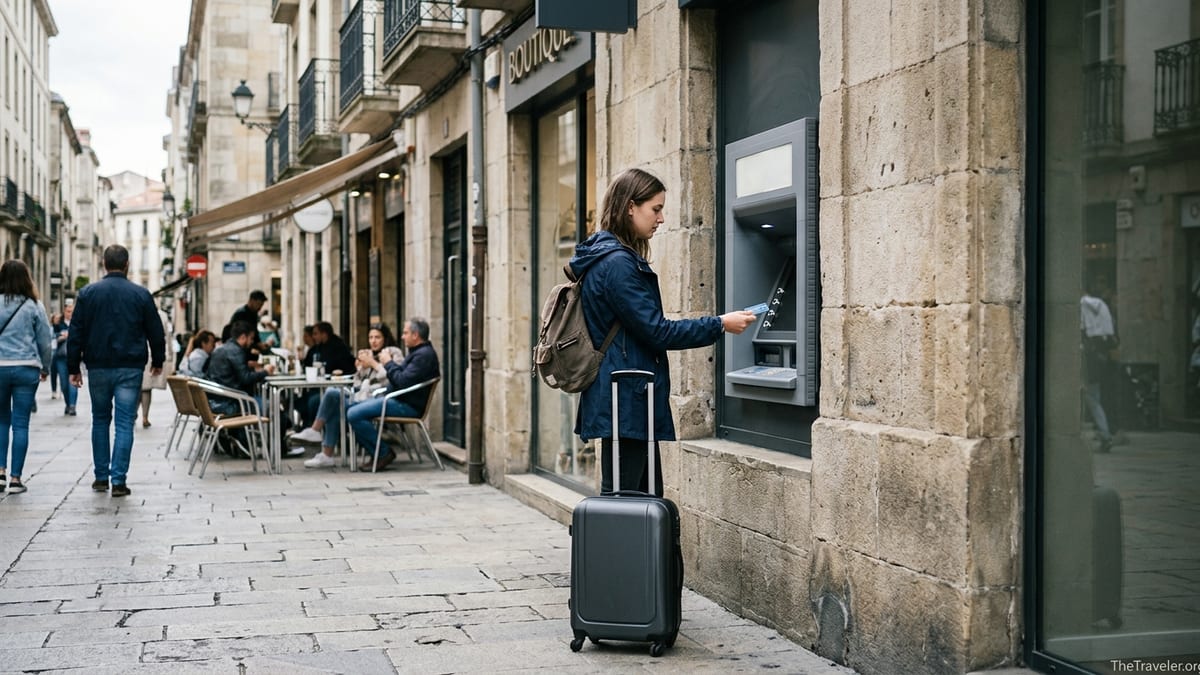
The pressure point for many travelers is cash. Monzo allows only a limited amount of fee free cash withdrawals abroad in each rolling 30 day period. Once you hit that cap, additional ATM withdrawals incur a percentage fee on the amount you take out. For example, if you are on a standard current account and withdraw the equivalent of a few hundred pounds in cash each week on a three week trip through Southeast Asia, you can easily bump up against your allowance and see a 3 percent charge added to further withdrawals that month. That may not sound huge, but on repeated pulls of 200 or 300 pounds worth of local currency, the extra cost adds up.
Paid Monzo tiers raise the limits, but at a monthly subscription cost that only makes sense if you are a very heavy user of ATMs or want the bundled travel insurance and extras. If you primarily travel outside Europe, the structure can feel especially tight because Monzo’s most generous fee free withdrawal terms are designed around European Economic Area usage. Long term backpackers, digital nomads and travelers who regularly need cash for markets, taxis and small guesthouses therefore have a strong incentive to look at alternatives that offer higher free ATM allowances or lower percentage fees beyond the cap.
As you compare options, focus on how you actually spend abroad. If you are mainly tapping your card in cities, you might stick with Monzo and pair it with a backup. If your trips involve cash heavy destinations like rural Vietnam or Argentina, switching your primary travel card could save you a noticeable amount over a multi month journey.
Wise: Strong Exchange Rates and Transparent ATM Fees
Wise, formerly TransferWise, has built its reputation on mid market exchange rates and transparent pricing. For travelers, the Wise debit card is one of the closest competitors to Monzo, with two key advantages. First, you can hold balances in dozens of currencies and convert them in advance at fees that are typically well under one percent of the amount exchanged. Second, Wise offers a predictable structure for global ATM withdrawals, with a small amount of free cash each month followed by a clear fee schedule that depends on where the card is issued.
For a typical traveler from the UK or the euro area, Wise allows a limited amount of fee free ATM withdrawals each month in the local currency equivalent. Above that threshold, a percentage fee of a little under 3 percent applies. Recent changes have actually increased the free allowance somewhat while also nudging the percentage rate up slightly for withdrawals beyond the cap. In practice, this means that if you only need occasional cash for small markets or tipping taxi drivers, you might never pay Wise an ATM fee at all. But if you are withdrawing the equivalent of several hundred pounds or euros each month in places like Thailand or Colombia, the percentage charge will kick in and you will want to factor it into your cost comparison with Monzo.
One practical advantage of Wise over Monzo is that you can pre fund local currency balances before you travel. Imagine you are planning a month in Japan and see that the exchange rate looks favorable compared with the last year. With Wise, you can convert a chunk of your home currency into yen in advance and then spend from that balance with your card. You still face ATM fees after the free allowance, but you are protected from sudden FX swings during your stay. Monzo, by contrast, converts at the Mastercard rate at the time of each transaction, which is usually fair but can be less predictable for long trips in volatile currencies.
Wise also supports receiving local bank details in several currencies. This is especially useful for digital nomads who might be paid in euros while living in Mexico or Thailand. You can receive income in one currency, hold and convert at the point you choose and then withdraw some of that balance locally in cash if needed. For heavy cash users, the newer Wise ATM pricing means it is no longer the clear cheapest option in every scenario, but for a blended pattern of card spending and occasional cash it is still one of the strongest Monzo alternatives.
Revolut: Generous Free Allowances but Watch the Small Print
Revolut is perhaps Monzo’s most direct rival for travelers, with a similar mobile first approach, virtual cards and support for dozens of currencies. On its standard plan, Revolut does not charge a monthly fee and offers fee free foreign card spending in a wide range of destinations, as long as you stay within its fair usage limits. For many travelers, the headline attraction is the monthly allowance of cash withdrawals and foreign currency exchange that comes with no extra charge, above which a percentage fee typically around 2 percent applies.
For example, a typical UK based Revolut Standard customer can withdraw up to about 200 pounds worth of cash each month or make around 1000 pounds worth of currency exchange before any markups. Beyond those levels, small percentage fees kick in. For US based customers, details differ slightly, but the pattern is similar: some amount of fee free ATM use and currency exchange each month, with a clearly published fee if you go past the limit. As with Monzo and Wise, the structure means casual vacationers doing a one week city break with minimal cash needs may never notice a fee. Long term travelers pulling cash multiple times per month will.
Revolut’s main gotcha for travelers is timing. On weekends, when currency markets are closed, Revolut applies a markup on foreign exchanges and card spending that involves currency conversion, typically around 1 percent on the standard plan. If you tend to land in a destination on a Saturday morning and immediately hit an ATM or convert a chunk of money in app, this weekend markup can make your effective cost higher than Monzo or Wise for that first day or two. A practical workaround is to exchange a modest amount on a weekday before you travel so you have a buffer without incurring the weekend uplift.
On the upside, Revolut offers a wide range of premium plans that remove or relax some of these caps, while adding bundled perks such as travel insurance, airport lounge passes or higher interest on savings. If you are a frequent flyer putting significant spending through your card every month, upgrading may make financial sense. For a typical backpacker who mainly cares about low ATM and FX costs, the free plan combined with a bit of awareness around weekend markups can be an appealing Monzo alternative, especially in countries where card acceptance is strong and cash use is shrinking.
Starling and Other UK Banks: Simple, Low Fee Travel Spending
If you are a UK based traveler, one of the simplest Monzo alternatives is Starling Bank. Starling has long marketed itself as a bank that does not charge extra fees for spending abroad. For card payments, it passes on the Mastercard exchange rate with no foreign transaction fee, much like Monzo. Where it stands out is cash withdrawals. Starling allows most personal account customers to withdraw cash abroad in local currency without adding its own extra fees, subject mainly to daily withdrawal limits for security rather than low rolling caps that trigger percentage charges.
In practical terms, this means that if you land in Mexico City and take out the equivalent of 300 pounds in pesos in a single withdrawal, you pay the ATM operator’s own surcharge if there is one, but Starling itself does not tack on a 3 percent fee the way Monzo does once you are beyond its threshold. Repeat that a few times during a month long trip and the savings become very visible. Many experienced travelers now pair Monzo with Starling, using Monzo for budgeting and spending insights but relying on Starling when they need larger chunks of cash.
Traditional banks can also be competitive if you pick the right products. In the UK, a handful of high street providers periodically offer current accounts or debit cards with fee free foreign spending and reasonable ATM terms, often targeted at more affluent customers. Similarly, in markets like the United States, some online banks and credit unions reimburse ATM fees worldwide and waive foreign transaction surcharges on their debit or credit cards. For instance, several online banks quietly refund the local ATM operator fee that many machines in Europe or Asia charge, which can be two or three euros per transaction, on top of offering no extra FX fee.
The trade off with these more traditional options is often app experience and multi currency features. You may not get real time notifications, granular budgeting tools or the ability to hold a balance in multiple currencies. But if your primary concern is simply minimizing your total cost when withdrawing cash abroad, a no FX fee debit card from a bank that also reimburses ATM charges can beat all the fintechs in specific scenarios, especially in countries where independent ATMs have started charging steep surcharges to foreign cards.
Credit Cards and Local Bank Accounts as Low Fee Backups
One often overlooked Monzo alternative for travelers is a well chosen credit card. Many travel oriented credit cards now offer no foreign transaction fee on purchases and use either the Visa or Mastercard exchange rate. While they usually treat cash withdrawals as cash advances with immediate interest and extra charges, they are excellent for card spending at hotels, airlines, restaurants and major retailers. Using a no foreign transaction fee credit card for almost all card payments and keeping Monzo or a rival fintech for occasional ATM use can significantly lower your blended cost compared with relying on a debit card for everything.
For long stays, another strategy is to open a local bank account in your destination country if regulations and your visa situation allow. Digital banks and remote signup have made this easier in parts of Europe, Asia and Latin America. Once you have a local account, you can often receive transfers from home via Wise or a similar service at low cost, then withdraw cash locally with no extra card issuer fees. For example, a digital nomad who spends six months in Portugal might open a local euro account, fund it using Wise from their home currency, and then use the local debit card for cash and everyday spending. Monzo becomes a backup rather than the primary spending tool.
The downside of local accounts is administrative friction and the need to navigate unfamiliar banking systems. However, for people who return to the same country every year or are on residency permits, the savings from avoiding repeated percentage based ATM fees can be meaningful over time. Combining a low fee local account with a global player like Wise or Revolut for cross border transfers gives you a flexible setup that Monzo alone cannot match.
Whatever mix of products you choose, redundancy is important. Networks occasionally fail, individual cards get declined for no obvious reason, and ATMs run out of cash. Traveling with at least two cards from different providers, ideally on different payment networks, reduces the risk of being stranded. If Monzo is your main card today, consider adding Wise, Revolut, Starling or a strong credit card so you can route transactions through the cheapest or most reliable option in each situation.
How to Compare Fees and Choose the Right Alternative
When you are reading fee tables, it is easy to get lost in the details. A more useful method is to model your own travel pattern and run some rough numbers. Start by estimating how much you usually withdraw in cash per month on the road and how many separate ATM visits that involves. Then note your typical card spending in foreign currencies and how often you travel on weekends. Finally, consider whether you are willing to pay a monthly subscription in return for higher limits or perks such as insurance.
With those numbers in mind, look at a few realistic scenarios. Suppose you are a backpacker who withdraws the equivalent of 600 pounds in cash each month over three or four withdrawals, and also spends 1000 pounds per month on card. Under Monzo’s standard caps, a chunk of your ATM usage will likely incur a 3 percent fee, while all your card spending remains fee free at the exchange rate. On Wise, you might get a couple of withdrawals free and then pay a little under 3 percent on the remainder. Revolut could give you around 200 pounds worth of fee free ATM use and 1000 pounds of FX per month, then roughly 2 percent beyond that plus a potential 1 percent markup on any weekend exchange.
By plugging your own figures into these frameworks, you can see which product is cheaper for your personal mix. If you barely use ATMs, Monzo may still come out ahead thanks to its simplicity and robust app. If you rely heavily on cash, Starling or a no fee bank debit card could be dramatically cheaper, especially in destinations where machines add their own surcharge. And if you are a digital nomad juggling multiple currencies and income sources, Wise or Revolut’s multi currency balances may save you as much in FX spread as you spend on ATM fees.
Do not forget to factor in non monetary features too. App reliability, ease of freezing and unfreezing your card, quality of customer support in a crisis and the availability of virtual cards for safer online bookings can all be as important as saving a fraction of a percent on FX. For example, if your card is skimmed at an ATM in Buenos Aires, the ability to instantly freeze it, spin up a new virtual card for urgent hotel bookings and get responsive support can matter more than whether you paid 2 percent or 3 percent on your last withdrawal.
Finally, remember that fee structures change. Wise has already tweaked its ATM pricing, Revolut periodically adjusts its allowances, and Monzo itself has evolved its travel limits over the years. Before a big trip, always re check the latest fee pages for your cards and adjust your strategy if something material has shifted. Building this review into your pre departure checklist, alongside travel insurance and visa checks, will help you avoid unwelcome surprises at foreign ATMs.
The Takeaway
Monzo remains an excellent everyday banking option with strong travel credentials, particularly for card spending where it still offers fee free foreign purchases at competitive exchange rates. However, its overseas cash withdrawal limits and subsequent percentage fees can make it less than ideal for travelers who rely heavily on ATMs or spend extended periods outside Europe. As more fintechs and challenger banks mature, you now have plenty of realistic alternatives that can reduce your total costs without sacrificing app quality or convenience.
Wise and Revolut lead the pack as multi currency specialists, offering powerful tools for holding and converting balances in dozens of currencies, with clear if sometimes complex ATM fee structures. Starling and certain traditional banks provide simpler propositions for UK travelers, with low or no extra fees on foreign cash withdrawals that can beat Monzo over a long trip. Layered on top of these, a well chosen no foreign transaction fee credit card can handle the bulk of your spending at hotels, airlines and restaurants while keeping debit card usage focused on situations where cash is unavoidable.
For most travelers, the ideal solution is not to abandon Monzo outright but to diversify. Keep Monzo for its budgeting tools, instant notifications and social features, while adding one or two low fee alternatives tailored to how you actually travel. If you mostly tap to pay, a good credit card might be enough. If you bounce between cash heavy destinations, a Starling or Wise card can lower your ATM costs. Digital nomads who earn and pay expenses in multiple currencies may benefit most from Revolut or Wise’s multi currency accounts.
In the end, the best Monzo alternative for lower fees is the one that fits your route, your habits and your risk tolerance. Spend an evening mapping out your typical month on the road, compare a few real world scenarios across competing cards and do not be afraid to carry more than one solution. With a bit of upfront planning, you can cut your banking costs, avoid nasty ATM surprises and focus on what really matters on your next trip: the journey itself.
FAQ
Q1. Is Monzo still good for travel if I rarely use cash?
Yes. If you mainly pay by card in shops, restaurants and online, Monzo remains a strong choice because it does not add a foreign transaction fee and uses competitive Mastercard exchange rates. The main weakness is its relatively tight allowance for fee free overseas ATM withdrawals, which will not affect you much if you only need cash occasionally.
Q2. Which Monzo alternative is best if I withdraw a lot of cash abroad?
If frequent or large cash withdrawals are your priority, a bank like Starling that does not add its own extra fee on most overseas ATM transactions can be very attractive. Wise and Revolut both offer limited fee free ATM allowances followed by percentage charges that are generally lower than Monzo’s, but costs will depend on how far you go beyond their monthly thresholds.
Q3. Are Wise’s new ATM fees a deal breaker for travelers?
Wise has recently adjusted its ATM pricing by raising the free withdrawal allowance but also increasing the percentage fee on amounts above the cap. For people who only take out modest cash each month, the changes are not a major issue and Wise remains competitive. Heavy cash users should run the numbers, as frequent large withdrawals may now cost more than with some bank debit cards.
Q4. How does Revolut compare to Monzo on weekend exchange rates?
Revolut typically adds a small markup on currency exchanges and card spending that involve conversion during weekends when FX markets are closed, which can make it slightly more expensive than Monzo at those times. A practical workaround is to exchange a reasonable amount of money in app on a weekday before you travel so you are not forced to convert large sums during the weekend window.
Q5. Can I avoid ATM fees entirely when traveling?
It is difficult to avoid every fee because some foreign ATMs apply their own surcharge to any non local card, no matter who issued it. However, you can minimize costs by choosing a card that does not add its own foreign ATM fee, withdrawing slightly larger amounts less often, refusing dynamic currency conversion at the machine and using a no foreign transaction fee credit card for most purchases so you rely less on cash overall.
Q6. Is it better to upgrade to a paid Monzo plan or switch cards?
Upgrading to a paid Monzo tier raises your fee free ATM limits and adds perks like travel insurance, but you pay a fixed monthly subscription. This can be good value if you are a frequent traveler who would otherwise incur significant withdrawal fees and also needs the bundled benefits. If you only travel occasionally or mainly care about low cash costs, switching to or adding a low fee competitor may be more economical.
Q7. Should I keep Monzo if I move my main travel spending to another card?
In most cases, yes. Monzo remains useful as a backup card, for budgeting and for domestic spending. Having more than one card from different providers reduces the risk of being stranded if a single bank has technical issues or flags a transaction as suspicious while you are abroad. You can simply shift your primary travel spending to whichever alternative offers the best fee structure for your style of trips.
Q8. How do local bank accounts help reduce travel banking fees?
Opening a local account in a country where you spend extended time lets you withdraw cash at domestic rates and often avoid international card issuer fees. You can fund the local account via low cost transfer services such as Wise, then use the local debit card for everyday spending and ATM use. It involves more setup, but for long stays or repeat visits it can significantly cut recurring foreign withdrawal charges.
Q9. Are multi currency accounts worth it for digital nomads?
For digital nomads who earn and spend in different currencies, multi currency accounts from Wise or Revolut can be very valuable. They allow you to receive payments in major currencies, hold balances and convert at times when rates are more favorable. Combined with a debit card, they give you flexibility to pay or withdraw locally while reducing reliance on repeated ad hoc conversions that can be more expensive.
Q10. How often should I review my travel card fees?
Fee structures change regularly as fintechs and banks update their pricing. It is sensible to review the official fee pages for your main cards before any big international trip, especially if it has been more than six months since you last traveled. A quick check can highlight changes to ATM allowances, percentage fees or subscription terms and help you adjust your strategy so you are not caught off guard on your next journey.