


More news on this day
Deadly late monsoon floods in Nepal have torn through key river corridors, destroying roads and villages and stalling visitor arrivals just as the country’s crucial autumn tourism season begins.
Get the latest news straight to your inbox!
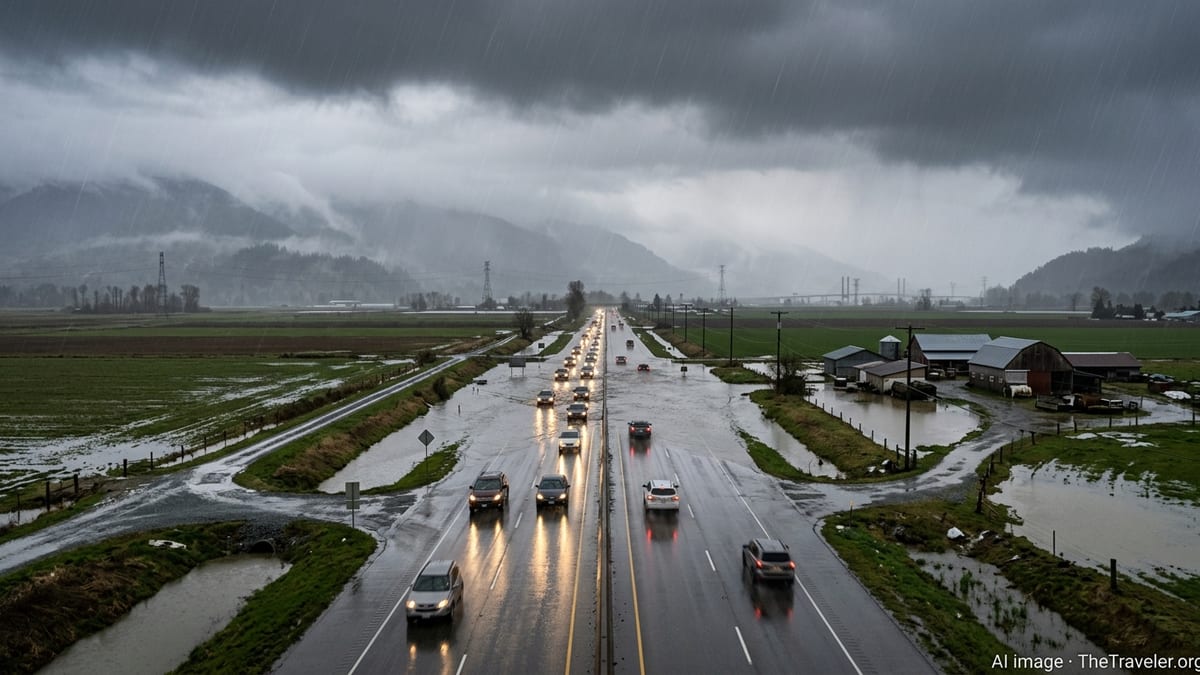
Floods hit as Nepal enters its busiest travel window
Published coverage of the August and September 2026 floods describes a cascade of glacier and landslide driven water racing out of the high border region into the Bhote Koshi and Trishuli river system, sweeping away homes, hydropower infrastructure and long stretches of highway. National disaster tallies released in mid September reported more than a thousand deaths and several thousand people still missing across affected districts, making this one of Nepal’s deadliest flood seasons in years.
The timing has been particularly severe for tourism. September and October are widely promoted as the prime months for trekking and cultural travel in Nepal, when monsoon clouds begin to clear and international arrivals usually climb. Previous tourism data from the Nepal Tourism Board has shown September visitor numbers approaching 100,000 in stronger years, underlining how closely the industry’s fortunes are tied to this window.
This year, however, key access roads to the Himalaya have been ripped apart just as guides, lodges and transport companies expected peak demand. Reports from the flood corridor indicate that the road towards the Chinese border at Rasuwagadhi, which also serves as the gateway for the Langtang trekking region and Kailash Mansarovar overland pilgrimages, has been broken in multiple places, with no confirmed timeframe for full reconstruction.
Travel advisories and local briefings emphasise that while the humanitarian emergency is concentrated in a defined set of valleys, the psychological impact has spread far wider. Prospective visitors are cancelling or postponing trips across the country, even to destinations that remain physically untouched by the floods.
Key trekking gateways feel like “a lockdown”
Tourism operators active in flood affected districts describe a situation where roads that once carried buses and jeeps of trekkers now sit silent. Coverage from Nepali outlets and regional travel platforms notes that lodges along the Bhote Koshi and Trishuli corridor, previously busy with overland traffic to Tibet and pilgrims bound for sacred sites, are operating at a fraction of normal capacity or have shut temporarily.
The mood has been compared in some reporting to the early months of the COVID 19 pandemic, when border closures and flight suspensions transformed bustling backpacker hubs into quiet streets. In towns that depend almost entirely on visitors moving through on their way to higher trails, residents now face a similar sense of sudden stop, even though airports and many domestic routes remain open.
Further west, Mustang district illustrates how perceptions can travel faster than floodwaters. Local English language coverage describes a marked slowdown in arrivals to this popular trekking and motorbiking destination following the August disaster, even though the flood itself occurred in a different river basin. Hotel owners and jeep drivers along the Kali Gandaki corridor report lower bookings, and the partial closure of sections of the highway due to erosion has added to the impression of a region on hold.
In the Annapurna region, local administrations have layered weather related restrictions on top of the national emergency. Public notices from Manang district, on the northern side of the Annapurna Circuit, temporarily halted trekking in higher Himalayan areas between 25 and 27 September because of forecasts of heavy rain and snow. Informal briefings shared with trekkers point to continued caution around landslide risk and unstable slopes, contributing to the sense that parts of the circuit are effectively shut just as the traditional season begins.
Tourism board urges perspective as major hubs stay open
Against the backdrop of dramatic images from the flood zone, Nepal’s tourism authorities and industry associations are trying to draw a sharper map for potential visitors. Public information campaigns stress that the destruction is geographically concentrated and that many of the country’s best known destinations, including Kathmandu, Pokhara, Chitwan and the main Everest and Annapurna trekking routes, remain accessible.
Recent public messaging under banners such as “Nepal is open for tourism” and “Nepal Calling” highlights that international flights are operating normally into Kathmandu’s Tribhuvan International Airport and that domestic connections to Pokhara and other hubs are running. Travel updates issued by large trekking agencies and regional associations list Everest Base Camp, Annapurna Base Camp, Upper Mustang and several other marquee routes as open, while advising travellers to avoid Langtang and the overland corridor to Tibet until road reconstruction progresses.
Travel safety briefings prepared for foreign visitors also underline that Nepal’s main trekking massifs sit in distinct river systems that did not carry the August floodwaters. Everest’s routes follow the Dudh Koshi and Imja valleys, most Annapurna itineraries track the Marsyangdi and Kali Gandaki, and Upper Mustang lies in a rain shadow north of the main Himalayan crest. These details are being used to counter the impression created by headlines that “Nepal” as a whole is underwater or inaccessible.
At the same time, advisory notes encourage a more flexible style of travel. Agencies are recommending that visitors keep buffer days in their itineraries, build in room for route changes, and maintain close contact with local partners who can react to evolving road and weather conditions.
Local economies face a double shock
The flood damage has delivered a brutal double blow to mountain communities already working to rebuild after the pandemic years. In districts such as Rasuwa and Nuwakot, where the floodwaters tore downriver, residents have lost bridges, farmland and power infrastructure at the same time as tourism income has dropped sharply.
Analyses produced by international organisations following previous flood seasons noted that tourism contributes around 7 percent of Nepal’s gross domestic product and supports large numbers of informal and seasonal workers. In highland areas where arable land is limited, the dependence on visitor spending is even more pronounced. Porters, guides, lodge owners and transport drivers often rely on the autumn trekking period to carry them through the rest of the year.
Current reporting from domestic media describes empty guesthouses in some trailhead towns, with owners struggling to cover loan repayments on buildings and vehicles financed in anticipation of a strong 2026 season. The disruption of overland links to Tibet also threatens cross border trade and pilgrimage flows that sustain markets and small hotels along the highways.
There is also concern that the reputational damage from this season’s disaster could echo beyond 2026. Commentaries in Nepali newspapers argue that without clear communication on which areas are safe and open, international tour operators may quietly shift clients to rival Himalayan destinations in India, Bhutan or China, hampering Nepal’s efforts to return to and surpass pre pandemic visitor numbers.
What prospective visitors should know before booking
Travel information compiled in September 2026 converges on a few practical points for visitors considering trips in the coming weeks. First, many of Nepal’s flagship trekking regions, including Everest Base Camp, Annapurna Base Camp and Upper Mustang, are reported to be operating normally in terms of trails and core infrastructure, although weather can still trigger localised landslides and short term disruptions.
Second, itineraries that rely on the Bhote Koshi and Trishuli corridor, including Langtang Valley, Gosaikunda and overland pilgrimages to Kailash Mansarovar, face significant uncertainty. Published travel advisories describe sections of highway that have effectively vanished and bridges that will take months to replace. Until official reconstruction plans are clearer, overland journeys through this corridor carry a high likelihood of diversion or cancellation.
Third, travellers eyeing the Annapurna Circuit should pay close attention to updates from Manang district and trekking operators. While much of the classic route lies outside the main flood zone, recent restrictions linked to heavy rain and snow, and reports of unstable road sections on the approach, mean that specific departures may be paused or rerouted with little notice.
Finally, experienced local guides and agencies remain central to safe travel decisions this season. Publicly available guidance from the Nepal Tourism Board, conservation area projects and trekking associations recommends that visitors confirm route status shortly before departure, allow extra time in their schedules, and be prepared to switch to alternative treks or to cultural and wildlife itineraries in regions that have been less affected. For communities along quieter trails and highways, each flexible booking still represents a vital lifeline as they face another long rebuilding effort.