


Saariselkä, a compact resort village in Finnish Lapland about 250 kilometers above the Arctic Circle, is one of the easiest gateways into true northern wilderness. On one side you have hotels, cafes and ski lifts; on the other, the fells and forests of Urho Kekkonen National Park stretch toward the Russian border. For travelers looking for well-marked hiking trails, dramatic Arctic scenery and a good chance of seeing the northern lights, Saariselkä offers an unusually practical balance between comfort and adventure.
Get the latest updates straight to your inbox!
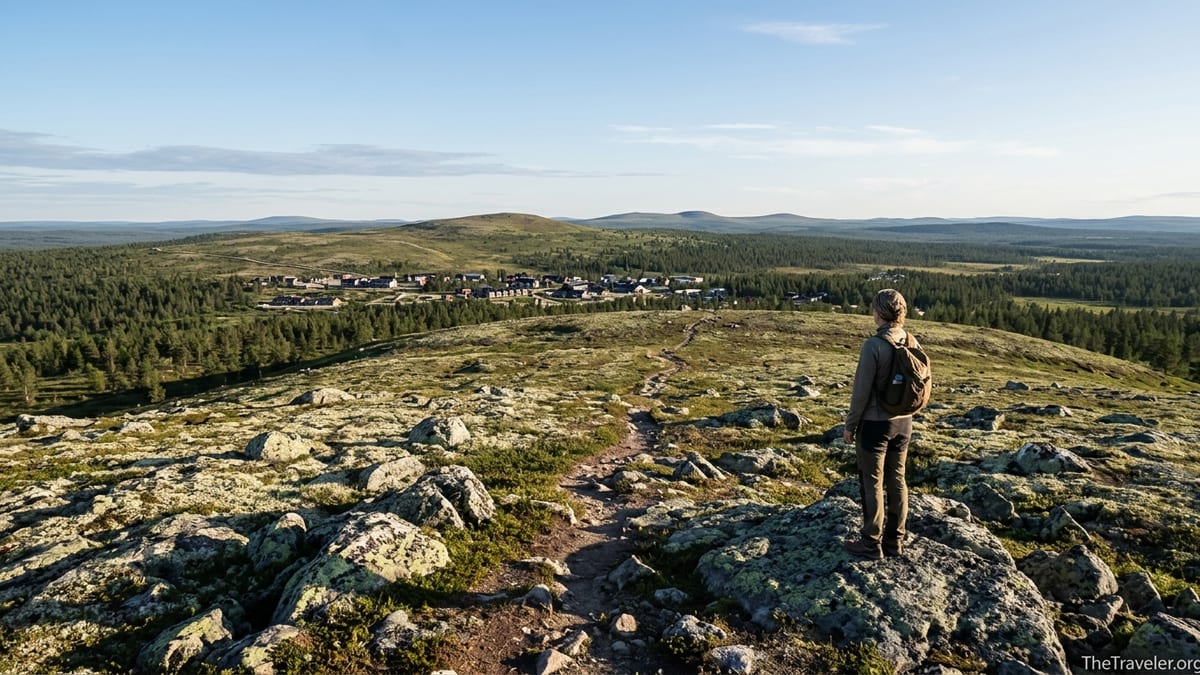
Why Saariselkä Belongs on Your Lapland Itinerary
Saariselkä is often described as Finland’s northernmost full-service outdoor resort, and that is a fair summary. The village sits right at the edge of Urho Kekkonen National Park, one of the largest protected areas in the country, with hundreds of kilometers of marked summer trails and winter routes accessible directly from town. You can check into a hotel in the afternoon, rent hiking poles in the evening, and be on a fell-top ridge with panoramic views before lunch the next day.
The feel of Saariselkä is low-rise and pine-scented rather than urban. A single main road threads through a cluster of hotels, cabin complexes, glass igloo resorts, supermarkets and a handful of bars and restaurants. In peak summer a basic double room in a mid-range hotel often starts around 120 to 160 euros per night, while self-catering cabins with a sauna can be competitive for families or groups. Many visitors choose Saariselkä because the infrastructure is there, yet you can step onto a trail within minutes and be surrounded by silence.
Connectivity is another advantage. Daily flights typically link Helsinki with Ivalo Airport, about 30 minutes away by bus or taxi. From other Lapland hubs such as Rovaniemi, long-distance coaches run north through the forests to Saariselkä. This makes it possible to visit without renting a car, although a vehicle can be useful if you want to explore outlying trailheads and lakes.
Above all, Saariselkä is an all-season base. In June and July, the midnight sun keeps the sky bright for almost 24 hours, inviting long hikes across the fells. In September, autumn colors turn the tundra into a patchwork of rust and gold. From late August through April, cold, clear nights bring reliable northern lights opportunities. Then in deep winter, many of the same routes that serve hikers in summer become cross-country ski and snowshoe trails.
Gateway to Urho Kekkonen National Park
Urho Kekkonen National Park begins almost at the edge of the village. The official Saariselkä starting gate sits just beyond the last hotels, marking the transition from resort to wilderness. From here, a network of waymarked routes leads into fell country ranging from short one to two hour walks to multi-day wilderness treks. This close integration is unusual: many major Nordic parks require a lengthy drive to reach the first trailhead, but in Saariselkä you can walk there from your breakfast table.
The landscape is classic Arctic Lapland. Low, rounded fells rise above open heaths, dwarf birch scrub and pine forest. Small lakes, streams and marshes interrupt the uplands, and wooden shelters dot the routes. On popular day trails you might encounter boardwalks across boggy ground, stairs on steeper sections and information boards describing local geology and Sámi culture. More remote sections of the park, particularly toward the eastern border, remain almost completely wild, with only faint paths and simple wilderness huts.
For most hikers based in Saariselkä, the first taste of the park is along its western fell line. Peaks such as Iisakkipää, Kaunispää and Kiilopää provide approachable summits with extensive views, especially in late summer when the air is at its clearest. On good-weather days you can see the forest stretching for tens of kilometers, with only the occasional radio mast or distant ski lift reminding you that you are near a resort.
More committed wilderness trekkers often use Saariselkä or the nearby Kiilopää fell center as starting and ending points for multi-day routes deeper into the park, including classic itineraries that reach remote spots like Luirojärvi lake beneath Sokosti fell. Even if you do not plan to go that far, being surrounded by people coming and going with large backpacks underscores how close you are to genuine backcountry.
Signature Hiking Trails Around Saariselkä
Several named trails around Saariselkä have become favorites for visiting hikers because they combine variety, manageable distances and straightforward logistics. One of the most accessible is the Iisakkipää Nature Trail, a roughly 6 kilometer loop that starts close to the village. It climbs gradually onto Iisakkipää fell, skirts the dramatic Pääsiäiskuru gorge and then returns via open slopes with broad views. Fit hikers complete it in two to three hours, though many allow half a day to linger at viewpoints and take photos.
Another well-known option is the Rumakuru Circle Trail, typically described as about 14 kilometers. It starts at the Saariselkä gate and follows the southern slope of Iisakkipää before diverging toward Rumakuru gorge, a rocky cleft that feels wilder than its proximity to the resort suggests. Expect to spend around four to six hours on this route depending on fitness, photo stops and weather. Boardwalks and good waymarking make it suitable for most hikers with basic preparation.
For something shorter, many visitors choose the Aurora Trail, which branches from the Saariselkä gateway and leads to a fell-top vantage point commonly used for northern lights viewing in winter. In summer it functions as an easy, family-friendly hike that gets you onto open ground in a relatively short time. From there, prominent peaks like Kaunispää are visible, and the soft evening light of the Arctic summer can be spectacular.
If you are willing to travel slightly farther from the village, the Kiilopää area around 15 kilometers away offers additional routes, including the Rautulampi circuit and more direct ascents of Kiilopää fell itself. Kiilopää hosts a dedicated outdoor center with rental gear and trail information, making it a good secondary base. By combining a day on the Iisakkipää or Rumakuru trails with another day at Kiilopää, many travelers feel they have sampled the variety of Urho Kekkonen’s western fells without needing an overnight trek.
Planning a Day Hike vs a Multi-Day Trek
One of the strengths of Saariselkä is how well it caters to different levels of ambition. If you only have a day or two, you can concentrate on clearly marked routes starting near the village or at Kiilopää. Most of these trails are signposted and described on visitor maps, and they typically pass by open shelters or day-use huts equipped with fireplaces. Many walkers simply pack a picnic, refill water from streams where conditions allow, and return to a warm hotel room each evening.
For a typical day hike in summer, you might budget around 20 to 30 euros per person for snacks, trail food and perhaps a simple restaurant meal afterward. Add to that the cost of bus transfers if you are heading out to Kiilopää or other trailheads. Gear rentals vary, but trekking poles, daypacks or rainwear can often be hired from local outfitters, which is particularly useful for travelers who came to Lapland mainly for city breaks or business and decided to add a side trip to Saariselkä.
Multi-day treks require more serious preparation. In the interior of Urho Kekkonen National Park, there are no serviced lodges, only simple wilderness huts and lean-tos. Many of these huts are free to use on a first-come basis, while a smaller number must be reserved and paid for in advance. You will likely need to carry a tent or at least be prepared for the possibility that a hut is full. Maps, a stove, sufficient food and a clear understanding of daily distances are essential. Typical itineraries range from three to seven days, often linking popular goals such as Luirojärvi lake, Paratiisikuru ravine and the Raja-Jooseppi or Aittajärvi trailheads.
Weather and light also influence planning. In June and July, the midnight sun allows extraordinarily flexible schedules. You can start late in the day to avoid heat, pause for a long rest in the middle of the night with the sky still glowing, or push on if conditions are perfect. In September, days shorten quickly, and by late autumn you must account for long twilights and cold nights. Winter expeditions, which often begin from Saariselkä on skis or snowshoes, are a separate undertaking entirely and should only be attempted by experienced travelers or with a professional guide.
Practical Visitor Information: Getting There, Seasons and Costs
Reaching Saariselkä is straightforward for most international travelers. The simplest route is usually to fly into Helsinki, then connect to Ivalo Airport in northern Lapland. From the airport, scheduled buses and pre-arranged transfers run directly to Saariselkä, with the journey taking around half an hour. Those already in Lapland can use long-distance coaches linking Rovaniemi, Sodankylä, Ivalo and other towns with the resort. Renting a car at the airport is common among visitors who want flexibility for day trips to nearby lakes or trailheads.
Choosing the right season depends on your priorities. For classic hiking with minimal snow on the ground, late June to early September is usually the safest window, although in some years patches of snow linger on higher fells into early summer. July and early August bring the warmest temperatures, with daytime highs often in the mid-teens Celsius, though conditions can shift quickly. September is prized for ruska, the intense autumn color display, but nights can be frosty and some services begin to wind down between the summer and winter seasons.
Price-wise, Saariselkä is comparable to other Lapland resorts. In summer, a mid-range hotel room or comfortable cabin with sauna often costs between 120 and 200 euros per night, depending on demand and how early you book. Self-catering apartments can stretch the budget further, especially if you shop in the local supermarkets for trail snacks and simple dinners. Guided activities such as husky hikes, fat-bike tours or northern lights excursions in shoulder seasons typically run from around 80 to 150 euros per person.
On the ground, day-to-day costs can be managed by mixing restaurant meals with supermarket food, refilling water bottles from taps and suitable natural sources, and making use of the free facilities provided by the park such as lean-tos and fire pits. The national park itself does not charge an entrance fee, though specific services like hut reservations and some guided programs do carry costs. Many visitors are pleasantly surprised by how much hiking they can do on a relatively modest daily budget once accommodation is booked.
Safety, Gear and Local Etiquette on the Trails
Despite the proximity to a resort village, the terrain around Saariselkä should be treated with respect. Weather can change rapidly on the open fells, even in midsummer, and visibility can drop in low cloud or rain. Basic safety steps include carrying a topographic map, checking the latest trail and weather information before departure, telling someone your plans, and packing extra layers, a hat and gloves even on seemingly warm days. Simple navigation mistakes are less likely on the best-known loops, but once you venture beyond those, you should be confident with map and compass or reliable GPS.
Gear choices in summer revolve around layering and dryness rather than extreme cold. A lightweight waterproof shell, quick-drying base layers, hiking trousers and sturdy footwear are usually enough for most day hikes. Some trails include rocky sections and wet ground where ankle support and good grip are useful. Trekking poles help on steeper climbs and descents, and many Saariselkä rentals can provide them for a day or longer if you did not bring your own. For overnight trips, add a reliable tent, sleeping bag appropriate for sub-zero nights in shoulder seasons, stove, fuel and a carefully planned food supply.
Local etiquette follows the broader Finnish principles of respecting nature and other hikers. Stay on marked paths where they exist to minimize erosion, especially on fragile fell slopes and boardwalks across bogs. Fires are usually restricted to designated fire pits, and in many cases visitors bring their own firewood or check local guidance on what is provided. Carry all rubbish back to the village, including food scraps. When using open wilderness huts, leave them tidy for the next party and make space for late-arriving hikers whenever possible.
Wildlife encounters around Saariselkä are generally low-key. You might see reindeer grazing near the village, especially in summer, as they roam freely through the area. Birdlife on the fells includes species adapted to Arctic conditions, and careful observers may spot tracks of foxes or hares. Large predators are present in the wider region but are rarely seen by visitors. The main natural hazards are underfoot: slippery rocks, boggy ground and, in warm weather, biting insects, particularly mosquitoes and blackflies in early summer near wetlands and forest edges.
Beyond Hiking: Other Attractions in Saariselkä
While hiking and national park access are Saariselkä’s headline draws, the village and surrounding area offer plenty of alternative activities, especially for mixed-interest groups or rest days between longer walks. In winter, the small downhill ski area on Kaunispää fell provides groomed runs with views over the forests, while an extensive network of cross-country ski tracks radiates from the resort into the park and beyond. Many summer hiking routes transform into signed ski trails once the snow arrives.
For travelers focused on the northern lights, Saariselkä’s location far north and away from major cities is a strong advantage. From late August through April, clear nights bring regular aurora displays. Some visitors simply walk a short distance out of the village to darker viewpoints, while others book dedicated aurora excursions by minibus, snowmobile or snowshoes. Glass-roofed cabins and igloo-style accommodations around Saariselkä are specifically designed to allow aurora watching directly from bed, though they often book out early during peak seasons.
Cultural and wellness experiences also play a role. Several hotels offer saunas, spas and indoor pools, which can be welcome after a long day on the fells. Occasional events and exhibitions highlight Sámi culture, local crafts and Lapland history. In summer, disc golf courses, fat-biking routes and canoeing opportunities on nearby rivers add variety for active travelers. Families often appreciate that these activities are concentrated in and around the compact resort, making it easy to combine a short hike with a swim, a sauna session or a casual evening meal.
Food options in Saariselkä range from simple cafes serving soup, pastries and coffee to restaurants specializing in local ingredients such as reindeer, salmon and berries. Prices are higher than in southern Finland but broadly in line with other Lapland destinations. Many eateries understand that guests may arrive in hiking clothes and cater for early dinners in winter when people are heading out again for aurora tours.
The Takeaway
Saariselkä occupies a rare sweet spot: a place where you can wake up in a comfortable bed, step outside to buy fresh bread and coffee, and then walk directly into one of the most extensive wilderness areas in Finland. For first-time visitors to Lapland who want to experience real Arctic landscapes without complex logistics, it serves as both a training ground and a gateway. Short, well-marked routes give a taste of the fells, while longer loops and multi-day treks reveal the spacious silence that defines Urho Kekkonen National Park.
Whether you come for summer hiking, autumn colors or winter aurora hunting, the combination of trails, services and atmosphere makes Saariselkä a strong candidate for an extended stay rather than a quick stop. With a little planning around season, gear and route choice, you can tailor your days from gentle family walks to ambitious backcountry expeditions, all from the same compact village base.
FAQ
Q1. How do I get from Ivalo Airport to Saariselkä without a car?
Several scheduled coach and shuttle services usually run between Ivalo Airport and Saariselkä, timed to meet arriving flights, and the journey takes around 30 minutes.
Q2. What is the best month for hiking around Saariselkä?
Late June to early September is typically the most reliable window for snow-free trails, with July and August offering the warmest temperatures and longest stable days.
Q3. Are the main Saariselkä hiking trails suitable for beginners?
Yes, routes like the Iisakkipää Nature Trail and the Aurora Trail are well marked and manageable for reasonably fit beginners, provided you bring suitable clothing and footwear.
Q4. Do I need to pay an entrance fee for Urho Kekkonen National Park?
There is generally no entrance fee to visit Urho Kekkonen National Park, though some services such as reservable wilderness huts and guided tours charge separate fees.
Q5. Can I drink water from streams while hiking near Saariselkä?
Many hikers do drink from clear streams in the fells, but it is wise to be cautious, avoid areas near settlements or reindeer enclosures, and use purification methods if you are unsure.
Q6. Is it realistic to see the northern lights during a summer hiking trip?
No, during the height of summer the sky stays bright through the night, so aurora viewing is limited; for northern lights, plan a visit between late August and April.
Q7. Are guided hikes available if I am not confident going alone?
Yes, local operators and outdoor centers in Saariselkä and nearby Kiilopää regularly offer guided day hikes and longer treks, especially in peak summer and winter seasons.
Q8. What kind of accommodation is best for hikers in Saariselkä?
Hikers often choose self-catering cabins or apartments with a sauna, which make it easy to dry gear and cook simple meals after long days on the trail.
Q9. Do I need special permits to camp inside Urho Kekkonen National Park?
Under Finland’s general outdoor access rules, camping is widely allowed, but within the national park you must follow specific guidelines on where camping is permitted and use marked sites where requested.
Q10. How crowded are the trails around Saariselkä in peak season?
The most popular loops near the village can be busy on fine days in July and August, but even then it is usually easy to find quieter sections by choosing slightly longer or less well-known routes.