


Almost every Stockholm local has a favorite island, and reaching it usually starts the same way: by scanning ferry timetables at Strömkajen or Nybrokajen and deciding how far into the archipelago you want to go. With hundreds of islands and several boat operators, it can feel confusing for visitors. Yet with a bit of planning, the Stockholm archipelago is one of Europe’s easiest, most rewarding island systems to explore on regular public ferries, often for less than the cost of dinner in the city.
Get the latest updates straight to your inbox!
Understanding the Stockholm Archipelago and Its Ferry System
The Stockholm archipelago stretches from just beyond the city harbor far out into the Baltic, with more than 30,000 islands, islets and skerries. Locals divide it roughly into inner, middle and outer archipelago. Inner islands like Fjäderholmarna and Vaxholm feel like gentle day-trip extensions of the city. Middle islands such as Grinda and Finnhamn combine nature reserves with simple guesthouses and hostels. Outer islands like Sandhamn and Möja add windswept rocks, fishing villages and some of the archipelago’s best hiking and sailing.
Two operators handle almost all visitor traffic. Waxholmsbolaget is the region-owned company running year-round public ferries that locals use as everyday transport, with classic white boats edged in blue and yellow. Parallel to that, Strömma runs faster, visitor-focused services under brands such as the Cinderella boats to key outer islands, plus a mix of sightseeing and dining cruises within the city harbor.
For most travelers, the choice is not whether you can get to an island, but how quickly, how comfortably and at what price. A Waxholmsbolaget boat from central Stockholm to popular islands like Grinda or Sandhamn typically takes longer but costs less and gives a more “local” feel. The Cinderella fast boats cover similar routes in less time, often with assigned or more comfortable seating and café service, at a higher per-trip cost. Once you understand this basic split, it becomes much easier to plan an itinerary that matches your time and budget.
Seasonality also matters. In 2026, the main tourist season in the archipelago runs broadly from early May to mid September, with noticeably denser timetables and more island services open in high summer. Outside those months, Waxholmsbolaget still serves many islands, but departures are less frequent and some smaller guesthouses, hostels and restaurants may be closed or only open on weekends.
Key Ferry Operators: Waxholmsbolaget vs Cinderella & Other Boats
Waxholmsbolaget is the backbone of the archipelago network. Boats leave from central quays like Strömkajen near the Royal Palace and also from outlying terminals such as Stavsnäs or Boda Brygga, connecting islands from Vaxholm and Grinda out to Möja, Sandhamn, Utö and beyond. On board, you pay point-to-point fares or use period passes sold by the company, and you can usually just show up, buy a ticket and sail. These boats typically do not require advance reservations for regular departures, which is useful if you want flexibility.
Strömma’s Cinderella boats are designed around excursion-style day trips. In 2026, the published timetable shows routes such as Stockholm to Sandhamn with stops at Nacka Strand, Vaxholm, Grinda and other jetties along the way, taking around two and a half hours from central Stockholm to Sandhamn in good conditions. Tickets are normally bought in advance for specific sailings, especially in July and early August when popular departures can sell out. On board, expect more of a cruise atmosphere: assigned seating on many departures, a well-stocked café or restaurant, and commentary in English and Swedish on some routes.
Within the inner harbor, several other boats operate under the SL public-transport brand, such as the Djurgården ferries. These are excellent for getting your sea legs and views of the city but generally do not go into the real archipelago. A typical visitor pattern is to use SL ferries for inner-city sightseeing, then switch to Waxholmsbolaget or Cinderella boats for the islands beyond the city limits.
If you are staying several days and plan multiple island hops, consider which company will carry you the most. A traveler basing themselves in central Stockholm and doing three or four day trips to different middle and outer islands may get better value from Waxholmsbolaget travelcards. Someone with only one full day who wants to reach Sandhamn quickly might prefer a direct Cinderella sailing even if it costs more than a Waxholmsbolaget ticket.
Tickets, Passes and What It Really Costs in 2026
For Waxholmsbolaget, tickets are typically sold per leg and priced by distance. As a rough example, an adult single ticket in 2026 from central Stockholm to nearby Fjäderholmarna is often less than what you might pay for a main course at a midrange restaurant in the city, while a ticket out to mid-range islands like Grinda or Finnhamn is usually closer to the price of a casual lunch with a drink. Outer-archipelago routes such as Stockholm to Sandhamn cost more but remain competitive compared to similar-length boat excursions elsewhere in Europe. Importantly, fares can change seasonally and annually, so it is safest to treat these as broad ranges rather than fixed prices.
Waxholmsbolaget also sells travelcards for 5 or 30 consecutive days that offer unlimited travel on their regular services during the validity period. These passes are particularly appealing if you plan to “boat hop” between islands, hike a section of the Stockholm Archipelago Trail, or base yourself on a single island and make repeated trips to the mainland. The passes are loaded onto the same plastic cards used for Stockholm’s SL public-transport system, which makes them familiar and easy to handle for anyone who has already bought a city travelcard.
During the archipelago low season, there is a special arrangement under which some longer-duration SL tickets are valid on the full Waxholmsbolaget network, typically for 30-day or longer travelcards. In practice, this is most relevant for residents or long-stay visitors who are already holding a monthly city pass. For short-term visitors in peak season, it is usually simpler to think in terms of Waxholmsbolaget single tickets or their own travelcards rather than trying to optimize every possible overlap between SL and Waxholmsbolaget rules.
Cinderella and other Strömma-operated excursion boats are priced more like day tours. A return ticket from central Stockholm to an outer island such as Sandhamn or Möja often costs significantly more than the equivalent journey on a slower Waxholmsbolaget boat, but you are paying for speed and tourism-focused service. In 2026 it is common to see full-day return fares that feel comparable to a midrange guided city tour. Children’s discounts are widely available, and younger kids often travel free or at sharply reduced fares, which can make the express boats more attractive for families trying to maximize time on the island and minimize time sitting on deck with restless children.
Best Islands for First-Time Visitors and How to Reach Them
The closest taste of the archipelago for most visitors is Fjäderholmarna, a compact cluster of islands only about 25 minutes from central Stockholm. It is an easy half-day or evening trip and is served by several operators, including Waxholmsbolaget and private excursion boats. Expect small craft workshops, rocky picnic spots and waterfront restaurants. Boats run frequently in high season, which makes this an excellent low-stress choice if you are short on time or traveling with young children who may not manage long sailings.
Vaxholm is often described as the “capital of the archipelago.” Roughly an hour from central Stockholm by Waxholmsbolaget ferry, it offers wooden villas, small-town streets, cafés, and a fortress on a separate islet reached by a tiny cable ferry. Many travelers use Vaxholm as either a day-trip target in itself or as a jumping-off point to further islands. On peak summer weekends, morning boats from Stockholm to Vaxholm can be busy, so arriving 20 to 30 minutes before departure is wise if you want a good spot on deck.
Grinda, about one and a half hours from Stockholm on most timetables, is a classic middle-archipelago island with a nature reserve, sandy coves and low cliffs. Regular Waxholmsbolaget boats serve it, and Cinderella boats stop here on their way to the outer islands. Visitors commonly spend five to six hours hiking across the island, swimming and renting kayaks before taking an afternoon or early evening boat back. Grinda is particularly popular in late June and July, when Swedes flock to its meadows and beaches, so planning your return departure time in advance is essential.
For a fuller outer-archipelago experience, Sandhamn is one of the best bets. Reached either by a roughly two-and-a-half-hour Cinderella boat from central Stockholm or by combining bus to Stavsnäs with a Waxholmsbolaget ferry, it offers guesthouses, restaurants and a maze of sandy paths through pine forest and dunes. Sailors consider it a key hub, and summer weekends can feel lively with yacht crews, hikers and day-trippers. If you have only one full day and want to see the Baltic horizon with minimal logistical complexity, booking a morning Cinderella departure from central Stockholm and an afternoon or evening return is one of the simplest options.
Planning Your Route: From City Quays to Outer Islands
Most visitors start their journey at central city quays. Waxholmsbolaget’s primary city departure point is Strömkajen, a quay facing the Royal Palace. Here you will find ticket counters, electronic boards listing next departures and their destinations, and the familiar white boats moored side by side. For many popular islands, you simply check the board for your island name, verify the sailing time and line number, and board when the crew opens the gangway. Tickets can usually be purchased on board with card, but buying ahead of time or arriving early in high season reduces stress.
Strömma’s Cinderella boats typically depart from nearby quays around Nybrokajen and Strandvägen. The departure area feels more like a tour-boat dock, with branded signs, boarding lines and many passengers carrying backpacks or rolling suitcases. If you have a pre-booked ticket, you often just show a QR code or booking reference as you board. It is wise to be at the quay at least 20 minutes before scheduled departure, more in July, to ensure you are in the correct line for your specific boat since several different cruises can leave within a short window.
An alternative strategy for longer trips is to first take a bus from Stockholm to an outer-archipelago gateway such as Stavsnäs, then board a Waxholmsbolaget ferry from there. This can be faster and cheaper than sailing all the way from the city on a slower boat, at the price of one extra change of transport. For example, reaching Sandhamn via Stavsnäs commonly means about an hour by bus followed by a shorter boat leg, whereas the direct Cinderella route from central Stockholm trades the bus ride for more time at sea.
If you intend to “island hop,” studying the network maps in advance pays off. You might, for instance, sail from Stockholm to Vaxholm in the morning, continue to Grinda around midday, and return from Grinda directly to the city in the evening on another line. This kind of triangle routing is easiest with Waxholmsbolaget, especially if you hold a travelcard, because you are not locked to specific departures in the way you are with many excursion boats.
On-board Experience and Practical Tips
On Waxholmsbolaget boats, the atmosphere is a mix of commuters, delivery staff transporting goods to the islands, and visitors with day packs and cameras. Seating is usually a combination of indoor saloons and open decks. There is almost always a small café selling coffee, pastries, simple hot dishes and sometimes beer and wine, though selection varies by vessel and route. In fine weather, the upper deck fills quickly, so if you want a front-row view of passing islands, board early and be ready to move inside if wind picks up.
Cinderella and other Strömma excursion boats feel more like small cruise ships. Seating is more organized, and onboard catering can include hot meals, buffets or more extensive bars on some departures. The ride is smoother and faster, but also more exposed to wind on the outer decks because of the higher speeds. These boats are particularly comfortable for travelers who value a guaranteed seat and clear announcements about stops, often in multiple languages.
Regardless of operator, dress with layers. Even in July, water and wind can make the decks feel much cooler than the city streets. A light windproof jacket, sunglasses and something to sit on are helpful if you plan to be outside for long stretches. In spring and autumn, gloves and a beanie can make the difference between an enjoyable scenic cruise and an hour of shivering as you approach your island.
Finally, carry a flexible mindset. Fog, strong winds or technical issues can lead to delayed or canceled departures, especially further out in the Baltic. If a connection fails, staff on board or at the quay are usually quick to suggest alternatives, such as changing to another line at Vaxholm or taking a later boat. Building in a time buffer before important evening plans back in the city is good practice, particularly if your last leg of the day depends on a single, late sailing.
When to Go and How Seasons Affect Service
In 2026, as in other recent years, the archipelago’s busiest months for ferry service and island life are late June, July and the first half of August. During this peak, departures on main routes like Stockholm to Vaxholm, Grinda and Sandhamn are relatively frequent, and many islands run seasonal restaurants, bars, kayak rentals and small grocery shops aimed at visitors. This is also when sunset cruises and special themed departures appear on operator schedules, and when you are most likely to need advance reservations for both boats and island accommodation.
Late May and September can be ideal for travelers seeking quieter trails and better availability. Timetables are still relatively full on central routes, but you may find slightly fewer midday departures and a stronger emphasis on morning and end-of-day sailings tailored to local commuters. Water temperatures are cooler than in high summer, though hardy Swedes will still be swimming off rocks and small beaches on sunny days in early September.
Outside the extended summer season, Waxholmsbolaget maintains year-round services to many islands, often with larger, more robust vessels equipped for colder conditions. Departures can be as limited as a few sailings per day or even fewer for smaller jetties, and services may run at times suited to schoolchildren and island residents rather than day-trippers. If you are traveling in late autumn, winter or early spring, always check the specific date for your intended route and be prepared to build your day around the boat, not the other way around.
Winter in the archipelago has its own beauty, with ice-framed channels and low, blue light, but it demands more planning. Some outer routes may change or shorten when ice forms, and land-based transport to outlying terminals like Stavsnäs can be affected by weather. For most first-time visitors focused on hiking, swimming and café-hopping, planning travel between late May and early September will provide the easiest mix of reliable timetables and open facilities.
The Takeaway
Exploring the Stockholm archipelago by ferry is one of the city’s essential experiences, whether you invest in a multi-day Waxholmsbolaget travelcard and hop between islands, or book a single fast Cinderella boat to a windswept outer island. The key decisions lie in how far out you want to go, how much time you are prepared to spend on the water, and whether flexibility or speed matters more to you. Once you match those preferences to the right operator and route, the logistics become straightforward.
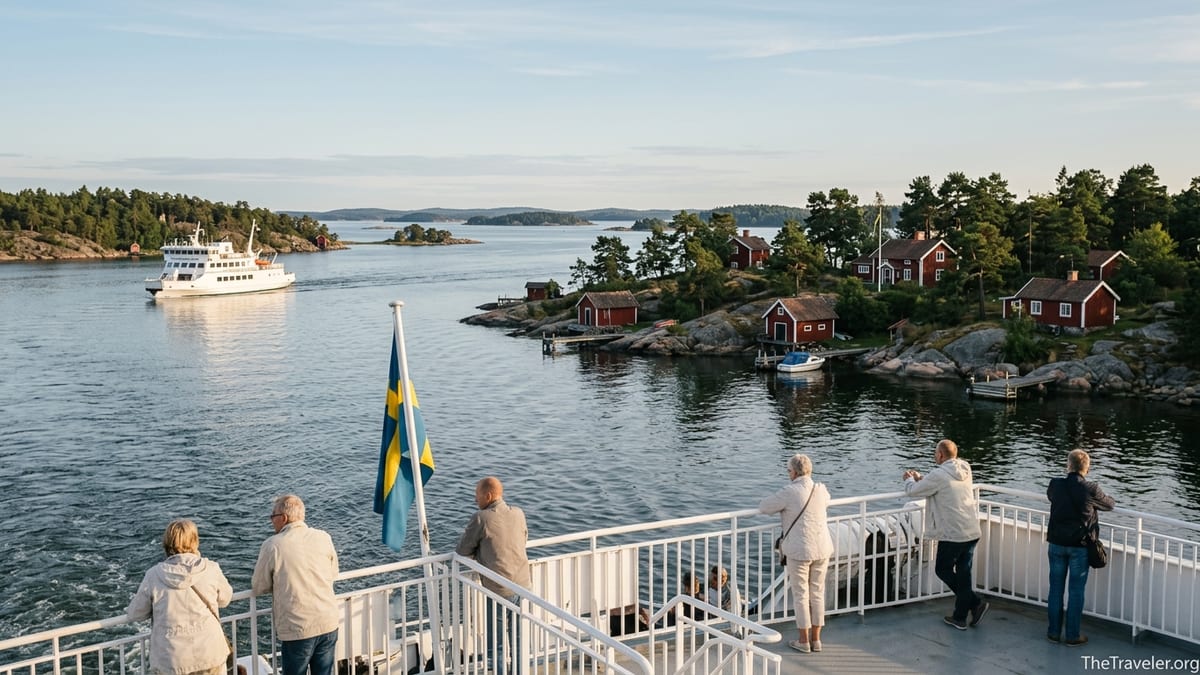
For a first visit, combining an inner-archipelago taster such as Vaxholm or Fjäderholmarna with one middle or outer island like Grinda or Sandhamn offers a good balance. Buy or load any necessary passes before you reach the quay, arrive a bit early for boarding in peak season, and pack layers so you can enjoy the decks regardless of wind. With those basics in hand, the rest is simple: find a spot on the rail, watch Stockholm’s skyline recede, and let the low granite islands, red wooden cottages and sparkling channels unfold in front of you.
FAQ
Q1. Do I need to book Stockholm archipelago ferries in advance?
For Waxholmsbolaget ferries, advance booking is usually not required on regular routes, though popular summer departures can be busy. For Cinderella and other excursion boats, especially to outer islands like Sandhamn in July and early August, buying tickets in advance is strongly recommended to secure a seat.
Q2. Can I use my Stockholm SL travelcard on archipelago ferries?
SL travelcards are valid on certain inner-city ferries year-round, but only overlap with Waxholmsbolaget services in specific periods and on selected routes. During the low season, some longer-duration SL passes can be used on more of the Waxholmsbolaget network. For short summer visits, most travelers should plan to buy separate Waxholmsbolaget tickets or travelcards for island trips.
Q3. Which island is best for a half-day trip from Stockholm?
Fjäderholmarna is the easiest half-day option, about 25 minutes by boat from central Stockholm and served by several operators. It offers short walking paths, rocky picnic spots and cafés, and you can comfortably fit the round trip and a relaxed meal into a morning or evening.
Q4. What is a good first island if I have a full day?
Grinda is a strong all-day choice for first-timers, about one and a half hours from central Stockholm. It combines marked trails, swimming coves, a small guesthouse and casual food options, and can be reached by both Waxholmsbolaget and Cinderella boats on many summer days.
Q5. How much should I budget for a day trip by ferry?
Costs vary by distance and operator, but a return trip to nearby islands like Fjäderholmarna often totals less than a typical restaurant meal in central Stockholm. Day trips to middle or outer islands such as Grinda or Sandhamn usually cost more, and fast excursion boats generally charge higher fares than slower public ferries. Adding coffee or lunch on board will raise the total.
Q6. Are the ferries wheelchair accessible?
Accessibility varies by vessel and quay, but many newer boats and main terminals offer ramp access and accessible toilets. However, some older piers in the outer archipelago have steep gangways or uneven surfaces. Travelers with mobility concerns should check details for both the specific route and island jetty in advance, and consider starting with more developed destinations such as Vaxholm.
Q7. Can I bring a bicycle on the ferries?
Several Waxholmsbolaget routes allow bicycles on board for an additional fee when space permits, which can be useful for exploring larger islands. However, capacity is limited, and at busy times the crew may refuse bikes if the boat is crowded. Express excursion boats are more restrictive, so always verify the rules for your planned departure before showing up with a bike.
Q8. What should I pack for a summer ferry trip?
Even on warm days, conditions can be noticeably cooler on the water. A light windproof jacket, sun protection, comfortable walking shoes, swimwear and a small dry bag for valuables work well. Bringing snacks and water is sensible, though most larger boats have cafés and many islands have at least one kiosk or restaurant open in high season.
Q9. What happens if my returning ferry is canceled?
Weather or operational issues can lead to delays or cancellations, especially on more exposed outer routes. If this happens, crew or quay staff typically advise on the next available departure or alternative connections, such as changing to another line at Vaxholm or an outlying terminal. Building a time buffer before evening flights, trains or dinner reservations is wise, particularly if your last boat of the day is the only late sailing.
Q10. Is it possible to stay overnight on the islands without a car?
Yes. Many islands have guesthouses, hostels, cabins or small hotels that assume guests are arriving by boat and walking from the jetty. Places like Grinda, Sandhamn, Möja and Utö all have accommodation options and marked paths from the ferry stops. If you plan to stay overnight, align your arrival and departure with ferry times and confirm late check-in arrangements in case your boat is delayed.