


Cannes is one of those names that carries instant glamour. Images of red carpets, luxury yachts and palm-lined boulevards make it sound like the Riviera at its most polished. Yet many travelers land on the same practical question: is Cannes actually worth visiting, or is it mostly an expensive backdrop for the film industry and luxury brands? The answer depends very much on what you want from your trip, your budget and the time of year you go.
Get the latest updates straight to your inbox!
Cannes Today: Beyond the Red Carpet Image
Cannes is a compact seaside city of around 75,000 residents on the French Riviera, facing the Bay of Cannes and the Lérins Islands. It is best known worldwide for the Cannes Film Festival held each May, which turns the city into a temporary capital of global cinema. For the rest of the year, however, it functions as a mixed resort and business-events destination with a surprisingly normal local life just a few blocks back from the waterfront.
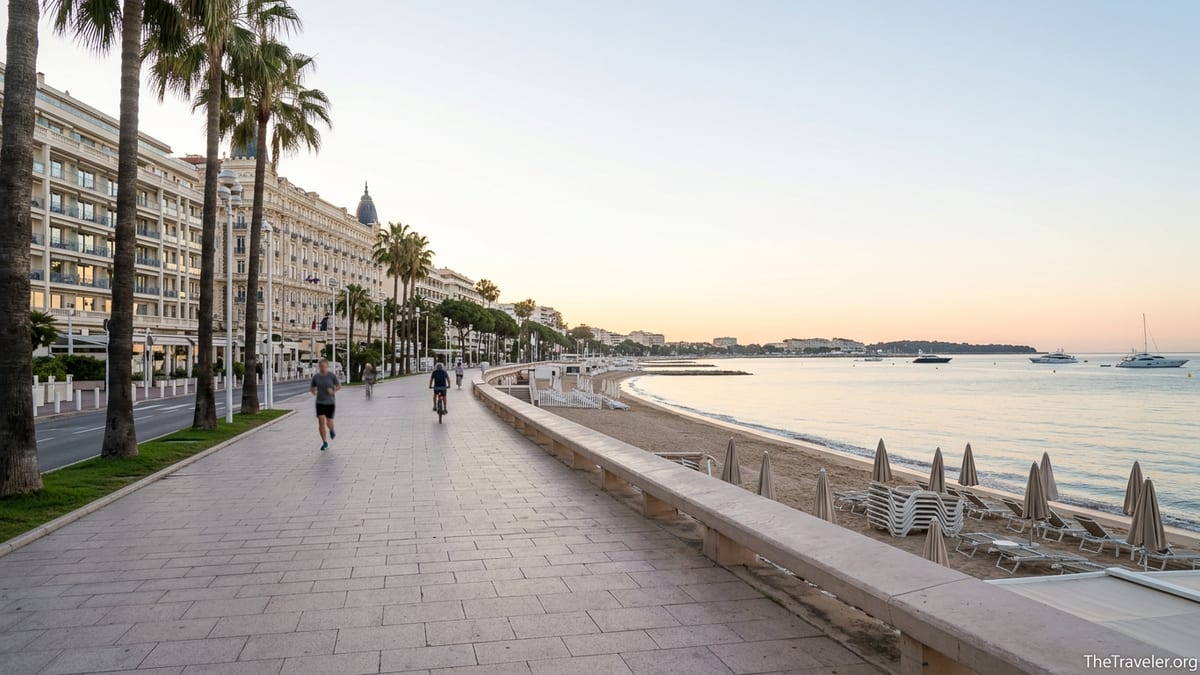
The city’s heart is La Croisette, the roughly three-kilometre promenade lined with luxury hotels, designer boutiques and a string of private and public beaches. Walking it in late afternoon, when locals jog and families stroll with ice creams, can be more charming than the publicity photos suggest. You see the Belle Époque facades of hotels like the Carlton and the Majestic, small children playing on the sand and cruise passengers trying to capture the skyline in one shot.
At the western end, the old quarter of Le Suquet climbs up a hill behind the Vieux Port. This is the part that often convinces sceptical visitors that Cannes is worth it. Narrow cobbled lanes, pastel shutters and a 17th century church create a very different mood from the polished Croisette. From the terrace near the Musée des Explorations du Monde you get one of the Riviera’s most atmospheric views: terracotta rooftops in the foreground, the yacht masts of the port, then the curve of the bay and the green silhouettes of the Lérins Islands offshore.
Cannes is also a heavyweight in the global events industry, hosting major trade shows and creative-industry gatherings throughout the year at the Palais des Festivals. This means the feel of the city can change dramatically from week to week. During a big convention, hotel lobbies and beach bars fill with badge-wearing delegates, while in quieter shoulder-season weeks you can find a far more relaxed Riviera resort.
Who Cannes Is Best For (And Who May Be Disappointed)
Cannes tends to suit travelers who appreciate a polished, city-meets-resort atmosphere more than those chasing wild scenery or bohemian nightlife. If your idea of a perfect day involves a morning espresso at a café on Rue d’Antibes, an afternoon on a sandy beach followed by a sunset aperitif on the port and dinner in a pedestrian old-town lane, Cannes can work very well as a base.
Couples on a short break often find Cannes appealing because the main sights are walkable. You can spend one day exploring Le Suquet and the Forville food market, another on the Lérins Islands and still have time for side trips to Antibes or Nice on the coastal train. The city’s compactness makes it easy to mix lazy beach time with culture and dining without worrying much about transport.
Families will find several advantages too. The bay is sheltered and the city maintains around a dozen public beaches, many with gradual entry into the water that suits children. Some stretches of beach are designated smoke free and, in summer, lifeguards monitor popular public areas. Boat rides to Sainte-Marguerite Island take about 15 minutes and feel like a small adventure for kids, with simple pine-forest paths and rocky coves once you land.
On the other hand, budget backpackers and travelers looking for an authentic fishing-village feel may come away underwhelmed. Cannes is more about polished comfort than edge. Much of the waterfront is occupied by private beach clubs attached to hotels and restaurants, and nightlife leans towards lounge bars, casino evenings and high-end clubs instead of grungy live-music venues. If you are comparing it with more laid-back Riviera towns like Villefranche-sur-Mer or Menton, Cannes will feel more commercial and focused on shopping, events and image.
Costs, Accommodation and How Expensive Cannes Really Is
Cannes is not a cheap destination, but costs vary sharply depending on when you visit and how close you stay to La Croisette. During the Cannes Film Festival, which in 2026 runs from 12 to 23 May, hotel prices can multiply several times, with standard rooms in central four and five star properties jumping into the high hundreds of euros per night and even modest apartments asking premium rates. Major conventions like the Cannes Lions advertising festival in June have a similar effect.
Outside those peak event windows, prices are more manageable, though still at Riviera levels. In a typical September or October week, a midrange three star hotel a few blocks behind the station may cost something like 120 to 180 euros per night, while a comparable place right on or just off La Croisette will often be higher. Simple studio apartments with kitchenettes in residential areas like La Bocca or up the hill from the port can bring costs down, especially for longer stays.
Dining follows the same pattern. A coffee at a café on the Croisette might cost noticeably more than one ordered on a side street in the Carnot or Prado neighbourhoods. Expect to pay a premium for sea view terraces and hotel bars. That said, you can still eat affordably if you use the daily Marché Forville in the old town for picnic supplies, grab takeaway socca or pan bagnat from local snack bars or opt for lunch menus instead of dinner on restaurant-heavy streets like Rue Saint-Antoine in Le Suquet.
Beach access brings a mix of free and paid options. Public beaches such as Plage du Casino and stretches near the Palais des Festivals offer free entry, so you can simply lay your towel on the sand. Private beach clubs, often attached to hotels along La Croisette, generally charge for sun loungers and parasols, with day rates that can easily run from several dozen euros upwards in high season. For some travelers, paying for the comfort of showers, bar service and a guaranteed spot is part of the Cannes experience. Others find the free public sections perfectly adequate and use their budget elsewhere.
Beaches, Islands and What the Coastline Is Really Like
One of Cannes’s major advantages over some neighboring Riviera cities is its sandy shoreline. The main city beaches along the bay are fine sand rather than the rounded pebbles you find in places like Nice, which makes them more comfortable for long days of swimming and sunbathing without special shoes. The coastline stretches for around 7 to 8 kilometres within the municipal area, with a mix of public strands and private concessions.
Public beaches are spaced along the bay, including centrally located options on La Croisette and more local-feeling stretches near the Pointe Croisette and the La Bocca district to the west. The city posts flags and signage about water quality and swimming conditions, and in high season there are safety patrols and designated smoke free zones on certain family-oriented beaches. Regulations are strict about barbecues and camping on the sand in summer, and sleeping on the beach overnight is generally not allowed, something budget travelers should keep in mind.
For a change of setting, many visitors take the short boat ride from the Vieux Port to the Lérins Islands, Sainte-Marguerite and Saint-Honorat. Ferries run frequently in season and the trip usually takes about 15 minutes across the bay. On Sainte-Marguerite you will find shaded forest paths, small rocky inlets for swimming and a historic fort that once held the so-called Man in the Iron Mask. Saint-Honorat, smaller and quieter, is home to a working monastery, vineyards and simple coves. Neither island has the polished beach-club feel of La Croisette, which makes them attractive for anyone seeking a more natural setting for the day.
Water sports and boat excursions are readily available along the waterfront. You will see rental kiosks and operators offering stand-up paddleboarding, jet-ski tours, parasailing and half day catamaran cruises, especially in July and August. Prices can be steep compared with less famous coasts, but the sea is generally calm inside the bay and the views back towards the city and the Esterel hills are impressive, particularly at sunset.
Atmosphere, Crowds and When to Go
The question of whether Cannes is worth visiting is closely tied to when you plan to be there. During the Cannes Film Festival and major trade shows, the city is crowded, intense and sharply more expensive. Hotel availability becomes tight sometimes many months in advance, security measures around the Palais des Festivals increase and simple tasks like crossing the Croisette or getting a table at a beachfront restaurant can take patience. For film professionals or serious cinephiles with festival access, that hive of activity is part of the appeal. For a casual visitor just looking for a beach town, those specific weeks are often best avoided.
Outside the big events, Cannes feels more like a relaxed Mediterranean resort with a business undercurrent. July and August bring family holidaymakers from across Europe, with busy beaches, warm water and a lively, late-night promenade scene. Shoulder seasons in late April, early June, September and October often hit a sweet spot for many travelers: pleasant temperatures suitable for al fresco dinners, enough activity that the city feels alive, but usually less pressure on hotel prices than deep summer or festival weeks.
Winter in Cannes is mild compared with much of Europe. Daytime highs in January often hover in the low teens Celsius and there are still palm trees, sea views and café terraces, though beach clubs may scale back operations and some smaller hotels or restaurants choose short closures. For travelers combining the Riviera with skiing in the nearby Alps, or those seeking sunshine without crowds, a winter stay can be quietly rewarding and considerably cheaper than high season.
It is worth checking the city’s event calendar before you lock in dates. Major gatherings like the Cannes Lions Festival of Creativity, the yachting festival and various film and television markets each occupy a week or more and can have a noticeable impact on prices and crowding, even if you never step foot inside the Palais.
Practicalities: Getting In, Getting Around and Day Trips
Cannes is well connected despite not having its own commercial airport. Most international visitors arrive via Nice Côte d’Azur Airport, then continue by train, airport coach or car. The regional TER train from Nice Saint-Augustin station, a short tram ride from the airport, runs along the coast and typically takes under 40 minutes to reach Cannes. For those willing to pay extra, taxis and ride‑hailing services offer a direct journey that can take around 30 to 45 minutes depending on traffic along the Riviera’s busy coastal roads.
Once in Cannes, many visitors find they need little transport beyond their own feet. The city centre, La Croisette, Le Suquet and the Vieux Port cluster within a compact area around the station. Public buses connect the centre with outlying neighbourhoods like La Bocca and the Californie hills. The local transit network also includes routes designed to serve people with reduced mobility, and information is available about accessible stops and the link between the city centre and the modern Cineum cinema complex.
Cannes also works well as a base for exploring other Riviera highlights. Regular coastal trains connect to Antibes, Juan-les-Pins, Nice, Menton and Monaco to the east, and Théoule-sur-Mer and Saint-Raphaël to the west. A day trip to Antibes might combine its fortified old town and Picasso Museum with a walk along its own sandy beaches, while an excursion to the dramatic red rocks of the Esterel coast west of Cannes shows a wilder side of the Mediterranean only a short journey away.
For drivers, parking in central Cannes can be expensive and tight, particularly during events, but several underground garages serve the Croisette and the port. Many visitors choose to skip a car entirely and rely on trains and buses, which are often more practical than battling Riviera traffic in high season.
Culture, Food and Everyday Life Behind the Glamour
Behind the high-end hotel facades and brand-name boutiques, Cannes has a lived-in side that rewards anyone who ventures a few streets inland. The daily Marché Forville, behind the old port, is a good place to start. In the morning you will see local residents buying fish, seasonal vegetables, herbs and cheeses, alongside visitors picking up fruit and picnic supplies. It is a chance to experience a local rhythm that has little to do with red carpets.
Le Suquet is the main historic quarter, and wandering its lanes in the evening can feel very different from walking La Croisette. Small bistros and wine bars spill onto the cobblestones, and while some menus are clearly targeted at visitors, prices can be more approachable than on the seafront. Climb to the church and the watchtower for sweeping views of the bay lit up at night and the silhouettes of yachts in the harbour.
Cultural offerings extend beyond the main festival. Cannes maintains several small museums and arts spaces, from contemporary exhibitions in a former chapel to the museum housed in the hilltop fort overlooking the city. On Sainte-Marguerite Island, an open air underwater eco‑museum of submerged sculptures highlights the region’s increasing emphasis on environmental awareness and sustainable tourism. Across the city, regular programming includes music festivals, dance events and open-air screenings in summer.
Food-wise, Cannes offers the expected Riviera blend of Provençal, Italian and modern international cooking. Near the port you will find seafood restaurants serving grilled fish and local specialties, while streets like Rue Hoche and areas behind Rue d’Antibes offer everything from contemporary brasseries to casual burger spots. High‑end hotel dining rooms cater to those chasing Michelin-level experiences, but it is still possible to find a simple plat du jour at a neighbourhood café for a reasonable price if you explore beyond the most obvious tourist stretches.
The Takeaway
So is Cannes worth visiting? For many travelers, the answer is yes, provided you arrive with realistic expectations. Cannes is not an untouched fishing village, nor is it the cheapest corner of the French Riviera. It is a polished, event‑driven seaside city with sandy beaches, strong transport links and a famously glamorous promenade, contrasted with a compact, characterful old town and easy access to quieter islands just offshore.
If you are drawn to people‑watching on stylish boulevards, combining city comforts with beach time and perhaps adding in a dash of film‑festival lore, Cannes can be a highly enjoyable base or short‑break destination. If your priority is rugged coastline, bohemian nightlife or the lowest possible prices, other Riviera towns may fit better. Either way, knowing how the seasons, events and local geography shape the experience allows you to decide whether Cannes matches the kind of trip you want to have.
FAQ
Q1. Is Cannes worth visiting if I am not going to the Film Festival?
Cannes can still be very enjoyable without festival access. Most visitors come for the beaches, old town, shopping and day trips, and many prefer the atmosphere outside festival weeks when prices and crowds are lower.
Q2. How many days do I need in Cannes?
Two full days are enough to see the main sights, but three to four days allow time for a boat trip to the Lérins Islands and at least one day trip along the coast to places like Antibes or Nice.
Q3. Is Cannes very expensive compared with other French Riviera towns?
Cannes is on the pricier side, especially on La Croisette and during major events. However, staying a few streets back from the seafront, using public beaches and eating at neighbourhood spots can keep costs closer to what you would find in other Riviera resorts.
Q4. Are there free beaches in Cannes or do I have to pay for a beach club?
Yes, there are several free public beaches where you can lay a towel on the sand at no charge. Private beach clubs charge for loungers and service but are optional, not mandatory.
Q5. Is Cannes suitable for families with children?
Yes. The sandy, gently shelving beaches, short boat trips to the islands and smoke free and supervised zones in season make it a popular choice for families, though parents should be aware of higher prices in peak summer.
Q6. When is the best time of year to visit Cannes?
Late spring and early autumn often offer the best balance of pleasant weather and manageable crowds. July and August are lively but hot and busy, while festival weeks in May and big convention periods see higher prices and more congestion.
Q7. Do I need a car in Cannes?
Most visitors do not need a car. The city is walkable and regional trains and buses cover coastal day trips. A car can be useful for exploring inland villages or the Esterel hills, but parking in central Cannes is relatively costly.
Q8. Is Cannes safe for solo travelers?
Cannes is generally considered safe, including for solo travelers, with the usual precautions you would take in any busy tourist city. The main risks are petty theft in crowded areas and late night overindulgence around bars and clubs.
Q9. How does Cannes compare to Nice or Antibes as a base?
Cannes offers sandy beaches and a compact, polished centre, while Nice is larger, more urban and often better connected for regional transport. Antibes feels more traditionally maritime and village‑like. Your choice depends on whether you prioritise beach comfort, nightlife, or a more historic harbour atmosphere.
Q10. Can I enjoy Cannes on a tighter budget?
It is possible, especially outside major events, by staying in simple accommodation away from La Croisette, using public beaches, relying on trains and buses and eating where locals do rather than on the most prestigious seafront terraces.