


Naples has one of Europe’s most spectacular urban seafronts, but not all stretches feel the same. If you are torn between staying by the fishing‑harbor charm of Mergellina or the postcard‑perfect sweep of Lungomare Caracciolo, the choice will shape how you experience the city. Both run along the Bay of Naples and both have Vesuvius on the horizon, yet the rhythm of daily life, the food scene and even your transport options are quite different. Here is how to decide which waterfront suits your style, with concrete examples from street level rather than the brochure view.
Get the latest updates straight to your inbox!
Mergellina and Lungomare Caracciolo at a Glance
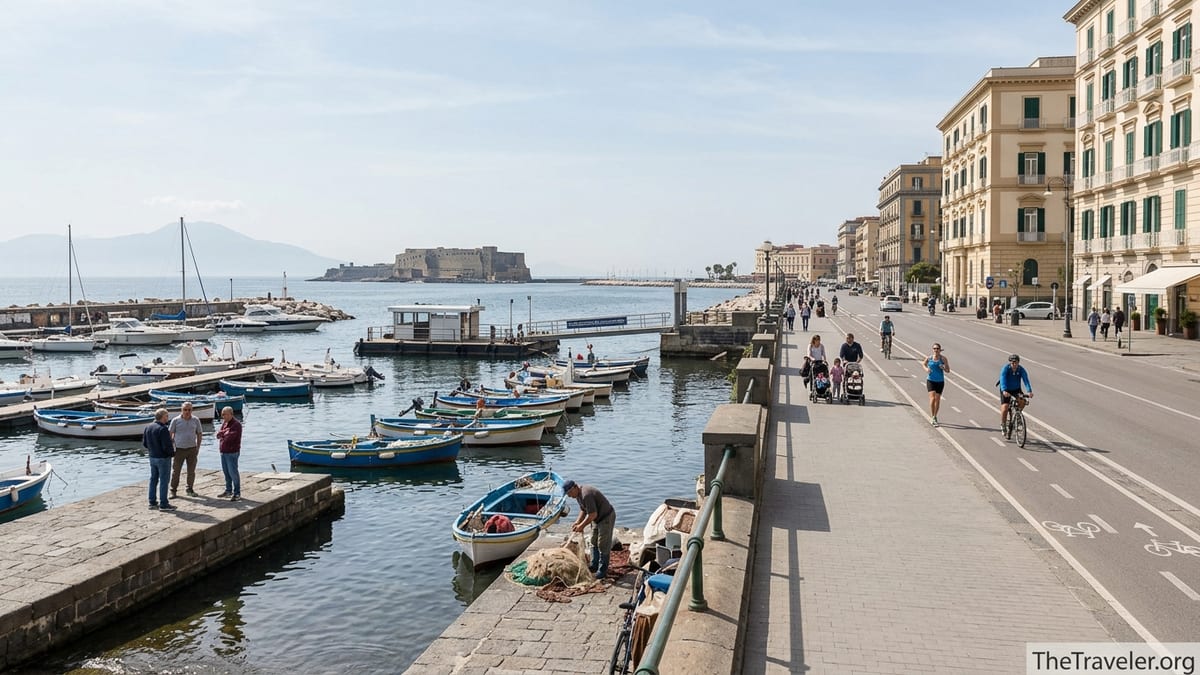
Mergellina is a coastal district to the west of central Naples, historically a small fishing village that has been absorbed into the city. Today it mixes a working marina, a small tourist harbor with hydrofoils to nearby islands, and a residential neighborhood that climbs the hillside toward Posillipo. You will see fishermen mending nets next to locals in business attire grabbing a quick espresso at the bar before work, especially around Piazza Sannazaro and the waterfront.
Lungomare Caracciolo, officially Via Francesco Caracciolo, is the grand seafront promenade that runs roughly 4 kilometers along the bay from the area around Mergellina eastward toward Castel dell’Ovo and the Santa Lucia district. Large sections have been pedestrianized since 2012, creating a wide, traffic‑calmed strip used for strolling, jogging and cycling, with uninterrupted views of Vesuvius and Capri on clear days.
In simple terms, think of Mergellina as a neighborhood with a harbor, and Lungomare Caracciolo as the city’s showcase balcony over the sea. In practice they overlap: the western end of the Lungomare merges into the Mergellina area, so you can easily walk between the two in minutes. Choosing where to stay is less about distance and more about which ambience you want outside your front door.
For many travelers, Lungomare Caracciolo works best if you want a classic postcard promenade with big‑view hotels and an evening passeggiata right downstairs. Mergellina suits those who prefer local life, easier access up to Posillipo by funicular, and slightly less polished surroundings that feel more “lived‑in” than “on display.”
Atmosphere: Postcard Promenade or Working Harbor?
On Lungomare Caracciolo, especially between Rotonda Diaz and Castel dell’Ovo, you are on Naples’ most photographed strip. The promenade is broad, with palm trees, benches and a separated cycle lane in many stretches. On sunny Sundays, entire families in their best outfits stroll here, teenagers lean on the balustrade eating gelato, and runners follow the curve of the bay. Street musicians often play near the Rotonda Diaz square or closer to Santa Lucia, adding to the holiday mood.
From the Caracciolo pavement you are slightly raised above the water, looking out across low rocky breakwaters and classic views of Vesuvius and the Sorrentine Peninsula. The hotels and residential palazzi on the inland side give it a more formal, grand‑boulevard feel. In the evening, the lights from Castel dell’Ovo and the line of seaside restaurants around Borgo Marinari reflect in the bay, drawing both tourists and locals for aperitivo.
Mergellina, by contrast, feels more like a neighborhood that happens to be on the water. The marina is filled with small fishing boats and mid‑size pleasure craft rather than big cruise ships. Around the pier you might find plastic crates piled with the day’s catch and older locals chatting in dialect on folding chairs. It can be a little chaotic at peak commuter or hydrofoil times, when people rush to boats headed to Capri or Procida in summer, but at other hours it has a sleepy, slightly faded seaside charm.
If you are sensitive to crowds and buskers, you might prefer basing yourself in Mergellina and walking 10 to 20 minutes along the water toward the busier central stretches of Lungomare Caracciolo when you want “wow” views and people‑watching. Conversely, if you want to step out of your hotel and instantly feel that sweeping bay panorama, Caracciolo is the obvious choice.
Views, Swimming and Outdoor Life
Both areas deliver great vistas, but the character of those views is subtly different. From Lungomare Caracciolo near Rotonda Diaz, the panorama is wide open: straight ahead lies the bay, with Vesuvius perfectly framed, and on clear days you can pick out Capri as a low hump on the horizon. Photographers often favor this section because there are few visual obstructions, and the promenade’s height above the shoreline gives you a sense of distance and depth.
Closer to Mergellina, the view includes more man‑made detail: the curved marina, breakwaters, moored yachts and, if you look back east, the line of hotels and apartment buildings marching toward Chiaia. From some spots on the Mergellina side you can also see up toward the green slopes of Posillipo, which reminds you how close you are to one of Naples’ most scenic hill neighborhoods.
For swimming, neither Mergellina nor Lungomare Caracciolo is a classic sandy‑beach destination. Locals sometimes sunbathe or dip from the rocks below the promenade in high summer, but water quality and comfort vary and there are no extensive facility‑packed lidos right on this stretch. If seaside lounging is a priority, many Napolitans head further out toward Posillipo’s private beach clubs or take a ferry to islands like Ischia or Procida from Mergellina’s port.
Outdoor fitness is strong on Lungomare Caracciolo. The pedestrianized status and dedicated cycle lane in key sections attract runners, inline skaters and cyclists at dawn and just before sunset, when the light is soft and traffic noise drops. Mergellina sees fewer joggers but more early‑morning dog walkers and anglers along the breakwaters. If your ideal morning is a 5‑kilometer run beside the sea, Caracciolo is easier. If you prefer a quiet stroll to a bar for a cornetto and espresso among locals, Mergellina wins.
Where You Will Spend and Save: Hotels, Food and Everyday Costs
Lungomare Caracciolo is lined with some of Naples’ more expensive seafront hotels, particularly closer to the eastern end near Castel dell’Ovo and Santa Lucia. Here, mid‑range to upscale properties with sea‑view rooms command higher rates, especially between April and October and around Italian holidays. Travelers often pay a premium for balconies facing the bay and rooftop terraces with Vesuvius views.
Eating along the central Lungomare is convenient but can feel curated for visitors. Waterfront restaurants around Borgo Marinari, for example, specialize in seafood pastas and grilled fish, with prices per main course often higher than in inland neighborhoods such as the Spanish Quarter or Vomero. You are paying partly for the setting: tables a few meters from the sea, candlelight bouncing off the water and a steady stream of passersby.
Mergellina’s food scene is more varied and slightly better value. Around Via Mergellina and the side streets toward Chiaia, you will find a mix of old‑school trattorias, neighborhood pizzerias and newer contemporary seafood spots. While some catered to island‑bound tourists from the harbor, many still serve a primarily local clientele, so menus reflect everyday Neapolitan tastes. A basic pizza and drink can be a little cheaper here than at a comparable spot directly on the Lungomare’s most popular segments.
For quick bites, both areas have plenty of bars selling sfogliatelle, graffe (Neapolitan doughnuts) and espresso at counter prices similar to the rest of the city. Supermarkets and minimarkets are slightly more common a couple of blocks back from the water, particularly on the Mergellina and Chiaia side, which helps if you are in an apartment and want to self‑cater for breakfast or snacks.
Getting Around: Transport, Access and Day Trips
One advantage of Mergellina is public transport. The Mergellina railway and metro station on Line 2 connects in a few stops to central hubs like Piazza Garibaldi (for long‑distance trains) and Montesanto. From near the waterfront, you can also access the Mergellina funicular, which climbs up to Posillipo, opening up views from the hill and easy access to residential districts above the bay.
Lungomare Caracciolo itself is walkable from several metro stops, notably Piazza Amedeo on Line 2, which lies a short distance inland from the Chiaia section. Buses run along or behind the seafront, though services can be crowded at peak times and slower when the promenade fills on Sundays or during events. Because much of the Caracciolo stretch is either fully pedestrian or strongly traffic‑calmed, taxis typically drop you at access points rather than cruising right along the main promenade.
For island day trips, Mergellina’s harbor occasionally serves hydrofoils to Capri and other destinations, particularly in the high season. The main port for ferries remains Molo Beverello closer to the city center, but if your accommodation is in Mergellina you may find seasonal services leaving almost from your doorstep. Always check current schedules locally, as routes and timings can shift from year to year.
If you plan frequent day trips outside Naples by train, you might find it slightly easier to stay closer to a major interchange like Piazza Garibaldi or Montesanto and visit the seafront in the evenings. However, if the bay is your priority and you are happy to spend 10 to 20 minutes commuting by metro into the historic center, both Mergellina and Lungomare Caracciolo are well connected enough to make this work.
Who Each Area Suits Best
Choosing between Mergellina and Lungomare Caracciolo is really about your travel personality. If you are a first‑time visitor who wants the classic, instantly recognizable Naples view outside your hotel, Lungomare Caracciolo is hard to beat. You can stroll from your door to Castel dell’Ovo for sunset, wander into the Santa Lucia district for a seafood dinner and enjoy the evening promenade without thinking about transport.
If, however, you have already seen the major sights or you prefer a more lived‑in local atmosphere, Mergellina can be more rewarding. The rhythm of the fishing harbor, the quick connection up to Posillipo by funicular, and the mix of long‑time residents with commuters give it a neighborhood feel in which you are a guest in someone’s everyday life rather than a spectator on a stage set.
Families with young children often appreciate Lungomare Caracciolo’s broad pedestrian stretches, where kids can run, ride scooters or pedal rental bikes with fewer cars to worry about. Joggers and cyclists also tend to gravitate here. Solo travelers looking for a quieter base but still within easy reach of the bay may feel more comfortable in Mergellina or the adjacent Chiaia backstreets, ducking down to the water when they crave sea air.
Night owls should consider that while there are bars and late‑opening gelaterie in both areas, more nightlife clusters toward Chiaia and central Lungomare Caracciolo, especially on weekends, when Neapolitans flock to the seafront for a late passeggiata. If you prefer to sleep away from weekend noise, a room a couple of streets back in Mergellina or uphill in Posillipo might offer a better balance of calm and access.
The Takeaway
Standing anywhere along Naples’ waterfront, it is clear that both Mergellina and Lungomare Caracciolo share the same natural asset: a sweeping, almost theatrical bay framed by Vesuvius and the islands. The differences lie in how each stretch stages that view. Lungomare Caracciolo is the polished front row, pedestrian‑friendly and scenic, alive with runners, families and strolling couples. Mergellina is the side of the stage where boats come and go, fishermen work and everyday life continues with the sea as a backdrop rather than the main act.
If you dream of waking up, crossing a single road and finding yourself on a grand promenade with a straight‑on view of Vesuvius, Lungomare Caracciolo will likely feel like the Naples you imagined. If, instead, you imagine chatting with a barista who recognizes you on your third morning, boarding a funicular up to Posillipo in the afternoon and watching locals cast fishing lines by evening, Mergellina may be the better fit.
Whichever you choose, remember that the two areas blend into each other, and walking from one to the other along the water is part of the pleasure of staying here. With sensible expectations about crowds, swimming options and transport, you can shape a seafront experience that matches your pace, whether that is slow and local or panoramic and on the move.
FAQ
Q1. Is Mergellina or Lungomare Caracciolo better for first-time visitors to Naples?
For a first visit, Lungomare Caracciolo usually suits travelers who want iconic views and an easy evening stroll right outside their hotel, while Mergellina appeals more to those seeking a neighborhood feel with a working harbor and quick access up to Posillipo.
Q2. Which area has better public transport connections?
Mergellina has a slight edge because it combines a Line 2 metro and railway station near the waterfront with the Mergellina funicular up to Posillipo, while Lungomare Caracciolo is mostly reached via nearby Line 2 stops like Piazza Amedeo plus buses or a short walk.
Q3. Can I easily walk between Mergellina and Lungomare Caracciolo?
Yes, the western end of Lungomare Caracciolo runs directly past the Mergellina area, and you can walk along the waterfront promenade between them in roughly 10 to 20 minutes depending on your pace and exact starting point.
Q4. Are there good swimming beaches in either area?
Neither stretch is a classic sandy‑beach destination. Locals sometimes swim from the rocks below the promenade in summer, but many prefer to go further out toward Posillipo’s beach clubs or take ferries to islands like Ischia or Procida for better swimming.
Q5. Which seafront is better for families with children?
Families often favor Lungomare Caracciolo because large sections are pedestrian or heavily traffic‑calmed, with wide pavements and a cycle lane where children can walk, ride scooters or cycle more safely than on regular city streets.
Q6. Where will I find more budget-friendly food options?
Prices vary, but you will generally find slightly more budget‑friendly everyday spots in Mergellina and the adjacent Chiaia backstreets, while many of the most scenic restaurants directly on the central Lungomare charge a premium for their prime waterfront locations.
Q7. Is one area safer than the other at night?
Both Mergellina and Lungomare Caracciolo are busy, well‑frequented areas, especially on weekends, and most visitors experience no problems, but normal big‑city precautions apply, such as avoiding deserted corners late at night and keeping valuables out of sight.
Q8. Which waterfront is better if I plan a lot of day trips outside Naples?
If frequent day trips by train are a priority, staying closer to central hubs like Piazza Garibaldi can be more efficient, but between the two seafronts Mergellina’s Line 2 station offers a small advantage for reaching mainline connections without changing lines.
Q9. Are there more nightlife options in Mergellina or along Lungomare Caracciolo?
Nightlife tends to cluster more around the central stretches of Lungomare Caracciolo and nearby Chiaia, with bars, gelaterie and late‑opening spots that fill on weekend evenings, while Mergellina feels a bit quieter and more residential after dinner time.
Q10. If I want a quieter stay but still love sea views, what should I choose?
Consider staying slightly back from the busiest seafront segments, for example in Mergellina or uphill toward Posillipo, where you can enjoy calmer residential streets yet walk or take short rides down to either Mergellina harbor or Lungomare Caracciolo when you want the classic bay panorama.