


Marriott Vacation Club Desert Springs in Palm Desert sits in the heart of Southern California’s Coachella Valley, where blue skies, dry air and mountain views are almost guaranteed. What changes dramatically through the year is how hot it feels, how busy the resort gets and what kind of trip you can realistically enjoy. Understanding the local desert climate is the key to choosing the best time to visit for perfect weather, whether you are dreaming of pool days, golf rounds or cool evening walks under palm trees.
Get the latest updates straight to your inbox!
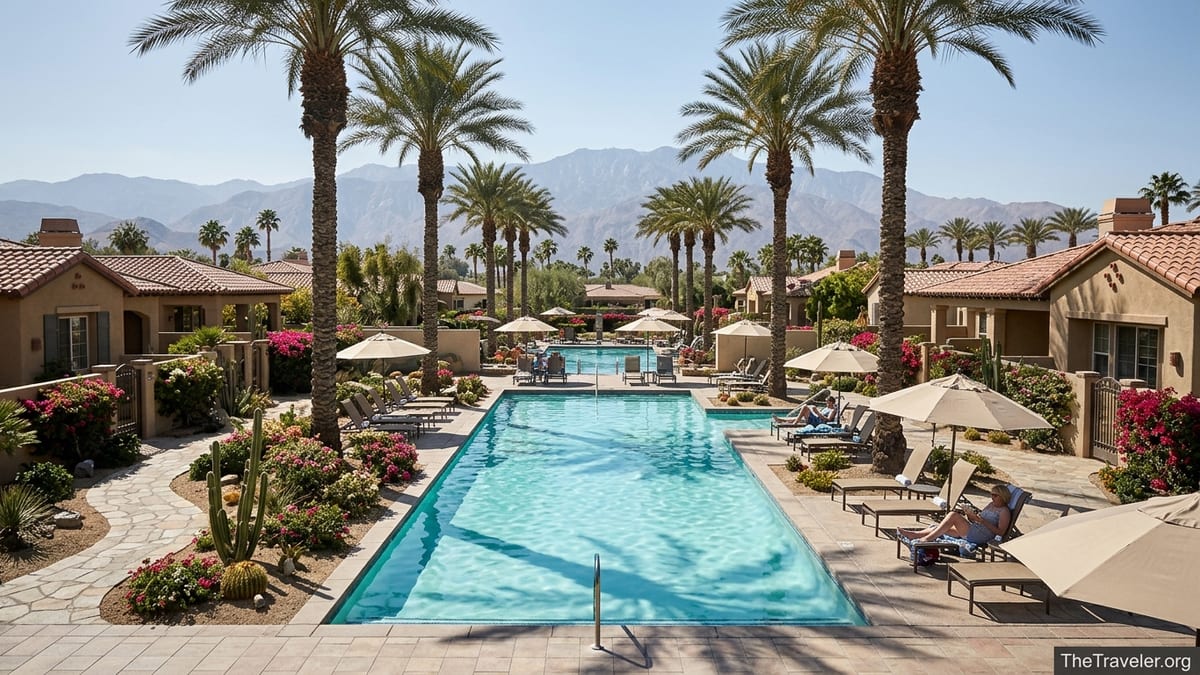
Understanding the Desert Springs Climate
Marriott Vacation Club Desert Springs, which includes Desert Springs Villas I and II, shares the same hot desert climate as Palm Desert and nearby Palm Springs. The region enjoys more than 300 days of sunshine a year, with very low humidity and minimal rainfall. Winter afternoons are typically pleasantly warm, while summer highs regularly push well past 100 degrees Fahrenheit, often reaching into the 110s during July and August. This wide swing between seasons is what makes timing your visit so important.
In practical terms, average daytime highs in Palm Desert sit in the low 70s Fahrenheit in January, climb into the 80s by March, and push through the 90s by May before peaking above 105 in mid-summer. By October, temperatures usually fall back into the 80s, and November days commonly return to the 70s. Even at the height of summer, evenings can feel more comfortable than the numbers suggest because of the dry air, but mid-day sun is intense enough that many locals simply stay indoors from late morning until late afternoon.
Rain is rarely a major factor when planning a trip. The entire Coachella Valley averages only a few inches of rain per year, with slightly higher odds of brief showers or thunderstorms in winter and during the late-summer monsoon pattern. Most vacationers will experience uninterrupted sunshine, which means the real question is not whether it will be dry, but whether the heat level aligns with your plans.
Because Marriott Vacation Club Desert Springs is designed around outdoor pools, shaded loungers and golf access, those seasonal temperature swings translate directly into how you will use the resort. A January stay might mean long walks through the landscaped grounds in a light sweater and coffee on the balcony, while an August visit is more about late-night swimming and moving quickly between air-conditioned villa, car and restaurant.
The Sweet Spot: Late Winter and Early Spring
For most travelers seeking perfect, comfortable weather, the best time to visit Marriott Vacation Club Desert Springs is from late February through early April. During this window, Palm Desert afternoons are generally in the mid-70s to mid-80s Fahrenheit, with cool but not cold mornings and evenings. You can sit by the pool in a swimsuit during the day, then put on a light jacket for dinner on the terrace without ever feeling chilled or overheated.
This is also prime season for golfers and active travelers. The resort is adjacent to area courses that stay in good condition through spring, and tee times shortly after sunrise can be particularly pleasant when temperatures hover in the 60s and low 70s. A couple visiting in mid-March, for example, can play 18 holes before noon, have lunch at a shaded patio, then spend the late afternoon reading by the pool without needing to retreat inside from oppressive heat.
Families often find that spring school-break weeks offer an ideal blend of weather and energy. In March, resort pools are fully usable without being uncomfortably cold, and children can move between splash areas and playgrounds comfortably. A multigenerational group might enjoy a spring break stay where grandparents take early morning walks along the pathways, parents head to the nearby spa at the adjoining JW Marriott, and kids join poolside activities organized by the vacation club team.
The main trade-off in this sweet spot season is demand. February through April is peak time across Greater Palm Springs, and Marriott Vacation Club Desert Springs is no exception. Villa rates are usually higher than in summer, and inventory can be limited, especially for popular spring weekends and around major events such as tennis tournaments in Indian Wells or music festivals in Indio. Booking several months ahead and being flexible with your arrival day can make a significant difference in both availability and price.
Shoulder Seasons: November, December and Early May
If you prefer slightly quieter resorts and are willing to accept a bit more variation in temperature, the shoulder seasons around early winter and late spring can be excellent times to visit. In November and early December, typical highs in Palm Desert are in the low to mid-70s, with cooler mornings in the 40s and 50s. The result is crisp desert air, long golden hours in the late afternoon and comfortable weather for hiking in nearby areas like Indian Canyons or the trails above Palm Springs.
At Marriott Vacation Club Desert Springs, a November stay can feel almost like an extended fall getaway. You might start the day with a light fleece while walking among the palms, then shed layers by late morning and sun yourself by the pool. While the water may feel brisk to some, many guests still swim comfortably in the afternoons, especially children who are less sensitive to cooler water. It is also a good season for couples who want to split their days between the resort and local wine bars, galleries and restaurants in Palm Desert’s El Paseo district.
Early May represents the other side of the shoulder season. By this time, average highs often sit in the low to mid-90s, but mornings and evenings remain very pleasant, and the dry air keeps things manageable for those who enjoy warmth. A long weekend in early May might mean walking to breakfast in the mid-70s, reclining under an umbrella by a pool that finally feels deliciously warm, and planning any more strenuous activity, such as a round of golf or a hike, for before 10 a.m.
In both these shoulder periods, villa rates and availability at Marriott Vacation Club Desert Springs are often a bit more forgiving than in peak winter and early spring. While you should still book ahead for holidays like Thanksgiving or the weeks surrounding major events, you are more likely to find good-value nightly rates or owner rentals, and public spaces such as the main pools and fitness center tend to feel less crowded.
Summer at Desert Springs: Hot Temperatures, Cool Deals
From roughly mid-June through early September, Palm Desert enters its true desert summer. Afternoon highs commonly breach 105 degrees Fahrenheit, and stretches over 110 are not unusual. At this time of year, the resort’s shimmering pools become less a leisure amenity and more a survival tool. The heat is intense, and anyone not accustomed to desert conditions must plan their days carefully, prioritizing shade, hydration and air conditioning.
Despite that, there are compelling reasons some travelers specifically choose summer at Marriott Vacation Club Desert Springs. One is value. Because fewer visitors are willing to face triple-digit highs, nightly villa rates and owner rental prices are typically much lower than during the winter and spring peak. A two-bedroom villa that might command a premium over a February holiday weekend can sometimes be found at a substantial discount in late July, especially for midweek stays.
For example, a family of four on a budget might plan a late-August trip where their days revolve around the resort’s pools, indoor activities and late dinners. Mornings are spent in the water or exploring air-conditioned attractions such as the nearby shopping centers and museums in Palm Springs. By late afternoon, when the sun begins to sink behind the mountains, the resort grounds take on a different character, with warm breezes, pink skies and long, shadowed pathways that invite slow evening strolls.
Summer can also work well for guests who simply want to relax and do very little. The combination of low prices and quiet common areas makes it easier to claim a favorite shaded cabana, read for hours undisturbed and treat themselves to spa sessions at neighboring properties. However, this is not the time to plan ambitious mid-day hikes in Joshua Tree National Park or 18-hole golf marathons. Those who come in summer and enjoy it tend to build their schedules around early mornings and late evenings, treating the hottest hours as an extended indoor siesta.
Matching Your Travel Style to the Seasons
Choosing the best time to visit Marriott Vacation Club Desert Springs ultimately depends on what kind of trip you want and who is traveling with you. For many couples looking for a romantic and relaxing escape, February through April is ideal. The days are warm, the nights are cool, and the resort’s landscaping is at its most lush. You might plan a three-night stay in early March, for example, combining pool time with a spa treatment at the adjoining JW Marriott, a sunset drink at one of the hotel’s lounges, and a day exploring art galleries and mid-century architecture in downtown Palm Springs.
Golfers who prioritize course conditions and comfortable play often favor late winter through early spring as well, though some prefer the slightly lower prices and lighter crowds of November and early December. A small group of golfing friends might time their trip for the first week of December, when tee sheets are easier to secure, afternoon highs hover in the low 70s and they can return to the villa to grill on the balcony or patio in the early evening without any chill.
Families with school-age children have to work within holiday calendars, but still have choices. Spring break weeks in March and April bring excellent weather but higher demand and more energetic pool scenes. Thanksgiving week offers cooler days, a festive atmosphere and the chance to combine a holiday meal with desert sunshine. Some families deliberately choose June, when temperatures are climbing but not yet at their absolute peak, to take advantage of lower rates and longer daylight, knowing they will structure their days carefully around the heat.
Those who are truly heat-tolerant and focused on value may discover that September can be a sweet spot as the intense summer crowds of other destinations fade and late-summer promotions appear. While it is still hot, particularly in the first half of the month, there is a perceptible easing as the calendar turns toward fall, and evening temperatures begin to dip just enough to make patio dining more comfortable.
Practical Weather Tips for Desert Springs Guests
Regardless of when you visit Marriott Vacation Club Desert Springs, smart planning around the local climate will make your stay more enjoyable. In cooler months, packing layers is essential. Morning walks in January or early February can feel brisk enough for a light puffer jacket or fleece, while lunchtime at the pool requires only a swimsuit and cover-up. Bringing a mix of long and short sleeves, plus a light sweater for evenings outdoors, ensures you are comfortable without overpacking.
From late spring through early fall, sun protection becomes the most important consideration. Strong desert sun, reflected off pale walkways and pool surfaces, can quickly cause sunburn even on mild-feeling days. Wide-brimmed hats, high-SPF sunscreen, polarized sunglasses and lightweight long-sleeved shirts can all help. Many guests find it useful to set a flexible daily rhythm: morning activities outdoors, long midday breaks in the villa or in shaded cabanas, then a return outdoors after 4 p.m. when the sun angles lower.
Hydration is another factor that visitors sometimes underestimate. The dry air in Palm Desert means you may not feel as sweaty as you would in a humid climate, but you can still lose significant moisture throughout the day. Keeping refillable water bottles in your villa and car, and drinking regularly even when you do not feel especially thirsty, is wise. This is particularly important for children and older travelers, especially if they are spending extended periods in the pools or hot tubs.
Finally, it is helpful to remember that weather conditions can still vary around the averages. Some winters bring particularly warm spells where January afternoons mimic March or April, while occasional early-season heat waves can push May temperatures into truly summerlike territory. Checking a reliable 10-day forecast for Palm Desert in the week before your trip allows you to fine-tune clothing choices and activity plans while still benefiting from the broader seasonal patterns described here.
The Takeaway
For classic desert sunshine with comfortably warm days and cool, inviting nights, the best time to visit Marriott Vacation Club Desert Springs is from late February through early April, with November, December and early May offering attractive alternatives. During these periods, you can fully enjoy the resort’s pools, palm-lined pathways and access to nearby golf, hiking and spa experiences without battling either chilly mornings or searing midday heat.
Travelers who prioritize value and do not mind intense warmth can also find rewarding stays during the summer months, provided they plan around the afternoon sun and lean into a slower, pool-focused rhythm. Families, couples and friend groups can each match their preferred style of vacation to a season, whether that means spring break energy, quiet early-winter serenity or a budget-friendly late-summer retreat.
By understanding how the desert climate shapes daily life in Palm Desert, and by aligning your expectations with the realities of each season, you can choose the moment that delivers your personal version of “perfect weather.” Whether that is a breezy March afternoon by the pool or a balmy September evening on your villa balcony, Marriott Vacation Club Desert Springs offers a setting where blue skies and mountain backdrops are almost always part of the picture.
FAQ
Q1. What is the single best month to visit Marriott Vacation Club Desert Springs for weather?
Many travelers consider March the best all-around month, with afternoon highs usually in the 70s and 80s Fahrenheit, cool but comfortable evenings and minimal rain.
Q2. Is it warm enough to swim at Desert Springs in winter?
Yes, most days from late February into April are warm enough for comfortable swimming in the afternoon. In mid-winter, pools can feel cooler, but many guests still enjoy them during sunny midday hours.
Q3. How hot does it really get in summer at Marriott Vacation Club Desert Springs?
From late June through August, Palm Desert highs often exceed 105 degrees Fahrenheit, and stretches over 110 are common. The air is very dry, so planning activities for early morning and evening is important.
Q4. Are November and December too cold for a pool-focused vacation?
November and early December bring highs mostly in the 70s, which many visitors find pleasant for sunbathing and short swims, though water can feel brisk. These months are ideal for guests who value walking, golfing and exploring over constant pool time.
Q5. When are villa rates typically lowest at Marriott Vacation Club Desert Springs?
Rates are often lowest in the peak summer months of July and August, and can also be more favorable in early September and parts of June compared with high-demand winter and spring dates.
Q6. Is spring break very crowded at the resort?
Yes, March and early April school-break weeks are among the busiest times of year. Expect more energetic pool areas, higher occupancy and stronger demand for larger villas.
Q7. What is the best time to visit if I want to play a lot of golf?
Late February through April is ideal for comfortable rounds, though November and early December also offer pleasant temperatures and slightly lighter demand for tee times.
Q8. Are evenings cool in the desert even in warmer months?
Evenings in late spring and early fall can be very pleasant, but in peak summer it may remain in the 90s after dark. In winter and early spring, nights are cooler, often calling for light layers or a jacket.
Q9. Does rain ever impact a stay at Marriott Vacation Club Desert Springs?
Rain is rare in Palm Desert and usually limited to short, passing showers in winter or brief storms linked to late-summer monsoon patterns. Most guests experience clear, dry weather throughout their visit.
Q10. How far in advance should I book for the best weather periods?
For peak months like March and early April, booking several months ahead is wise, especially for larger villas or popular weekends. For shoulder seasons and summer, you can often book closer to arrival and still find good availability.