


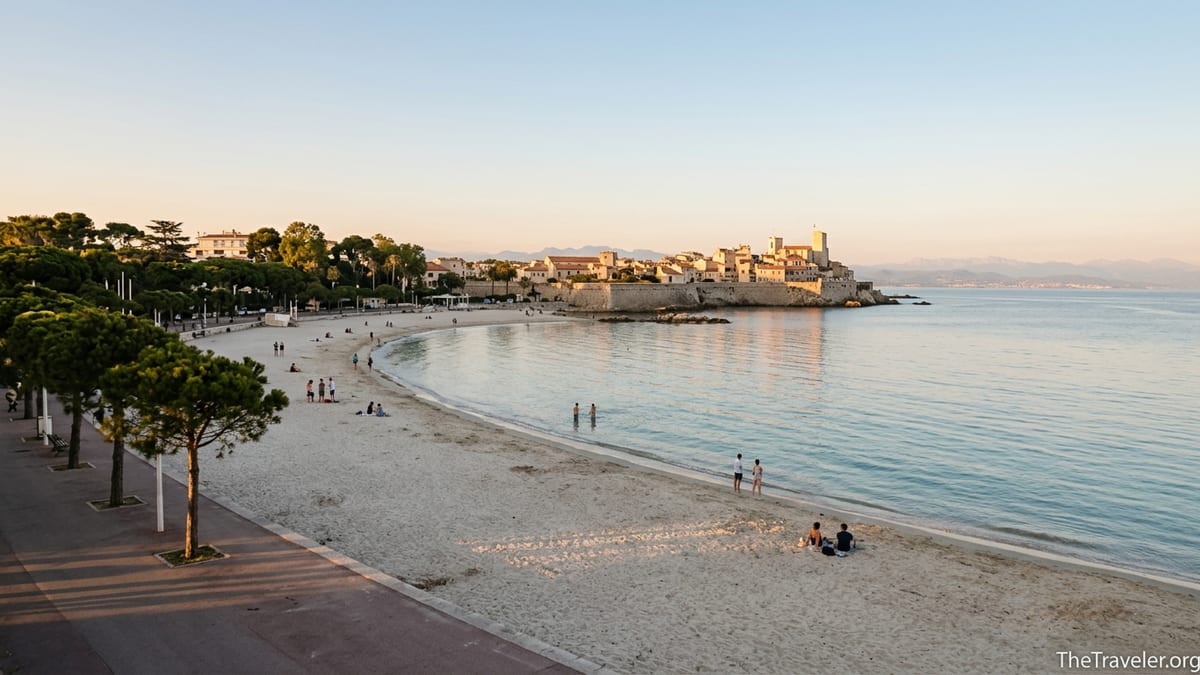
Plage du Ponteil in Antibes is one of those French Riviera beaches that feels instantly familiar: a long curve of pale sand, shallow turquoise water, and the stone ramparts of the old town glowing in the distance. Yet your experience here can vary dramatically depending on what time you show up. If you care about softer light, space to stretch out your towel, and photos that look like the postcards, timing your visit is everything.
Get the latest updates straight to your inbox!
Understanding Plage du Ponteil’s Daily Rhythm
Plage du Ponteil is a predominantly public beach just south of Antibes’ old town, with a narrow but long band of sand backed by a tree-lined promenade and a low-traffic coastal road. Locals love it for easy access and shallow, protected water, which means it fills quickly when the sun is high and schools are out. In July and August, arriving after late morning often means weaving between tightly packed towels and families camped for the day as far as the waterline.
From early morning to late evening, the atmosphere changes in clear stages. Before 9 am, you mostly share the beach with joggers, dog walkers on the promenade, a handful of swimmers doing laps, and a few photographers setting up tripods. Late morning to mid-afternoon is peak sunbathing time, particularly on hot days when the narrow strip of sand feels fully occupied. From around 5 pm, locals drift back for after-work swims and volleyball, the light softens, and the crowd skews more to groups of friends and people with picnic baskets.
This predictable rhythm gives you two main windows if you want soft light and fewer people: sunrise to mid-morning, and late afternoon into the evening. Both are practical even without a car, as the beach lies a flat 10–15 minute walk from Antibes train station and just a few minutes from the old town lanes where cafés open early.
Golden Hours: When the Light Is Softest
If you are chasing flattering light for photos or simply want the sea and ramparts to look their best, focus on the golden hours. On the Côte d’Azur, sunrise in summer is typically between about 5:45 and 6:15 am, while sunset can be as late as 9:15 pm in June and around 8:30 pm in September. The most photogenic conditions at Plage du Ponteil usually occur from sunrise to roughly 9 am, and again from about 6 pm until 20–30 minutes after sunset.
In the morning, the low sun tends to hit the old town ramparts and Alps in the distance from a flattering angle, often turning the city walls a warm honey color. The water looks soft and slightly pastel rather than glaring turquoise. Photographers set up at the eastern end of the beach near the Royal Beach club to frame the curve of sand, with the Fort Carré and the high Alps often still snowy in spring across the bay. People are fewer, silhouettes are long, and you can capture unhurried scenes of individuals wading or paddleboarding.
By late afternoon, the heat begins to ease and the light slides into golden tones again. From around 6:30 pm on clear summer days, the sun dips toward the Cap d’Antibes headland, throwing a gentle sheen across the water. Practical example: arrive at 5:30 pm in August, rent a paddleboard from the sailing club next to the Antibes Yacht Club for an hour, then settle back on the sand around 7 pm as the sky softens pink and the streetlights on the ramparts begin to flicker on. You can swim without squinting and get portraits where nobody is shading their eyes.
How Seasons Change Crowds and Light
Across the year, the character of Plage du Ponteil shifts not just with daylight hours but also with local habits. High summer, from roughly late June through late August, is school holiday season in France and peak time for visitors staying in Antibes and nearby Nice or Cannes. During this period, even mornings can be busy by 10 am, and late afternoon brings in waves of after-work locals as well as day-trippers lingering until sunset. For softer light and space, you will need to lean heavily on true early mornings or later evenings.
Shoulder seasons in May, early June, September, and early October are particularly rewarding if you prefer calmer scenes. The water is often warm enough for swimming, especially in September, but many families have returned home. On a mid-September weekday, for example, you might find only scattered couples and a few retirees on the sand at 9:30 am, plus a small crowd of paddleboarders waiting to launch. Golden hour around 6:30 pm still brings people, but towels are spaced apart and you can walk the entire promenade without stepping around volleyball games.
In winter and early spring, the beach turns into more of a local promenade than a swimming spot. The light can be spectacular on crisp, clear days, particularly from mid-afternoon onward when the low sun lights the old town and Cap d’Antibes in a soft, subdued palette. You might see families bundled in light jackets, children playing near the shoreline without getting in, and residents sitting on benches facing the sea. Winter sunrise can be as late as around 8 am, which means you can enjoy that soft first light without a brutally early alarm.
Weekdays vs Weekends: Timing Your Visit
Even within the same season, the difference between a Saturday afternoon and a Tuesday morning at Plage du Ponteil can feel like two different beaches. Weekends, particularly from June through September, draw not only visitors but also residents from Antibes and surrounding towns who come for the day with full coolers, parasols, and folding tables. On a sunny Saturday in August at noon, you may see queues of cars circling the small car parks along the coast road and families staking out the shallows with inflatable unicorns.
On weekdays, especially outside of school holidays, the rhythm eases. A Wednesday in late May or late September often means free benches along the promenade and wide unclaimed areas of sand until mid-morning. Tradespeople and office workers may appear for a quick dip at lunch, but the density remains lower than on a comparable weekend. If your itinerary is flexible, aim for a Tuesday through Thursday visit to stack the odds in favor of elbow room.
Time of day is equally important. For fewer crowds and softer light on any day of the week, target roughly 7:30–10 am or 5–8 pm in summer, adjusting by season. In practice, that might look like taking the 7:15 am train from Nice, walking down from Antibes station, and being in the water by 8 am, when the beach is still quiet and the sun low. Alternatively, in peak season you could plan a day exploring the Picasso Museum and old town lanes, then arrive at the beach after 5 pm, once the strongest glare has passed and some day visitors start to pack up.
Planning for Photography and Peaceful Swims
If your priority is photography, think in terms of angles as well as timing. Early morning is particularly good for shots looking west and northwest toward the old town, with the mountains behind. Stand at the southern end of the beach, closer to Plage de la Salis, and you can frame the full curve of Ponteil, the city walls, and any superyachts anchored in the bay. Bring a polarizing filter to cut reflections on bright days and a light tripod if you want long exposures when the light is low.
Late afternoon offers flattering backlight for portraits with the sea behind your subject. Around 6:30–7:30 pm on a clear June evening, for example, you might shoot from the promenade down onto the sand, catching volleyball games and picnics in a gentle, warm glow rather than harsh overhead light. Keep in mind that the promenade itself is a superb vantage point; its shaded benches give you a slightly elevated perspective, ideal for capturing both the curve of the bay and the silhouettes of people entering the water.
For peaceful swims with minimal splashing children and inflatable toys, target earlier or later than the mainstream. Before 9 am even in August, the water is often dotted with just a few strong swimmers doing laps parallel to the shore. In the hour before sunset, particularly outside of peak holiday weeks, you may find a similar calm, with couples floating quietly in the shallows and the occasional paddleboarder gliding past. The shallow gradient at Ponteil means the water stays warmer near the surface in late season, so an early October evening swim can still feel surprisingly comfortable if the day has been sunny.
Where Soft Light Meets Local Life
Part of Ponteil’s charm is how tightly it interlocks with daily life in Antibes. The promenade becomes an informal meeting place in the cooler hours, especially when the light is gentle. Late afternoon and early evening see a cross-section of the town: teenagers setting up a beach volleyball net, grandparents watching from benches, office workers walking home along the seafront, and small groups stopping at the Casino mini-market across the road for rosé and fresh bread before spreading blankets on the sand.
If you want soft light without complete solitude, aim for these early evening hours outside of the busiest summer weeks. For example, in mid-June or mid-September around 7 pm, the sun is low, the air still warm, and the crowd usually relaxed rather than dense. You might pick up a slice of pizza from the simple takeaway behind the promenade, find space near the waterline, and watch as the sky moves from pale gold to pastel pink. It is busy enough to feel lively, but you can photograph candid local life without constantly dodging photo-bombers.
For a quieter yet still social experience, consider combining Ponteil with a stroll toward Plage de la Salis along the same bay. In the softer light of morning or evening, this walk gives you changing angles on the same coastline, with fishermen on the rocks, joggers weaving between benches, and occasional street musicians near the old town end. You can pause at whichever stretch feels calmest that day, then loop back to Ponteil if you prefer sandier footing and a gentler entry into the sea.
Practical Tips to Beat Glare and Crowds
To make the most of the softest light, bring simple gear that helps you adapt. Polarized sunglasses and a brimmed hat make early and late sun more comfortable, especially if you plan to stay through the shift from bright to warm tones. For photography, a lens hood, polarizing filter, and microfiber cloth can be the difference between washed-out midday snaps and rich, layered morning or evening images. Shooting with a moderate zoom, such as a 24–70 mm equivalent on a mirrorless camera, lets you frame the old town or isolate swimmers without needing to move constantly on the sometimes crowded sand.
Arriving early or late also helps with logistics. Street parking near Ponteil can be competitive in summer, but if you drive in around 8 am or after 7 pm you stand a better chance of finding a space along the seafront or on nearby side streets. Those relying on public transport can time their train or bus from Nice, Cannes, or Juan-les-Pins to land in Antibes about 30–45 minutes before their preferred light window. That leaves a buffer for picking up pastries or ice cream in the old town on the way down.
Finally, build in flexibility for weather. On hazy or partially cloudy days, light may stay soft a bit longer in the morning or shift into golden tones earlier in the afternoon. Instead of fixing on exact times, think in ranges. If the forecast calls for a clear, hot day in August, plan on being at the beach from 7:30–9:30 am or from 6:30–8:30 pm. On a milder day in May, you might comfortably extend that to 10 am or start your evening swim closer to 5:30 pm without harsh glare.
The Takeaway
Plage du Ponteil rewards those who pay attention to the clock and the calendar. The same stretch of sand that feels relentless and crowded at 2 pm in August can feel almost contemplative at 8 am or glow with mellow energy at 7:30 pm, when the sun sinks behind Cap d’Antibes. If your priorities are softer light, gentler colors, and a little breathing room, aim for early mornings and late afternoons, and favor shoulder seasons over the peak of summer when possible.
In practical terms, that might mean planning your Antibes days so you wander the old town, museums, and markets during the harshest midday hours, then drop down to Ponteil when heat and crowds ease. Whether you are carrying a camera bag or just a towel and a paperback, timing your visit around the golden hours will give you a version of this much-loved local beach that looks and feels closer to the Riviera ideal: luminous water, space to exhale, and a front-row view as the light changes over one of the prettiest bays on the coast.
FAQ
Q1. What is the best time of day to visit Plage du Ponteil for softer light?
Early morning between about 7:30 and 10 am and late afternoon from roughly 5 to 8 pm usually offer the gentlest, most flattering light.
Q2. When is Plage du Ponteil least crowded in summer?
In July and August, the quietest times are typically before 9 am and after about 7 pm, especially on weekdays rather than weekends.
Q3. Which months offer a good balance of warm weather and fewer crowds?
May, early June, September, and early October usually provide pleasant temperatures, swimmable water, and noticeably lighter crowds than peak summer.
Q4. Is sunrise or sunset better for photography at Plage du Ponteil?
Both work well, but sunrise tends to be quieter, while sunset brings more local life and color in the sky, especially looking toward Cap d’Antibes.
Q5. Can I still enjoy soft light at Plage du Ponteil in winter?
Yes, winter afternoons often have beautifully gentle light, with the sun low in the sky and clear views of the old town and surrounding hills.
Q6. How does the beach atmosphere change between weekdays and weekends?
Weekends, especially in summer, are busier and livelier, while weekdays often feel more relaxed, with more space on the sand in the same light conditions.
Q7. Are evenings at Plage du Ponteil safe and lively?
Evenings are generally relaxed and sociable, with families, couples, and groups picnicking or walking the promenade until after sunset in good weather.
Q8. Is there shade on the beach during the softer light periods?
Natural shade on the sand is limited, but the promenade behind the beach has tree-shaded benches that are particularly pleasant in early morning and evening.
Q9. What gear should photographers bring for golden hour at Ponteil?
A camera with a mid-range zoom, a polarizing filter, and possibly a small tripod are useful for capturing low-light, golden hour scenes on the beach.
Q10. How early should I arrive if I want a quiet swim and easy parking?
Arriving around 8 am usually gives you a calm swim and a better chance at street parking nearby, even in the busier summer months.