


Between Antibes’ medieval ramparts and the pine-fringed curves of Cap d’Antibes, Plage du Ponteil offers a slice of the French Riviera that still feels refreshingly human in scale. This long, pale arc of sand is where locals say they are going when they simply announce, “I’m off to the beach,” and it has quietly become one of the Côte d’Azur’s best spots for low-key, sun-drenched days by the sea. Calm, shallow water, clear views to the Alps and Old Town, and an easy, everyday atmosphere make it a particularly appealing choice for travelers who want a relaxed Riviera experience without the glitz or stress.
Get the latest updates straight to your inbox!
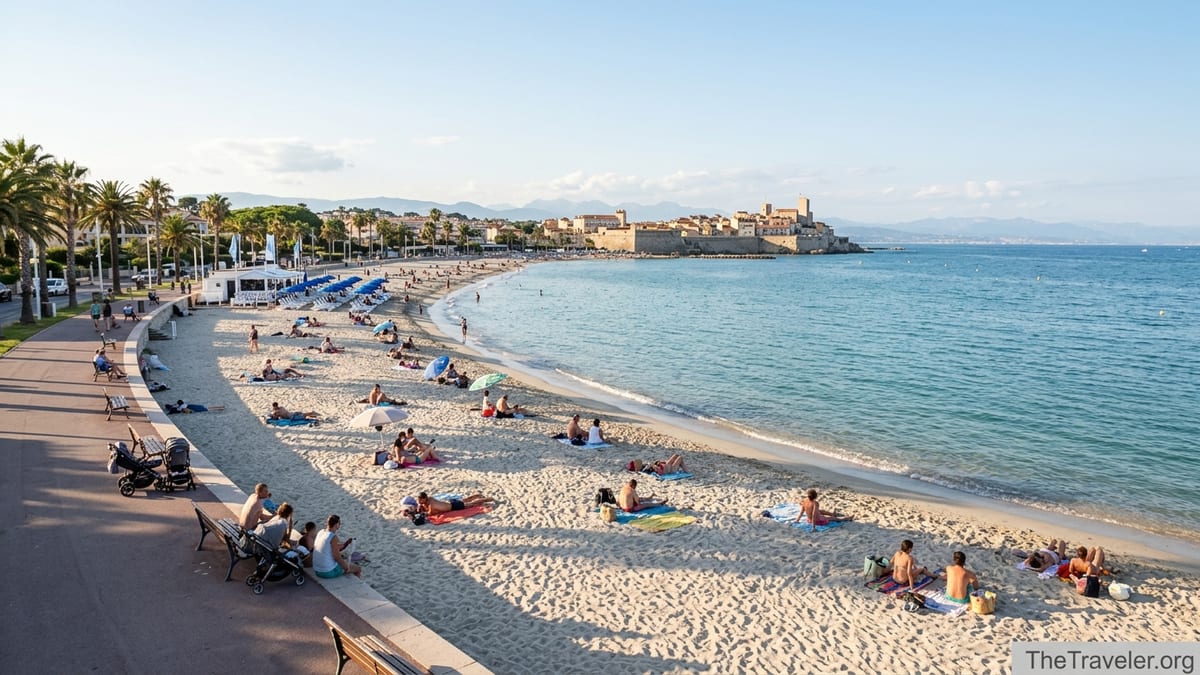
A Classic Riviera Beach With a Softer Side
Plage du Ponteil sits just south of Antibes’ Old Town, a long curve of soft, light sand running from near the Antibes Yacht Club towards Cap d’Antibes. Protected by the natural shape of the bay and the mass of the old ramparts, the water here is usually calm and shallow for a good distance from the shore. Travelers often describe it as a “flat, calm” beach where even nervous swimmers feel comfortable easing into the Mediterranean.
Unlike the famous private beach clubs of nearby Juan les Pins or Cannes, Ponteil is largely public. Most of the sand is free to access, with locals laying down simple towels and families unfolding inexpensive folding chairs bought from the Casino mini supermarket across the road. At the eastern corner you will find Royal Beach, a single private club where you can rent loungers and order plates of burrata, grilled fish, or a glass of rosé, but the overall feel of Ponteil is more neighborhood beach than luxury catwalk.
What sets Ponteil apart is this balance. You still get a classic Riviera panorama: the walled Old Town to one side, the forested rise of Cap d’Antibes to the other, and on a clear day the snowy peaks of the Alps hovering behind Nice. Yet the atmosphere on the sand is unhurried. You are more likely to see a group of local teenagers playing beach volleyball or grandparents reading in the shade of the promenade trees than champagne buckets and DJs.
For many visitors, that mix of beauty and normalcy is the real luxury. Instead of feeling pressured to spend heavily on daybeds and bottle service, you can throw a baguette, some cheese, and a bottle of supermarket rosé into a tote bag and settle in for a day that feels pleasantly ordinary, even as superyachts sit quietly out in the bay.
Calm, Shallow Water Ideal for Easygoing Swims
One of the strongest arguments for choosing Plage du Ponteil is the character of the water itself. The bay here is naturally sheltered by Old Antibes on one side and the long arm of Cap d’Antibes on the other, which helps keep the sea relatively calm. On most summer days, waves are little more than a gentle lap, making it comfortable for anyone who prefers to ease into the sea rather than brace against surf.
The seabed shelves very gradually, so you can often walk out 20 to 30 meters and still be standing at chest or waist height, depending on the tide. Families with younger children appreciate that older kids can splash and play with inflatable rings or small bodyboards without immediately reaching deep water. Adults who are not strong swimmers frequently comment that they finally feel relaxed enough to float and swim laps parallel to the shore.
Local authorities typically station lifeguards at Ponteil during the core summer season, especially in July and August, adding another layer of reassurance. The water quality along this stretch of Antibes is generally good, with clear visibility that makes snorkeling around the rocks near the yacht club surprisingly rewarding. While Ponteil does not have the steep drop-off you find at some pebble beaches along the Riviera, it is still wise to wear simple water shoes if you have sensitive feet, as there can be occasional pebbles or shells at the waterline.
For travelers comparing beaches across the region, this combination of soft sand plus calm, shallow water is a strong contrast with Nice’s famous but often challenging rounded-stone beaches. If your idea of a relaxed Riviera day involves long, lazy swims without worrying about slippery pebbles or sudden depth changes, Ponteil quickly stands out.
Everyday Convenience: Access, Parking, and Facilities
Another reason Plage du Ponteil works so well for slow-paced beach days is how easy it is to use. From Antibes’ Old Town, it is roughly a 10 to 15 minute walk along the seafront, a route that takes you past the ramparts and gives you changing views of the bay. Many visitors staying in town simply stroll down in flip-flops after breakfast, carrying only a tote bag and a beach mat.
If you are arriving by car, there is a dedicated beach car park just behind the sand, plus additional spaces along nearby streets such as Avenue du 11 Novembre and around the Ilette area. In summer, these free or modestly priced spaces can fill by late morning, so locals often advise arriving before 10:00 a.m. or aiming for late afternoon when turnover increases. Public buses serving Antibes and the Cap stop at nearby points like “Parking du Ponteil” or “Ilette,” making it straightforward to reach the beach without driving.
On the sand and along the promenade, facilities are practical and low-key rather than glamorous. Public showers and toilets are spaced out along the beach, typically free or with a small maintenance charge in high season. Toward one end of the sand you will usually find a simple snack kiosk selling fries, sandwiches, cold drinks, and ice creams, the kind of place where a basic lunch of a panini and a soda might cost under 15 euros. Just across the road, a small Casino supermarket and a handful of newsagents and beach shops sell picnic supplies, sunscreen, inexpensive umbrellas, and inflatable toys.
Plage du Ponteil is also part of France’s “Handiplage” network of accessible beaches, with dedicated access routes and assistance for visitors with reduced mobility during the main season. This means reserved parking bays nearby, ramped access, and, when staffed, special beach wheelchairs designed to roll over sand and enter the water. For travelers who need them, this infrastructure can turn what might otherwise be a complicated outing into a simple, enjoyable day by the sea.
Local Life on the Promenade: From Sunrise Swims to Golden Hour
Relaxed Riviera days at Ponteil are as much about the rhythm of the day as they are about the beach itself. Early mornings are the domain of locals and long-stay visitors: swimmers stroking out toward the buoys, joggers looping along the palm-lined promenade, and older residents sitting on benches with coffee from a takeaway bar, watching the light change over the bay. If you arrive before 9:00 a.m. in July or August, you can often choose a spot close to the water and enjoy a couple of tranquil hours before the midday crowd arrives.
By late morning and early afternoon, the beach fills with families, groups of friends, and day trippers from Nice, Cannes, or inland villages. Umbrellas and small tents dot the sand, kids dig elaborate sandcastles, and the snack kiosk line grows longer. Even at its busiest, Ponteil tends to feel more lived-in than performative. Beachwear runs the gamut from simple Decathlon swimsuits and supermarket flip-flops to more stylish resort pieces, but there is little sense of a dress code. You can show up with a simple cotton pareo and a paperback novel and feel completely at home.
The mood shifts again in late afternoon. From about 4:00 p.m. onwards, the sun starts to soften, and many families with young children begin to pack up, replaced by locals finishing work and coming down for a quick swim. This is when Ponteil feels particularly magical: golden light on the old stone walls of Antibes, long shadows from the promenade trees, and the Alps slowly taking on a pinkish hue in the distance. A simple ritual could be to swim, dry off on the sand, then cross the road to a café terrace for a glass of chilled rosé or a citron pressé before walking back into the Old Town for dinner.
In the height of summer, evenings along the promenade become social without being overwhelming. Couples wander hand-in-hand, families push strollers, and groups of teenagers cluster around the volleyball courts or sit on the low wall overlooking the sea. Musicians occasionally set up near the benches. Unlike some nightlife-heavy beaches, Ponteil tends to quiet down by around 10:00 or 11:00 p.m., making it suited to travelers who value atmosphere but still want a restful night.
Simple Pleasures: Swimming, Paddling, and Light Watersports
Plage du Ponteil is not a high-adrenaline watersports hub, and that is part of its charm. Activities here largely revolve around swimming, floating, and gentle paddling, which suits travelers looking to unwind rather than collect thrills. The Antibes Yacht Club at one end of the beach offers sailing lessons and rentals geared toward dinghies and small boats, and in high season you will often see children in lifejackets learning to tack and jibe in the sheltered bay.
Kayaks and stand-up paddleboards are typically available to rent from operators near the yacht club or between Ponteil and neighboring Plage de la Salis. Renting for an hour often costs in the range of 15 to 25 euros, depending on the equipment and the season. Paddling out along the curve of the coastline towards Cap d’Antibes gives you a striking perspective on the ramparts of the Old Town and the line of the Alps beyond, while remaining within a safe, relatively enclosed area.
Those who prefer a purely horizontal day can simply alternate between dipping into the sea and lying on the sand to dry. Because the sand is fairly fine, a basic beach mat or towel is enough, though visitors planning to spend multiple days at Ponteil sometimes pick up inexpensive folding loungers at local supermarkets or beach shops for better back support. Snorkeling is possible around the rockier sections near the yacht club or further towards Salis, where you might spot small fish, sea urchins, and sea grass beds, but this is not a destination for dramatic underwater scenery.
If you are craving more intense watersports such as parasailing, jet skiing, or towable inflatables, it is easy to balance a relaxed Ponteil day with a more active excursion to neighboring Juan les Pins or other parts of the Riviera. You can spend two or three laid-back days at Ponteil and then dedicate a single afternoon to higher-energy activities elsewhere, returning to the calm of Antibes in the evening.
Where to Eat and Drink Around Plage du Ponteil
Food and drink options around Plage du Ponteil are pleasantly varied for a relatively compact area, ranging from casual snack bars to sit-down waterfront restaurants. On the sand itself, the primary full-service option is Royal Beach, the private beach club connected to the Royal Antibes hotel. Open seasonally, usually from late spring through early autumn, it serves modern Italian-inspired dishes such as seafood pasta, grilled prawns, and salads, alongside a selection of local wines. A typical main course might cost in the mid-20 to low-30 euro range, comparable to other quality seafront restaurants on the Riviera.
Just behind the promenade, small cafés and pizzerias cater to beachgoers who want something simpler or more affordable. It is easy to pick up a takeaway slice of pizza or a sandwich for under 10 euros and bring it back to your towel. The nearby Casino supermarket offers fresh baguettes, fruit, cheeses, charcuterie, and chilled drinks, so assembling your own picnic for a family or group can be both economical and enjoyable. Many visitors make a morning ritual of stopping by a bakery in the Old Town for croissants, then collecting picnic ingredients at the supermarket on their way to the beach.
For something a little different, the streets just inland from Ponteil host small bistros and wine bars where you can sit down for a proper lunch or dinner away from the sand. Places serving grilled fish, niçoise specialties, or classic bistro dishes are common, and prices tend to be slightly lower than in the very center of the Old Town. A three-course fixed-price lunch in a neighborhood bistro might run between 25 and 35 euros per person, including a glass of wine.
If you are staying in Antibes for more than a couple of days, it can be nice to alternate between these options: one day with a splurge at Royal Beach in loungers, another with a picnic under the promenade trees, and a third with a leisurely lunch at a nearby bistro followed by an afternoon swim. All of them allow you to enjoy Ponteil without feeling locked into a single style of Riviera dining.
Choosing Ponteil Over Other Antibes Beaches
Antibes has several appealing beaches, each with its own personality, so understanding how Ponteil compares helps clarify why it is such a strong choice for relaxed days. Plage de la Gravette, tucked just inside the Old Town walls, is a smaller, very sheltered cove often favored by families with very young children because of its enclosed feel and ease of access from central Antibes. However, it can feel more crowded and less expansive than Ponteil, especially in peak season.
Further along towards the tip of Cap d’Antibes, beaches such as Plage de la Garoupe and the small coves along the coastal path offer dramatic scenery and clear, deep water over rock and sand. Many of these stretches are partly occupied by high-end private clubs, and while public sections remain, space can be limited. These spots are wonderfully atmospheric for a special lunch or a scenic swim, but they are less practical as an everyday base for long, low-key beach days.
Compared with the nightlife-focused beaches of Juan les Pins, where music and late-evening bar scenes are more prominent, Ponteil tends to feel quieter and more residential. It draws a mix of Antibes locals, French holidaymakers, and international visitors who prioritize easy swimming, views, and simple pleasures. If you want the option of nightlife, it is easy to hop over to Juan les Pins by bus or taxi in the evening, then retreat to the calmer ambiance around Ponteil to sleep.
For travelers deciding between staying in Nice or Antibes, Ponteil can be a strong argument in favor of choosing Antibes as a base. While Nice’s extensive seafront and beach clubs on its pebbly shore have their own appeal, many visitors who value comfort underfoot, gently shelving sand, and a smaller-town atmosphere find that they end up commuting toward sandy beaches like Ponteil anyway. Basing yourself near Antibes Old Town puts this kind of beach day within a short walk of your accommodation.
The Takeaway
In a region known for high-gloss glamour and crowded beach clubs, Plage du Ponteil offers a different take on the Riviera: soft sand underfoot, calm and shallow water, and an unforced, everyday charm. It is the sort of place where you can slip into a simple routine of morning swims, lazy picnics on the sand, and golden-hour walks along the promenade without ever feeling that the beach is performing for you.
Its strengths are quiet but compelling: views that stretch from Antibes’ honey-colored ramparts to the distant Alps, easy access by foot or public transport, family-friendly conditions, and enough nearby cafés, shops, and one well-placed beach club to keep you comfortable without overwhelming the shoreline. For travelers seeking a relaxed Riviera base rather than a trophy destination, Ponteil has a way of becoming the beach you return to day after day.
Whether you are visiting Antibes for a long weekend or settling in for a week or more, planning at least one full day at Plage du Ponteil is an investment in slowing down. Bring a book, a simple picnic, and a willingness to do very little. The Mediterranean, calm and inviting at your feet, will take care of the rest.
FAQ
Q1. Where exactly is Plage du Ponteil in Antibes?
Plage du Ponteil is located just south of Antibes’ Old Town, between the historic ramparts and the beginning of Cap d’Antibes. It is about a 10 to 15 minute walk along the seafront from the old harbor area.
Q2. Is Plage du Ponteil a sandy or pebble beach?
Plage du Ponteil is primarily a sandy beach with light, fine sand underfoot. You may encounter occasional small pebbles or shells near the waterline, but it is much softer and easier to walk on than the pebble beaches in nearby Nice.
Q3. Is the water at Plage du Ponteil suitable for children and non-swimmers?
Yes. The bay at Ponteil is generally calm and the seabed slopes gently, so the water stays shallow for quite a distance from shore. In summer there are usually lifeguards on duty, making it a reassuring choice for families and less confident swimmers.
Q4. Are there showers, toilets, and changing facilities on the beach?
There are public showers and toilets spaced along the beach and promenade. Facilities are basic but practical, and some may charge a small fee for maintenance during the busiest months.
Q5. Can I rent sunbeds and umbrellas at Plage du Ponteil?
Most of Ponteil is public and you will need to bring your own towel or umbrella, but at the eastern end Royal Beach offers rental loungers, umbrellas, and waiter service for food and drinks during the main season.
Q6. Is Plage du Ponteil accessible for visitors with reduced mobility?
Plage du Ponteil participates in the Handiplage program, with adapted access routes, reserved parking nearby, and, in season, assistance and special beach wheelchairs designed for use on sand and in shallow water.
Q7. How crowded does the beach get in summer?
In July and August the beach can become very busy from late morning through mid-afternoon, especially on weekends. Arriving before 10:00 a.m. or after 4:00 p.m. usually makes it easier to find space and enjoy a calmer atmosphere.
Q8. Are there restaurants and shops close to the beach?
Yes. Royal Beach offers full-service dining on the sand, while cafés, pizzerias, and a small supermarket sit just across the road. You can easily buy picnic supplies, snacks, drinks, and basic beach gear within a few minutes’ walk.
Q9. How do I get to Plage du Ponteil without a car?
If you are staying in Antibes, the simplest option is to walk from the Old Town along the waterfront. Local buses also stop near the beach at stops such as “Parking du Ponteil” or “Ilette,” making it accessible from other parts of Antibes and nearby areas.
Q10. When is the best time of day to visit for a relaxed experience?
Early mornings offer the quietest conditions and a more local feel, while late afternoon and early evening provide beautiful light and slightly thinner crowds. Midday in high summer is the busiest and hottest period.