


The Dodecanese islands sit in the warm, southeastern Aegean, with a classic Mediterranean pattern of long, hot, dry summers and mild but potentially wet and windy winters. Thanks to their southerly latitude and relatively warm sea, the shoulder seasons of spring and autumn are extended. From roughly late April into early November, swimmers can usually enjoy pleasant sea temperatures, and in May, June, September and early October you often find a sweet spot of warm days, swimmable water and fewer crowds than peak summer.
Get the latest updates straight to your inbox!
Understanding the Dodecanese climate and microclimates
Across the Dodecanese, summers are reliably hot and dry, while winters are mild compared with much of mainland Europe but can be unsettled, with rain, wind and occasional storms. Long-term climate data from Rhodes and Kos for the 1991 to 2020 reference period show average daytime highs climbing from around the mid teens Celsius in January to about 30 degrees in July and August, with rainfall concentrated between roughly November and March and almost no measurable rain in mid summer. Sea temperatures typically lag the air by a month or two, remaining above 20 degrees from about June into November according to port and airport records for Rhodes.
Rhodes, one of the southernmost and largest islands, is among the warmest places in Greece, with mean annual temperatures around 21 degrees and average August highs at the main airport close to 30 degrees in the 1991 to 2020 normals. Coastal areas in the southeast, such as Lindos, tend to be slightly warmer and drier than the breezier north. Rainfall in Rhodes averages well over 100 millimetres in the wettest winter months and drops to near zero in July and August, so summer is consistently dry but can also be affected by heatwaves beyond these averages.
Kos, a little further north but still in the southeastern Aegean, shows a very similar pattern in Hellenic National Meteorological Service normals. Average daily maximum temperatures rise from the mid teens Celsius in January to around 30 degrees in July and August, with mean sea temperatures usually near or above 23 to 24 degrees between July and October based on combined climatology and recent reanalysis datasets. Rainfall again is strongly seasonal, with winter totals several dozen millimetres per month and only a few millimetres or less in June to August.
Karpathos, lying between Rhodes and Crete, illustrates how microclimates differ inside the same island group. Municipal climate reports for 1990 to 2021 show an average annual temperature of roughly 19.5 degrees, with mean monthly values from about 13 degrees in January to about 26 degrees in August, and an annual rainfall total a little over 330 millimetres. Summer highs often feel moderated by strong meltemi winds, yet those winds can be intense enough in July and August to affect sea conditions for swimmers and ferry sailings. More mountainous or northerly islands such as Kalymnos, Nisyros or Tilos may have slightly cooler evenings and more wind than low-lying, sheltered south-facing bays.
April and May: spring flowers, cooler seas and growing services
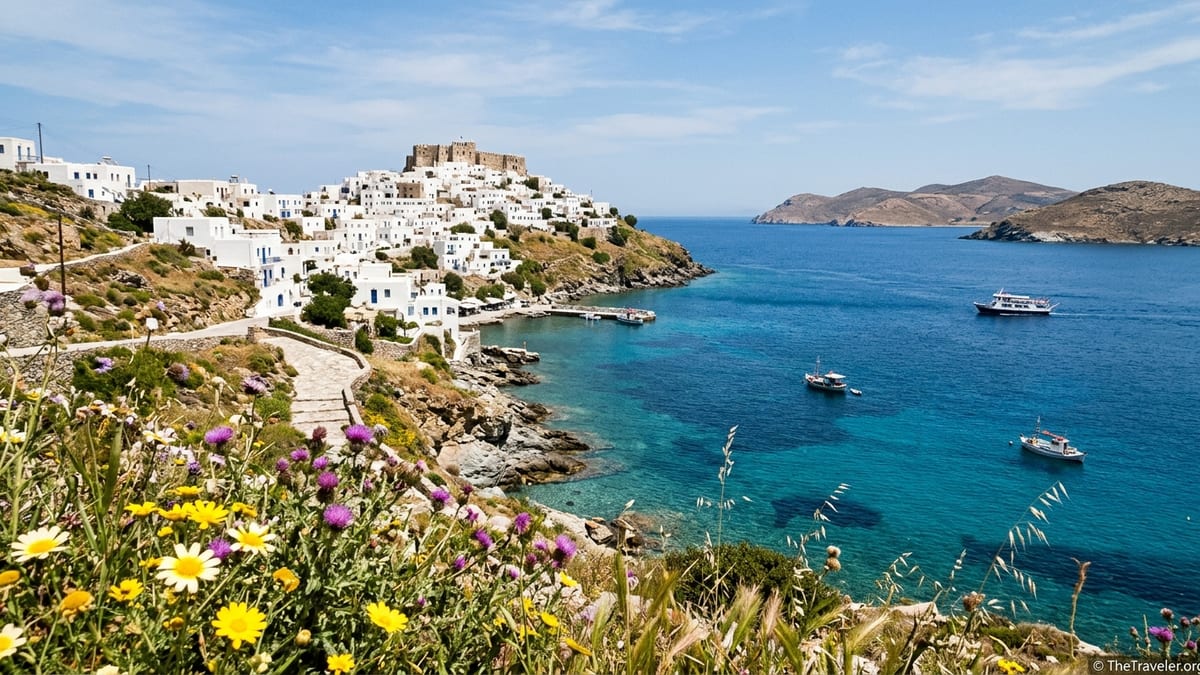
By April, the Dodecanese has usually emerged from winter rains into a bright, green landscape, with wildflowers in full bloom on islands such as Tilos, Nisyros and Kalymnos. On Rhodes, April averages from the mid to high teens Celsius by day at coastal stations, with a fair chance of sunny days but still some passing showers and breezy spells. Kos shows similar averages. Sea temperatures are typically around 17 to 18 degrees in April off Rhodes and Kos, which is refreshing rather than truly warm, though many visitors still swim on calm days.
Ferry and flight services start to ramp up around Orthodox Easter, which in 2026 falls in mid April, bringing more domestic visitors and the first wave of international flights to Rhodes and Kos. Schedules from major ferry operators into the Dodecanese already show an uptick in late April and May 2026 compared with winter, with more frequent sailings between Piraeus and key islands and additional inter-island connections. However, some smaller islands retain only a few boats a week, so timing flexibility is essential if you are travelling in April.
By May, air temperatures on Rhodes and Kos typically reach low to mid 20s Celsius by day on average, with many afternoons feeling warmer in the sun. Rainfall drops sharply compared with March, and sunshine hours lengthen. Sea temperatures climb to around 19 to 21 degrees off Rhodes and slightly similar values around Kos and Karpathos based on port and satellite-derived climatologies. For many travellers this is when swimming becomes comfortable, especially in protected coves and shallow bays that warm faster than open water.
Tourism infrastructure in May is largely open on major islands. Resorts on Rhodes’ east coast and along Kos’ beaches operate on near full schedules, restaurants and beach clubs restart service and car-rental fleets are available. On quieter islands such as Symi, Halki or Lipsi, some family-run accommodations may reopen only around Orthodox Easter or early May, and a few seasonal tavernas may still be getting ready. For hikers and cultural travellers, April and May are excellent, with long days, manageable heat and the ability to enjoy sites like the Medieval City of Rhodes or the Asklepieion of Kos without peak-season crowds.
June and the core of summer: hot, dry and very busy in July and August
June is widely recommended by Greek tourism boards and regional guides as one of the best months for the Dodecanese. Average daytime highs on Rhodes and Kos are already around 28 to 29 degrees Celsius according to 1991 to 2020 airport data, but nights remain comfortable, often in the low 20s, and humidity is usually moderate. Rain is rare, sunshine is abundant and the sea has usually warmed to roughly 22 to 24 degrees, with some local measurements around Rhodes’ east coast indicating even warmer shallow waters late in the month.
Crowds in early June are moderate. Package tourism has begun, and many northern European schools start holidays later in the month, so the last two weeks feel noticeably busier than the first two. Ferry and flight networks are close to peak capacity, with multiple daily flights from European hubs into Rhodes and Kos and dense catamaran and ferry connections out to islands such as Symi, Patmos and Kalymnos. Prices for accommodation and car rentals are generally lower than in July and August, but higher than in April or early May.
July and August represent high summer in the Dodecanese, both climatically and in terms of visitor numbers. Long-term records for Rhodes, Kos and Karpathos show average maximum temperatures around 30 degrees Celsius at coastal stations, and recent years have seen frequent heatwaves where inland or unsheltered sites temporarily exceed these averages by several degrees. Rainfall is minimal and sunshine is almost guaranteed, but there can be haze, strong UV radiation and high fire risk during prolonged dry spells, which national authorities in Greece increasingly highlight in summer advisories after recent hot seasons.
On exposed archaeological sites, volcano rims or hiking paths with little shade, such as the caldera rim trails in Nisyros or certain routes on Kalymnos, the combination of heat and reflection from pale rock can be intense from late morning to late afternoon. Visitors in July and August should plan for early starts, long midday breaks, high-factor sun protection, hats and constant hydration. In return, they benefit from the fullest tourism offering: almost every taverna, café and beach bar operates, nightlife is lively in Rhodes Town and Kos Town, water sports centers and diving schools run full schedules, and ferry and flight frequencies are at their maximum.
September and early October: warm seas and softer light
For many travellers and independent experts, September and the first half of October are ideal for the Dodecanese, particularly for a mix of beach time and exploration. The sea retains summer warmth, with Rhodes and Kos typically seeing water temperatures around 24 to 25 degrees in early September and still roughly 22 to 23 degrees into early October. Air temperatures trend down from average highs around 28 degrees in early September to the mid 20s by early October on Rhodes and Kos, with Karpathos similar but often breezier.
Rainfall probabilities begin to increase slightly in late September and more obviously by late October, especially in northern parts of the Aegean, but the Dodecanese remain relatively dry. Showers at this time of year are usually short-lived and can clear to bright skies. The light softens, sunsets can be striking and the landscape, though drier than in spring, retains its coastal charm. For hikers, the reduced heat makes longer routes on Tilos, Nisyros or Patmos more comfortable, and for climbers on Kalymnos this period is considered one of the prime seasons, with international climbing festivals often scheduled around late September or October according to recent event programs, although exact dates vary by year and should always be confirmed on official channels.
In terms of crowds and prices, early September can still feel fairly busy on Rhodes and Kos, especially in resort zones that cater to families finishing school holidays. By late September, however, numbers fall sharply. Room rates and car rentals typically become more competitive compared with August, and you may find good-value packages that combine ferry tickets and accommodation to islands such as Symi or Leros. Most tourism businesses remain open until at least the first or second week of October, and inter-island ferry schedules for 2026 currently indicate a gradual thinning from mid October rather than an abrupt stop.
By mid to late October, especially after the Greek school term resumes, beaches are quieter, nightlife in the main towns tones down and smaller seasonal establishments on outlying islands start to close. Weather remains suitable for swimming on many days, but you should be prepared for a mix of sun and cloud, possible showers and cooler evenings where a light jacket is useful, particularly on windier islands.
Late October and November to March: winter realities in the Dodecanese
From roughly late October into March, the Dodecanese shifts into its winter rhythm. Climate data for Rhodes, Kos and Karpathos between 1991 and 2020 show average daytime highs dropping to around 20 degrees Celsius in November, mid teens in January and February, then rising again in March. Night temperatures are usually above freezing at sea level, often 10 degrees or higher, which means winters are mild compared with much of continental Europe. However, this is also the wettest season, with monthly rainfall totals on Rhodes and Kos commonly between several dozen and more than 80 millimetres in the heart of winter, along with frequent overcast days and storms.
Sea temperatures cool more slowly, staying around 20 degrees in November around Rhodes and Kos before sliding to roughly 16 to 17 degrees in February and early March. Hardy swimmers may still dip in on calm days, but this is no longer a typical beach holiday period. Instead, a winter visit is about experiencing local life in Rhodes Town, Kos Town or perhaps Kalymnos’ main port, enjoying quieter streets, cafés frequented by residents, and major historic sites without crowds. Many small islands feel extremely quiet, with much of the seasonal accommodation closed and only a handful of tavernas operating, often on limited hours.
Transport is also more limited. Timetables published for winter seasons show far fewer high-speed catamarans and a focus on lifeline ferry routes linking islands to Piraeus or Rhodes rather than dense inter-island networks. Weather-related disruptions are more common, especially during periods of strong northerly winds or storms. Flights to Rhodes and Kos continue year-round from Athens and a few other Greek airports, but most direct international services pause until spring. Travellers who need reliable connections or have tight schedules should account for possible delays and consider travel insurance and flexible bookings.
In winter, many hotels and self-catering units on small islands close entirely or only offer long-term rentals. On larger islands, a core of year-round accommodation remains, often in town centers or business districts rather than beach resorts. While prices can be lower than in summer, the trade-off is limited choice and reduced services. Those who do come in winter should pack waterproof layers, warm clothing for evenings, and expect a social scene centered on local cafés and restaurants rather than tourist nightlife.
Ferries, flights and seasonal opening patterns in 2026
Planning around transport and seasonal openings is critical when choosing the best time for a Dodecanese trip. For 2026, preliminary schedules from major Greek ferry operators and booking platforms show the familiar Mediterranean pattern: a core year-round network supplemented by increased frequencies from late April, a peak of services in July and August, and a gradual reduction from late September through October. High-speed catamarans linking Rhodes and Kos with smaller islands such as Symi, Leros, Patmos and Kalymnos tend to start regular near-daily operations from around early May and scale back to a few weekly sailings by late October, although exact dates and frequencies vary between routes and operators.
International charter and low-cost flights to Rhodes and Kos intensify sharply from May through October, with multiple daily arrivals from major European cities in July and August. For 2026, published airline plans already indicate seasonal routes beginning as early as late March or early April from some origins, but the densest schedules still cluster from June to September. Outside these months, most travellers connect via Athens or occasionally Thessaloniki to reach the islands.
Accommodation calendars for 2026, visible on large booking platforms and the official sites of several resorts and small hotels in Rhodes, Kos, Karpathos, Symi and Patmos, show a broadly similar pattern. Many resort-style properties open between early April and early May and close sometime between mid October and early November. Smaller family-run pensions on quieter islands may operate a shorter season, opening around Orthodox Easter or early May and closing by mid or late October. A limited set of city hotels and some apartments in main towns stay open all year, especially in Rhodes and Kos.
Because patterns can change with demand and local decisions, it is unwise to rely on a single year’s dates as fixed rules. Travellers planning shoulder-season visits in April or late October to smaller islands should always check that their chosen accommodation and key services, such as local buses or boat excursions, are scheduled to operate in the specific year of travel, and they should reconfirm ferry routes a few weeks before departure in case of adjustments.
Matching the Dodecanese seasons to different traveller types
Families tied to school holidays often have limited flexibility. For those visiting in July and August, the Dodecanese delivers warm seas, near-guaranteed beach weather and extensive family-oriented infrastructure on Rhodes and Kos, including water parks, organized beaches and a wide choice of hotels with pools. The trade-offs are higher prices, busier beaches and hotter daytime conditions, especially at historical sites and on excursions. Families able to travel in late May, June or early September usually enjoy more moderate temperatures, less crowded attractions and better value, while still finding kids’ clubs, boat trips and beach facilities largely open.
Hikers targeting long routes on islands like Tilos, Nisyros or Kalymnos generally find April, May, late September and October the most comfortable. Daytime highs in these months on Rhodes and Kos are usually between the high teens and mid 20s Celsius, with lower humidity than in midsummer. Trails are greener in spring, with running water more likely in ravines and richer wildflower displays, while autumn offers warmer seas for a post-hike swim. Winter hiking is possible for experienced walkers prepared for rain, wind and occasional muddy or slippery paths, but shorter daylight and transport limitations make logistics trickier.
Rock climbers heading to Kalymnos traditionally favor spring and especially autumn, when the limestone cliffs dry quickly after showers and temperatures under the shade of overhangs are manageable. Local climbing guides and recent festival programs highlight late September and October as a prime window, but also caution that popular sectors can feel busy when events draw international crowds. Summer climbing is feasible in shaded sectors for experienced climbers who start early and manage heat carefully, but it requires rigorous sun and hydration planning.
Pilgrims and cultural travellers focusing on Patmos, with its monastic heritage, or Rhodes’ Medieval City and castles, may prioritize quieter atmospheres over beach time. For them, April to early June and late September to October often work best, balancing pleasant walking temperatures with open monasteries, museums and guided tours. Winter brings fewer visitors and a more contemplative mood, but some chapels, museums or guided services may operate on reduced hours or close temporarily, so current information from local authorities or church administrations is essential.
Budget-conscious travellers typically find the most favorable combination of prices and conditions in late April, May, late September and October. During these months, hotel rates and car rentals are usually noticeably lower than in high summer, and it is often possible to upgrade to better located or higher-category accommodation for the same budget. Travel in winter can be even cheaper in terms of nightly rates, but reduced competition and limited openings on small islands may offset savings, and utility costs for heating and longer stays can matter for slow travellers.
Month-by-month overview: weather, seas, crowds and transport
January and February are the heart of winter, with average daytime highs around 14 to 15 degrees Celsius on Rhodes and Kos, sea temperatures near 16 to 17 degrees and the highest rainfall and wind probabilities. Crowds are very low, prices for year-round accommodation are at their minimum, and ferry and flight frequencies are at their thinnest, concentrated on essential lifeline routes.
March sees a gradual improvement, with highs often around the mid teens to near 17 or 18 degrees, somewhat reduced rainfall and lengthening days. The sea remains cool, around 16 to 17 degrees, but walking conditions improve. Crowds are still sparse, prices low and transport intensity low to medium, with some additional sailings appearing around Greek public holidays.
April typically brings highs near 18 to 20 degrees on the main islands, mixed sunshine and showers, and sea temperatures around 17 to 18 degrees. Crowds rise from low to medium around Orthodox Easter, prices remain moderate, and ferry and flight schedules shift to medium intensity as seasonal services begin. May generally enjoys highs in the low to mid 20s, much lower rainfall, sea temperatures around 19 to 21 degrees, medium crowd levels and medium to high transport frequencies as the main tourist season starts in earnest.
June usually offers highs around 27 to 29 degrees, minimal rainfall, sea temperatures close to 22 to 24 degrees and crowd levels building from medium to high by late month. Prices are medium to high, particularly in prime beach zones, and ferry and flight intensity is high. July and August see highs around 30 degrees or higher during heatwaves, virtually no rain, sea temperatures often 24 to 26 degrees or above, very high crowds on Rhodes and Kos, and the highest price levels. Transport intensity is at its maximum, with multiple daily connections and near-complete opening of seasonal businesses.
September brings highs easing from around 28 degrees to the mid 20s, low rainfall for most of the month, sea temperatures still around 24 to 25 degrees, and crowds falling from high to medium by late month. Prices trend from high to medium, and transport remains high, especially in the first half. October tends to have highs in the low to mid 20s, increased chances of showers later in the month, sea temperatures about 22 to 23 degrees early on, medium to low crowds and medium transport intensity as services are reduced.
November marks a clear seasonal shift, with highs around 19 to 20 degrees, more frequent rain, sea temperatures declining toward 20 degrees, low crowds and low to medium transport. December is again cool and unsettled, with highs around the mid teens, the sea around 17 to 18 degrees, very low tourist numbers, lower prices and minimal ferry and flight frequencies beyond the core lifeline and domestic routes.
Choosing the right month for your priorities
For a classic beach-focused holiday with reliable heat and warm seas, but without the densest crowds and highest prices, June and September stand out. June brings fresher landscapes and slightly cooler nights, while September offers warmer water and a mellower, late-summer mood. Families constrained to school holidays will likely opt for July or August and should embrace early-morning and late-afternoon activities, allow time for rest during the hottest hours and consider staying near organized beaches with shade and easy facilities.
If your priority is hiking, climbing or multi-island exploration with substantial walking, April, May, late September and October are generally the best choices. Spring gives greener scenery and floral displays; autumn combines comfortable daytime temperatures with excellent sea swimming and good ferry coverage, particularly through late September. For cultural city breaks focused on Rhodes Town, Kos Town or Patmos’ religious sites, almost any month outside the hottest part of summer can work, with winter offering the quietest, most local feel but also the highest weather uncertainty.
Travellers seeking the quietest island atmospheres with enough services to function should look to May and October on smaller islands, and to November through March on larger islands if their expectations are tuned to a local, non-resort experience. Budget-focused visitors generally come out best in late April, May, late September and October, when shoulder-season prices intersect with pleasant weather and decent transport links. Throughout the dry season, it remains important to monitor local advisories for wildfire risk and heatwaves, while in winter and the shoulder months, travellers should watch for strong wind warnings that can affect ferries.
Ultimately, there is no single best month for every traveller to visit the Dodecanese. Instead, the islands offer a spectrum of experiences across the year: high-energy beach life in midsummer, active adventures and softer light in spring and autumn, and a quieter, more introspective mood in winter. By aligning your priorities with the seasonal patterns of weather, sea conditions, crowds and transport, you can choose the period that makes this sunlit corner of the Aegean feel most like your own.