


Renting a car in Europe often looks cheaper away from the airport at first glance. Airport branches may show higher base rates and add concession or facility fees, yet they usually offer longer opening hours, walkable desks from arrivals and clearer procedures for delayed flights. Downtown branches can offer lower daily prices, but the savings shrink once you add the cost and time of getting into town, limited opening hours and the risk of missed pickups or returns.
Get the latest updates straight to your inbox!
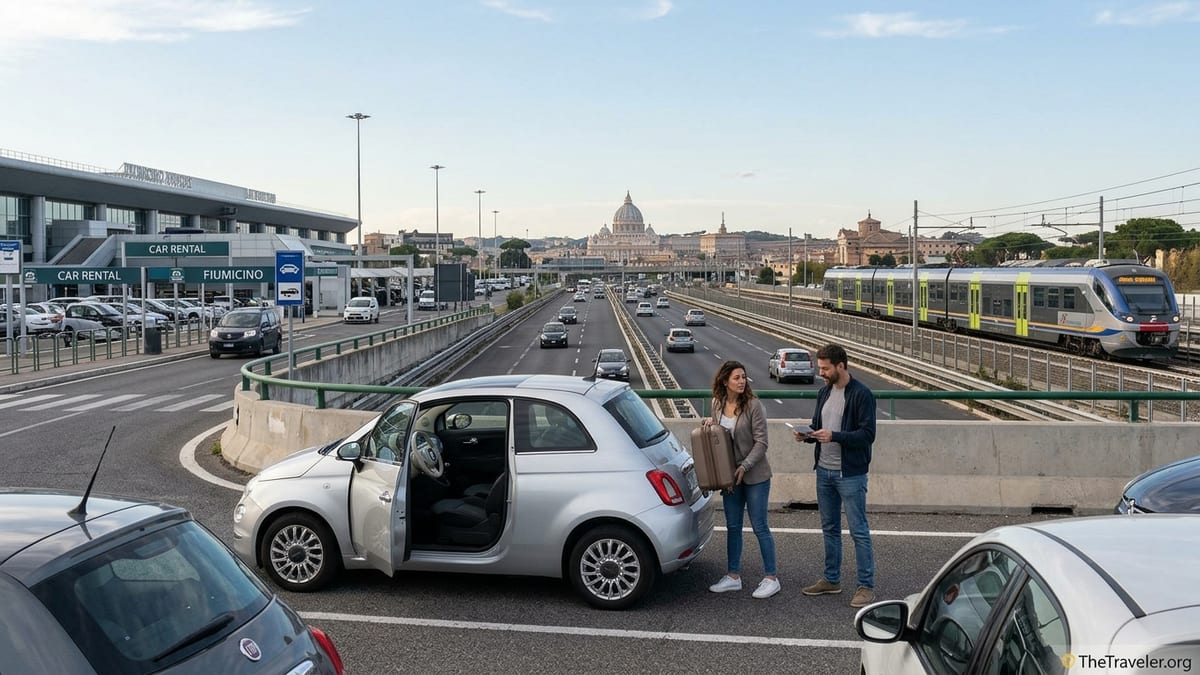
How we compared airport and downtown rentals
To move beyond theory, this comparison is based on real‑world quotes checked in November 2026 for early March 2027, looking at compact petrol cars from major brands in Rome, Milan, Lisbon and Málaga, plus spot checks in Barcelona and Nice. The searches used well known international brokers and direct quotes from large rental companies to reduce bias. All examples assume a 35‑year‑old primary driver, unlimited or high mileage, and standard collision and theft cover with a moderate excess.
For each city, prices were checked for matching rental dates, similar pick up and drop off times, the same driver age and comparable insurance conditions at both the main airport and at a central downtown branch of the same brand wherever possible. When unlimited mileage was not available downtown or at the airport, the comparison uses the closest capped allowance. Because car hire pricing is highly dynamic, the figures here should be treated as indicative snapshots rather than fixed rules.
Alongside base rental costs, we factored in airport concession or facility charges, local taxes, young driver and additional driver fees, fuel policies, out of hours surcharges and one way drop charges where relevant. We then added realistic city transfer costs based on current public transport and taxi fares, plus an allowance for the time and hassle of moving luggage and, in some cases, children or elderly relatives between locations.
To show how the choice plays out in practice, the article builds three scenarios that many travelers will recognize: a couple collecting a car immediately after landing for a seven day trip, a family staying three nights in the city before driving off, and a traveler returning a car before a very early flight. In each case, the total cost picture can look quite different from the initial search results.
Real price snapshots: Rome, Milan, Lisbon and Málaga
In Rome, a one week compact rental in early March 2027 with a major international brand showed an airport base rate at Leonardo da Vinci Fiumicino that was roughly 10 to 20 percent higher than a comparable central Rome branch of the same company on the same dates. The airport quote included a separate concession or location surcharge that pushed the headline total up, while the downtown quote showed slightly lower daily rates but a smaller location fee.
In Milan, comparing Milan Malpensa Airport with a city center branch near Milano Centrale station, the pattern was similar. For a seven day compact with standard insurance for a mid‑March arrival, the airport daily rate came out slightly higher, and the final total was approximately 40 to 70 euros more for the full week once airport fees were added. However, the downtown branch required travelers to reach the city first. Current Malpensa Express train fares into Milano Centrale add around 13 euros per person each way, while a taxi into town can reach 100 euros or more, particularly late at night or in heavy traffic. Once you include transfers for two people, the apparent rental saving is often wiped out.
Lisbon showed a more modest gap. At Lisbon Airport, a compact rental for one week in March 2027 with a major brand was priced only slightly above the same company’s downtown branch near Marques de Pombal, often within 5 to 10 percent once all compulsory fees and taxes were shown. The airport location charged a facility fee, but the downtown branch showed higher municipal surcharges. Meanwhile, a metro ride from the airport into central Lisbon is inexpensive but can be cumbersome with multiple suitcases and young children, especially during rush hour.
In Málaga, often seen as a classic fly‑and‑drive destination, on airport brands inside the terminal tended to be more expensive than reputable off airport companies located in the industrial area just outside the airport perimeter. When comparing a terminal desk with a downtown office near María Zambrano station, differences of 10 to 25 percent in base rates were common, but the airport location offered true walk off service, while the downtown location required either a local train or taxi. A short taxi ride from Málaga Airport to the station can easily add 20 euros or more each way, reducing or eliminating the advantage of downtown pickup for week long rentals.
Airport fees, taxes and insurance: what really drives the total
Across these cities, airport branches almost always add some kind of concession or “premium location” fee. This might appear as a percentage of the rental rate, a per day surcharge or a flat amount added at checkout. Local or regional taxes may also be higher at airports, particularly in Italy and Spain, where municipalities levy special surcharges on locations deemed premium. When you compare offers, the difference often becomes visible only at the final pricing step.
Insurance structure can tilt the balance in either direction. Many airport locations push “zero excess” or “super cover” packages that significantly reduce or remove the deductible in case of damage or theft. These packages can add several hundred euros to a week long rental in expensive markets. Downtown branches from the same brand may promote the same add ons less aggressively but still charge the same once selected. Third party excess insurance sold through major booking platforms is usually much cheaper than the rental firm’s own zero excess option, but it does not work identically: renters must still leave a security deposit on a credit card at the desk, and any damage charges are first taken by the rental company and later reclaimed from the external insurer.
Airport locations typically hold higher deposits, especially when using basic insurance with a large excess. It is common to see deposit holds of 1,000 to 2,000 euros for compact or midsize cars when picking up at major airports in Italy, Portugal and Spain with standard coverage. Downtown offices from the same brand often apply similar rules, but some city branches are more amenable to lower deposits or additional verification when presented with a strong credit profile and a return flight ticket. Travelers relying on debit cards face more restrictions: some airport offices in Europe refuse debit cards entirely for security deposits, or allow them only for smaller car groups, while selected downtown branches will work with debit cards if extra documentation and insurance are accepted.
Fees for additional drivers, young drivers under 25 and some older drivers can also add up. These are usually the same at airport and downtown locations for a given brand in one country, but differences appear between companies. A family planning to add two drivers under 25 in Italy or Spain could easily see 20 to 30 euros per day added in combined surcharges, overshadowing the base rate differences between branches. For older couples with a single driver over 30, the relative impact of airport surcharges is more obvious.
Downtown savings and the often ignored cost of getting there
Downtown rental branches can show impressively low daily rates compared with airport desks when you search a broker site from home. A compact in central Milan or central Rome may show as 15 to 30 percent cheaper than the same car at the airport on identical dates. The catch is that you must factor in the time and cost of transporting yourself, companions and luggage between the airport and the city location.
In Rome, a taxi from Fiumicino into the historical center has a fixed fare that currently sits in the region of 50 euros or more, while a shared shuttle or rideshare can run slightly less. For a couple landing in the evening and planning to drive immediately into the countryside, paying for that taxi into town solely to collect a cheaper car would rarely make sense. Even with a 100 euro difference in rental price, the time and expense of a round trip into the city can nullify any savings.
In Lisbon, the metro and city buses are inexpensive, and a couple traveling light might genuinely save money by taking public transport to a central branch if their hotel is already in town and they plan to spend several car free days before driving. However, a family of four with large suitcases or strollers will face crowded carriages and stairs at some stations. A taxi or app hailed car between Lisbon Airport and city hotels often costs 10 to 20 euros each way, and that needs to be multiplied if you are traveling back and forth just to pick up or return a car.
Málaga provides another instructive example. The suburban train between the airport and city center is cheap and quick, but runs on a fixed schedule and can be crowded in high season. A downtown pickup might save 70 to 100 euros over a week compared with an on airport desk if booked early, but adding local train fares or taxis for several people plus the time spent hauling bags may erase most of the advantage, especially on short trips.
Scenario 1: couple collecting a car immediately after landing
Consider a couple in their mid thirties flying from London to Rome Fiumicino for a seven day road trip in Tuscany in early March 2027. At the time of research, a major brand at the airport offered a compact manual car with unlimited mileage and standard insurance for just under 300 euros for the week, including airport surcharges. A comparable downtown branch quote in central Rome was around 240 euros for the same period, with similar insurance and mileage conditions.
On paper, the downtown branch appears to save roughly 60 euros. However, this couple lands at 20:00 and wants to drive directly to an agriturismo near Siena, avoiding Rome city traffic and extra hotel nights. Reaching the downtown office would require either a 50 euro fixed fare taxi into the center or a combination of train and taxi with luggage, taking at least an extra hour. The return trip cost is irrelevant because they will drop the car at the airport a week later.
Once the taxi cost is included, the downtown option now costs around 290 euros in rental plus 50 euros for the transfer, or roughly the same as renting straight from the airport. The extra time, hassle and risk of the downtown office closing before they arrive tip the balance further toward airport pickup. In this scenario, saving a few euros on the weekly rate is rarely worth it, particularly if there is any risk of flight delay pushing arrival past the downtown branch’s closing time.
For similar couples landing late in Milan or Málaga and heading straight out to the lakes or the Costa del Sol, airport pickup tends to win once transfer costs are included. The only exception would be when a hotel night in the city is already planned and the downtown branch is a short walk from the accommodation, allowing pickup the next morning without any extra transport cost.
Scenario 2: family staying three nights in the city before driving
Now consider a family of four flying into Lisbon for a city break followed by a coastal road trip. They arrive on a Saturday afternoon in March 2027 and stay in a central hotel near Avenida da Liberdade for three nights before driving down to the Algarve. An airport quote for a midsize car or small SUV suitable for four people and luggage was approximately 430 euros for a full seven days, picked up on arrival. A downtown quote for the same car class, picked up three days later from a central Lisbon branch, was around 360 euros for four days.
If the family collects the car at the airport on arrival, they must pay for four extra rental days when the vehicle will likely sit mostly idle in a hotel garage. Central Lisbon hotels frequently charge 15 to 30 euros per day for parking. Over three nights, that can add 45 to 90 euros to the bill, and navigating Lisbon’s hills and narrow streets with a large hire car offers little benefit when much of the city is walkable or served by trams and the metro.
If, instead, the family uses a taxi or app hailed car from the airport to their hotel, paying perhaps 15 to 20 euros, and picks up the rental only on the morning they leave Lisbon, they pay for four rental days rather than seven and avoid three nights of parking fees. Even after adding another 10 to 15 euros to return by taxi or metro to an airport branch at the end of the trip, the total outlay is often 150 to 250 euros lower than renting on arrival, thanks mainly to fewer rental days and no city parking.
This pattern holds in many European cities. Families or groups planning several car free days at the start of a trip often save the most by delaying pickup until they are ready to leave urban areas, even if that means collecting the car downtown or at a suburban location rather than the airport. The key is to ensure the branch opening hours match your schedule and that you understand the route back to the airport at the end.
Scenario 3: returning a car before an early morning flight
Early morning flights complicate downtown returns. Imagine a solo traveler who has spent a week driving around Andalusia and ends in Málaga city, with a 07:30 flight home from Málaga Airport on a Monday in March 2027. They have a compact car rented for seven days. A downtown office may close at 19:00 on Sundays and offer only limited drop box options. Some city branches in Spain and Italy accept after hours key drop but explicitly state that the vehicle remains the renter’s responsibility until the next opening, with the rental clock continuing to run.
If this traveler returns the car downtown on Sunday afternoon to avoid any risk, they may pay for an extra hotel night near the airport or rely on an early morning taxi. The downtown branch might be slightly cheaper than the airport for the initial rental, but dropping the car a day earlier than necessary or paying high taxi fares before dawn can erase the saving. By contrast, an on airport rental that allows drop off at 06:00 without surcharge may make more financial sense even if the base weekly rate was slightly higher.
In Rome and Milan, some airport locations inside the terminal operate 24 hours or at least align closely with the first and last flights of the day, while many downtown offices keep more traditional hours and are closed on Sundays and public holidays or offer reduced hours. In Lisbon, airport desks generally open earlier than city branches, and in Málaga several on airport and near airport firms accept returns around the clock, even when their counters are technically closed, through secure key drop facilities linked to the parking garage.
The risk of flight delays adds another variable. Airport rental locations usually track incoming flights and will often hold a car if they see that your flight, linked to the booking, is arriving late in the evening, though not indefinitely. Downtown branches may not have access to flight information and may close at their normal time, considering a no show as a lost rental after a certain grace period. If your arrival is significantly delayed, an airport desk is often more forgiving.
Opening hours, off airport shuttles and reservation risks
One of the most significant practical differences between airport and downtown locations is opening hours. Major European airports such as Rome Fiumicino, Milan Malpensa, Lisbon and Málaga typically host car rental desks that open from early morning, often around 07:00, and close late at night, sometimes near midnight in peak season. Many downtown branches, even for the same brand, operate from roughly 08:00 or 09:00 until 18:00 or 19:00, and some shut entirely on Sundays and national holidays.
Off airport rental sites, common in Málaga and at secondary terminals, may rely on shuttle buses that run every 10 to 20 minutes during office hours. These can be cheaper than on terminal desks but add transfer time and can be stressful when traveling with small children or bulky luggage. If your flight is delayed and lands after the last shuttle, you may find the office closed, leaving you to arrange last minute accommodation or pay for an expensive on airport rental at walk up rates.
Reservation policies also differ. Many companies state that they will hold a car for a certain grace period, often one or two hours after the scheduled pickup time, though in practice airport locations will wait longer if the flight number is in the booking and they can see a delay. Downtown locations may strictly follow the grace period and mark the renter as a no show, particularly during busy weekends. In that case, prepayment may or may not be refunded depending on the tariff, and you could arrive to find no vehicles available despite having a reservation.
Sunday and holiday operations matter a great deal when planning round trips. In Italy and Spain, some central city branches are closed on Sundays or open only in the morning. In Portugal, Sunday afternoon closures are also common. If your itinerary involves picking up or dropping off a car on a Sunday, an airport branch is often the only realistic option without paying for an extra day or reshuffling flights.
Credit cards, deposits and third party insurance complications
Whether you rent at the airport or downtown, European car hire firms lean heavily on credit cards to cover security deposits. At major airports in Rome, Milan, Lisbon and Málaga, staff typically insist on a credit card in the driver’s own name with sufficient available limit to hold a deposit that may equal or exceed the insurance excess. Travelers who arrive with only a debit card frequently find their options restricted to certain car classes or to more expensive packages that waive excess and therefore require smaller deposits.
Some downtown branches are marginally more flexible, especially when dealing with local residents, but foreign visitors usually face similar rules. Debit card rentals may be allowed only with proof of return travel, an address, and mandatory purchase of the rental company’s own zero excess coverage. This can narrow or cancel the apparent price advantage of a cheaper downtown rate when compared with an airport package that a traveler can secure with a standard credit card.
Third party excess insurance sold by online platforms often appears far cheaper than the rental company’s premium protection. However, it is not legally equivalent to the zero excess packages sold by the car hire brand. With third party cover, the rental firm still blocks a large deposit on a card and will charge for any damage when the car is returned. The renter must then claim reimbursement from the external insurer, often providing paperwork and photos. With the rental company’s own zero excess or full protection packages, the deposit can be smaller, and minor damage is usually covered directly without extra payment at drop off, though at a much higher upfront cost.
Understanding these differences is crucial for budgeting, particularly when traveling to high demand summer destinations where windscreen chips and parking scrapes are common. The decision to use third party cover may make an airport booking much cheaper overall if it allows you to accept a higher excess and avoid the rental firm’s costly add ons. Equally, travelers determined to avoid any deposit stress may prefer a pricier but simpler zero excess package at either location.
Key takeaways and recommendations
For couples and solo travelers landing and driving straight out of the city, airport pickup usually represents better overall value once the cost, time and inconvenience of getting into town are factored in. The higher base rates at airports in Rome, Milan or Málaga often balance out when compared with the taxi fares or train tickets required to reach a cheaper downtown branch, especially when flights land in the evening or at weekends.
For families or groups planning several car free days in a city before exploring the region, delaying car pickup until leaving the urban area can generate substantial savings. By renting from a downtown branch in Lisbon or Barcelona on the day of departure instead of on arrival, travelers avoid paying for unused rental days and expensive hotel parking garages. Even after adding modest local transport costs between the airport and hotel, the overall bill can be significantly lower.
Travelers facing very early morning departures or late night arrivals should pay close attention to opening hours, drop box rules and flight delay policies. In many European destinations, only airport locations can guarantee convenient pickup or drop off outside standard office hours. Opting for a downtown office can become a false economy if it forces you to return the car a day early, pay an extra hotel night near the airport or risk expensive late return fees.
The most effective strategy is to compare total trip costs rather than focusing on daily rates alone. Include transfers between airport and city, parking, potential unused rental days, surcharges for young or additional drivers, deposit and card requirements and any after hours fees. With this full picture in mind, travelers can choose airport pickups when they streamline the journey and downtown collections when they genuinely align with time in the city, minimizing both hassle and expense.