


For Australian travellers, the Westpac Altitude Black has long been a go-to premium card for earning points and unlocking airport lounge access. But in 2026 it faces strong competition from other high-end travel cards that can deliver more value on certain trips, especially if you are focused on Qantas points or low foreign fees. This guide ranks some of the main Australian travel cards from best to worst against the Westpac Altitude Black, using real-world travel scenarios rather than theoretical examples.
Get the latest updates straight to your inbox!
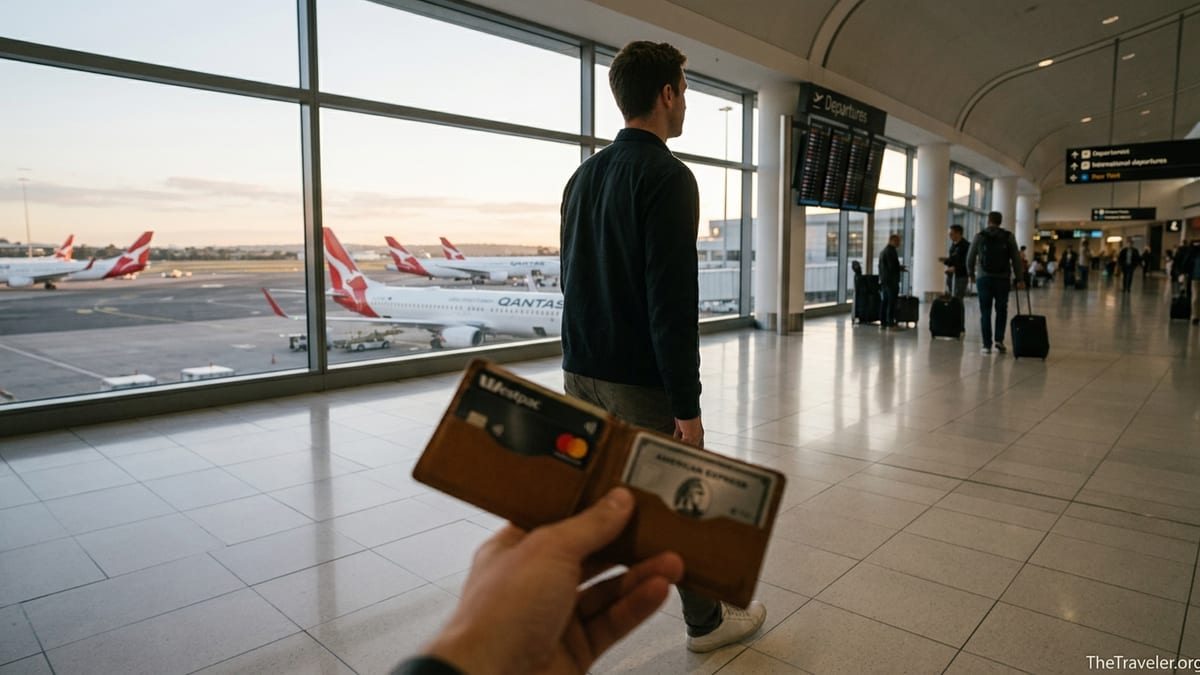
How Westpac Altitude Black Works as a Benchmark
Westpac Altitude Black is a premium rewards card that many Australian travellers treat as a baseline for what a solid travel card should offer. As at mid-2026, the Altitude Rewards Black version typically carries an annual card fee of around $295 after a discounted first year offer, and earns up to around 1.25 Altitude Rewards points per dollar on eligible domestic spend, with the ability to transfer those points to airline partners or redeem them for flights via the Altitude program. The Qantas-linked Altitude Qantas Black alternative sends points directly to Qantas Frequent Flyer instead, but also charges a separate Qantas program fee.
On the travel side, Altitude Black includes a complimentary Priority Pass membership that saves you the US$99 joining fee, though you still pay per lounge visit unless you receive a free visit offer. It also provides two complimentary Qantas Club lounge invitations each year when you hold the Qantas-earning version and meet a small qualifying Qantas spend in Australia, plus complimentary travel insurance when you pay for eligible return travel with the card. For many cardholders, that mix of lounge access, insurance and flexible points makes it an all-rounder for both domestic and international trips.
To understand its strengths and weaknesses in practice, imagine a Sydney to Singapore holiday costing about $2,000 in flights and $3,000 in hotels and sightseeing. Put that $5,000 through Altitude Black and you might earn in the ballpark of 6,000 to 7,000 airline points equivalent, depending on the transfer partner, along with lounge access for one or two segments and built-in travel insurance. It is not the absolute highest-earning card in the market, but it combines solid earn rates with a familiar big-four bank brand and a wide acceptance footprint.
Using Westpac Altitude Black as the benchmark, this article looks at how other major Australian travel cards stack up on three elements that matter most to travellers: points earn versus annual fee, lounge benefits and travel perks, and how they perform in common real-world travel scenarios.
Top Tier: Qantas American Express Ultimate
For travellers whose primary goal is to maximise Qantas points and Qantas-branded lounge access, the Qantas American Express Ultimate card generally ranks above Westpac Altitude Black in 2026. The Qantas Amex Ultimate charges a higher annual fee, currently around $450 a year, but offsets this with a yearly Qantas travel credit of about the same value when you book eligible Qantas flights through American Express Travel. In practice, if you buy at least one Qantas flight each year, many cardholders treat the effective net fee as close to zero.
The ongoing earn rate is a key advantage. The card earns up to 1.25 Qantas Points per dollar on most everyday purchases, 2.25 Qantas Points per dollar on selected Qantas products and services in Australia, and around 0.5 points per dollar on government spend such as tax or council rates. Once you earn 100,000 Qantas Points in a calendar year the everyday earn rate drops slightly on new spend, but for an average family putting perhaps $3,000 to $4,000 of general expenditure each month through the card, the higher earn rate typically yields more Qantas Points than Westpac Altitude Black for the same spend.
Lounge and travel perks further push the Qantas Amex Ultimate ahead in a pure travel ranking. Cardholders receive two complimentary Qantas Club lounge invitations each year once they make an eligible Qantas purchase in Australia, plus two entries to Amex Centurion Lounges in Sydney or Melbourne international airports. Travel insurance is included when you pay for eligible return travel using the card, and frequent travellers often report that the coverage compares competitively with standalone policies for typical leisure trips.
Consider a Melbourne to Tokyo return trip for two, costing $3,500 in Qantas economy fares booked via Qantas and $2,500 in hotels, tours and dining charged to the card. On the Qantas Amex Ultimate, that $6,000 trip might generate around 7,500 Qantas Points from general spend and up to roughly 7,800 points from the Qantas flight purchases alone, so close to 15,000 Qantas Points in total, plus lounge access in Melbourne and on the return transit through Sydney if timed well. On Westpac Altitude Black, the same spend usually earns fewer Qantas Points and more limited lounge access, which is why many Qantas-focused travellers rate the Amex Ultimate as a clear step up.
Strong Challenger: ANZ Rewards Black and Flexible Points Cards
Travellers who value flexible points that can move to different airline programs may find ANZ Rewards Black a strong alternative to Westpac Altitude Black. ANZ markets this as its highest-earning rewards card, with an annual fee that is usually in the same general range as Westpac’s premium cards, and a points program that can transfer to partners such as Virgin Australia’s Velocity and several overseas airlines. For people who fly different carriers each year, this flexibility can matter more than pure Qantas earn rates.
ANZ Rewards Black also includes complimentary international travel insurance for eligible cardholders when travel is paid for on the card, and typically covers things like overseas medical emergencies, trip cancellation and rental vehicle excess, subject to the usual conditions and age limits. While it does not match the Qantas Amex Ultimate on Qantas-specific perks, in many real-world cases it competes closely with Westpac Altitude Black on overall value, especially if you redeem points on non-Qantas partners or want to move your balance into different airline programs over time.
Take a Perth to London trip flying with a mix of carriers, such as Qatar Airways or Singapore Airlines on one route and a low-cost carrier inside Europe. If the total trip spend runs to $8,000 including airfares, accommodation and car hire, ANZ Rewards Black holders might prefer to earn flexible points that can later be transferred to a partner airline that serves their chosen route well, rather than locking into Qantas. By contrast, Westpac Altitude Black can also offer flexible transfers depending on the variant, but some travellers find ANZ’s transfer partnerships and promotional bonuses more compelling in particular years.
In headline rankings, cards like ANZ Rewards Black sit just behind the Qantas Amex Ultimate but very close to Westpac Altitude Black. For travellers who do not want an American Express as their main card or who often fly non-Qantas airlines, ANZ Rewards Black can quietly outperform Altitude Black in day-to-day use while remaining squarely in the top tier of Australian travel cards.
Solid Benchmark: Where Westpac Altitude Black Still Shines
Despite heavy competition, Westpac Altitude Black remains a solid benchmark card for a wide audience of Australian travellers who value a big-four bank relationship and a familiar Mastercard network. The card’s key strengths are its balance of benefits rather than any single headline perk. It offers Priority Pass membership, Qantas lounge invitations for the Qantas-earning version, comprehensive travel insurance on eligible trips, and a robust rewards program, all backed by Westpac’s digital banking and customer support.
One real-world example is a family from Brisbane taking two overseas holidays each year, one to Bali with Jetstar or Virgin Australia and one to New Zealand with Qantas. Their combined annual travel spend might sit around $10,000 including flights, accommodation and tours. If they prefer to keep most of their finances inside Westpac, Altitude Black offers enough lounge access to start or end each major trip in comfort, reasonable points earn on everyday spend, and insurance that replaces the need for a separate family policy. For them, the convenience factor of having everything under one banking umbrella can outweigh slightly higher earn rates available elsewhere.
Altitude Black is also often favoured by travellers who regularly need a Mastercard for acceptance reasons. In parts of Asia and smaller merchants in Europe, some travellers still report occasional difficulty using American Express, or higher surcharges when it is accepted. In those situations, a Westpac Altitude Black Mastercard can function as a reliable workhorse that still earns travel rewards at a decent rate, even if a companion Amex card is used for larger domestic purchases where acceptance is strong.
Finally, Westpac periodically promotes large sign-up bonus offers on Altitude Black, such as up to 200,000 Altitude Rewards points spread over the first two years if you meet annual minimum spend thresholds. In years when those offers are generous, the total points haul over 24 months can rival or exceed the value from many competitors, especially if you redeem Altitude points carefully for long-haul premium cabin flights or well-priced partner awards.
Mid-Tier Options: Lower Fees but Thinner Perks
Beneath the true premium cards sit a range of mid-tier travel cards in Australia that have noticeably lower annual fees but also slimmer lounge and insurance benefits. Examples include various platinum-level cards from the big four banks that still offer modest rewards and some form of international travel insurance when you pay for your trip with the card, but that may not come with lounge invitations or flexible airline transfers.
These cards can make sense for travellers who only head overseas once every year or two and mainly want the backup of travel insurance without paying for a top-tier product. For instance, a couple from Adelaide who take a single $4,000 cruise holiday every two years and rarely fly internationally might reasonably choose a mid-tier platinum card with a fee in the low hundreds of dollars. The included insurance and basic rewards could be adequate for their needs, and they may not miss the extra lounges or bonus earn rates of a Westpac Altitude Black or Qantas Amex Ultimate.
However, when compared directly with Westpac Altitude Black, these mid-tier options generally fall behind on pure travel value for frequent flyers. A traveller doing multiple overseas trips each year is more likely to exhaust the limited perks of a cheaper card. In that scenario, Westpac Altitude Black still ranks comfortably ahead because it provides more meaningful lounge access, higher earning potential, and more comprehensive travel cover that gets used more than once every few years.
In ranking terms, mid-tier travel cards usually sit below Westpac Altitude Black for serious travellers, but above entry-level low-rate cards that offer virtually no travel benefits at all. They can be a stepping stone for people who are just beginning to explore points and perks before upgrading to a more powerful travel card later.
Lower Ranked: Basic Cards with Minimal Travel Value
At the bottom of any travel card ranking are basic, no-frills products that either earn very low rewards or none at all, and provide little or no complimentary travel insurance or lounge access. These might be low-rate or low-fee cards from the big four banks and smaller institutions that aim to minimise interest costs rather than reward travellers. In some cases they offer a very small number of rewards points per dollar, but not enough to materially offset the cost of an overseas trip or to secure meaningful flight redemptions.
For example, a card with an annual fee under $100 that offers no lounge access and only a basic points program might work perfectly for someone who rarely leaves Australia and mainly wants a simple card for grocery and fuel spending. But if that same person starts planning regular international trips, the lack of travel insurance, foreign transaction concessions, or airport comfort quickly becomes apparent. In that case, even a mid-tier travel card would rank higher on a best-to-worst list than the basic product.
Compared against Westpac Altitude Black, these lower-ranked cards appear clearly outclassed on travel features. The Altitude Black’s combination of Priority Pass membership, Qantas lounge invitations, travel insurance and higher earn rates means that regular travellers usually recover the higher annual fee through a mix of saved insurance premiums, lounge visits that would otherwise be paid out of pocket, and points redeemed for flights. By contrast, a basic card user might end up paying for standalone travel insurance, buying day passes to lounges, and earning far fewer points on exactly the same travel spend.
For Australian readers trying to decide where to start, it can be useful to think of Westpac Altitude Black as the line where a card becomes a true travel tool rather than simply a payment method. Anything significantly less generous on travel perks will likely rate below it, while the only cards that clearly rank above it are the most focused, high-fee products built specifically for heavy travellers.
Choosing the Right Card for Your Travel Style
Ranking cards from best to worst is only part of the story. The right card for you depends heavily on how, where and how often you travel. Someone who flies Qantas to Asia three times a year and spends heavily on restaurants, rideshares and streaming services at home will get much more from a Qantas American Express Ultimate than someone who takes one low-cost airline trip to New Zealand every two years. Likewise, a traveller who frequently flies non-Qantas airlines to Europe may find ANZ Rewards Black or a flexible-points Westpac Altitude variant better aligned with their routes.
Start by reviewing your last 12 to 24 months of travel. Add up international and domestic airfares, accommodation, tours, car hire and other travel-related card spend. A frequent flyer might easily see $15,000 or more per year passing through their card, while an occasional holidaymaker might sit closer to $3,000. Then look at your everyday spending on groceries, fuel, dining and bills that could reasonably be shifted onto a credit card and paid off in full each month. A realistic picture of your annual card spend helps you estimate how many points you can actually earn with each product.
Next, match that spend pattern against where you want the points to take you. If your dream trip is a business class redemption to London on Qantas, a Qantas-focused product such as the Amex Ultimate or Westpac Altitude Qantas Black may be ideal. If you are open to flying with whichever airline has award seats at good value, a flexible points card like ANZ Rewards Black or Westpac Altitude Rewards Black might rank higher for you personally. On the other hand, if you mainly want simple, automatic travel insurance and occasional lounge access before a once-a-year holiday, Westpac Altitude Black itself may hit the sweet spot between cost and convenience.
Finally, consider practical factors such as card acceptance, surcharges and your comfort with managing multiple cards. Many Australian travellers carry both a Mastercard or Visa, such as Westpac Altitude Black, and an American Express like the Qantas Amex Ultimate. They use the Amex where it is easily accepted and default back to the Mastercard where surcharges are higher or acceptance is patchy. In that two-card setup, Westpac Altitude Black often remains in the wallet even if it is technically outranked on some features, because it fills crucial gaps when the premium Amex is not appropriate.
The Takeaway
When ranked purely on travel value against Westpac Altitude Black, the Qantas American Express Ultimate generally comes out on top for Qantas-focused travellers, thanks to its higher earn rates, annual Qantas travel credit and richer lounge access. Flexible points cards such as ANZ Rewards Black and some Westpac Altitude variants sit close behind, offering strong earn rates and the ability to move points to different airline partners, which suits travellers who do not always fly Qantas.
Westpac Altitude Black itself remains a reliable benchmark. It combines Priority Pass membership, Qantas lounge invitations on the Qantas version, comprehensive travel insurance and respectable earn rates in a single Mastercard that is widely accepted in Australia and overseas. Below it, mid-tier platinum cards and basic low-fee cards generally offer thinner travel benefits and are best suited to infrequent travellers who care more about low costs than lounges and points.
For most readers, the smartest strategy is not to chase rankings for their own sake, but to choose the card or combination of cards that best matches your real spending and travel habits. If you pay your balance in full each month, use the included insurance wisely and plan redemptions carefully, a well-chosen travel card can pay back its fee several times over in flights, hotel savings and airport comfort, no matter where Westpac Altitude Black happens to sit on your personal best-to-worst list.
FAQ
Q1. Is Westpac Altitude Black still a good travel card in 2026?
Yes, Westpac Altitude Black remains a strong all-round travel card, especially for those who want big-four bank backing, Mastercard acceptance, lounge access and comprehensive travel insurance in one product. It is rarely the absolute best in any single category, but it offers a balanced package that suits many frequent and semi-frequent travellers.
Q2. How does the Qantas American Express Ultimate compare to Westpac Altitude Black?
The Qantas Amex Ultimate typically delivers higher Qantas Points earn rates, an annual Qantas travel credit roughly equal to its annual fee, and more generous lounge access via Qantas Club invitations and Amex Centurion Lounge entries. In exchange, it charges a higher annual fee and relies on Amex acceptance, which may be patchier than Mastercard in some overseas locations.
Q3. Which card is better if I mostly fly non-Qantas airlines?
If you regularly choose non-Qantas airlines for trips to Europe or Asia, a flexible rewards card such as ANZ Rewards Black or Westpac Altitude Rewards Black may be more useful than a purely Qantas-focused product. These cards allow you to transfer points to different airline partners, so you can pick the carrier with the best award seats or schedules for each trip.
Q4. Do I really need lounge access for my trips?
Lounge access is not essential, but it can significantly improve long travel days by providing quieter seating, food, drinks and showers before or between flights. If you only take one short international trip every few years, paying for a day pass once might be enough. If you travel several times a year, complimentary lounge invitations from cards like Westpac Altitude Black or Qantas Amex Ultimate can easily justify part of the annual fee.
Q5. How important is complimentary travel insurance on a credit card?
Complimentary travel insurance can save you the cost of a separate policy for many standard leisure trips, provided you meet the activation requirements, such as paying for return flights with the card. It is important to read the policy wording carefully, especially around age limits, pre-existing conditions and coverage caps, but for many travellers the included insurance on a premium card is a major part of its value.
Q6. Should I keep both Westpac Altitude Black and a Qantas American Express Ultimate?
Many frequent travellers choose to hold both. They use the Qantas Amex Ultimate for high-earning domestic and online purchases where Amex is well accepted, and rely on Westpac Altitude Black as a widely accepted Mastercard, particularly overseas or at merchants that surcharge Amex. This combination can maximise points while ensuring flexibility and coverage.
Q7. Are mid-tier platinum cards worth it for occasional travellers?
Mid-tier platinum cards with lower annual fees can be good value for occasional travellers who mainly want basic international travel insurance and a modest points program. They usually rank below Westpac Altitude Black on perks, but if you only travel once every couple of years the savings on the annual fee compared with a full premium card might outweigh the extra lounge access and higher earn rates.
Q8. How should I estimate the points I can earn from a travel card?
Look at your last year of spending on flights, accommodation, dining and everyday purchases that could be paid with a credit card and then multiplied by each card’s earn rate. For example, $20,000 of annual spend at 1 point per dollar would generate about 20,000 points before any bonuses. Comparing those rough totals across cards helps you see which product gives you enough points each year to meaningfully reduce the cost of future trips.
Q9. What if I prefer to focus on keeping interest costs low?
If your priority is minimising interest rather than maximising travel perks, a low-rate or low-fee card will usually suit you better than a premium travel card. Travel products like Westpac Altitude Black and Qantas Amex Ultimate assume that you pay your statement balance in full each month. If you often carry a balance, the interest charges can quickly wipe out any value from points, lounges or insurance.
Q10. Can I rely only on a travel card for all my travel protections?
Premium travel cards can provide substantial protections, but they are not a complete solution in every situation. Complex trips, older travellers or travellers with existing medical conditions may still need top-up insurance or a tailored standalone policy. It is wise to treat the card’s insurance as a core layer of protection and then consider whether any gaps matter for your specific trip.