


Tokyo Haneda is one of the most efficient major airports in the world, but it can still feel overwhelming before a long-haul flight or after a red-eye connection. The good news: Haneda’s network of airline, credit card, and independent lounges gives you places to shower, recharge devices, have a proper meal, or simply escape the crowds for a few quiet hours. This guide focuses on the best Haneda Airport lounges for comfort before your flight, with practical, up-to-date details on who can get in, what to expect, and how to choose the right option for your budget and airline.
Get the latest updates straight to your inbox!
Understanding Haneda’s Terminals and Lounge Layout
Before you decide which lounge to aim for, it is crucial to understand how Haneda is laid out. The airport has three main passenger terminals: Terminal 1 and Terminal 2 for domestic flights, and Terminal 3 for most international departures. Many long-haul travelers will be using Terminal 3, but some domestic connections and late-night flights still depart from Terminals 1 and 2, each with its own cluster of lounges. When booking flights, check not only which terminal you depart from, but also whether you are flying on Japan Airlines (JAL), All Nippon Airways (ANA), another oneworld or Star Alliance carrier, or a SkyTeam airline such as Delta, as this will strongly influence your lounge options.
Each terminal also mixes airline-operated lounges with so-called card lounges, which are accessible to holders of certain credit cards, and a smaller number of independent spaces open to Priority Pass and other lounge program members. For instance, Power Lounge locations in Terminals 1 and 2 serve mainly domestic travelers with day passes and card benefits, while Terminal 3’s TIAT Lounge and Sky Lounge South are the primary independent options for international passengers using programs like Priority Pass. Understanding these categories will help you avoid the common mistake of walking across the terminal only to be turned away for not having the right ticket or status.
Transit times between terminals are fairly quick: a free airside shuttle bus connects Terminals 1 and 2 on the domestic side, while the monorail and Keikyu rail line serve all three terminals landside. However, security and immigration lines can fluctuate, especially in the evening bank of international flights, so most travelers should choose a lounge in the same terminal as their departure gate. As a rule of thumb, assume you will want to be within a five- to ten-minute walk of your gate by the time boarding starts, especially if traveling with children or bulky cabin baggage.
Lounges at Haneda typically open early in the morning, sometimes around 6:00 or 6:30, and many in Terminal 3 operate late into the night to serve overnight departures. A few, such as Sky Lounge South in Terminal 3, run 24 hours, which can be a lifeline if you land after midnight and have a long connection before your next flight. When planning a trip, it is worth checking operating hours for your exact date, as some spaces adjust schedules seasonally or during renovation works.
Top Airline Lounges in Terminal 3 for Long-Haul Comfort
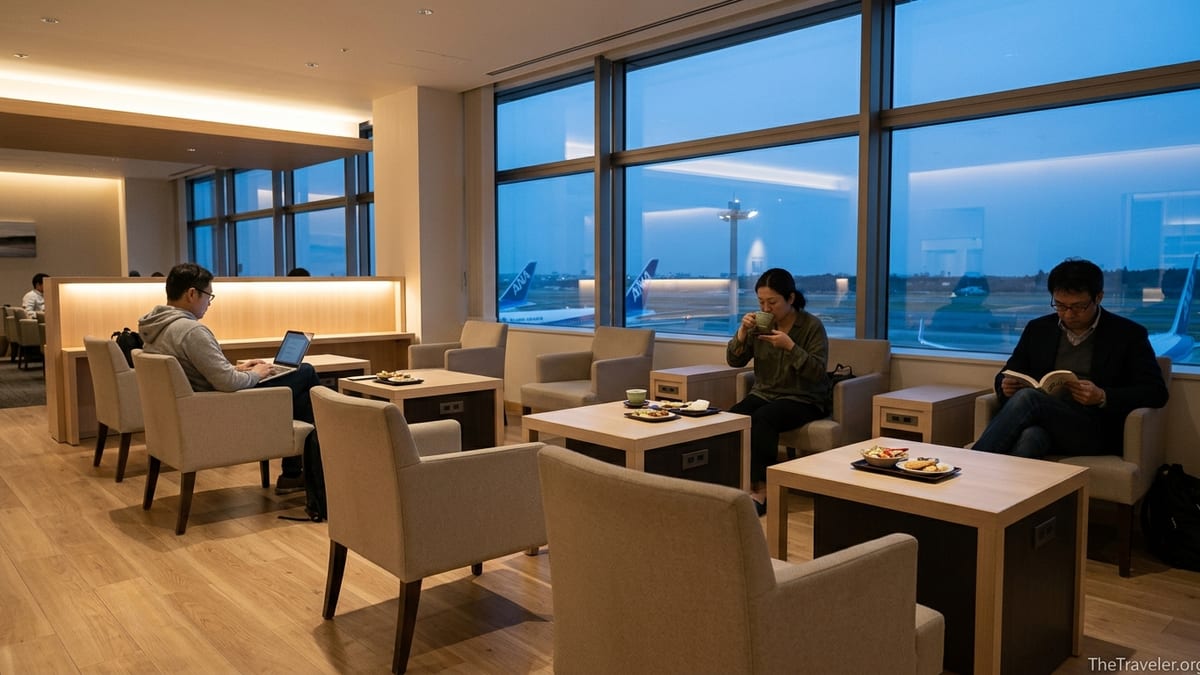
For travelers flying in premium cabins or holding elite status, the most comfortable options at Haneda are the airline-operated lounges in Terminal 3. Japan Airlines’ Sakura Lounge is a standout for oneworld flyers. Located in the international departures area, it offers expansive runway views, a hot buffet of Japanese and Western dishes, and the carrier’s much-loved JAL Original Beef Curry, which is frequently cited by frequent flyers as a reason to arrive early. Seating ranges from communal tables to quiet armchairs, and business travelers will appreciate the abundance of power outlets and reasonably fast Wi-Fi suitable for large downloads or video calls.
ANA’s lounges in Terminal 3 provide a similarly high standard for Star Alliance passengers. The main ANA Lounge for business-class and eligible Star Alliance Gold travelers features a sleek, modern interior with large windows, a noodle bar where staff prepare fresh bowls of ramen or udon to order, and self-serve beverage stations that include Japanese beers and sake. Shower suites are available and particularly useful for those arriving on overnight flights from Europe or North America before connecting onward in Asia. Towels and basic amenities are provided, so you only need to bring your own toiletries if you prefer specific products.
Delta Sky Club has emerged as one of the strongest SkyTeam-aligned options at Haneda. Situated near the Delta gates in Terminal 3, this lounge is relatively new and was designed specifically for long-haul passengers heading to the United States. Inside, you will find a mix of bar and lounge seating, a rotating selection of Japanese and international dishes, and a staffed bar pouring both standard and premium spirits. Several shower suites with rainfall showerheads provide a private, hotel-like experience, a major step up from basic pay-per-use shower booths. If you are connecting from a domestic flight into an overnight transpacific service, planning a 60 to 90 minute stop here can make the journey feel significantly less exhausting.
Access to these airline lounges is typically limited to business- and first-class passengers on the operating carrier or its alliance partners, as well as travelers with the relevant elite status. Importantly, most do not accept lounge membership cards such as Priority Pass or generic day passes at the door. If you are flying economy and want this level of comfort, one practical strategy is to watch for reasonably priced last-minute upgrades offered through the airline app or check-in kiosk; at Haneda, upgrade offers of around the equivalent of a few hundred US dollars are not uncommon on long-haul routes, and many travelers consider that worthwhile if it includes both a better seat and access to these higher quality lounges.
Independent and Priority Pass Lounges in Terminal 3
For travelers without premium cabin tickets or elite status, the main options in Terminal 3 are the independent lounges, many of which partner with Priority Pass or similar programs. TIAT Lounge, located above the gate area in Terminal 3, is widely regarded as the flagship independent lounge. It offers runway views, a buffet of light hot and cold food, complimentary soft drinks and alcoholic beverages, shower rooms, and a dedicated powder room. Comfortable seating makes it a solid choice if you want a quiet workspace with a plate of curry rice and a beer while watching aircraft movements. However, access conditions have become more restrictive in recent years, with some membership programs only accepted during limited overnight hours, typically around 1:00 to 5:00 in the morning, to manage crowding.
Sky Lounge and Sky Lounge South serve as the other core independent options for international departures. Sky Lounge, situated on an upper level in the central part of the terminal, functions as a classic contract lounge where multiple airlines and card programs send passengers. It usually offers soft drinks, basic snacks, and a selection of Japanese and Western alcohol. Sky Lounge South, closer to some of the late-night departure gates, is notable for operating 24 hours and accepting Priority Pass and similar memberships for much of the day. Facilities are simpler than in top airline lounges, but for a traveler with a long economy layover or a very early check-in before dawn, the combination of sofa-style seating, USB outlets, and coffee can be invaluable.
Reviews of these independent lounges at Haneda are mixed. Many travelers appreciate having a quiet space and free drinks, especially when they hold lounge access through a credit card at no extra marginal cost. Others find the spaces crowded at peak times and note that food selection can be limited to small sandwiches, packaged snacks, and simple hot dishes rather than full restaurant-quality meals. If you are considering buying a one-time lounge pass through a lounge program or your bank, it is worth setting your expectations accordingly: at Haneda, independent lounges are best treated as a step up from the public gate area, not a substitute for a top-tier airline business-class lounge.
From a budget perspective, Priority Pass and similar memberships usually pay off for frequent travelers who use lounges several times per year. At Haneda specifically, if you hold a premium credit card that bundles Priority Pass or DragonPass access, these Terminal 3 lounges offer a convenient way to turn long connection times into productive working or resting periods without out-of-pocket payment on the day. On the other hand, buying a single-entry lounge pass at the airport can cost the equivalent of tens of US dollars, so occasional travelers should weigh that against simply spending money at one of the many sit-down restaurants or cafes in the terminal instead.
Domestic Comfort: Power Lounge and Airline Lounges in Terminals 1 and 2
Not all comfortable lounge experiences at Haneda involve international flights. Domestic travelers using Terminals 1 and 2 also have access to a network of well-regarded spaces that focus on short-haul comfort. Power Lounge is the most prominent independent brand, with several locations such as Power Lounge North, Power Lounge South, and Power Lounge Central in Terminal 1, and Power Lounge Premium and other branches in Terminal 2. These lounges typically feature minimalist, wood-accented interiors with panoramic windows, bar-style seating with chargers at each stool, and simple buffets of pastries, snacks, and soft drinks. Alcohol may be available for purchase or in limited complimentary quantities, depending on the specific lounge and time of day.
Power Lounge locations generally welcome travelers regardless of airline as long as they are departing from the appropriate terminal, and access is often included with certain Japanese credit cards or sold as day passes. Prices are usually moderate, comparable to what you might spend on a full meal and coffee in the public area. A practical example: a business traveler flying a one-hour domestic hop from Haneda to Osaka might arrive an hour early, pay for lounge access, enjoy a quiet desk with coffee and a light snack, and head to the nearby gate with minimal stress and no need to search for open power outlets in the crowded departure hall.
On the airline side, both JAL and ANA operate domestic lounges for eligible passengers in Terminals 1 and 2. JAL’s domestic Sakura Lounges and ANA’s domestic ANA Lounge and ANA Suite Lounge cater mainly to status holders and premium-fare passengers. Facilities are more pared back than their international counterparts but still a significant upgrade over the public areas: expect comfortable armchairs, soft drinks, beer dispensers, basic snacks such as rice crackers, and strong Wi-Fi suitable for catching up on work before a short flight. For frequent domestic flyers, achieving the required status level can be worthwhile precisely because it unlocks this consistent, quiet space at each departure.
One detail to keep in mind is that some domestic lounges have been, or will be, subject to renovation programs. Airline announcements in 2026 indicate that certain JAL domestic lounges in the Haneda North Wing are being refreshed, which may temporarily change opening hours or available seating. If you are planning a trip far in advance, it is wise to check the latest information a few days before departure in case your usual lounge is temporarily closed and you need to allow extra time to find an alternative or use public seating instead.
Showers, Sleep, and Late-Night Strategies
For many travelers, the most important comfort feature at Haneda is not free wine or a quiet workspace but the ability to shower and rest before or after a long-haul flight. Several airline-operated lounges in Terminal 3, including ANA’s and Delta’s spaces, offer shower suites to eligible passengers, which can be reserved on arrival at the lounge reception. During busy evening departure waves, waits of 30 to 60 minutes for a shower are not unheard of, so if you are connecting from another flight and know you want to freshen up, it is smart to head straight to the lounge and request a shower slot before sitting down to eat.
Independent options also exist for those without premium-class tickets. Within Terminal 3, public shower rooms in the arrivals area operate 24 hours and typically do not require reservations. You pay a set fee for a block of time that includes towels and basic amenities, allowing you to step off a long flight from Europe or North America, clear immigration, and take a quick shower before heading into Tokyo or back airside for a connecting flight. Prices are higher than basic airport restrooms but noticeably lower than the cost of a hotel day room, striking a practical balance for travelers who only need 30 minutes to feel human again.
For sleep, the lounges themselves are not designed as full overnight accommodation, and staff may actively discourage lying across multiple seats. However, a long late-night layover can still be made more bearable with access to a 24-hour lounge such as Sky Lounge South in Terminal 3. Here, reclining chairs, subdued lighting, and a constant supply of hot drinks and snacks make it easier to stay comfortable until check-in for your next flight opens. Travelers with very long connections, especially those arriving around midnight and departing the following morning, often consider booking a room at one of the hotels connected to the terminal complex, such as the large hotel integrated with the Haneda Airport Garden complex, which offers direct indoor access to Terminal 3 and additional onsen and spa facilities.
Parents traveling with young children should factor in both shower access and flexible seating when choosing a lounge. Airline-operated lounges are usually stricter about noise and running around, whereas some independent spaces have slightly more tolerant atmospheres and larger open areas where small children can move without disturbing sleeping business travelers. Bringing a compact change of clothes for each family member and using a shower or at least a washroom to freshen up after an overnight flight can make the onward journey into central Tokyo or another connecting flight far more manageable.
How to Choose the Right Lounge for Your Trip
Choosing the best lounge at Haneda starts with three questions: which terminal are you using, what airline and class of service are you flying, and what type of comfort matters most to you. If you are flying business or first class on JAL or ANA from Terminal 3, their respective airline lounges are almost always the most comfortable choice, with better food, more space, and higher-quality showers than independent alternatives. SkyTeam travelers on Delta will generally find the Delta Sky Club more than adequate for work, relaxation, and a preflight meal, especially on long transpacific flights.
If you hold a lounge membership through a credit card and are traveling in economy, independent lounges such as TIAT Lounge, Sky Lounge, and Sky Lounge South in Terminal 3, or the various Power Lounge locations in Terminals 1 and 2, are the most realistic options. Within this group, think about your priorities. Business travelers may value quiet and desk space, in which case a Power Lounge or the less crowded times at TIAT Lounge can be ideal. Leisure travelers on long layovers may prioritize showers and hot food, leaning toward airline lounges if they can access them through an upgrade, or toward independent lounges that explicitly advertise shower rooms.
Budget plays a role as well. For instance, imagine an economy passenger on an overnight flight from Tokyo to London with a four-hour preflight wait. They might compare three options: paying a one-time fee to access an independent lounge through a membership program, spending a similar amount on a proper sit-down meal and drinks at an airport restaurant, or putting the money toward a last-minute bid upgrade to premium economy or business class that includes lounge access. Since prices for food and drinks in the public area of Haneda are relatively reasonable by international standards, occasional travelers may decide a comfortable restaurant seat and a meal of tonkatsu or sushi is sufficient, while frequent flyers value the guaranteed Wi-Fi, outlets, and quiet environment of a lounge more highly.
Another factor to weigh is timing. If your flight departs during a peak evening bank, airline lounges can become crowded, and independent lounges that accept membership cards may temporarily refuse entry due to capacity. In contrast, early morning and late-night windows are often quieter, making it easier to find a good seat and enjoy a relaxed shower. Travelers who know they are arriving at a peak time should build in some flexibility: if their first-choice lounge has a long queue, it may be worth walking a few minutes farther to a second option or spending the first hour exploring the terminal’s shops and restaurants before trying again.
The Takeaway
Haneda is not an airport where you need a lounge to survive. Public areas are clean, efficient, and full of places to eat and shop. Yet for many travelers, especially those facing overnight flights or long connections, the right lounge transforms the experience from merely tolerable to genuinely comfortable. From the polished calm of JAL and ANA’s airline lounges in Terminal 3 to the 24-hour practicality of Sky Lounge South and the work-friendly Power Lounge network in the domestic terminals, there is a wide spectrum of options to match different budgets, tickets, and travel styles.
The key is to align your expectations with the facilities realistically available to you. Premium-cabin and elite-status passengers will generally find that airline lounges offer the best combination of food, showers, and quiet seating. Travelers relying on credit card lounge access should view independent spaces as a welcome upgrade over the gate area, but not as full-service business-class lounges. Whichever category you fall into, planning ahead, checking current opening hours, and knowing where lounges sit relative to your departure gate will help you make the most of your preflight time at Tokyo Haneda.
FAQ
Q1. Which is the best overall lounge at Haneda for international departures?
The best overall experience for most long-haul travelers is usually found in the airline-operated lounges in Terminal 3. JAL’s Sakura Lounge, ANA’s main international lounge, and Delta Sky Club all combine good food, showers, and comfortable seating. The “best” among them often comes down to which airline you are flying and which design and food style you personally prefer.
Q2. Can I use a Haneda lounge if I am flying economy class?
Yes, but your options depend on your airline and memberships. Economy passengers can gain access through elite frequent flyer status, paid upgrades to premium cabins, lounge memberships like Priority Pass where accepted, or by buying single-entry passes to independent or card lounges such as Power Lounge in the domestic terminals or Sky Lounge South in Terminal 3.
Q3. Are there 24-hour lounges at Haneda Airport?
Yes. In Terminal 3, Sky Lounge South is known for operating 24 hours a day, which is especially useful for passengers with very late-night or early-morning flights. Keep in mind that food offerings may be reduced during overnight hours, but hot drinks, soft drinks, and basic snacks are typically available.
Q4. Where can I take a shower at Haneda if I do not have lounge access?
Passengers without lounge access can use the public shower rooms located in Terminal 3’s arrivals area. These facilities operate around the clock, charge a fixed fee for a set time block, and provide towels and basic amenities. This is a practical solution if you land from a long-haul flight and want to freshen up before heading into Tokyo or checking in for another flight.
Q5. Is Priority Pass useful at Haneda Airport?
Priority Pass and similar memberships can be useful at Haneda, particularly in Terminal 3 where Sky Lounge South and some other independent lounges accept them, and in the domestic terminals where certain card lounges participate in access schemes. However, acceptance hours and conditions can change, and some lounges restrict Priority Pass access during peak times, so it is wise to check the current details shortly before travel.
Q6. What is the difference between airline lounges and card lounges at Haneda?
Airline lounges, like JAL’s Sakura Lounge and ANA’s lounges, are operated by specific carriers and usually reserved for their premium-cabin passengers and elite-status members. Card lounges, such as many Power Lounge locations, are independent or airport-operated spaces that grant access based on certain credit cards, paid day passes, or membership programs. Airline lounges tend to offer more substantial food and better amenities, while card lounges focus on quiet seating, drinks, and workspace.
Q7. How early should I arrive to make lounge access worthwhile?
For international flights from Terminal 3, arriving about three hours before departure is generally enough to clear formalities and enjoy 60 to 90 minutes in a lounge. For domestic flights, arriving 60 to 90 minutes early is usually sufficient. If you arrive closer to departure than this, you may find that using restaurants or cafes near your gate is more practical than trying to squeeze in a rushed lounge visit.
Q8. Are Haneda’s lounges suitable for families with children?
Many lounges at Haneda welcome families, but quiet business-focused spaces may not be ideal for very active children. Independent lounges and some card lounges often have more relaxed atmospheres and flexible seating, which can be easier for families. When in doubt, look for lounges with larger open areas and avoid those that are clearly set up as silent workspaces during peak business travel hours.
Q9. Can I move between terminals to use a different lounge?
Moving between terminals at Haneda is possible via rail and shuttle connections, but it usually involves leaving the secure area and passing through additional security or immigration checks. Because of that time and uncertainty, most travelers are better off using a lounge in the same terminal as their departure gate, unless they have a very long layover and a clear plan to return through security with ample time.
Q10. Is it worth paying out of pocket for lounge access at Haneda?
It can be, depending on your situation. If you have a long layover, need reliable Wi-Fi and power, or highly value a quiet environment and complimentary drinks, paying for an independent lounge or card lounge may be reasonable. For short waits or travelers on tight budgets, spending the same amount on a proper meal in one of Haneda’s many restaurants can deliver similar comfort without the need to commit to lounge entry.