


Tokyo Haneda Airport has quietly become one of the most convenient international gateways in Asia, and its hotel scene has grown just as fast. Whether you are landing late, catching a red-eye departure, or breaking up a long-haul journey, choosing the right hotel near Haneda can turn an exhausting transit into a smooth, almost effortless stopover. This guide looks at the best real-world options in 2026, from compact capsule stays inside the terminal to full-service luxury hotels directly connected to the airport and value properties a short train ride away.
Get the latest updates straight to your inbox!
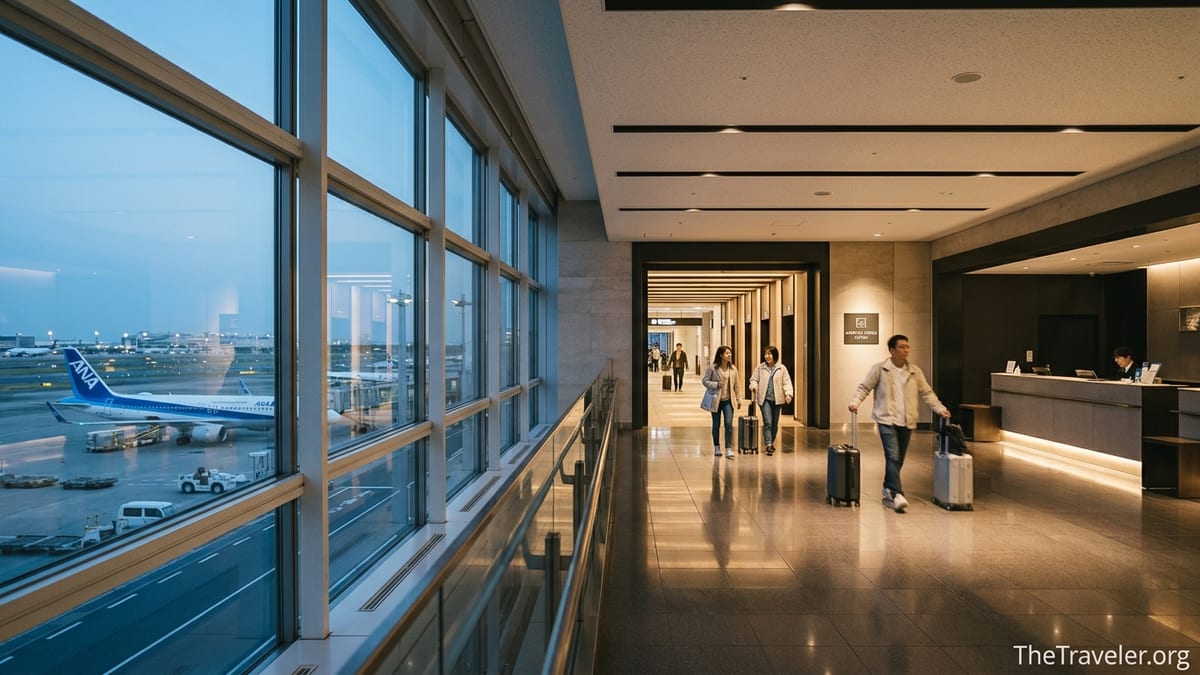
Understanding Haneda’s Layout and Why Your Hotel Choice Matters
Haneda Airport has three passenger terminals: Terminal 1 and Terminal 2 for most domestic flights, and Terminal 3 for most international services. Terminals 1 and 2 are linked by an underground walkway, and all three are connected by a free shuttle bus, as well as the Tokyo Monorail and Keikyu Line trains into central Tokyo. In practical terms, this means an airport hotel attached to any terminal keeps you within a short shuttle ride of the others, but if you have a tight connection, being in the right terminal can still save 20 to 30 minutes.
For travelers, the key question is how much time and energy you want to spend moving between your gate and your bed. A hotel with a corridor leading straight from the departure lobby, such as Royal Park Hotel Tokyo Haneda at Terminal 3 or Haneda Excel Hotel Tokyu at Terminal 2, can reduce a late-night arrival to a five-minute walk. On the other hand, if you have a full day before your next flight, staying one or two train stops away, in areas like Kamata or Hamamatsucho, can offer cheaper rooms and more neighborhood character without making the next morning’s journey back to the airport difficult.
Prices also vary widely depending on proximity. In 2026, rooms in the most convenient airside or terminal-connected properties often start in the mid-20000s yen per night for standard rooms, and can rise significantly during busy holiday periods. In contrast, business hotels in nearby districts may offer clean double rooms closer to the 10000 to 15000 yen range, especially if you book in advance or stay on a weekday.
Because late-night public transport becomes limited after around midnight, your arrival time matters too. If you land after the last trains, an on-site hotel or capsule inside the terminal can be cheaper and far less stressful than navigating taxis into central Tokyo. For departures before 8:00 a.m., staying at or next to the airport similarly removes the risk of early-morning traffic or train delays.
Sleep Inside the Terminals: The Ultimate in Convenience
For travelers who value sheer convenience above everything else, the most attractive options are the hotels located inside Haneda’s buildings themselves. Haneda’s own service guide lists three: First Cabin Haneda Terminal 1 in Terminal 1, Haneda Excel Hotel Tokyu in Terminal 2, and The Royal Park Hotel Tokyo Haneda in Terminal 3. Each of these properties allows you to step from your room into the terminal area in just a few minutes, without going outside.
First Cabin Haneda Terminal 1 is a capsule-style hotel on the first floor arrivals level of Terminal 1. Its compact, airplane-cabin-inspired pods provide a bed, small storage, and shared bathrooms and showers. It operates 24 hours, offers both overnight and hourly stays, and is particularly popular with solo travelers catching early domestic flights, or international passengers who land late and want a simple place to sleep before heading into Tokyo the next morning. Rates can be comparatively budget friendly for the airport, often under 10000 yen for a night in a standard cabin, with shorter stays available for a fraction of that, depending on season and availability.
Haneda Excel Hotel Tokyu, attached to Terminal 2, is a full-service hotel with roughly 380 guest rooms overlooking the runways and Tokyo Bay. Guests can reach the check-in counters for domestic flights in a short walk, and the hotel provides direct access to the terminal lobby. Rooms range from compact but functional singles to larger twin and triple options, some with runway views that particularly appeal to aviation enthusiasts. In 2026, standard rooms often price in the low- to mid-20000 yen range, though this shifts with demand and event periods. The on-site restaurant serves breakfast from early hours, which is helpful for early departures.
At Terminal 3, The Royal Park Hotel Tokyo Haneda connects directly to the international departure lobby. This property includes both a regular landside hotel and a limited set of transit rooms accessible from the airside area, allowing certain connecting passengers to rest without clearing immigration. The main hotel offers modern rooms with soundproofing, making it a favored choice for long-haul passengers who want to minimize walking after a late arrival. Nightly rates usually sit in a similar band to Haneda Excel Hotel Tokyu, with occasional higher prices for rooms located closest to the terminal access points.
Haneda Airport Garden and Villa Fontaine: Mid-Range to Upper-Mid Luxury
Directly connected to Terminal 3 via an indoor corridor, the Haneda Airport Garden complex has quickly become a destination of its own. Inside the development you will find two sister properties: Hotel Villa Fontaine Grand Haneda Airport and Hotel Villa Fontaine Premier Haneda Airport. Together, they add thousands of rooms right at the doorstep of the international terminal, plus a shopping mall, restaurants, and bus terminal.
Hotel Villa Fontaine Grand Haneda Airport is positioned as a high-grade, large-scale hotel suitable for business and leisure travelers. It offers a wide range of room categories, from compact doubles to more spacious family rooms. Many guests also choose it for its large communal bath and spa facilities, which provide a welcome chance to soak in hot water after a long flight. Reviewers often highlight the convenience of moving from baggage claim to the hotel through fully covered walkways, particularly during bad weather or with large suitcases.
Hotel Villa Fontaine Premier Haneda Airport, in the same complex, targets travelers seeking a more upscale stay. Rooms are more spacious and have additional design touches and amenities, suitable for couples at the start or end of a Japan trip or for business travelers expecting more comfort. In practice, prices at the Premier tend to be higher than at the Grand, especially for rooms with better views or access to club-style benefits. For many travelers, the decision between the two comes down to budget and how much time they plan to spend on-site versus exploring the city.
Because these hotels sit within the Haneda Airport Garden, guests can walk to a range of restaurants, convenience stores, and shops without stepping outside, which is especially practical for late arrivals when local neighborhoods may be closed. For a traveler arriving into Terminal 3 at 10:00 p.m. with children, walking directly to Villa Fontaine Grand, grabbing a light meal in the complex, and heading to bed can be far less stressful than attempting to navigate unfamiliar trains at night.
Budget and Capsule Options Near Haneda
While the capsule pods of First Cabin Haneda Terminal 1 offer one of the lowest-cost ways to sleep inside the airport, budget-conscious travelers also look to nearby districts such as Kamata, Anamori Inari, and Otorii. These areas, typically one or two stops from Haneda on the Keikyu Line, have clusters of Japanese business hotels and simple properties that can be good value if you do not mind an extra 10 to 20 minutes of transit.
In these neighborhoods, you will find chains such as Toyoko Inn, APA Hotel, and other domestic brands. A typical double room in a business hotel might run somewhere around 9000 to 14000 yen on a regular weeknight in 2026, although prices climb during holidays or major events. Rooms are compact by international standards, often around 12 to 15 square meters, but generally include private bathrooms, small desks, and amenities such as pajamas, toiletries, and electric kettles.
Capsule-style options beyond First Cabin exist in the wider Tokyo area, though not all are directly tied to Haneda. For a traveler whose flight lands at a reasonable evening hour, it can be sensible to take the Tokyo Monorail or Keikyu Line into central districts like Hamamatsucho or Shinagawa and stay in a capsule there, especially if the next day will be spent sightseeing in the city. The tradeoff is that you lose the immediacy of walking straight from your gate to your bed, but you gain easier access to restaurants, nightlife, and attractions the following morning.
When comparing budget options, it is wise to factor in the cost and timing of early-morning or late-night transport. A cheap room that requires a predawn taxi ride of several thousand yen back to the airport may end up costing the same as a more expensive room attached directly to the terminal, so consider your actual door-to-gate time and expenses, not just the nightly rate.
Mid-Range Hotels Within a Short Ride
For many travelers, the ideal balance lies in mid-range hotels that are not strictly airport properties but still offer simple connections to Haneda. Areas like Kamata, Omori, and Hamamatsucho are popular because they sit along rail lines that run directly to the terminals, often without transfers. For instance, staying near Hamamatsucho Station places you next to the Tokyo Monorail terminus, where trains typically reach Haneda in around 15 to 20 minutes during regular hours, making it realistic to enjoy central Tokyo in the evening and still reach an early flight.
In these districts, hotel options include international brands and local chains catering to both business and leisure guests. A typical example would be a mid-range property with 18 to 22 square meter rooms, en suite bathrooms, complimentary Wi-Fi, and breakfast buffets. In 2026, nightly prices often fall in the range of 14000 to 20000 yen, depending on season and how far in advance you book. Compared with terminal-attached hotels, these properties can offer more space and stronger neighborhood character for the same or slightly lower price.
This category suits travelers who have at least half a day in the city before or after their flight. You might, for example, land at Haneda in the afternoon, check into a hotel near Hamamatsucho or Shinagawa, enjoy dinner in nearby Shiodome or Ginza, and then take the monorail or train back to the airport early the next morning. Families often appreciate the extra room size and local dining options, while still being within a straightforward ride of the terminals.
The main consideration is schedule reliability. Evening arrivals that risk missing the last monorail or Keikyu train may be better paired with an on-site airport hotel. Similarly, if your outbound flight leaves very early in the morning, verify the first train times from your chosen neighborhood to ensure you can arrive at check-in comfortably in time. In some cases, paying more for one night right at the airport is a form of travel insurance against delays.
Luxury and Wellness-Focused Stays Near Haneda
For travelers looking to turn a layover into a restorative break, several Haneda-area hotels now emphasize wellness and comfort beyond the basics. Hotel Villa Fontaine Premier Haneda Airport, within the Haneda Airport Garden complex, is one such example, with more spacious rooms, upgraded linens, and access to on-site spa facilities. Guests can combine a hot spring-style bath, massage services, and a relaxed meal with the ease of walking to Terminal 3 for their next flight.
Similarly, The Royal Park Hotel Tokyo Haneda markets itself as an upper-mid to near-luxury property for international travelers. Soundproofed rooms, well-designed interiors, and premium bedding aim to ensure quality sleep even as planes come and go outside. For those recovering from long-haul sectors between Europe, North America, and Asia, a night here can be a strategic pause that reduces jet lag before continuing deeper into Japan.
In the broader Tokyo area, high-end hotels in districts like Shinagawa, Shibuya, and central Tokyo can also serve as practical pre- or post-flight bases if your schedule allows more time. A traveler on a late afternoon arrival at Haneda might check into a luxury property in central Tokyo, enjoy an evening in the city, and then return to the airport the next day on the monorail or train. This approach blends the convenience of Haneda’s close proximity to the city center with the more classic urban luxury hotel experience.
When deciding whether to pay for a premium stay near the airport itself, ask how you plan to spend your transit time. If you simply need a quiet place to sleep for six hours, a well-reviewed mid-range option or one of the better airport-connected hotels may suffice. If you are arriving particularly exhausted or celebrating the start or end of a special trip, booking into a spa-equipped or more luxurious property can make the journey feel less like a necessity and more like part of the vacation.
Practical Tips for Choosing the Right Haneda Hotel
Beyond budget, the single most important factor in choosing a Haneda-area hotel is timing. Check your arrival and departure terminals, as shown on your airline booking, and note whether you are likely to arrive before or after the last trains of the night. If your long-haul flight lands close to midnight, staying in a property connected directly to Terminal 3, such as Royal Park Hotel Tokyo Haneda or the Villa Fontaine hotels in Haneda Airport Garden, can remove the uncertainty of late-night transport.
Next, think about what you need from the hotel itself. Solo travelers on a short layover may prefer the simplicity and value of First Cabin Haneda Terminal 1, particularly if they are comfortable with shared bathroom facilities and compact sleeping spaces. Couples or small families might value a private bathroom and more floor space, pointing them towards terminal-attached full-service hotels or nearby business hotels. If you will be working, check for in-room desks, reliable Wi-Fi, and quiet rooms with good reviews from business travelers.
Another practical point is luggage. If you are traveling with multiple large suitcases, minimizing transfers and stairs can make a big difference. Directly connected properties allow you to push a luggage cart from the arrivals hall to reception, while train-based options may require you to navigate ticket gates and station escalators. In the Haneda Airport Garden complex, elevators and wide corridors are designed to handle travelers with bags, making it especially suitable for families and tour groups.
Finally, consider the broader context of your trip. If this is your only night in Tokyo, you may not need to head into the city at all. On-site restaurants, convenience stores, and observation decks at Haneda can provide enough atmosphere for a brief stay. If you have a full day between flights, however, choosing a hotel one simple train ride from areas you plan to visit, such as Asakusa, Shibuya, or Tokyo Station, can make better use of your limited time without sacrificing airport access.
The Takeaway
In 2026, travelers passing through Tokyo Haneda Airport can choose from a wide spectrum of hotels, from capsule pods and compact business rooms to spa-equipped, higher-end properties. The right choice depends less on finding a single “best” hotel and more on matching your budget, arrival and departure times, and personal travel style to the many options clustered in and around the terminals.
If you value absolute convenience, the hotels inside or directly connected to the terminals, including First Cabin Haneda Terminal 1, Haneda Excel Hotel Tokyu, The Royal Park Hotel Tokyo Haneda, and the Villa Fontaine properties in Haneda Airport Garden, will keep your transit steps to a minimum. Travelers watching their spending can look to nearby rail-linked neighborhoods for smaller, more affordable business hotels, especially when trains are still running and flight times are not at the extremes of the day.
With Haneda’s continued growth as a major international gateway, new services and amenities are regularly added to both the airport and its surrounding districts. By pairing up-to-date information on your flight schedule with a clear sense of how you want to spend your layover, you can turn even a short overnight stop into a comfortable and efficient part of your journey through Tokyo.
FAQ
Q1. Which hotel is closest to Haneda’s international flights?
The Royal Park Hotel Tokyo Haneda and the Villa Fontaine hotels in the Haneda Airport Garden complex are directly connected to Terminal 3, where most international flights operate.
Q2. Is there a capsule hotel inside Haneda Airport?
Yes. First Cabin Haneda Terminal 1 is a capsule-style hotel with compact cabins and shared facilities located inside Terminal 1, open 24 hours for overnight and short stays.
Q3. Are there hotels where I can stay airside without passing immigration?
Selected rooms at The Royal Park Hotel Tokyo Haneda in Terminal 3 are designed for transit passengers, allowing some travelers to rest airside, depending on their ticket and immigration requirements.
Q4. How expensive are hotels directly connected to Haneda Airport?
Terminal-connected full-service hotels typically start in the low- to mid-20000 yen range per night for standard rooms, with prices varying by season, room type, and demand.
Q5. What is the cheapest way to sleep near Haneda?
Budget travelers often choose capsule-style accommodation like First Cabin or business hotels in nearby neighborhoods such as Kamata or Otorii, reachable by short train rides from the airport.
Q6. Is it better to stay at Haneda or in central Tokyo for an early-morning flight?
For very early departures, staying in a hotel connected to or very close to the airport reduces stress and avoids relying on the first trains. For later morning flights, central Tokyo hotels along direct rail lines can also be practical.
Q7. How long does it take to reach central Tokyo from Haneda hotels?
From airport-connected hotels, the Tokyo Monorail and Keikyu Line trains typically reach major hubs such as Hamamatsucho or Shinagawa in roughly 15 to 25 minutes during regular daytime operations.
Q8. Do Haneda-area hotels offer day-use or hourly stays?
Some properties, including capsule hotels and certain airport-connected hotels, offer day-use plans or hourly rates, useful for long layovers when you only need a room for part of the day.
Q9. Are there family-friendly hotels near Haneda?
Yes. Larger mid-range and upper-mid hotels such as Villa Fontaine Grand Haneda Airport and Haneda Excel Hotel Tokyu offer family rooms or twin and triple configurations suitable for traveling with children.
Q10. How far in advance should I book a Haneda airport hotel?
For peak travel periods, booking several weeks to a few months in advance is wise, particularly for terminal-connected hotels and weekends, as these properties can fill quickly.