


Driving to Tokyo Haneda Airport can be incredibly convenient, especially if you are traveling with family, carrying bulky luggage, or catching an early-morning or late-night flight. The challenge is knowing exactly where to park and what it will cost. Haneda’s five multi‑story parking garages and a growing number of off‑site lots all work a little differently. This guide explains the main options, how they connect to each terminal, what you can expect to pay, and how to avoid the most common parking headaches.
Get the latest updates straight to your inbox!
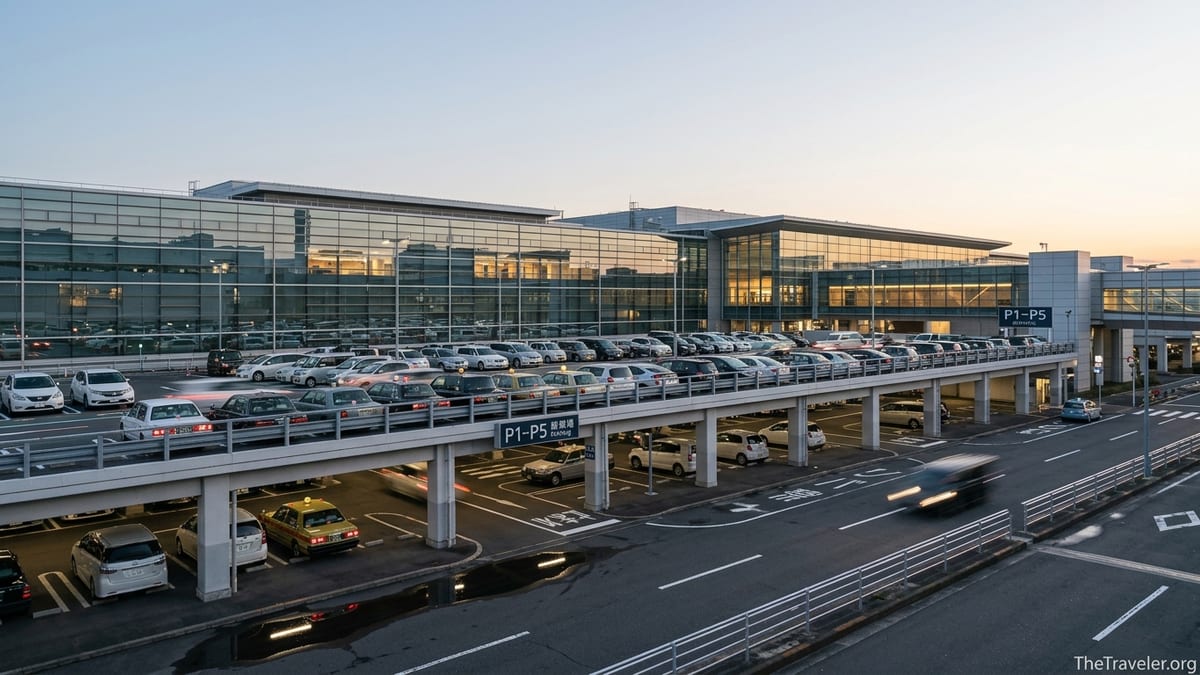
Understanding Haneda’s Terminals and Parking Layout
Tokyo Haneda Airport is compact compared with many major hubs, but its terminal layout still matters when choosing where to park. Terminal 1 is primarily used by Japan Airlines and some partner airlines for domestic flights. Terminal 2 is the main domestic hub for All Nippon Airways (ANA) and also handles a small number of international services. Terminal 3 handles most international flights, including many services to North America, Europe, and Asia. Each of these terminals is directly connected to at least one official parking garage, labeled P1 through P5.
The domestic terminals are served by four multi‑story garages. P1 and P2 are integrated with Terminal 1, while P3 and P4 sit beside Terminal 2. These structures are only a short covered walk from the check‑in counters, which is a major advantage if you are carrying skis, golf bags, or traveling with young children. The international Terminal 3 is linked to garage P5, which stands just outside the terminal building and is connected via walkways and elevators, making it easy to roll luggage trolleys all the way from your car to check‑in.
All five official garages operate 24 hours a day and are designed for relatively fast turnover, with cars entering and exiting continuously rather than being stored in distant long‑stay fields. For most travelers, the choice comes down to which terminal they are using, and whether they are planning a short visit of a few hours or leaving the car for several days. The following sections break down each option with real‑world use cases and typical pricing patterns.
Navigation is helped by clear roadside signage in both Japanese and English. For example, if you follow signs marked “Terminal 1 P1 / P2” from the metropolitan expressway, you will be routed directly into the entry ramps for those garages. First‑time visitors often find it reassuring that if they simply follow the terminal signs they cannot stray far; every turn inside the airport loop quickly leads to one of the five official lots.
P1 & P2: Best for Terminal 1 Domestic Flights
P1 and P2 are the closest options for Japan Airlines domestic departures from Terminal 1. Both garages are attached to the terminal via pedestrian walkways and elevators, so you can park and be at check‑in within a few minutes even with multiple suitcases. P1 sits slightly closer to the South Wing counters, while P2 is convenient for the North Wing, but in practice either works for any JAL domestic flight. Drivers coming from central Tokyo often naturally encounter P1 first, followed by P2 a short distance later.
Pricing for P1 and P2 follows the standard Haneda domestic parking table. Fees are charged in 30‑minute increments, with a daily cap that keeps longer stays from becoming unreasonable. Based on the latest fee schedules, standard cars pay a modest amount per half hour, with a cap of roughly 2,800 yen for the first 8 hours. There is then a capped total around 5,600 yen at 48 hours and approximately 8,400 yen at 72 hours, with a slightly lower hourly rate kicking in after the third day. In practical terms, parking a family car at P1 from Friday evening to Sunday afternoon for a weekend in Hokkaido often comes out to somewhere in the 5,000 to 7,000 yen range, depending on exact entry and exit times.
P2 also participates in Haneda’s advance reservation system, which can be valuable during peak seasons like Golden Week or New Year. When you reserve a standard space in P2, you pay the regular metered fee on departure plus a reservation surcharge. Recently, that extra fee has been around 1,000 yen per reservation regardless of the length of stay. Travelers who value certainty often judge that surcharge worthwhile, particularly when driving in from outside Tokyo and wanting to avoid the stress of searching different floors for a space.
For most everyday domestic trips, such as a one‑night business visit to Osaka or Sapporo, the convenience of P1 and P2 is hard to beat. You roll directly from your car to the JAL check‑in counters, and on return you are back in your vehicle minutes after collecting your luggage. The only downside is that these lots can fill quickly during major holidays and long weekends, especially mid‑morning. In those cases airport staff may temporarily direct incoming cars to the other garages or suggest using off‑site lots.
P3 & P4: Ideal for Terminal 2 and Longer Domestic Stays
P3 and P4 serve Terminal 2, which is ANA’s main domestic base and also hosts some international routes. Like P1 and P2, they are multi‑story concrete garages connected to the terminal by covered walkways, escalators, and elevators. Travelers flying ANA to cities such as Fukuoka, Sapporo, or Hiroshima generally find P3 and P4 the easiest options, especially when traveling with children or multiple pieces of luggage. Signs on the airport loop road direct Terminal 2 traffic first to P3, then to P4 slightly further along.
Fees at P3 and P4 mirror the standard domestic rate structure applied at P1 and P2. You are charged in half‑hour blocks, but the total is capped at a daily maximum around the same 2,800 yen mark for the first 24 hours, increasing gradually with each additional day. Parking for four or five days does add up, but because of the capped structure many drivers find that a week in P3 or P4 is still manageable compared with the cost and time of trains or taxis for a whole family. Recent comparison tables compiled by Japanese parking websites show that for seven days the official lots tend to land in the low‑to‑mid‑teens of thousands of yen for a standard car, which is in line with the daily caps shown in the airport’s own fee charts.
Both P3 and P4 accept reservations for a subset of their spaces. Similar to P2, a reservation typically adds about 1,000 yen on top of your regular parking fee, while private enclosed spaces in P4 carry a higher separate surcharge. These private bays, sometimes described as “car rooms,” suit drivers leaving high‑end vehicles at the airport for longer business trips, as they are shut away behind individual doors. Although priced at approximately double the standard per‑day rate plus a few thousand yen as a private‑space fee, they appeal to owners of luxury sedans or imported sports cars who want extra peace of mind.
P4 in particular has become known among frequent flyers for its car wash and detailing service. If you book a reserved space there, you can also request a professional hand wash or coating. Many Tokyo‑area business travelers leave their car in P4 for a multi‑day trip and return to find it cleaned and polished, effectively using their time away to handle routine maintenance. This is a small but very tangible example of how Haneda’s on‑site parking has evolved beyond simply a place to leave your car.
P5: Closest Parking for International Terminal 3
For international flights, P5 is usually the most convenient choice. It stands beside Terminal 3, with sheltered walkways and large elevators connecting the parking levels directly to the departures and arrivals halls. This proximity is important for late‑night and early‑morning flights, when trains and buses are less frequent and many travelers prefer to drive. A family catching a 1:30 a.m. red‑eye to Southeast Asia, for instance, can drive from their home in Kanagawa, park in P5, and be at check‑in within minutes, avoiding the need to wrangle sleepy children on overnight public transit.
P5 follows a similar metered structure to the domestic garages, but with a few notable differences. It supports advance reservations more extensively, and the reservation surcharge is typically higher than for P2–P4. For a standard reserved space, expect a one‑time extra fee in the ballpark of 1,400 yen on top of the regular parking charges. Private shuttered spaces in P5 again carry significantly higher fees, including a larger private‑space surcharge, reflecting both the international clientele and the premium location right at Terminal 3.
The P5 online reservation system has become an important tool, particularly during holiday periods when outbound international travel spikes. On peak dates around the New Year or during major summer holidays, the reservation calendar often shows “full” indicators across much of the month. Travelers planning long overseas trips, such as a two‑week visit to Europe or North America, increasingly treat P5 reservations as part of their overall trip planning, booking a space once flight tickets are confirmed. Because the reservation fee is fixed regardless of how many days you stay, the cost per day of that extra security becomes less significant on longer trips.
Physically, P5 is a modern multi‑story structure with height limits around 2.3 meters, which means standard passenger cars, station wagons, and most SUVs fit without issue. Oversize vehicles, tall vans, or cars with roof boxes may not be allowed, and drivers of such vehicles should confirm dimensions before setting out. Within the garage, reserved rows are clearly marked, while non‑reserved spaces operate on a first‑come, first‑served basis. Travelers arriving without a reservation on busy days sometimes find upper levels more likely to have vacancies, so it is worth following the guidance of the digital signboards at the entrance that display space availability by floor.
How Much Does Parking at Haneda Really Cost?
Because Haneda’s fee charts are dense and filled with half‑hour blocks and daily caps, it helps to look at typical real‑world scenarios. For a short domestic drop‑off or pickup, such as meeting arriving relatives at Terminal 1, you might park in P1 for one to two hours. With the current structure, that would usually fall well under 1,000 yen. Many Tokyo residents treat this as an acceptable premium for meeting family right in the arrivals hall, especially late at night when trains require multiple transfers.
For a weekend domestic trip, imagine driving to Haneda on Friday evening at 7 p.m. and returning Sunday at 5 p.m., around 46 hours in total, and parking in P3. Because of the capped 24‑hour amounts and discounted daily rate after a certain point, the total often lands in the mid‑thousands of yen, roughly equivalent to individual round‑trip train fares for two adults from some parts of the greater Tokyo area. For a family of four, particularly if they live in western Tokyo or Kanagawa, driving and paying for official parking can be cost‑competitive when compared with the combined train fares, especially when convenience is factored in.
On the international side, consider a 10‑day trip from Terminal 3 with parking in P5. With the daily caps and slightly lower hourly rates after several days, the total for a standard space often falls into the low‑to‑mid‑tens of thousands of yen for the entire period. Add the 1,400 yen or so reservation fee if you chose to reserve. This compares with the cost of airport limousine buses or taxis each way from distant suburbs, which can be substantial. For a group traveling with several large suitcases, a stroller, and perhaps a musical instrument or sports equipment, trading the cost of multiple transit tickets for a flat parking fee can be appealing.
One important cost consideration is congestion. At peak times such as New Year’s holidays or major domestic travel weekends, it is not uncommon for on‑site garages to fill up. Japanese media and user reports have described cases where on certain days drivers arriving without reservations had to park several kilometers from the airport in overflow or private lots and transfer by shuttle. When that happens, any savings from skipping reservations can disappear, and the added time and uncertainty can be stressful. In short, the sticker prices on the fee chart are only part of the equation; planning and timing can have as much impact on your total “cost” as the yen amount itself.
Off-Site Parking Lots Around Haneda
In recent years, off‑site parking operators around Haneda have multiplied, providing alternatives to the official P1–P5 garages. These lots are typically clustered in the Haneda and Ota districts, often in repurposed warehouse yards or open‑air lots a short drive from the terminals. They generally offer lower per‑day rates than the on‑site garages and include shuttle transfers to the airport, similar to off‑airport parking at major hubs in North America and Europe.
For example, a typical off‑site operator might charge a flat amount per day that is notably lower than the airport’s own capped daily rates, with discounts kicking in for week‑long stays. Many run free shuttles that take 5 to 15 minutes to reach the terminals, running on schedules aligned with flight peaks. Some include car washing or battery checks, and a few even provide indoor storage or covered spaces for a premium. When comparing, it is important to add in any service or nighttime surcharges and to note whether you keep your keys or hand them over, as some operators will move cars within the lot while you are away.
Off‑site parking can be particularly attractive for long international trips. A family heading overseas for three weeks may find that an off‑site lot’s capped long‑stay rate saves a meaningful amount compared with leaving the car in P5 for the entire period. On the other hand, off‑site options usually involve a slightly more complex arrival and departure experience. You drive to the lot, unload bags, wait for a shuttle, ride to the terminal, and repeat the process in reverse on your return. This trade‑off between cost and simplicity is similar to what travelers see at airports like Narita, Kansai, or overseas hubs such as Los Angeles or Heathrow.
Quality and reliability vary among off‑site providers, so it is wise to choose operators with clear information, established operations, and recent customer feedback. Look for details such as operating hours, shuttle frequency, and policies for delayed flights. In practice, many Tokyo‑area residents settle on one or two trusted off‑site providers for long trips while sticking to the official P‑lots for shorter domestic travel, balancing savings and convenience based on trip length.
Reservations, Peak Times, and Practical Tips
Haneda’s on‑site garages have become busy enough that reservations are now a key part of parking strategy. P2, P3, P4, and P5 accept advance bookings for part of their capacity, with a fixed reservation fee added to your eventual parking bill. For P2–P4 this fee is around 1,000 yen, while P5’s standard reservation fee is higher, around 1,400 yen. Private enclosed bays in P4 and P5 carry their own separate surcharges. These amounts do not reduce your parking cost but secure you a space in a designated reserved zone, which can be invaluable over national holidays when demand is intense.
As a rule of thumb, if you plan to leave your car for more than two or three days during busy Japanese travel seasons, booking a reserved space is wise. For example, during Golden Week or the year‑end period, reservation calendars for P5 often show many days marked as fully booked weeks in advance. Without a reservation you may still find space in the non‑reserved sections, but you risk circling multiple floors or being diverted to more distant options. The same applies to P3 and P4 for ANA’s domestic peaks, such as three‑day weekends with heavy travel to regional cities.
Timing your arrival also matters. Early morning, before 7 a.m., often sees more available spaces, especially on weekdays, as many travelers aim for mid‑morning flights. Late‑night arrivals for overnight flights can be more challenging, particularly at Terminal 3. If you are driving from outside Tokyo and cannot reserve, plan extra time to navigate between garages if your first choice is full. Airport information screens and staff at entry ramps usually provide real‑time guidance on which P‑lots still have vacancies.
Other practical tips include checking height limits if you drive a tall van or have a roof box, allowing a few extra minutes to find a space and walk to the terminal, and taking a quick photo of your parking space number and level on your phone. Haneda’s garages are well signed, but after a long international flight it is easy to forget whether you parked on Level 4 or 5. Some frequent travelers also keep a small toll card or prepaid card dedicated to airport and expressway fees so that parking charges at the exit gate do not surprise their main household budget.
The Takeaway
Parking at Tokyo Haneda Airport is straightforward once you understand how the P1–P5 garages line up with the terminals and how the fee caps work. P1 and P2 are the natural choices for JAL domestic flights at Terminal 1, while P3 and P4 serve ANA’s Terminal 2. For international flights, P5 beside Terminal 3 offers the shortest walk to check‑in and the most comprehensive reservation system. All are open 24 hours and run on similar metered pricing with daily caps that keep multi‑day stays from rising without limit.
Off‑site parking lots around Haneda expand your options, often offering lower long‑stay rates with shuttle transfers of around 5 to 15 minutes. They can be particularly attractive for two‑ or three‑week overseas trips, although they add a transfer step on both departure and arrival. The official on‑site garages, by contrast, excel in convenience, especially when you are wrangling children, bulky luggage, or late‑night departures when public transport is sparse.
In practice, the best option depends on your priorities. If you value absolute proximity and a predictable experience, especially during peak seasons, consider reserving a space in P2–P5 and budgeting for the modest extra fee. If keeping costs down on a long trip is more important than shaving a few minutes off your walk to the terminal, research reputable off‑site providers and compare their long‑stay packages. With a little planning, driving to Haneda can transform your departure and homecoming into a smoother, more flexible part of your journey rather than a last‑minute stress point.
FAQ
Q1. Which parking lot should I use for Japan Airlines domestic flights at Haneda?
For JAL domestic flights from Terminal 1, P1 and P2 are the most convenient choices. Both are integrated with Terminal 1 via walkways and elevators, and you can usually reach check‑in counters within a few minutes on foot.
Q2. Where is the best place to park for international flights from Terminal 3?
P5 is the closest and most practical parking option for Terminal 3. It is located beside the international terminal building, with covered connections that allow you to roll your luggage directly from your car to the departures area.
Q3. How much does it typically cost to park at Haneda for a weekend?
For a Friday‑to‑Sunday domestic trip in P1–P4, many drivers pay in the range of several thousand yen, often around or a bit above 5,000 yen depending on exact entry and exit times. The fee structure uses half‑hour increments with daily caps, so you will not pay an unlimited hourly rate.
Q4. Is it worth making a parking reservation at Haneda?
If you are traveling during busy periods such as Golden Week, Obon, or New Year, or if you are leaving your car for several days, a reservation at P2–P5 can be very helpful. You will pay a fixed reservation surcharge, but in return you secure a space in a designated zone and avoid the risk of full garages.
Q5. Are there cheaper off-site parking options near Haneda Airport?
Yes. Several off‑site parking operators around the Haneda and Ota areas offer lower daily rates than the official P‑lots, especially for long stays. They typically include shuttle transfers of about 5 to 15 minutes to the terminals. These can be cost‑effective for long overseas trips, though they are less convenient than parking directly at the terminal.
Q6. Can I leave my car at Haneda for a long international trip?
Many travelers leave their cars at Haneda for 10 days or longer, usually in P5 if flying internationally or in P3/P4 for domestic connections. The daily caps make extended stays feasible, though the total can still be substantial. For very long trips, some travelers compare on‑site costs with off‑site long‑stay packages.
Q7. Are there height or size limits in the Haneda parking garages?
Yes. The multi‑story structures have height limits, typically around 2.3 meters. Standard passenger cars and most SUVs fit comfortably, but tall vans, vehicles with roof racks, or cars with roof boxes may exceed the limit. Drivers of larger vehicles should verify height restrictions before heading to the airport.
Q8. Is motorcycle parking available at Haneda?
Motorcycle parking is available in designated areas of the domestic parking garages, usually on the ground level. Spaces can be limited, so arriving early and following the on‑site signage is recommended for riders planning to leave a bike at the airport.
Q9. How early should I arrive at Haneda if I am driving and parking?
On normal days, arriving 30 to 45 minutes earlier than you would if using public transport is usually sufficient. This gives you time to enter the garage, find a space, and walk to check‑in. During major holidays or busy weekends, adding an extra 30 minutes is sensible, especially if you do not have a reservation.
Q10. Can I get my car washed while it is parked at Haneda?
Yes. At certain official garages, notably P4 and P5, you can book car wash and detailing services in conjunction with a reserved space. Professional staff clean or coat your car while you are away, so you return to a freshly washed vehicle after your trip.