


Across cities like London, New York, Paris and Dubai, Big Bus Tours has become almost synonymous with hop-on hop-off sightseeing. The red open-top buses feel like an easy, one-stop solution for ticking off major landmarks. Yet a surprising number of travelers walk away feeling they either overpaid, misunderstood what they bought, or discovered only later that a small change in how they purchased would have saved them serious money or hassle. The core mistake is simple: people buy Big Bus Tours tickets based on the marketing headline instead of the details of the product and where they buy it. This guide breaks down how that mistake plays out in real life, and how to avoid it on your next city break.
Get the latest updates straight to your inbox!
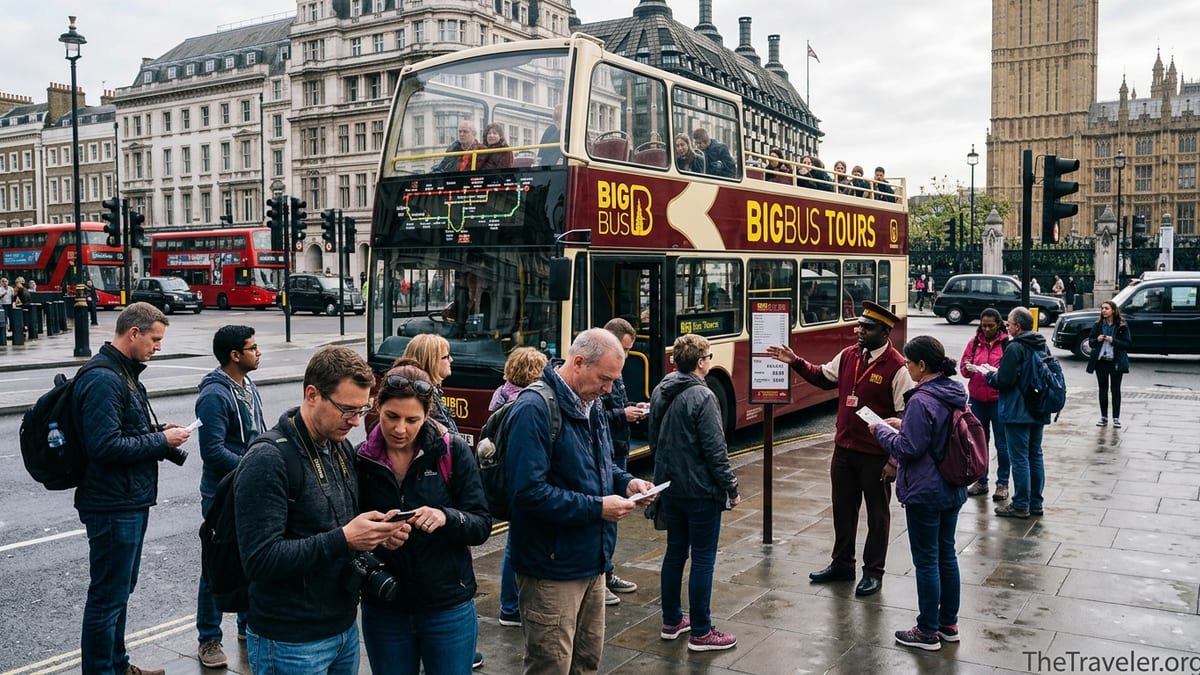
The Real Cost of Convenience
The most common mistake travelers make with Big Bus Tours tickets is assuming that the first price they see is the “standard” price and that all sellers are basically the same. In practice, the exact same 24-hour Big Bus London ticket that sells at or near full price on the official site and at the street kiosk can be significantly cheaper through time-limited deals and third-party resellers. Recent offers in London, for example, have listed a 24-hour Big Bus hop-on hop-off ticket with Thames cruise at around 48 to 50 US dollars per adult on mainstream resellers, while daily deal platforms have promoted the same core product for as low as about 19 pounds on selected dates. That spread is not unusual in big cities with heavy competition.
Travelers who arrive in London, walk up to the first Big Bus kiosk near Green Park or the London Eye, and tap a card for a pair of full-fare 24-hour tickets are often paying a convenience premium of 30 to 50 percent compared with people who did five minutes of research a week earlier. The same pattern appears in New York, where Big Bus classic tickets are sold on the company’s own site, on ticket marketplaces and through hotel concierges, often at slightly different headline prices and with varying add-ons like night tours or Statue of Liberty ferry options. Convenience has value, but if you are buying for a family of four, that premium can quickly equal the price of a good restaurant meal.
This is not about hunting for obscure coupons. It is about recognizing that Big Bus operates in a marketplace where its own official channels, global resellers like Viator or GetYourGuide, and regional distributors such as UK-based ticket shops all compete on price and inclusions. Treating your ticket like any other substantial purchase, rather than an impulse buy on the sidewalk, almost always leads to better value.
Another overlooked cost of convenience is timing. Many visitors buy a “24-hour” ticket at lunchtime on their arrival day because a salesperson is standing outside a major attraction. If you do not have the energy to use the bus that afternoon and you plan to sightsee only until mid-morning the next day, you have paid for a full day on paper while only getting a few effective hours of use in reality.
Misunderstanding Ticket Types and Durations
A second big mistake is assuming that all Big Bus tickets are created equal, or that “24 hours” and “1 day” are interchangeable terms. In London, Big Bus has marketed several ticket tiers with names such as Discover, Essential and Explore. The Discover ticket typically gives 24 hours of hop-on hop-off access and a one-way Thames cruise. Essential and Explore tickets extend access to 48 hours and add extras like walking tours or an evening panoramic tour. In New York, there are comparable tiers for classic versus premium products, sometimes bundled with extra days or attractions. The catch is that sales staff and aggregators do not always explain clearly how these differences translate into actual time on the ground.
One recurring point of confusion is when the validity clock starts. Some Big Bus tickets are activated from the time they are first scanned on board, which makes sense if you arrive in the afternoon and want to use the full next morning. Others are calendar day based in practice, operating only within the day’s service hours, even if the marketing language highlights “24 hours” or “2 days.” This can matter a lot in cities where the first buses start around 8:30 in the morning and the last full loops depart in mid-afternoon, especially in winter when services are reduced.
Consider a visitor who buys a “48-hour” Big Bus ticket in Paris at 4 p.m. on a Friday, assuming it will cover sightseeing through Sunday afternoon. If the operator’s terms specify that the ticket is valid for two calendar days from first use, they may find that by Sunday lunchtime the ticket has already expired, or that service frequencies are too thin to justify using it. That same traveler might have been better off with a cheaper 24-hour product used strategically on a single full day, combined with a metro ticket for the rest of their stay.
Another nuance is that tickets sometimes bundle separate experiences with their own schedules. A London Big Bus Explore ticket, for instance, has included walking tours like a Royal London route or a Harry Potter themed walk at set times, along with a river cruise operating on a different schedule. Visitors who assume “I can just hop on whenever” may miss these inclusions completely because they did not check the timetable, effectively paying for tours they never had a chance to join.
Buying From the Wrong Channel
Where you buy your Big Bus ticket can be as important as which ticket you buy. The company sells directly through its official websites for each city, on-site ticket booths and staff at bus stops, as well as through local tourist offices and hotel concierges. On top of that, there are global online travel agencies and marketplaces that resell the same product while adding their own cancellation policies and price structures. Each channel has different strengths and trade-offs, and travelers often choose one without realizing what they are giving up.
Booking directly with Big Bus, whether online before you travel or in person at a kiosk, generally gives you the clearest access to the operator’s own terms and the most up-to-date route and timetable information. For example, if Big Bus London shortens its Green route because of roadworks or a royal event, that change will usually appear first on the company site and staff will mention it at the point of sale. A third-party voucher bought months earlier may still show an older route map, and you might not realize that your planned stop near Kensington Gardens or Tower Bridge is no longer served on that day.
By contrast, third-party platforms sometimes offer more flexible cancellation or lower prices due to promotions. It is not unusual to find a Big Bus ticket in Dubai or Abu Dhabi on a major reseller with the promise of free cancellation up to 24 hours before the tour date, which can be reassuring in the face of uncertain travel plans or summer heat. However, the refund usually has to be processed through the marketplace, not directly through Big Bus, and the operator’s staff on the ground may not be able to help if you want to change dates or have voucher issues. Refund requests, according to Big Bus’s own terms, normally have to go back through the original booking channel.
There is also a growing ecosystem of regional ticket shops and deal sites that package Big Bus access with attractions like the London Eye or Madame Tussauds. These combinations can be good value if you were already planning both activities, but they complicate what happens when plans change. If rain rolls in and you decide to skip the bus but still visit the Eye, the bundle’s terms may not allow you to refund just the unused portion. Buying each product separately, or choosing a flexible pass that clearly spells out partial refund rules, can be safer even if the headline bundle price looks attractive.
Overlooking Terms, Refunds and Weather Disruptions
A third major mistake is not reading or at least skimming the ticket terms and conditions, especially around cancellation, service changes and weather. Big Bus’s international terms explain that routes, stops and timetables may be modified because of traffic, weather, public events or safety concerns, and that the company can suspend or alter services when necessary. Yet many travelers only discover this after buying a nonrefundable ticket on a weekend when a marathon or parade forces the bus off key streets for hours.
In practical terms, this means your carefully timed loop past Buckingham Palace, Westminster Abbey and the Tower of London can turn into a much slower detour on side streets, or even a situation where the driver directs everyone to disembark because the bus cannot legally proceed. The fine print usually states that such disruptions, if outside the operator’s control, do not guarantee a refund. For visitors on a short city break, losing a half-day of sightseeing time can feel more painful than losing the ticket price.
Weather is another critical factor that travelers underestimate. Big Bus and similar operators typically run rain or shine, and tickets are rarely refundable simply because the day turns wet or windy. In London or Dublin, an open-top bus ride can be charming on a bright spring day but miserable during a cold downpour, even with a plastic poncho. If your itinerary makes you use the bus on a specific day regardless of conditions, you are taking a small gamble with the weather. In cities with frequent showers, some visitors choose to buy tickets only after checking the forecast, rather than locking in a non-flexible date far in advance.
A final point is understanding how refunds are processed. Big Bus’s general terms make it clear that refunds are handled by the channel where you bought the ticket, and that once a ticket is activated, refunds are usually not available unless local laws require them. Travelers who buy through a major marketplace and then try to negotiate directly with Big Bus on the curb in New York or Hong Kong often leave frustrated, not because staff are unwilling to help, but because the back-end system simply does not allow them to undo someone else’s transaction.
Misjudging Value Against Local Transit and Alternatives
Another error is treating a Big Bus pass as the default way to get around a city, rather than one sightseeing option among several. In places with strong public transport, hop-on hop-off products can be significantly more expensive per day than using regular buses and metros. In London, a traveler recently compared a 24-hour hop-on hop-off ticket at about 45 pounds with a Transport for London daily cap for unlimited regular bus rides at roughly a fraction of that cost. The iconic views from the top deck of a public double-decker may not have commentary, but the route along Oxford Street or past St Paul’s Cathedral is much the same.
Similarly, in New York, a Big Bus loop around Midtown and Downtown provides a convenient overview and audio guide, but a metro pass plus one or two targeted walking tours can cost much less, especially for longer stays. The key is to define what you want from the experience. If you are short on time, traveling with young children or older relatives, or prefer to avoid constant navigation, then the premium for a structured hop-on hop-off service might be worth it. If you are comfortable with subway maps and smartphone navigation, you may get more out of the city by mixing public transit, occasional taxis and neighborhood walking tours.
There are also competing operators to consider. In London, for instance, Big Bus shares the market with companies such as Tootbus and others that offer similar open-top loops and commentary. Prices, route coverage and inclusions like night tours or river cruises vary. Some travelers report better live commentary or more frequent buses with one brand than another. By automatically choosing Big Bus because the name is familiar or because you saw their marketing on a flight, you might miss an operator whose timetable better suits your hotel location or travel dates.
Finally, you should weigh whether you really need multi-day coverage. A 48- or 72-hour ticket might sound attractive, especially when words like “best value” appear in brochures. Yet many visitors end up using the bus heavily only on the first day, then switching to faster options once they get their bearings. In that case, a single well-used 24-hour ticket or a short city highlights tour might represent better value than a longer pass that ends up half-used.
Common Real-World Booking Scenarios
To see how these mistakes play out, consider a family of four planning a long weekend in London. They land on a Friday, settle into a hotel near Victoria and, on their way to Buckingham Palace, are approached by a Big Bus salesperson offering a 48-hour ticket with river cruise and walking tours. Without checking online prices, they buy on the spot. Later they discover that, had they pre-booked the same product a week earlier or used a regional ticket outlet, they might have saved the rough equivalent of one child’s ticket. They also find that their Sunday plans take them out of central London, which means they barely use the second day of hop-on hop-off access they paid for.
Another scenario involves a solo traveler in New York booking through a global marketplace. They choose a Big Bus pass that includes an add-on night tour and free cancellation up to 24 hours before the start date. The price matches the operator’s own website, but when a work issue forces a last-minute schedule change, they assume Big Bus will shift the date at the Times Square stop. In reality, staff direct them back to the marketplace’s customer service, which operates through online forms and scheduled calls. The traveler spends more time sorting out the booking than they would have spent riding the bus, all because they did not realize that only the original channel can modify or refund the ticket.
A third example is a couple in Dubai who buy a premium Big Bus ticket because it advertises multiple routes, a dhow cruise and entry to a selected attraction. Overwhelmed by jet lag and heat, they use only the main city loop and skip both the boat and the included attraction. On paper, the bundle is good value; in practice they would have been better off with a cheaper basic ticket and paying separately for any extra activity they actually felt up to doing. The lesson is that inclusions are only valuable if you realistically have the time and energy to enjoy them.
Finally, think of travelers in Paris who buy a hop-on hop-off ticket mainly to avoid navigating local transport, only to discover that traffic around the Eiffel Tower and the Champs Elysées moves at a crawl on busy afternoons. They spend more time sitting in congestion than exploring neighborhoods. A short orientation loop on the bus plus a day pass on the metro would have allowed them to see more for less money.
The Takeaway
The single biggest mistake people make with Big Bus Tours tickets is buying quickly and vaguely, instead of slowly and specifically. They pay the first price they see, accept a ticket type they do not fully understand, and skip the fine print that governs refunds, route changes and weather. Then they compare their limited real-world usage to the premium they paid and conclude that hop-on hop-off buses are poor value in general.
A smarter approach is to treat a Big Bus ticket like any other significant travel purchase. Before you buy, clarify what you want from the experience, check a couple of sales channels for price and flexibility, and read at least the key lines of the terms: when the ticket activates, how long it is really valid, what is included, and what happens if the route changes or rain arrives. Compare the cost with local transport and competing operators, and be honest about how many hours you will actually spend on board.
When you match the right ticket to the right day, bought through the right channel, Big Bus can be an efficient and enjoyable way to get a city overview, especially for first-time visitors, families and anyone who prefers to sit back and listen to commentary. The goal is not to avoid hop-on hop-off buses altogether, but to avoid buying the wrong product at the wrong time, for the wrong reasons.
FAQ
Q1. Is it cheaper to buy Big Bus Tours tickets online or in person?
Buying online in advance is often slightly cheaper or comes with better cancellation terms, but regional deal sites and occasional on-the-day promotions can undercut both. Check two or three channels before committing.
Q2. Does a 24-hour Big Bus ticket always mean a full 24 hours of use?
Not always. Some tickets count 24 hours from first activation, while others effectively work on calendar days within operating hours. Always confirm how validity is calculated for the specific city and ticket type.
Q3. What happens if bad weather ruins my hop-on hop-off day?
Most Big Bus services run in rain as well as sun, and tickets are usually not refundable for weather alone. If your plans are flexible, consider waiting to buy until you see a reliable short-term forecast.
Q4. Are bundled tickets with attractions and boat cruises really good value?
They can be if you are certain you will use all elements. If your schedule is tight or you are unsure about the extras, a simpler ticket plus paying separately for any must-do attractions can be better value.
Q5. Is Big Bus better than using public transport in cities like London or New York?
It depends on your priorities. Public transport is almost always cheaper and sometimes faster, while Big Bus offers curated routes and commentary. Many travelers combine a single day on the bus with local transit for the rest of the trip.
Q6. Can I change the date of my Big Bus ticket after booking?
Some tickets are sold as fully flexible with free date changes, especially online, while others are fixed-date. Changes generally have to be processed by the original booking channel, not the driver or street staff.
Q7. How can I avoid missing included extras like walking tours or river cruises?
As soon as you purchase, check the timetable for any included walks or cruises and plan your day around them. Set reminders for start times and allow enough transfer time between bus stops and piers or meeting points.
Q8. Are third-party platforms like Viator or GetYourGuide safe ways to buy Big Bus tickets?
They are widely used and generally reliable, but you are subject to their specific refund and customer service policies. Read their conditions carefully and keep all confirmation emails and vouchers accessible offline.
Q9. Do kids and seniors get meaningful discounts on Big Bus Tours?
Most cities offer reduced fares for children, and some have family tickets that bundle two adults with one or more kids. Senior discounts vary by destination and are not universal, so always check the local pricing page before you buy.
Q10. Is a multi-day Big Bus pass worth it for a short city break?
If you are staying only two or three days, a multi-day pass is worthwhile only if you truly plan to ride the bus extensively on each day. Many travelers find a single intensive day on board plus walking and public transport later is enough.