


The Cathedral of Santa Maria del Fiore, better known as the Florence Duomo, is one of Europe’s great architectural icons and the heart of the city’s historic center. It is also one of the most misunderstood sights in Italy. Long queues, confusing ticket types, strict dress rules, and crowded viewpoints can turn a dream visit into a frustrating box-ticking exercise. With a little planning, and by sidestepping a handful of very common mistakes, you can experience the cathedral complex the way it deserves: as a place of worship, art, and breathtaking city views rather than a stressful stop on a hurried itinerary.
Get the latest updates straight to your inbox!
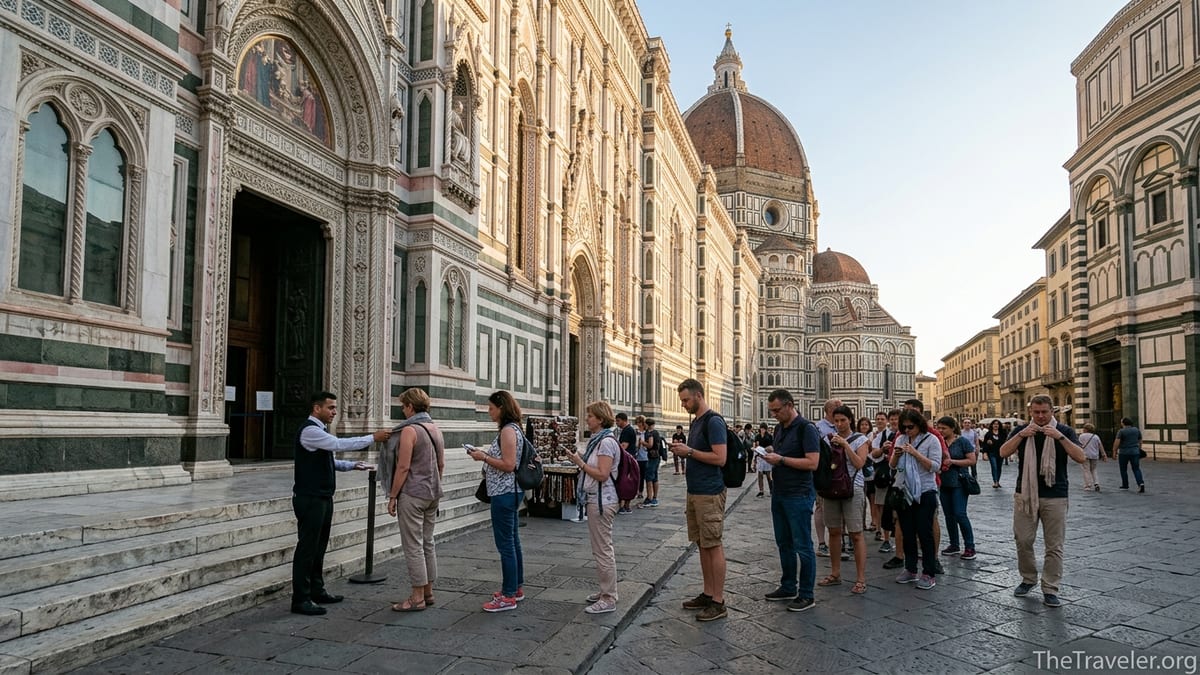
Misunderstanding the Duomo Complex and Its Tickets
One of the biggest mistakes visitors make at Santa Maria del Fiore is assuming that “the Duomo” is a single attraction with one simple ticket. In reality, the cathedral belongs to a wider complex that includes Brunelleschi’s Dome, Giotto’s Campanile (the bell tower), the Baptistery of San Giovanni, the archaeological area of Santa Reparata under the nave, and the Museo dell’Opera del Duomo. Access to these spaces is managed through different pass types sold by the Opera di Santa Maria del Fiore, the institution that oversees the site. Many first-time visitors arrive in Piazza del Duomo expecting to walk into the church and climb the dome on a whim, only to discover that dome entry is by timed reservation and may be sold out days in advance.
As of mid 2026, the official passes typically include options such as the Brunelleschi Pass, which covers all the monuments including Brunelleschi’s Dome, and other passes like Giotto or Ghiberti that give access to most of the complex but not the dome itself, all valid over multiple days rather than for a single timed block. Travelers often buy a third-party “skip-the-line” product without realizing it may be based on one of these same passes and still requires them to choose a specific dome climb time or respect separate entry rules for each monument. When you show up at the wrong time or with the wrong type of ticket, staff will simply turn you away from the climb.
A practical strategy is to start on the official Opera del Duomo ticket site well before you travel, decide whether climbing the dome is essential for you, and then purchase the corresponding pass with a dome timeslot that fits your schedule. If Brunelleschi’s Dome is fully booked for your dates, consider the Giotto Pass instead and plan to climb the bell tower, which offers comparable views and is often easier to book at shorter notice. Several travelers in recent seasons have salvaged sold-out dome days by doing exactly that and still enjoyed sweeping panoramas with the cathedral itself in the skyline.
Another frequent oversight is thinking the Duomo complex can be “done” in an hour. Even a brisk visit that includes the cathedral interior, one major climb, and the museum will take several hours once you account for security checks and walking time between sites. Treat the pass as a mini-itinerary for one or two half-days rather than a single rushed stop. This shift in mindset helps prevent the frantic, stressful experience that so many visitors report afterward.
Ignoring Dress Code and Security Rules
Santa Maria del Fiore is an active cathedral, not just a landmark. The dress code is close to what you would find at other major Italian churches: shoulders and knees should be covered, and overly revealing garments are not permitted. Every day, visitors who have waited in the security line are quietly turned away at the cathedral doors because they are wearing sleeveless tops, very short shorts, or low-cut dresses. In summer, when temperatures soar in Florence, this can be a costly mistake that wastes both time and patience.
The enforcement is not theatrical or dramatic. Staff at the cathedral entrance typically do a quick visual check and may ask you to put on a shawl or scarf if you have one; if not, they will refuse entry. While some online anecdotes report visitors getting through with less conservative clothing, relying on luck is risky. The simple solution is to plan your Duomo day outfit around the rules: lightweight linen trousers or a midi skirt, and a T-shirt or short-sleeved blouse. Many travelers carry a thin scarf in their day bag specifically for church visits so they can drape it over bare shoulders as needed.
Security procedures can also trip up unprepared visitors. Large backpacks, hard-sided suitcases, tripods, and bulky camera equipment are not allowed into the dome or bell tower climbs, and some items are prohibited in the cathedral and museum. There is a bag deposit service, but on busy days queues here can cost you your reserved climbing slot. People who arrive with big daypacks or shopping bags sometimes end up sprinting between the deposit and the monument entrance, watching their carefully booked entry time slip away. Travel light on your Duomo day, with a small crossbody bag or compact backpack, and leave heavy gear in your accommodation.
Small details also matter. Eating and drinking are not allowed inside the sacred spaces, and visitors are expected to keep their voices low. Those who treat the cathedral nave like a public hall, chatting loudly or taking phone calls, can be asked to step out by attendants. Respect these rules and you will find the atmosphere inside, especially under the frescoed dome and in the side chapels, far more powerful and contemplative than the noisy queues outside.
Showing Up at the Wrong Time or Without a Plan
The timing of your visit can make the difference between a memorable experience and two hours of standing in the sun. A common mistake is to arrive at Piazza del Duomo around late morning or early afternoon in high season with no plan, when tour groups and cruise excursions are at their peak. The square becomes a dense crowd, the sun is high, and the queues for the dome, bell tower, and cathedral security snake around the buildings. Under those conditions, taking even one good photograph of the façade or the Baptistery doors can feel like a battle.
Early morning or late afternoon are usually more pleasant, especially on hot days. Many experienced travelers aim for the first or second climb slot of the day for either the dome or Giotto’s Campanile, when temperatures are lower and the steps are less crowded. Climbing in the mid-afternoon in July or August, by contrast, means stuffy stairwells and frequent bottlenecks as people pause to catch their breath or squeeze past each other on tight landings. Visitors who underestimate this often report feeling faint or claustrophobic halfway up.
Another planning error is trying to combine the dome climb, bell tower, and a thorough museum visit back-to-back without breaks. Each climb involves hundreds of stone steps and narrow passages, and the museum alone can easily absorb an hour or more if you enjoy sculpture and Renaissance art. A more thoughtful approach is to treat the dome or bell tower as your anchor activity, then sandwich it between quieter stops: for example, climb in the morning, have a relaxed lunch on a side street away from the square, then visit the Baptistery and museum later in the day when your energy has returned.
Many visitors also ignore the weather forecast. On days with thunderstorms, the top terraces of the dome or bell tower may close temporarily for safety, causing delays or unexpected changes to your entry. While refunds for weather issues are handled case by case, relying on last-minute flexibility is not wise. If your stay in Florence spans several days, pick a clearer-weather morning for your climb and keep rainier days for indoor activities like the cathedral interior and the museum.
Underestimating the Physical Challenge of the Climbs
Photos of Brunelleschi’s Dome and Giotto’s Campanile often focus on the spectacular views, but far fewer show the steep staircases, tight turns, and low ceilings. Both climbs are physical challenges, and one of the most common mistakes is assuming that anyone who can handle a normal city walk can automatically manage them. The dome climb involves several hundred steps on narrow spiral staircases, sections where people move two-way in close quarters, and corridors that pass right between the inner and outer shells of the dome. There is no lift, and once you are inside the route, there are few opportunities to turn back.
Travelers with knee problems, vertigo, claustrophobia, or cardiovascular conditions sometimes book the climb because they feel it is “unmissable,” only to freeze in panic halfway up or down. Guides report having to coax nervous visitors along landing by landing, while others simply sit out sections of their family’s visit at a café below. If you are unsure how you will tolerate the heights or enclosed staircases, consider prioritizing the bell tower instead, which is still strenuous but more straightforward in layout, with regular landings and window openings for light and air.
Footwear is another underestimated factor. It is not unusual to see visitors attempting the climb in sandals with thin soles or fashion wedges, which is both uncomfortable and unsafe on worn stone steps. Flat, closed shoes with good grip will make the experience less tiring and reduce the risk of slips, especially when the steps are damp from rain. Keep in mind that interior staircases can be cool and slightly damp even when the piazza outside is hot and dry.
Finally, respect your own pace. There is social pressure at busy times, with lines of people forming behind you, but pushing yourself beyond your comfort level on a confined staircase is not worth it. Allow extra time in your schedule so you can pause on landings without feeling that you are jeopardizing another museum booking or lunch reservation, and hydrate before and after your climb rather than during, as you cannot drink inside the stairwells.
Rushing the Artistic and Spiritual Heart of the Complex
Another major mistake is treating the cathedral interior and the Museo dell’Opera del Duomo as secondary afterthoughts compared with the photo-friendly rooftop views. Many visitors queue for the dome or bell tower, snap a few pictures from the top, then wander briefly through the nave of Santa Maria del Fiore and skip the museum altogether. In doing so, they miss much of what makes the complex unique in European art and religious history.
Inside the cathedral, the vast fresco of the Last Judgment beneath the dome, the marble floor patterns, and the side chapels all reward slow looking. Pausing under the central crossing to absorb the scale of Brunelleschi’s engineering often leaves more lasting impressions than any single rooftop snapshot. Likewise, the archaeological area of Santa Reparata beneath the nave offers a tangible sense of the earlier church on which the present cathedral stands, something that rarely appears in quick-hit social media guides.
The museum, a short walk behind the apse, holds many of the original sculptures and artworks that once adorned the exterior of the cathedral and Baptistery. Here you can stand eye to eye with the original bronze panels from the Baptistery’s “Gates of Paradise,” early works by Michelangelo, and devotional objects that survived centuries of liturgical change. Because the museum is indoors and climate controlled, it tends to be calmer and less crowded than the square, making it an ideal place to decompress after the sensory overload of the dome climb.
Plan at least an hour for the museum if you have even a passing interest in Renaissance art. It is also a good option for midday in summer, when the heat and crowds outside are at their peak. Travelers who structure their day so that the museum visit comes at the end often describe it as a highlight, allowing them to understand the cathedral’s sculpture program and decorative scheme more deeply before stepping back out into the piazza.
Falling for Crowds, Scams, and Tourist Traps Around the Piazza
Piazza del Duomo is one of the densest concentrations of visitors in Florence, which makes it fertile ground for petty crime and aggressive street sales. A recurring complaint from travelers is the experience of being harassed by unofficial “guides,” bracelet sellers, or people thrusting roses, trinkets, or clipboards into their hands on the approaches to the cathedral, then demanding payment. Others report nearly losing phones or wallets to pickpockets in the tight security queues or while lining up for entry to the Baptistery or dome.
The basic precautions are straightforward. Keep valuables in front pockets or money belts, and close bags with zippers, ideally clipped or looped through straps so they are harder to open unnoticed. When someone approaches with a bracelet, a “free gift,” or an urgent question like “do you speak English,” a firm but polite “no, thank you” while walking away is often the safest response. Most legitimate services related to the Duomo, such as audio guides or official tours, are clearly branded and sold through structured counters or the official website rather than by individuals brokering deals on the pavement.
The immediate streets around Piazza del Duomo also contain some of the most tourist-oriented cafés and restaurants in Florence, many with prices and “coperto” cover charges far above what you will pay a few blocks away. Visitors who sit down impulsively at a front-row table directly facing the cathedral often end up paying much more for a simple espresso, gelato, or glass of wine than they expected. To avoid this, step a couple of streets away into the warren of lanes between the Duomo and Santa Croce or toward San Lorenzo, where local bakeries and smaller bars serve more reasonably priced snacks and drinks.
Being aware of these dynamics does not mean you need to feel anxious the entire time you are near the cathedral. Rather, treat the square like any busy urban hub. Enjoy the architecture and the atmosphere, but stay alert, keep your belongings secure, and reserve your seated meals for quieter side streets or other neighborhoods. That balance allows you to soak up the spectacle without the sour aftertaste of a scam or an unexpectedly inflated bill.
Overlooking Accessibility, Families, and Special Needs
Visitors with mobility challenges, young children, or other special needs often assume that the Florence Duomo complex is off limits to them, or, conversely, underestimate the practical barriers. Both assumptions can lead to disappointment. The cathedral interior itself is relatively accessible from the piazza, and staff can often advise on the best entry for wheelchair users or those with limited mobility. However, the dome and bell tower climbs are not suitable for wheelchairs and may be difficult even for those who manage short staircases comfortably at home.
Families with small children face a different set of trade-offs. There is no lift to the top of either major structure, and strollers are not allowed on the climbs. Parents sometimes try to carry toddlers up the stairs while also managing backpacks and water bottles, which quickly becomes exhausting and can feel unsafe in narrow passages. A common, more realistic approach is for families to split activities: one adult climbs while the other explores the piazza or visits the museum with younger children, then they swap roles. Older children who are used to hiking usually enjoy the climb, but preparing them for the number of steps and the confined spaces is wise.
The complex publishes guidelines for visitors with disabilities and special needs, and staff on site are generally willing to help within the limits of the historic architecture. Because conditions and policies can evolve, particularly in response to safety reviews, it is worth checking the latest information shortly before your visit and, if necessary, emailing the accessibility contact listed by the Opera del Duomo to ask specific questions. This is particularly important if you travel with mobility aids, have serious health conditions, or rely on service animals, as rules on animal access can differ between the open piazza, the cathedral interior, and the museum.
Above all, avoid the mistake of assuming that the only “real” experience of Santa Maria del Fiore involves climbing to the top. For some travelers, the most meaningful moments happen sitting quietly in a pew during a weekday Mass, contemplating sculptures in the museum, or watching the changing light on the marble façade from a nearby side street café. Tailor your visit to your abilities and priorities rather than to a rigid checklist, and you are far more likely to come away satisfied.
The Takeaway
The Cathedral of Santa Maria del Fiore rewards the traveler who arrives informed and unhurried. The most common mistakes have less to do with obscure rules and more to do with expectations: assuming a simple walk-in visit instead of a layered complex with timed entries, treating a functioning cathedral like a theme park, or underestimating both the physical demands of the climbs and the artistic depth of the museum. Add in the predictable frictions of crowds, street sellers, and high-season heat, and it is easy to see why some visitors leave feeling they have “done the Duomo” without truly experiencing it.
By contrast, those who take time to understand the ticket options, respect the dress code and security guidelines, choose their visit time carefully, and pace themselves through the various monuments often describe the Duomo complex as a highlight not only of Florence but of their travels in Italy. A little planning transforms the visit from a rushed photo opportunity into a coherent journey through faith, engineering, and art, from the Romanesque Baptistery to Brunelleschi’s soaring dome and the sculpture galleries of the museum.
If you approach Santa Maria del Fiore with patience, modesty of dress, and realistic expectations about what you can and cannot do in a single day, you will find that Florence’s most famous landmark still has the power to astonish. The cathedral has dominated the city’s skyline for centuries; it deserves more than a hurried tick on an itinerary. Give it the time and respect it asks for, and your memories of the Duomo will extend far beyond a single photograph from the top.
FAQ
Q1. Do I need a ticket to enter the cathedral of Santa Maria del Fiore?
Entry to the main cathedral nave is usually free, but the dome, bell tower, Baptistery, archaeological area, and museum all require a paid pass. Check current rules before your visit, as policies can change.
Q2. How far in advance should I book Brunelleschi’s Dome climb?
In busy months from spring through early autumn, timed slots for the dome can sell out several days or even weeks ahead, especially for morning times. Book as soon as your travel dates are fixed if this climb is a priority.
Q3. What happens if I miss my dome or bell tower timeslot?
If you arrive late, staff are often unable to accommodate you in a later slot because of capacity limits. In most cases, missing your time means you forfeit that part of your ticket, so allow plenty of margin for queues and bag checks.
Q4. What exactly is the dress code for visiting the Duomo?
Shoulders and knees should be covered, and very low-cut, transparent, or beach-style clothing is discouraged. A lightweight scarf or shawl to cover bare shoulders and longer shorts or skirts are usually sufficient for compliance.
Q5. Are there elevators for the dome or Giotto’s Campanile?
No, both the dome and the bell tower are accessible only by staircases with several hundred steps. There are landings along the way, but no lift or mechanical assistance.
Q6. Is it safer or less crowded to climb the bell tower instead of the dome?
Giotto’s Campanile tends to feel slightly less claustrophobic, with more frequent windows and platforms, and its reservation system can be more flexible. It is still busy at peak times, but many visitors find the climb more comfortable than the dome.
Q7. Can I bring a backpack or tripod inside the Duomo complex?
Small daypacks are usually permitted after security checks, but large backpacks, suitcases, and tripods are often refused at climbs and may not be allowed in the cathedral. Travel with a compact bag and leave bulky equipment in your accommodation.
Q8. Is the area around the Duomo safe from pickpockets?
The square and its queues are heavily touristed, which attracts pickpockets and aggressive street vendors. Keep valuables in secure pockets or money belts, close your bag, and avoid engaging with unsolicited offers or “free gifts.”
Q9. How much time should I plan for a full Duomo complex visit?
For the cathedral interior, one major climb, the Baptistery, and the museum, plan at least half a day. If you prefer a gentler pace with time to rest and reflect, spreading your pass over two days is more comfortable.
Q10. Is the Duomo visit suitable for young children or older travelers?
The cathedral interior and museum are suitable for most visitors, but the climbs can be strenuous and cramped. Families and older travelers often choose to skip the rooftop sections, divide activities between adults, or focus on the less demanding parts of the complex.