


More news on this day
British Airways passengers across Europe faced a fresh wave of disruption as 29 flights were cancelled and 154 delayed, affecting services through London, Madrid, Frankfurt, Dublin, Barcelona and a string of other key routes.
Get the latest news straight to your inbox!
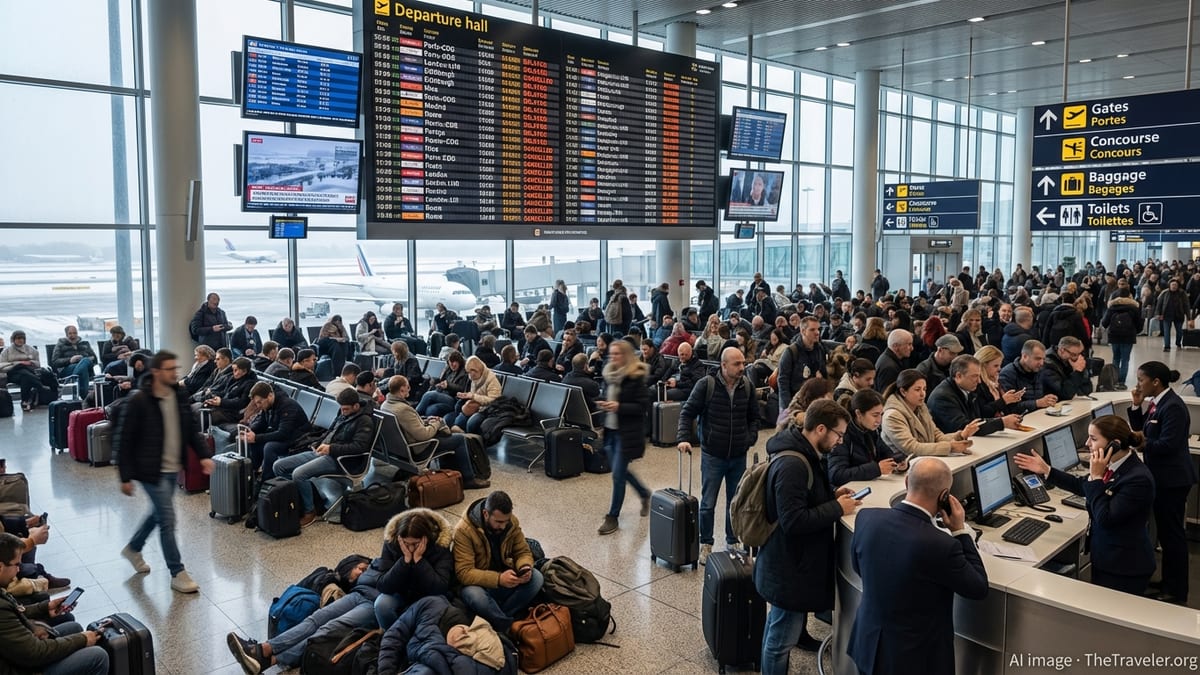
Concentrated Disruption Across London and Major European Hubs
Publicly available flight tracking data and passenger reports indicate that the latest disruption has been heavily concentrated at London Heathrow, British Airways’ main hub, before rippling across the carrier’s short and medium haul network. London services to and from Madrid, Frankfurt, Dublin and Barcelona were among those most affected, with cancellations and late departures creating knock-on delays across connecting routes.
The cancellations, while limited in number compared with the overall daily schedule, have proved particularly disruptive due to Heathrow’s hub structure. When an early rotation is removed or significantly delayed, aircraft and crews struggle to reach subsequent destinations on time, resulting in cascading delays that can run well into the evening peak.
Additional congestion at other major European airports, including Frankfurt and Madrid, has further complicated efforts to recover the schedule. These hubs are managing busy summer traffic alongside air traffic control restrictions and weather-related constraints, creating a narrow margin for recovery when even a small incident occurs.
Reports from flight status platforms show that the impact has been felt on both business-heavy routes and leisure destinations, leaving travellers bound for city breaks, beach holidays and onward long haul connections facing extended waits in terminals and, in some cases, missed connections.
Operational Pressures and a Fragile Summer Schedule
A review of recent performance patterns suggests that British Airways continues to operate a high-utilisation schedule, where individual aircraft are rostered for multiple legs across the day with relatively short ground times. Industry analysis available in early summer 2026 points to this approach as highly efficient when operations run smoothly but vulnerable when disruptions occur, as there is limited spare capacity to absorb delays.
Documents examining British Airways’ recent disruption trends highlight a combination of factors behind cancellations and delays, including aircraft rotation issues, crew availability and air traffic control constraints across the UK and continental Europe. In some instances, flights have reportedly been withdrawn pre-emptively in order to protect long haul services and stabilise the wider network rather than allow delays to accumulate.
Air travel observers note that Heathrow’s status as one of Europe’s busiest and most slot-constrained hubs intensifies the challenge. When ground handling, baggage systems or boarding processes are slowed, even marginal delays can cause knock-on effects that quickly spread across connecting flights, especially in peak travel periods.
Weather patterns and airspace restrictions continue to play a supporting role in day-to-day reliability. While not the primary driver in every cancellation, periods of low visibility, thunderstorms and temporary flow restrictions imposed by air traffic management can force airlines to thin out schedules or accept extended holding times, adding further strain to an already tight operation.
Impact on Travellers Across Key City Pairs
The latest figures on 29 cancellations and 154 delayed services represent a relatively small share of British Airways’ total daily flights, yet the practical impact for affected travellers has been significant. Passengers connecting through London to or from cities such as Madrid, Frankfurt, Dublin and Barcelona have faced missed onward flights, rebookings via alternative hubs and last-minute changes to itineraries.
Short haul city pairs are especially sensitive to disruption due to their role in feeding long haul departures. A late departure from London to Dublin, for example, can strand travellers planning to continue on to North America, while a delayed inbound service from Barcelona may cause passengers to miss tightly timed evening departures to the Middle East or Asia.
Accounts shared on travel forums describe travellers waiting in terminals as departure times were repeatedly pushed back, with gate changes and revised boarding estimates adding to confusion. In some cases, customers reported returning home or arranging overnight stays when rebooked flights departed the following day.
Families and leisure travellers appear particularly affected on routes to popular holiday destinations served from London and other European capitals. With school breaks and summer holidays under way in several countries, demand for seats on alternative flights is strong, leaving limited flexibility to re-accommodate disrupted passengers on the same day.
Passenger Rights and What Disrupted Flyers Can Expect
Consumer advocacy groups and specialist compensation platforms note that British Airways flights departing from or arriving into the United Kingdom and European Union are generally covered by UK261 and EU261 passenger rights rules. Under these regulations, travellers may be entitled to meals, refreshments, hotel accommodation and, in certain circumstances, monetary compensation when flights are significantly delayed or cancelled for reasons within an airline’s control.
Published guidance explains that eligibility depends on factors such as the length of delay, the distance of the route and the underlying cause of the disruption. Operational issues, crew rostering problems or technical faults that are not related to extraordinary circumstances can, in many cases, trigger compensation. Severe weather or air traffic control strikes are typically treated differently.
Passengers are encouraged in public information campaigns to retain boarding passes, confirmation emails and receipts for any additional expenses such as meals, transport or accommodation. These documents can support later claims through airline customer service channels or third-party claims services that specialise in enforcing UK261 and EU261 rights.
Travel planners also point to the value of comprehensive travel insurance, particularly for complex itineraries involving multiple connections or mixed carriers. Policies that cover missed connections, trip interruption and additional accommodation can provide an extra layer of protection when airline remedies are limited or when onward services with other airlines fall outside statutory compensation schemes.
Ongoing Monitoring of British Airways Network Performance
The disruption affecting the 29 cancelled flights and 154 delayed services forms part of a broader pattern of heightened operational sensitivity across European aviation in 2025 and 2026. Industry trackers observe that airlines, including British Airways, are continuing to rebuild schedules, manage constrained workforces and operate in an environment where airspace and airport capacity remain tight.
Real-time flight tracking services and airport status dashboards indicate that conditions across the British Airways network can change quickly throughout the day, particularly at core hubs like London Heathrow and London Gatwick. Travellers are increasingly advised in publicly available guidance to monitor flight status closely from 24 hours before departure and again before leaving for the airport, especially on days when multiple delays and cancellations have already been recorded.
Analysts note that the carrier’s performance over the remainder of the peak summer season will be closely watched by both regulators and consumer advocates. Any sustained pattern of cancellations or long delays could prompt further scrutiny of staffing levels, maintenance planning and contingency arrangements for handling surges in demand or sudden operational shocks.
For now, the latest figures highlight how a relatively modest number of cancellations, when combined with a larger volume of delays, can rapidly affect thousands of passengers across interconnected routes linking London with key European cities. As the summer progresses, the resilience of British Airways’ schedule across London, Madrid, Frankfurt, Dublin, Barcelona and other routes will remain a central concern for travellers planning time-sensitive trips.