


More news on this day
Air travel across the United States faced another wave of disruption as fresh data showed at least 40 flights grounded and more than 570 delayed in a single day, with the impact concentrated at major hubs in Florida, Illinois, Georgia and New York and affecting passengers booked on Air Canada, Delta Air Lines, JetBlue, American Airlines, SkyWest, United Airlines and Qatar Airways.
Get the latest news straight to your inbox!
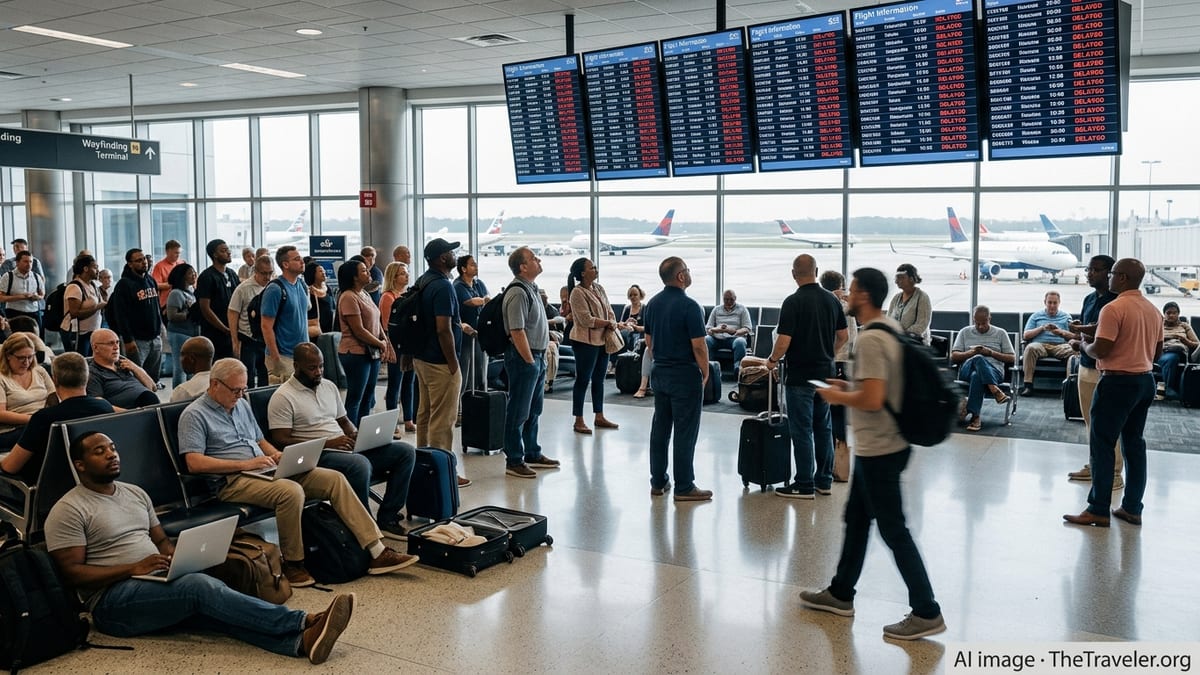
Hubs From Orlando to New York Buckle Under Operational Strain
Publicly available tracking data and industry reports indicate that the latest disruption has clustered around some of the country’s busiest gateways, including Orlando and other Florida airports, Chicago O’Hare in Illinois, Hartsfield Jackson Atlanta in Georgia and key New York area facilities. The tally of at least 40 cancellations and around 570 delays reflects only a snapshot of a wider pattern of operational strain that has dogged US air travel in recent months.
In Florida, large tourist volumes into and out of Orlando, Tampa and Fort Lauderdale have made the state particularly vulnerable when schedules start to slip. Recent coverage of systemwide interruptions shows these airports repeatedly among the worst performers on days of heavy disruption, with late arriving aircraft and congestion triggering rolling knock on effects across domestic and international networks.
Illinois has similarly emerged as a pressure point, with Chicago O’Hare’s role as a central transfer hub amplifying even modest timetable problems. Data published in mid June highlighted more than a thousand delays at O’Hare on a single disruptive day, underscoring how quickly conditions can deteriorate when crews, aircraft and gate space fall out of alignment.
Georgia and New York complete the current list of hardest hit states, with Atlanta and New York’s multi airport system acting as critical junctions for both domestic and long haul traffic. When adverse weather, air traffic management initiatives or equipment issues occur at these hubs, the resulting gridlock can ripple through dozens of downstream airports by late afternoon.
Major Carriers and Partners Caught in the Turbulence
The disruption has touched a wide range of airlines, from US legacy carriers to regional operators and international partners. Flight status data and media summaries show Air Canada, Delta, JetBlue, American, SkyWest, United and Qatar Airways all appearing among affected operators as the latest wave of cancellations and delays unfolded.
Delta and United, with large operations at Atlanta, Chicago and the New York airports, are particularly exposed when those hubs encounter ground holds, low visibility procedures or runway capacity constraints. Reports from earlier nationwide disruption days in 2026 describe situations in which hundreds of Delta and United flights were delayed or canceled, illustrating how quickly their extensive networks can seize up once key nodes encounter problems.
Regional carrier SkyWest, which flies under the banners of several major airlines, frequently appears in disruption statistics because its operations are tightly entwined with those of its code share partners. When mainline carriers adjust schedules or crews run up against duty time limits, regional flights can be among the first to be retimed or scrubbed.
International airlines have also been swept into the latest turbulence. Air Canada services linking Canadian cities with US hubs, along with Qatar Airways and other long haul operators connecting through major US gateways, are vulnerable when connecting passengers or inbound aircraft are delayed. Even when their own fleets and crews are available, congestion on the ground can force widebody departures to leave late or divert.
Weather, Congestion and Staffing Continue to Drive Delays
While the latest disruptions are spread across multiple states and carriers, the underlying triggers mirror patterns seen throughout the year. Published coverage points to a recurring combination of convective summer weather, high traffic volumes and tight staffing levels in both airline operations and air traffic control as key contributors to the current wave of problems.
Short lived but intense thunderstorms around major hubs, particularly in Florida and the Southeast, regularly prompt ground stops or reroutes that quickly eat into schedule buffers. New York’s constrained airspace and chronic congestion compound the effect, as even minor slowdowns can stack arrivals and departures into lengthy queues.
At the same time, airlines continue to operate with leaner spare capacity in aircraft and crew, a legacy of post pandemic restructuring and ongoing hiring challenges. Industry analysts note that when one or two flights are canceled early in the day, there are often fewer standby crews or aircraft available to plug gaps, allowing minor operational issues to snowball into widespread disruption by evening.
Recent summaries of national performance show that once delays pass the mid three figure mark across the system, it becomes difficult for carriers to reset until traffic levels ease. This dynamic appears to be at play in the current bout of disruption, with the 40 recorded cancellations and hundreds of late departures representing only a portion of a broader network wide challenge.
Passengers Face Long Lines, Missed Connections and Limited Options
For travelers, the numbers translate into long queues at check in desks, customer service counters and security checkpoints, along with crowded gate areas and aircraft cabins. Reports from earlier disruption events this year describe passengers sleeping on terminal floors, queueing for hours to be rebooked and struggling to obtain timely information about revised departure times.
Those connecting through hub airports in Florida, Illinois, Georgia and New York are especially vulnerable, as missed inbound flights can break carefully timed international or cross country itineraries. In some recent cases, travelers have reported being rebooked a day or more later when peak departure banks were already full and spare seats scarce.
Consumer advocacy groups point to these episodes as evidence that the system remains fragile during peak travel periods. They highlight the difficulties many travelers still face in accessing compensation or rerouting assistance, particularly when disruptions are attributed to weather or air traffic control constraints rather than airline controllable factors.
Travel planning services and passenger rights organizations continue to encourage travelers to monitor live flight status tools, build longer connection windows where possible and keep essential items such as medication and key documents in carry on bags to reduce the impact of unexpected overnight stays in transit.
What Travelers Can Do on the Next Day of Chaos
Although individual passengers cannot prevent widespread operational problems, they can take practical steps to reduce exposure when signs of disruption emerge. Aviation information platforms provide real time snapshots of arrival and departure performance at major airports, allowing travelers to spot patterns of growing delays hours before reaching the terminal.
Travel experts routinely recommend booking early morning departures, which statistics show are less likely to be affected by the cumulative knock on delays that build through the day. Direct flights are also generally more resilient than tight connections, particularly when storms are forecast around major hubs.
When cancellations or long delays do occur, passengers are advised to use multiple channels simultaneously to seek assistance, including airline apps, websites and airport kiosks in addition to staffed counters. Experience from previous disruption days suggests that those who move quickly to secure alternate routings or standby positions often fare better than those who wait for automatic rebooking.
With the latest data once again revealing dozens of grounded flights and hundreds of delays from Florida to New York, analysts suggest that travelers should expect further bouts of turbulence in the US air travel system through the busy summer and fall seasons, and plan their journeys with an extra margin of time and flexibility.