


More news on this day
British Airways is scaling back flights to parts of the Middle East and increasing capacity to India, joining a growing list of European airlines that are redrawing route maps as regional airspace closures and conflict-driven risks disrupt traditional corridors over the Gulf.
Get the latest news straight to your inbox!
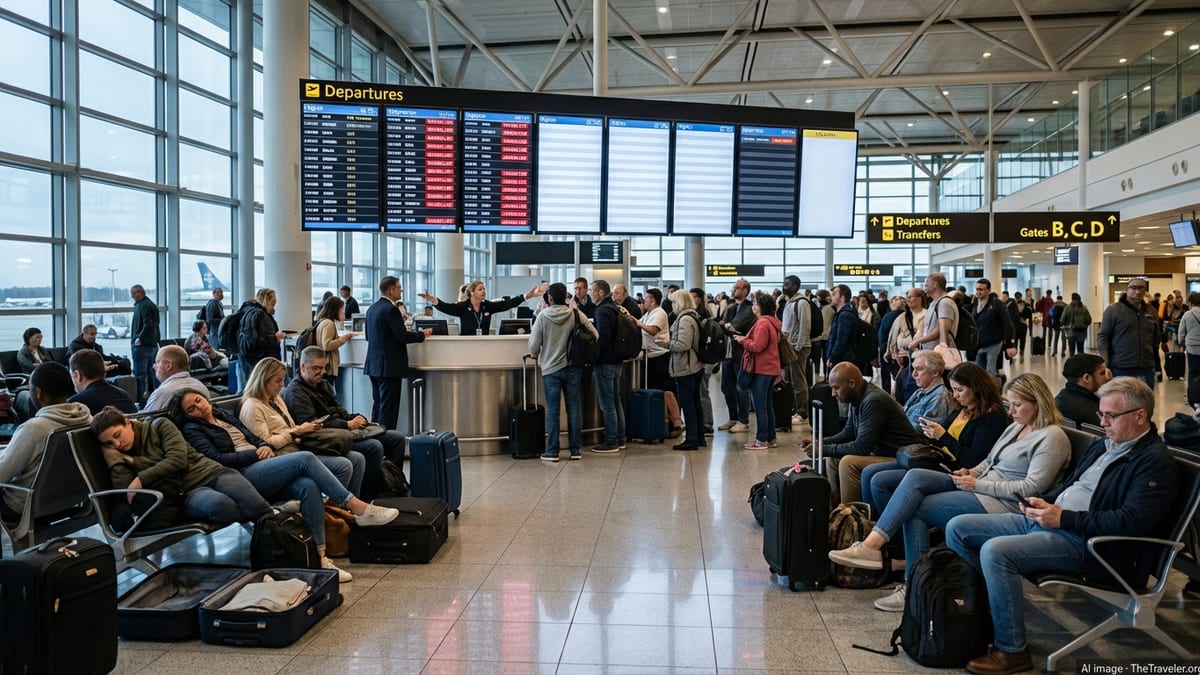
Middle East Airspace Closures Reshape Global Networks
Prolonged airspace closures across Iran, Iraq, Israel, Kuwait, Qatar, Bahrain and parts of the Gulf have emptied some of the region’s busiest skies and forced airlines to redraw long-haul routes. Published coverage and flight-tracking data indicate that large portions of this airspace remain restricted or subject to short-notice shutdowns, triggering widespread cancellations, diversions and schedule cuts.
The disruption has hit the traditional Europe to Asia trunk routes particularly hard. For years, flights linking European hubs with India, Southeast Asia and Australasia have relied on corridors over the Gulf and Iran for the most direct routing. With those paths now constrained or unavailable, many carriers are adding up to two extra hours of flying time as they swing further north via Central Asia or further south over Egypt and the Arabian Sea.
Traffic statistics from major European hubs show a steep fall in direct Middle East volumes and a corresponding shift of demand into alternative regions. At London Heathrow, recent operational data point to a sharp year-on-year decline in flights to and from the Middle East, even as Asia Pacific and South Asia flows have surged on rerouted services.
Analysts note that the current pattern follows earlier episodes in which regional tension led to temporary rerouting, but the duration and geographic breadth of the latest closures are producing more structural changes in airline network planning. Carriers are reassessing the commercial value of some Gulf routes while ramping up capacity on markets that can be served without relying on contested airspace.
British Airways Scales Back Gulf, Adds India Capacity
British Airways has emerged as one of the most prominent examples of this recalibration. According to recent industry reports, the airline will suspend its London Heathrow to Jeddah service from April 24, effectively withdrawing from a Saudi gateway that has long been part of its Middle East portfolio. Services to other Gulf destinations such as Dubai and Doha are set to resume in phases but with reduced frequencies and tighter capacity.
At the same time, the carrier is significantly reinforcing its India schedule for the northern summer 2026 season. Network updates highlighted by aviation consultancies show additional flights into major Indian cities, including a second daily service to Bengaluru and a temporary increase to three daily services on the London–Delhi route. These moves allow British Airways to capture strong point-to-point demand and India-origin transfer traffic that might previously have flowed over Gulf hubs.
Operationally, British Airways has already experienced the volatility of the current environment. In one widely reported incident in June 2025, a London-bound flight from Chennai was forced to return to India after an abrupt Middle East airspace closure, underscoring how quickly conditions can change. Since then, the carrier has joined other European airlines in planning routings that avoid the most sensitive airspace even when it is not formally closed.
Industry observers suggest that by leaning into the India market while trimming exposure in the Gulf, British Airways is attempting to stabilise its long-haul operation and reduce the risk of further last-minute disruptions. The strategy also positions the airline to compete more aggressively with Gulf carriers on Europe–India flows at a time when some regional rivals are constrained by the same security environment.
Lufthansa, SWISS, Finnair, Virgin Atlantic and Air France Reroute
British Airways is far from alone in rethinking how it connects Europe with the Middle East and South Asia. Publicly available flight data and passenger accounts indicate that Lufthansa, SWISS, Finnair, Virgin Atlantic and Air France have all implemented significant routing changes on services touching the region.
Lufthansa’s India flights, for example, have been operating on northerly tracks that bypass Iranian and Iraqi airspace, routing instead via Central Asia and northern Turkey. Travellers report longer block times between German hubs and Indian cities such as Bengaluru and Delhi, but also note that schedules have largely been maintained by adding buffer time and adjusting departure waves.
SWISS and Air France have taken similar approaches on select services to India and Southeast Asia, steering clear of contested flight information regions and, in some cases, reducing frequencies on routes that previously transited the Gulf. Finnair, which had already been pivoting its Asia strategy after earlier Russian airspace restrictions, is understood to be layering the latest Middle East constraints into its long-range planning, further reinforcing its focus on markets that can be reliably served via polar or Central Asian routings.
Virgin Atlantic has concentrated on maintaining key trunk routes while rerouting to avoid the most volatile corridors. Its UK–India services, in particular, have remained in high demand from both leisure and visiting-friends-and-relatives travellers who are seeking alternatives to disrupted one-stop itineraries via Dubai, Doha or Abu Dhabi.
India Emerges as a Relative Winner in Capacity Shift
As flights to and from the United Arab Emirates, Qatar and other Gulf states are scaled back or rerouted, India has emerged as a relative winner in the evolving traffic pattern. Passenger demand between India and Europe, as well as India and North America, remains robust, and the country’s large diaspora is proving resilient in the face of schedule changes and longer flight times.
Indian carriers such as Air India and IndiGo have had to cancel or reschedule some flights to Europe and the Middle East during periods of peak disruption, particularly when both Pakistani and Iranian airspace were constrained at the same time. However, reports indicate that Indian airlines are now operating a mix of scheduled and non-scheduled flights across the region using alternative routings, while foreign airlines are adding direct India services to compensate for reduced connectivity via Gulf hubs.
For European airlines, strengthening nonstop links to Indian cities helps recapture traffic that might otherwise connect over Dubai, Doha or Abu Dhabi. Expanded British Airways services to Bengaluru and Delhi, additional capacity from Lufthansa and SWISS into Indian metros, and sustained frequencies from carriers such as Air France and Virgin Atlantic all reflect this trend.
Travel agencies and fare watchers note that while journey times on some routes have increased, advance bookings to India remain strong and, in some cases, premium-cabin demand has firmed as travellers opt for more predictable nonstop or one-stop itineraries that avoid the most disrupted airports.
Passengers Face Longer Flights, Volatile Schedules and Higher Costs
For travellers, the real-world impact of the airspace closures and route reshuffles is being felt in longer flight times, volatile schedules and, in many cases, higher fares. Rerouted services between Europe and India that bypass key Middle Eastern corridors can add 90 to 120 minutes to travel time, pushing overnight flights deeper into daylight hours and tightening connections at hub airports.
Airlines are absorbing part of the additional fuel burn and crew costs, but industry commentary suggests that some of these expenses are being passed on to passengers through higher average fares and reduced availability of the lowest price buckets. Dynamic schedule changes, including short-notice cancellations and aircraft swaps, are also complicating travel planning for both leisure and corporate customers.
Disruption has been particularly acute for those who traditionally relied on Gulf super-connector hubs. With services from carriers based in the UAE, Qatar and neighbouring states periodically curtailed or operating on reduced schedules, passengers are increasingly funnelling through alternative hubs such as Istanbul, key European gateways and major Indian metros.
Consumer advocates are advising travellers to monitor itineraries closely, allow more buffer time for connections, and consider booking on carriers that offer flexible change policies while the regional situation remains fluid. For now, the combination of British Airways’ shift toward India, similar adjustments by Lufthansa, SWISS, Finnair, Virgin Atlantic and Air France, and ongoing constraints in Gulf airspace points to a prolonged period of uncertainty for air travel across the broader Middle East corridor.