


Southern Utah’s red rock country gives travelers a delightful dilemma: if you only have time for one park, should you choose Bryce Canyon National Park or Zion National Park? Both are world class destinations within roughly a two hour drive of each other, yet they deliver very different kinds of adventure. The better choice depends less on which park is more famous and more on your travel style, fitness level, and practical constraints like season, budget, and how you like to spend your days outside.
Get the latest updates straight to your inbox!
Getting Oriented: Two Very Different Canyons
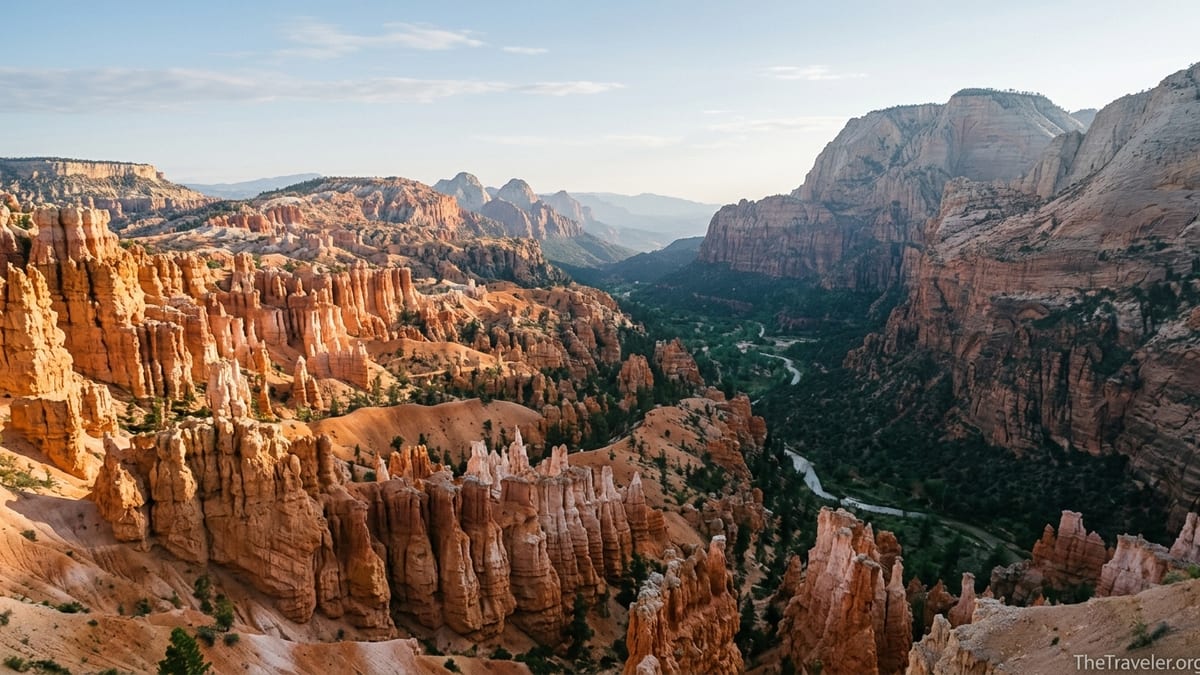
Bryce Canyon and Zion sit on the same high desert plateau in southwestern Utah, but they feel like completely different worlds. Bryce Canyon National Park is not actually a single canyon but a series of amphitheaters carved into the Paunsaugunt Plateau, famous for its dense forest of orange and pink hoodoos rising like stone totem poles. You mostly explore Bryce from the top looking down into these natural amphitheaters, then dip in and out on half day trails.
Zion National Park centers on Zion Canyon, a deep sandstone gorge where 2,000 foot cliffs rise straight up from the Virgin River. Here, you typically start at the bottom and look up, walking along the river or climbing steep switchbacks to high viewpoints. The scenery is greener and more lush than many visitors expect: cottonwood trees line the river, and in spring the canyon floor feels almost oasis like compared with Bryce’s high elevation forests.
In practical terms, Zion tends to feel more intense and immersive. Trails like Angels Landing and the Narrows put you right inside the landscape, on cliff edges or wading in a river between canyon walls. Bryce, by contrast, offers more panoramic overlooks and shorter loop hikes where you can wander among the hoodoos for a few hours and then be back at your car or lodge by lunch. Neither experience is better objectively, but each suits a different kind of traveler.
Both parks are managed by the National Park Service and charge a similar entrance fee for private vehicles that is valid for seven consecutive days. Many travelers purchase the America the Beautiful annual pass if they plan to visit both parks plus at least one other national park in the same year, since individual park fees can quickly add up for a family road trip.
Who Will Love Bryce Canyon Most?
Bryce Canyon is a strong match for travelers who prioritize dramatic views with relatively modest effort. The park’s main road runs along the rim, and within a few minutes of parking at Sunrise, Sunset, Bryce, or Inspiration Points you can be looking down into vast amphitheaters of hoodoos with minimal walking. This makes Bryce particularly appealing to mixed ability groups, multigenerational families, and travelers who are short on time.
On a typical first visit, many people hike the combined Queens Garden and Navajo Loop, a roughly 3 mile lollipop loop that descends from Sunrise Point into the amphitheater, winds past famous formations like Queen Victoria and Thor’s Hammer, and returns to the rim at Sunset Point before following the short section of Rim Trail back to your starting point. According to recent park materials, most reasonably fit visitors complete this in 2 to 3 hours at a relaxed pace, with plenty of time for photos among the hoodoos and stops in the shade.
The elevation at Bryce is a key consideration. The rim sits around 8,000 to 9,000 feet above sea level, significantly higher than Zion’s canyon floor. That elevation keeps summer daytime temperatures cooler than Zion’s often triple digit highs, which is a blessing for travelers who overheat easily. However, it also means thinner air. Visitors who are not used to altitude often find themselves more winded than expected on the climb back out of the amphitheater, even on short trails.
If your ideal national park day involves sunrise and sunset photography, leisurely walks along the rim, and the option to return to a cabin, motel, or campground by mid afternoon, Bryce fits beautifully. Many travelers base themselves in Bryce Canyon City or at the historic park lodge near Sunrise Point, where you can step out to the rim in just a few minutes for the golden hour glow on the hoodoos.
Who Will Love Zion National Park Most?
Zion tends to captivate travelers looking for immersive, sometimes strenuous adventure. Iconic hikes like Angels Landing, the Narrows, and Observation Point have earned Zion a reputation as one of the premier hiking destinations in the United States. In 2024 the park hosted nearly five million visitors, reflecting its status as a bucket list stop on the classic Southwest road trip.
From early spring through late fall, a mandatory shuttle system operates in the main Zion Canyon. Most visitors park in Springdale or at the main visitor center, then ride the shuttle to trailheads like the Grotto, Weeping Rock (when open), and the Temple of Sinawava. This system keeps private vehicles out of the narrow canyon and helps manage crowding, but it also shapes your day. You need to plan around shuttle start and end times and may encounter lines during peak hours, particularly around school holidays and long weekends.
Zion is best suited to travelers who like longer days and do not mind some logistics. For example, to hike the Narrows from the bottom up, many visitors rent canyoneering shoes, neoprene socks, and a hiking pole from outfitters in Springdale, then catch an early shuttle to Temple of Sinawava. A typical out and back into the Narrows can take four to six hours depending on how far you go, and you will be walking in a cold river much of the time. Angels Landing operates under a lottery based permit system. You must apply in advance for a time window to cross the chained ridge, or try for a day before lottery if your plans are flexible.
Travelers who thrive in Zion tend to enjoy problem solving around permits, start times, and gear rentals. They like the feeling of standing on a ledge high above the canyon or wading between walls that nearly shut out the sky. If this sounds thrilling rather than stressful, Zion is likely your better match, especially if you can devote at least two full days to the park.
Scenery and Photography: Grand Vistas vs Immersive Canyons
From a scenery standpoint, both parks are extraordinary, but they offer very different photographic experiences. Bryce Canyon’s amphitheaters are at their most photogenic around sunrise and sunset when low angle light lights up the hoodoos in shades of orange, pink, and red. A sunrise at Bryce Point or Inspiration Point can yield sweeping panoramic images where thousands of spires appear to glow from within. Even casual smartphone photographers come away with dramatic shots simply by walking a few steps from the parking areas to the overlooks.
Inside the canyon on the Queens Garden and Navajo Loop, you can compose intimate frames of individual hoodoos, windows carved in the rock, and switchbacks like Wall Street when it is open. The high elevation often leads to crisp, clear air, especially in the cooler months, which helps with long distance views down the Grand Staircase toward distant plateaus.
Zion offers a more immersive style of photography. At places like the Court of the Patriarchs overlook or along the Pa rus Trail, morning and late afternoon bring soft light on cottonwoods and towering sandstone walls. In the Narrows, you will often shoot in reflected light as the sun bounces off the canyon walls, turning them golden while the river stays in shade. Photographers frequently carry dry bags and waterproof cases, since slipping in the river is a real possibility on the rounded cobbles beneath the water.
If you love big, clean horizons and layered rock formations, Bryce feels tailor made. If your dream images involve standing in a river between glowing walls or capturing tiny hikers on a massive cliff face, Zion delivers more of what you are after. Some travelers choose to spend sunrise at Bryce for the amphitheater glow, then drive to Zion for late afternoon shots along the canyon floor, making the most of the two hour connection between the parks.
Hiking Styles: Short Loops or All Day Epics
Your preferred hiking style is one of the clearest ways to choose between Bryce and Zion. Bryce’s core trails are mostly half day or shorter. Besides the Queens Garden and Navajo combination, there are options like the 5.5 mile Peekaboo Loop, which adds more time among the hoodoos, or the Rim Trail segments between popular viewpoints. You can mix and match these into a very full but still manageable day without committing to a single long out and back.
In practice, a typical one day itinerary at Bryce for an active traveler might look like this: arrive at Sunrise Point before dawn, photograph the amphitheater as the light changes, then hike the Queens Garden and Navajo Loop, returning to the rim by late morning. After lunch and a rest, drive the park road to Rainbow and Yovimpa Points, stopping at overlooks, and perhaps walk the short Bristlecone Loop at the far end of the park for a quieter forested experience. By late afternoon you are back at the rim near the lodge to watch sunset from Sunset or Inspiration Point.
Zion’s marquee hikes, in contrast, often fill an entire day by themselves. An Angels Landing outing including the steep approach on Walter’s Wiggles and the chained ridge typically takes four to six hours for most hikers, plus time waiting for shuttles. A Narrows day may run six to eight hours when you factor in gear rental pick up and return, shuttle rides, and time wading upriver. Even moderate hikes like the East Rim or Observation Point from the east side can easily become full day adventures.
If you prefer to string together two or three shorter hikes and scenic drives with plenty of breaks, Bryce aligns better with that rhythm. If you like the idea of committing to one iconic hike each day, starting early and returning pleasantly exhausted for dinner in Springdale, Zion is more in tune with your style.
Season, Weather, and Crowds
Seasonality can heavily influence which park feels like the right choice. Summers in Zion are hot, with daytime highs frequently in the 90s Fahrenheit or higher in July and August. Hiking steep exposed trails in the middle of the day can feel punishing, and afternoon thunderstorms sometimes trigger flash flood warnings that close the Narrows. Many experienced visitors shift their main activities to early morning and late afternoon in midsummer, spending midday resting in shaded hotel courtyards or cafes in Springdale.
At Bryce, the same July week may be 15 to 25 degrees cooler on average because of the higher elevation. Many families plan their Southern Utah itineraries so that they tackle Zion’s big hikes in late May or September, when temperatures are more moderate, and then head to Bryce in midsummer when cooler temperatures on the rim make hiking more comfortable. However, Bryce’s altitude also means cold nights for campers and the possibility of snow and ice on trails from late fall through early spring. Winter visits can be spectacular, with hoodoos dusted in snow, but traction devices and warm layers become essential.
In terms of crowds, Zion tends to feel busier because so many visitors funnel into a relatively small stretch of canyon accessible by shuttle. During busy periods, shuttles can be standing room only, and you may share iconic viewpoints with many other travelers. That said, starting early, riding the first few shuttles, and choosing some less famous trails can still yield pockets of relative solitude.
Bryce receives fewer visitors overall and spreads them along a longer rim with multiple overlooks. Even on busy days, it is often possible to find quieter stretches of the Rim Trail between major viewpoints or to escape the crowds by driving to the farther southern overlooks. For travelers sensitive to crowding, or those who simply want a more relaxed feeling day, Bryce often feels less hectic than Zion, especially during peak school holiday periods.
Logistics, Lodging, and Budget Considerations
Both parks reward planning ahead, but Zion demands more of it. Because of its popularity, lodging in Springdale, the gateway town just outside the south entrance, can be relatively expensive, especially from late spring through fall. Midrange hotels commonly run well over typical interstate motel prices during peak periods, and popular small inns and vacation rentals often book months in advance. On the other hand, staying in Springdale means you can walk to shuttle stops, restaurants, outfitters, and cafes, which simplifies your days in the canyon.
Bryce Canyon has fewer lodging options but often slightly lower prices for basic motels and cabins in Bryce Canyon City and nearby towns along Highway 12. The historic Bryce Canyon Lodge inside the park is a sought after choice for those wanting to be walking distance from the rim, but it also requires early reservations in peak season. Because many of Bryce’s key views are steps from parking lots, you do not necessarily need to stay at the rim to enjoy sunrise or sunset if you are willing to drive a short distance in the dark.
On the budget side, both parks share similar entrance fees for private vehicles, and both participate in the national annual pass program. For a typical couple planning to visit both Bryce and Zion plus at least one more national park within a year, the annual pass often pays for itself. Gear rentals in Zion, such as Narrows specific footwear and dry pants in the colder months, add a modest additional cost compared to hiking dry trails at Bryce, where standard hiking shoes and layers usually suffice.
Transportation can also influence your choice. If you are flying in and renting a car, places like Las Vegas and Salt Lake City function as common gateways. Many travelers route their trip in a loop, visiting Zion first, then driving the scenic two hours to Bryce, and eventually continuing on to other Utah parks or back to their airport. If you only have two or three days and do not want to change hotels, staying in Springdale and focusing on Zion may feel more efficient than trying to split your time. With four or more days, including both parks becomes much more realistic.
How to Decide If You Can Only Pick One
When time or budget limit you to a single park, a few simple questions can clarify your decision. First, consider your comfort with exposure and heights. If the idea of narrow chains and drop offs makes you queasy, Zion’s most famous trail, Angels Landing, may not appeal. While there are many beautiful low exposure options in the park, such as Emerald Pools, Riverside Walk, and the Pa rus Trail, you may feel like you are skipping the signature experience. Bryce’s main trails, while steep in places, generally feel more enclosed and less vertigo inducing.
Second, reflect on how you like to spend a perfect outdoor day. If you imagine a gentle start, coffee in hand watching sunrise, then a moderate hike with big views and a nap or scenic drive in the afternoon, Bryce aligns closely with that vision. If your perfect day feels more like an expedition, where you gear up, catch the first shuttle, hike hard for several hours, and end the day with tired legs and a big dinner in town, Zion is more likely to satisfy.
Third, factor in the season of your trip. A February visit might tilt toward Zion’s lower elevation for milder temperatures and mostly snow free canyon trails, while a July road trip with kids might favor Bryce’s cooler air and more forgiving shorter hikes. Families with small children often report that Bryce is easier for nap schedules and early bedtimes, since you can dip in and out of the park more flexibly by car without relying on a shuttle timetable.
Finally, think about your broader itinerary. If you are also planning to see other high elevation destinations like the North Rim of the Grand Canyon or Cedar Breaks, you may appreciate the environmental variety that Zion offers with its lush canyon. Conversely, if your route is heavy on desert and slickrock, Bryce’s whimsical hoodoos provide a unique geological contrast that you will not find at many other parks.
The Takeaway
Bryce Canyon and Zion are not competitors so much as complementary chapters in a Southern Utah story. Bryce excels at offering surreal, sculpted landscapes in manageable doses, ideal for contemplative walks, accessible viewpoints, and cooler summer temperatures. Zion shines as a playground for immersive canyon adventures where every day can feel like a small expedition, from riverside strolls to bucket list hikes like the Narrows and Angels Landing.
If you can, plan a trip that includes both parks, giving at least one full day to Bryce and two or more days to Zion. If you must choose, let your travel style be your guide. Seek Bryce if you value big views with moderate effort, cooler air, and a slower pace. Choose Zion if you crave immersive hikes, do not mind navigating shuttles and permits, and want to feel tiny beneath towering sandstone walls.
Either way, you will be stepping into some of the most distinctive landscapes in the United States, and you may find that your first visit simply plants the seed for a return trip focused on the park you did not have time for this time around.
FAQ
Q1. Can I visit both Bryce Canyon and Zion in one day?
It is technically possible to drive between the parks and see highlights in a single long day, since they are roughly two hours apart, but it makes for a rushed experience. Most travelers find it more rewarding to dedicate at least one full day to Bryce and one or two full days to Zion, with an overnight stay near at least one park.
Q2. Which park is better for families with young children?
Bryce Canyon often works better for families with small kids because many of the best viewpoints are steps from parking areas, and classic hikes like the Queens Garden and Navajo Loop can be shortened or skipped if little legs get tired. Zion can also be wonderful with children, especially on easy trails like the Pa rus Trail and Riverside Walk, but the shuttle system and longer marquee hikes require more planning and stamina.
Q3. Do I need special permits to hike in either park?
Most hikes in both parks do not require permits, but Zion has a few high profile exceptions. Angels Landing uses a lottery based permit system, and certain advanced canyon routes such as the Subway and top down Narrows require permits and careful planning. At Bryce, standard day hikes among the hoodoos do not require permits. Always check current National Park Service information before your trip, as rules can change.
Q4. Which park is less crowded?
Zion generally feels more crowded because most visitors concentrate in the main canyon accessed by shuttle, and flagship trails attract heavy use. Bryce spreads visitors along a longer rim road with multiple overlooks and trailheads. While both parks see busy periods, many travelers report that Bryce feels more relaxed overall, especially if you drive to the farther southern viewpoints or walk less frequented sections of the Rim Trail.
Q5. How should I choose between Bryce and Zion in summer?
In midsummer, temperatures in Zion’s canyon often climb high enough that steep hikes feel very hot by late morning, so early starts are crucial. Bryce’s higher elevation keeps daytime temperatures cooler, making it more comfortable for midmorning and afternoon hiking. If you must pick one park in July or August and prefer to avoid intense heat, Bryce generally offers a more pleasant climate, while Zion still works well for early risers willing to plan around the heat.
Q6. Is it possible to visit without a car?
Zion is somewhat more accessible without a car because shuttle buses run through Springdale and the main canyon during much of the year, and some visitors arrive by regional shuttle or organized tour. However, reaching Springdale still usually involves a car, regional shuttle, or tour transfer. Bryce is more remote, and having a rental car is the norm for most visitors. If you are relying on tours and shuttles, Zion is generally the easier choice.
Q7. Which park is better for people afraid of heights?
Travelers with a strong fear of heights often find Bryce more comfortable because its main trails, while steep, do not usually involve narrow ridges or dramatic drop offs right at the edge of the path. In Zion, iconic routes like Angels Landing feature significant exposure that can feel intimidating. That said, Zion still has low exposure options such as the Pa rus Trail and lower Emerald Pools, so it comes down to which hikes you plan to prioritize.
Q8. What kind of gear do I need for each park?
At Bryce, sturdy hiking shoes, layered clothing for cool mornings and warmer afternoons, sun protection, and plenty of water are usually sufficient for day hikes. In Zion, in addition to similar basics, many visitors also rent canyoneering shoes, neoprene socks, and a hiking pole for the Narrows, especially when water is cold or the riverbed is rocky. For both parks, traction devices can be helpful in winter when trails may be icy.
Q9. Can I see the main highlights in just one day per park?
Yes, with careful planning you can experience the core highlights of each park in a single day. At Bryce, one full day allows for sunrise at the rim, the Queens Garden and Navajo Loop, and a drive to southern viewpoints like Rainbow Point. In Zion, one day is enough for a flagship hike such as the Narrows or Angels Landing plus a shorter walk or scenic stops along the shuttle route. However, spending extra days gives you time for quieter trails and less rushed mornings.
Q10. If I only have two days total, how should I split them?
With just two days, most travelers either spend both in Zion or devote one full day to Zion and one to Bryce, based on their interests. If you prefer immersive hikes and do not mind early mornings and shuttle logistics, two days in Zion makes sense. If you want a taste of both landscapes, consider making Zion your base and planning one day in the canyon and a second day as a loop drive to Bryce, leaving early in the morning and returning in the evening.