


Ask a ranger at Bryce Canyon National Park which hike first-timers should do and two names come up again and again: Queen’s Garden and Navajo Loop. Both drop from the rim into Bryce’s famous amphitheater of hoodoos, both are short enough for most reasonably fit visitors, and both deliver the kind of views that end up framed on living room walls for years. But they are not the same experience. If you only have time or energy for one, choosing the right trail can shape your entire impression of Bryce Canyon.
Get the latest updates straight to your inbox!
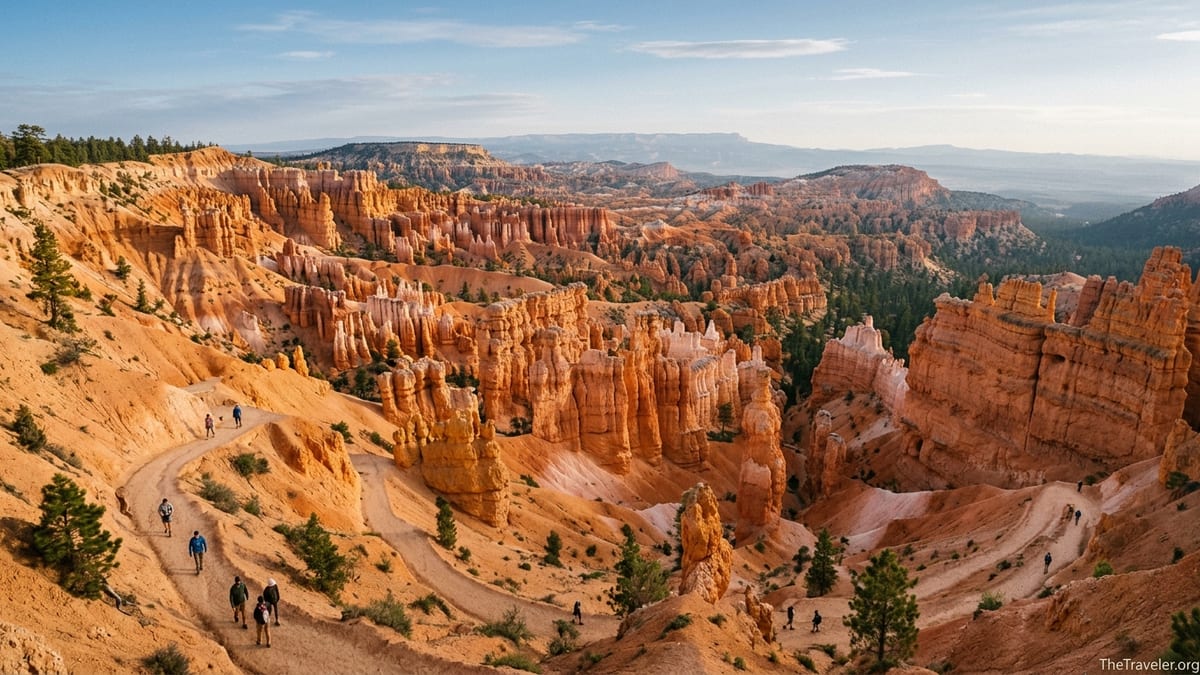
Know the Basics: Distances, Elevation and Trail Layout
Queen’s Garden and Navajo Loop are neighbors on the edge of Bryce Amphitheater, but they start from different viewpoints and feel very different underfoot. Queen’s Garden begins at Sunrise Point and is an out-and-back trail that drops roughly 1.8 miles round-trip into the canyon with about 450 to 500 feet of elevation change. Navajo Loop starts at Sunset Point and forms a 1.3-mile loop with about 500 to 550 feet of elevation loss and gain packed into a much steeper grade. On paper they are both “moderate” hikes, but the way that elevation is delivered makes a big difference to your legs and lungs.
The park’s official hiking guide currently lists a combined Queen’s Garden / Navajo Loop option of about 2.9 miles, often taking 2 to 3 hours for most visitors who stop often for photos. Many guidebooks and hiking blogs round that up to roughly 3 miles. In practice, your distance can creep closer to 3.2 or 3.4 miles if you add short side detours to viewpoints or hoodoo lookouts, which most people happily do.
One detail that often surprises visitors is how the high elevation affects effort. Bryce Canyon’s rim sits around 8,000 feet above sea level, meaning the same climb that feels moderate at home can feel noticeably tougher here. Travelers who come directly from low‑elevation cities like Los Angeles or Chicago sometimes underestimate this. If you land in Las Vegas, drive up to Bryce that afternoon, and head straight to the trails, even the shorter Navajo Loop can feel strenuous on the climb out.
Season also matters for layout. In winter and early spring, the Wall Street side of Navajo Loop is often closed for rockfall and ice, and the trail becomes an out‑and‑back using the Two Bridges side instead of a full loop. Hikers can usually still connect Queen’s Garden with Navajo via a “lollipop” route, but you should always check current trail status at the visitor center or on same-day ranger boards before committing to a plan.
What You See: Scenery and Signature Moments
If you choose based purely on views, both trails are exceptional, but they showcase different personalities of Bryce Canyon. Queen’s Garden is often described as the gentler, more open experience. As you descend from Sunrise Point, the landscape quickly opens into rolling hills of orange and pink rock, scattered with clusters of hoodoos and fin-like walls. You pass through small rock tunnels carved into the canyon sides, wander under leaning spires, and eventually come to the Queen’s Garden area where a hoodoo formation loosely resembles a seated Queen Victoria.
Navajo Loop, in contrast, is about drama and verticality. Starting from Sunset Point, the trail plunges into a narrow slot-like corridor of towering walls on the Wall Street side when it is open. This is one of the most photographed spots in the park: long series of tight switchbacks wedged between vertical cliffs, with tall ponderosa pines stretching for light far below. On the Two Bridges side, you wind through intricately carved fins and pass below the natural arch-like formations that give the section its name. Just off the loop, another spur leads to Thor’s Hammer, a classic hoodoo that appears in countless Bryce Canyon postcards and travel magazine spreads.
To visualize the difference, imagine walking through a sculpture garden versus walking down a narrow city street lined with skyscrapers. Queen’s Garden is the sculpture garden: wide sightlines, space between formations, great for sweeping amphitheater shots. Navajo Loop is the skyscraper street: tight turns, tall walls, and dramatic light shafts that change every few minutes. If your priority is big wide-angle photos of hoodoos stretching into the distance, Queen’s Garden has a slight edge. If you want to feel tiny beneath stone walls and capture those iconic switchback shots, Navajo Loop is the stronger choice.
Lighting can tip the balance too. At sunrise, Queen’s Garden benefits from soft light hitting the amphitheater from behind Sunrise Point, bathing the hoodoos in warm pinks and oranges. For late afternoon and golden hour, Navajo Loop’s walls catch side light that creates strong contrast and deeper shadows, especially near Thor’s Hammer and the Two Bridges section. Serious photographers sometimes do both in one day, dropping Queen’s Garden in the morning and returning to Navajo Loop for late-day light.
Difficulty, Crowds and Safety: Which Trail Fits You?
On difficulty alone, most rangers and guidebooks describe Queen’s Garden as the least strenuous way to descend below the rim, particularly if you hike down Queen’s Garden and back up the same trail. The grade is generally more gradual, and while there are short steeper sections, the climb never feels quite as relentless as the Navajo switchbacks. Families with school-age kids, travelers who are not used to hiking, and visitors sensitive to heights often find Queen’s Garden more comfortable.
Navajo Loop compresses more of its elevation change into a shorter distance, which makes the ascent from the canyon floor feel more intense. If you are coming from sea level, carrying a child in a carrier, or traveling with older parents, the steep switchbacks can be a real challenge on the way back up. In summer, afternoon heat bouncing off the rock amplifies the effort. A typical real-world scenario: a family from Dallas hits the trail at 1 p.m. in July, starts down the Wall Street side, and finds themselves taking a long series of breathers on the way up because the combination of thin air, steep grade, and sun quickly adds up.
Crowds are another factor. The Queen’s Garden / Navajo combination is by far the park’s most popular hike, so you should expect company on both trails from May through September. That said, Navajo Loop’s switchbacks and tight corridors can feel more congested when large tour groups arrive. Queen’s Garden, with its slightly wider and more open sections, usually disperses people a bit more. If you want a quieter experience while still sampling these classics, start as close to sunrise as you reasonably can or come in shoulder seasons like late October when tour volume tends to dip and temperatures are cooler.
On safety, the main issues are footing and weather. Both trails are well maintained but feature packed dirt, loose gravel, and occasional muddy sections after summer storms. Proper hiking shoes with some tread make a noticeable difference; rangers regularly report rescues related to visitors wearing slick-soled fashion sneakers or flip-flops. In winter, icy patches can develop on shaded switchbacks, especially on Navajo’s steeper stretches. Carrying traction devices such as simple microspikes can turn a sketchy descent into a confident one if you are visiting in December or January.
Logistics: Shuttles, Parking and When to Start
Both Queen’s Garden and Navajo Loop sit in the heart of Bryce Amphitheater, served by the park shuttle when it is operating, typically from spring through fall. Sunrise Point is the main access for Queen’s Garden, and Sunset Point anchors Navajo Loop. During shuttle season, vehicles longer than about 23 feet are restricted from parking at these viewpoints, so many visitors park at the main shuttle station near the park entrance or at the visitor center and ride the free shuttle to the trailheads.
In practical terms, this means that if you are staying at a hotel in nearby Bryce Canyon City or at a campground near the entrance, it is often faster and less stressful to hop on the shuttle rather than circle the small parking lots at Sunrise and Sunset Points. A common real-world strategy is to catch an early shuttle around sunrise, hike Queen’s Garden first from Sunrise Point while temperatures are cool, and then walk the rim or ride the shuttle over to Sunset Point for Navajo Loop if you still have energy.
Timing your start is particularly important in summer. On sunny July and August days, temperatures can feel significantly warmer on the canyon floor than on the rim, especially around midday when the sun reflects off the orange rock. If you only plan to hike one of the two trails, a 7 to 8 a.m. start lets you descend in cooler air and climb out before the worst of the afternoon heat. Shoulder seasons like May or early October are more forgiving, and many visitors comfortably start mid-morning.
Water and sun protection are non‑negotiable. There is no potable water on either trail, so you will need to carry your own. A realistic guideline is at least one liter per person for a short hike in mild weather, but more if you tend to drink heavily or are hiking in summer. Wide-brimmed hats, sunscreen, and lightweight long-sleeve shirts pay off once you are below the rim and away from the occasional shade of rimside trees.
Who Should Choose Queen’s Garden?
Queen’s Garden is usually the better choice for hikers looking for a gentler introduction to Bryce Canyon’s interior. If you are traveling with younger children who can walk on their own but might get intimidated by towering switchbacks, the more gradual descent here can feel adventurous without feeling overwhelming. Kids often enjoy walking through the small rock tunnels and pointing out shapes in the hoodoos, and the out-and-back format lets parents turn around whenever attention spans or energy levels begin to fade.
Travelers who are nervous about heights also tend to prefer Queen’s Garden. While you are absolutely descending into a canyon, the trail typically feels less exposed than the tight edges of some Navajo Loop switchbacks. The open amphitheater views can actually help people with mild vertigo, because they can focus on the horizon and the wider landscape instead of a steep drop immediately off the trail edge.
If photography and leisurely wandering among hoodoos is your priority, Queen’s Garden shines. The more moderate grade encourages frequent stops for photos without the urgency to keep marching up steep stairs. Amateur photographers carrying heavier camera gear, such as a full-frame DSLR or mirrorless camera with a couple of lenses, often find they can enjoy the scenery here with less concern about the physical exertion required to get back out.
Queen’s Garden is also a solid option when conditions are less than ideal on Navajo Loop. After heavy summer thunderstorms, muddy or unstable sections sometimes linger longer in the deeper Navajo corridors. In winter and early spring, closures on one side of Navajo can make it trickier to plan. Queen’s Garden, starting from Sunrise Point, is often among the first inner-canyon routes to feel comfortable when storms or freeze–thaw cycles have recently passed.
Who Should Choose Navajo Loop?
Navajo Loop is a favorite for visitors who want Bryce Canyon’s maximum punch in minimum time. If you only have an hour or two in the park and want something that feels like a “bucket list” experience, descending the tight Wall Street or Two Bridges switchbacks and standing beneath Thor’s Hammer delivers an immediate wow factor. Many day-trippers driving in from Zion or the Grand Staircase area specifically budget a two-hour stop for this loop before continuing on their road trip.
Fit hikers often gravitate to Navajo Loop because the short but steep climb offers a satisfying workout without consuming half a day. Trail runners and active travelers used to elevation change might treat it as a warm-up before heading to longer routes like Peekaboo Loop or Fairyland Loop later in the day. The sustained ascent makes it easy to gauge your effort, and some visitors simply enjoy the feeling of powering up a classic series of switchbacks in a spectacular setting.
Photographers who love dramatic compositions should not underestimate Navajo Loop’s appeal. The tall, narrow walls near Wall Street, the zigzagging trail cut into the canyon face, and the interplay of light and shadow create opportunities for striking images even with a simple smartphone. Early morning and late afternoon produce especially beautiful conditions, when the high canyon rims bounce warm reflected light into the deeper corridors.
Navajo Loop also pairs naturally with other trails if you want to build a bigger day. From the canyon floor, you can connect into the more extensive Peekaboo Loop for a longer figure-eight route that climbs back up via Navajo. Travelers with a full day at Bryce sometimes start with the Navajo / Peekaboo combination in the morning and then stroll easy sections of the Rim Trail in the afternoon for variety.
Or Should You Combine Them? The Classic Queen’s Garden / Navajo Loop
If you have the time and moderate fitness, the best answer to “Queen’s Garden or Navajo Loop?” is often “both.” The combined Queen’s Garden / Navajo loop is widely recommended by rangers as the single best introduction to Bryce Canyon’s amphitheater. Hiking it clockwise is usually suggested: start at Sunrise Point, descend Queen’s Garden with views in front of you, cross the canyon floor, then climb out via Navajo’s steeper switchbacks to finish at Sunset Point.
In a typical real-world itinerary, a couple on a Utah road trip might arrive at Bryce the evening before, watch sunset from Sunset Point, then set an early alarm. They catch the first or second shuttle to Sunrise Point, drop down Queen’s Garden while the light is soft and temperatures cool, take a short snack break on the canyon floor, and then tackle the Navajo climb as the sun rises higher. By late morning they are back on the rim, with time to grab coffee at the lodge and still drive on toward Capitol Reef in the afternoon.
The combined loop strikes a sweet spot: long enough to feel like a meaningful hike, short enough that most reasonably active visitors can complete it in 2 to 3 hours with plenty of photo stops. Because you experience both the open amphitheater views of Queen’s Garden and the vertical drama of Navajo, it also helps you decide what kind of terrain you enjoy most for any additional hikes later in your visit.
The main caveat is seasonal closures. If the Wall Street side of Navajo is closed, you may still be able to connect Queen’s Garden with the Two Bridges side and return to the rim via a modified lollipop route rather than a full loop. Before committing, check the latest trail advisories at the visitor center or posted near the shuttle stops so you know which sections are open and how you will exit the canyon.
The Takeaway
Choosing between Queen’s Garden and Navajo Loop at Bryce Canyon is not about finding the “better” trail, but about matching the hike to your body, your schedule and the experience you want to remember. Queen’s Garden offers a more gradual descent with open, panoramic views and an easier climb out, making it the most forgiving option for families, first-time hikers, and anyone still adjusting to Bryce’s high elevation. Navajo Loop condenses the park’s most dramatic vertical scenery into a short, steep package, perfect for confident hikers who want Bryce’s greatest hits in one intense burst.
If your visit schedule or fitness limits you to a single trail and you prefer gentle grades and spacious views, pick Queen’s Garden. If you crave tight switchbacks, soaring walls, and iconic formations like Thor’s Hammer, head for Navajo Loop instead. And if you can manage a moderate 3-mile outing, link the two into the classic combination loop that many repeat visitors consider Bryce Canyon’s definitive hike.
Whichever path you choose, start early, carry more water than you think you need, wear real hiking shoes, and build in time to simply stand quiet among the hoodoos. For many travelers, that first walk below the rim at Bryce is not just a hike; it is the moment the park shifts from beautiful lookout to unforgettable place.
FAQ
Q1. Is Queen’s Garden or Navajo Loop easier for beginner hikers?
Queen’s Garden is generally easier for beginners. It has a slightly longer distance but a more gradual grade, so the climb out tends to feel less punishing than Navajo Loop’s steep switchbacks.
Q2. How long does it take to hike Queen’s Garden or Navajo Loop?
Most visitors complete Queen’s Garden in about 1.5 to 2 hours and Navajo Loop in 1 to 1.5 hours. The combined Queen’s Garden / Navajo loop typically takes 2 to 3 hours with photo stops.
Q3. Which trail has better views, Queen’s Garden or Navajo Loop?
Queen’s Garden offers broader amphitheater views and open hoodoo fields, while Navajo Loop features dramatic canyon walls and famous spots like Wall Street and Thor’s Hammer. Many visitors prefer the combination because it delivers both perspectives.
Q4. Can I hike Queen’s Garden and Navajo Loop in the same day?
Yes. The combined loop of about 3 miles is one of the most popular hikes in the park and is very manageable in half a day for reasonably fit visitors.
Q5. What is the best time of day to hike these trails?
Early morning is ideal, especially in summer. Temperatures are cooler, crowds are lighter, and sunrise light enhances the colors on Queen’s Garden. Late afternoon also works well, particularly for photographing Navajo’s switchbacks and canyon walls.
Q6. Do I need hiking boots for Queen’s Garden or Navajo Loop?
You do not need heavy boots, but sturdy footwear with good tread is strongly recommended. The trails include packed dirt, loose gravel, and occasionally mud or ice, and smooth-soled shoes or sandals can be slippery.
Q7. Are these trails suitable for children?
Many families hike both trails with school-age children. Queen’s Garden is usually a better first choice because of its more gradual slopes and open feel, but older kids who enjoy hiking often love the adventure of Navajo’s steep switchbacks.
Q8. What happens if part of Navajo Loop is closed?
If the Wall Street side is closed, the trail often remains open as an out-and-back on the Two Bridges side, and you can usually still connect it with Queen’s Garden via a modified loop. Always confirm current conditions with park staff before starting.
Q9. Is it safe to hike these trails in winter?
It can be safe with the right gear and conditions, but ice and snow are common. Traction devices for your shoes, warm layers, and checking for seasonal closures or advisories are essential steps if you plan a winter hike.
Q10. If I only have one hour at Bryce Canyon, which trail should I choose?
If you have limited time and are reasonably fit, Navajo Loop usually delivers more intense, dramatic scenery in under an hour. If you prefer a gentler experience or are concerned about steep climbs, use that hour on Queen’s Garden instead.