


Montenegro packs a lot into a small coastline and a compact mountain interior, which means timing your trip has a big impact on what you can actually do. The Adriatic beaches around Budva and Ulcinj follow a classic Mediterranean pattern, while highland areas such as Durmitor and Prokletije run on a completely different weather calendar. Understanding when the sea is warm enough to swim, when trails are snow free, and when prices spike along the coast will help you decide whether to come in peak season or aim for a quieter shoulder month.
Get the latest updates straight to your inbox!
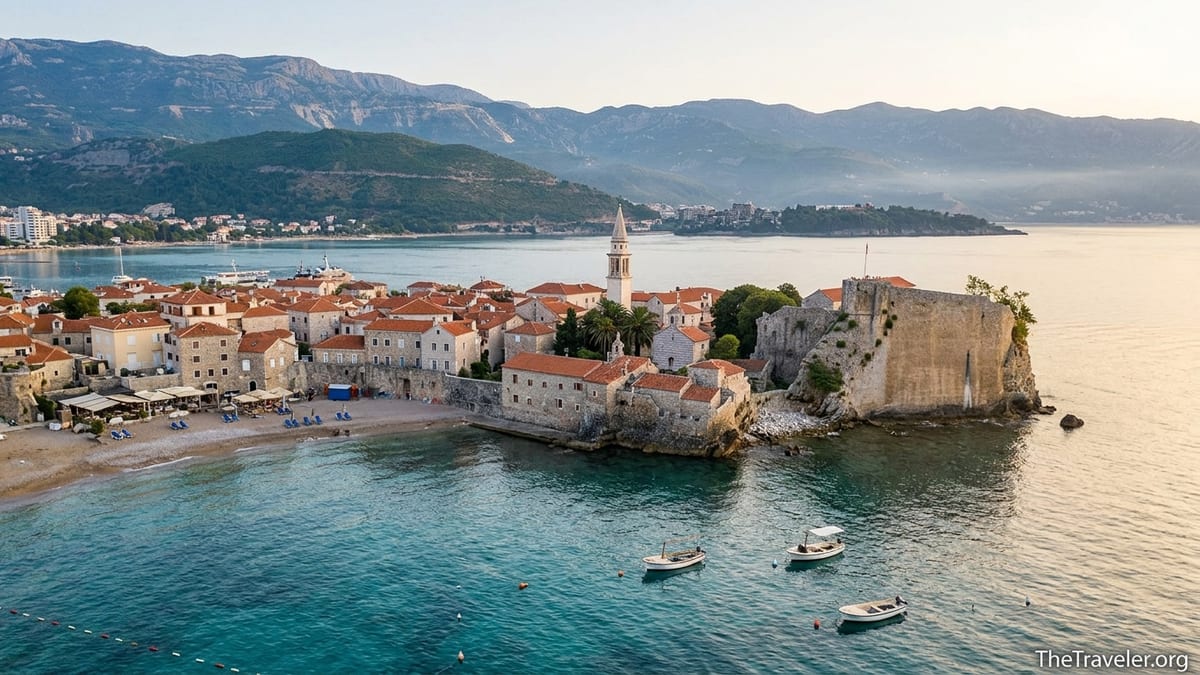
Montenegro’s Climate in a Nutshell
Montenegro has two main climate zones that matter to travelers. Along the Adriatic coast and around the Bay of Kotor you get a classic Mediterranean pattern, with hot, dry summers and mild, wetter winters. Summer daytime highs on the coast typically sit around 29 to 32 degrees Celsius from late June through August, and sea temperatures in bays like Kotor usually hover in the low to mid 20s Celsius from June into late September. Inland and at altitude, in areas such as Durmitor National Park and the Bjelasica and Prokletije ranges, the climate is more Alpine, with cooler summers and heavy snow in winter that can linger on higher trails into June.
The split is obvious if you compare July in Budva with July in Žabljak, the main base town for Durmitor. On the Budva Riviera, days are often above 30 degrees and the streets around Slovenska Beach stay busy late into the night. In Žabljak, around 1,450 meters above sea level, typical summer highs are closer to the low 20s, which feels ideal for hiking to viewpoints like Bobotov Kuk or circling Black Lake without overheating. This difference allows you to combine hot beach days with naturally cooler nights in the mountains, as long as you account for extra travel time between regions.
Seasonality also shapes how open and busy places feel. From roughly mid May to late September, most coastal hotels, beach clubs, and tour operators run at full capacity. In contrast, smaller seaside businesses start to wind down from the second half of September, and some shutter entirely by early October, even if the weather stays pleasant. In the mountains, many hiking routes are only fully accessible from June to September, while ski areas around Durmitor and Kolašin come to life between roughly late December and March, when snow cover is reliable enough for winter sports.
Prices track these patterns. Coastal apartment rates in Kotor, Budva, and Ulcinj can easily double between early June and late July, and private beach clubs on Jaz or Mogren might charge premium rates for a pair of loungers and an umbrella in August. The same properties often drop to noticeably friendlier prices by mid September, when water is still warm but school holidays end and crowds thin. In the interior, you will usually find better value throughout the year, with family guesthouses in Žabljak or Kolašin offering half board at rates that would barely cover a basic room on the coast in peak season.
Beach Season: When the Adriatic Shines
For most visitors, the main question is when the sea is warm and the beaches feel alive without turning into a struggle for towel space. In Montenegro, the full beach season usually runs from roughly late May to late September on the central and southern coast. By early June, water temperatures around Budva, Kotor, and Bar often reach the low 20s Celsius, which is comfortable for most swimmers. Through July and August, sea temperatures in the Bay of Kotor and along the Budva Riviera typically climb a few degrees higher, and you get some of the longest, sunniest days of the year.
Different parts of the coast also come into their own at slightly different moments. Around Kotor and Perast, the narrow bay warms up a bit earlier than the open sea, so confident swimmers will often be in the water by late May, especially on sunny afternoons. On the more open Budva Riviera, where beaches like Mogren, Jaz, and Bečići face the full Adriatic, swimming is most pleasant from mid June through mid September. Further south near Ulcinj, the long sandy stretch at Velika Plaža absorbs heat quickly and can feel like a classic summer resort even in the first half of June, making it a popular choice for early season trips.
Beach infrastructure follows this curve. Sun bed rentals, beach bars, and water sports providers typically start setting up in May, but the full range of services appears in June. If you want guaranteed facilities, regular boat excursions, and a wide choice of seafood restaurants right on the promenade, it is safer to plan for mid June onward. In August it is common to see every lounger occupied by mid morning at Slovenska Beach in Budva or on the small strips inside the old town of Kotor, while in June and September you can usually find a spot without reserving ahead. This is a practical consideration if you dislike tightly packed rows of chairs and loud beach clubs.
Even in the height of summer you can still find quieter water. Smaller coves between Petrovac and Sveti Stefan or around Luštica Peninsula tend to be less crowded than Budva’s central beaches. Travelers who book rooms in villages just outside the big hubs, such as Prčanj across the bay from Kotor or the hills above Rafailovići, often report having far more relaxed swims at small local jetties in the morning, then heading into town later for dinner and nightlife. These micro choices of base and timing can shape how you experience Montenegro’s otherwise very busy coastal summer.
July and August: Crowds, Heat and Festival Energy
July and August are Montenegro’s top months for guaranteed beach weather and event calendars, but they also bring the largest crowds and highest prices. Daytime temperatures on the central Adriatic coast during this period frequently rise above 30 degrees Celsius, with some heatwave days edging toward the mid 30s, especially in built up areas such as Budva’s waterfront. Narrow streets in Kotor’s old town can feel particularly hot in the early afternoon, when stone alleys radiate heat and cruise ship day trippers fill the main squares.
Accommodation in this window is at a premium. Waterfront apartments in Kotor with direct bay views, or mid range hotels a short walk from Mogren Beach in Budva, regularly sell out weeks or months ahead for late July and the peak of August. Budget travelers who might find a double room for a moderate price in May or October can face significantly higher rates at this point, especially in Kotor old town and on the Budva Riviera. It is common for hosts to require longer minimum stays and to be less flexible about check in times, simply because demand exceeds supply.
On the other hand, this is when the coast feels most animated. Budva hosts large scale music events, with late August and early September often bringing an electronic music festival on Jaz Beach that fills town with concert goers. Kotor’s KotorArt festival runs across much of July and August, with classical concerts, theater, and street performances held in open air courtyards and on waterfront stages. In Ulcinj, beach bars along Velika Plaža organize themed parties and DJ nights almost every evening. If your image of Montenegro involves live music until late, crowded promenades, and plenty of people watching, then this high season energy can be part of the appeal.
The downside is that certain experiences become harder to enjoy. Day trips to Perast and Our Lady of the Rocks can feel crowded by mid morning, with boats queuing at the small island pier and limited shade available during the hottest hours. In Budva, traffic jams in and out of town are common, particularly at weekend peaks, and drivers report long waits for parking spots close to the old town walls. Families with young children or travelers sensitive to heat often find that they need to retreat to air conditioned rooms each afternoon, then return to the waterfront only in the evening, which effectively compresses their sightseeing window into a few cooler hours per day.
May, June and September: Smart Months for Value and Comfort
For many travelers, the sweet spot for Montenegro’s coast comes in May, June, and September, when the weather is generally warm, the sea is either already or still swimmable, and prices and crowds remain below their peak. In May, daytime highs on the coast often sit in the high teens to low 20s Celsius, making it pleasant to stroll Kotor’s walls or explore the lanes of Budva’s old town without overheating. Water is cooler and may feel brisk for long swims, but on sunny afternoons you will still see locals and visitors in the water, particularly in sheltered parts of the Bay of Kotor.
By June the coast has shifted firmly into summer mode. Air temperatures commonly climb into the mid to high 20s, and sea temperatures generally move into the low 20s, which suits most swimmers. At this point, the majority of restaurants, bars, and tour providers are open, but you rarely see the level of crowding typical in late July. Visitors in June often comment that they can walk into popular places in Kotor or Petrovac without reservations on weekdays and still find waterfront tables, something that becomes harder in high season.
September offers a similarly attractive balance, especially from the first week through about the third week of the month. The sea remains warm from the summer heat, often only a couple of degrees cooler than in August, so long beach days at Mogren, Jaz, or Queen’s Beach still feel entirely natural. At the same time, school holidays in much of Europe end in late August, and the density of visitors drops, which translates to quieter promenades and shorter queues for activities like boat tours on Skadar Lake. Apartment and hotel rates usually fall back to more moderate levels compared with August, with many coastal stays showing visible price reductions online.
The caveat is that the shoulder season requires slightly more checking of specifics. Some seasonal beach bars and smaller water sports operators along the Budva Riviera begin to close from the second half of September, prioritizing weekends over weekdays as demand tapers. If having full nightlife and every beach club open is important, aim for early September or late June. On the other hand, if you prefer a half empty beach even if that means a quieter bar scene, late September in less developed spots like Buljarica or certain coves near Luštica can feel almost private, especially outside weekends.
Mountain Weather, Hiking Season and Active Trips
Montenegro’s mountains are a major draw in their own right, and their ideal season differs from the coast. Durmitor National Park, centered around Žabljak, typically has snow cover at higher elevations from late autumn into late spring. Lower trails around Black Lake can open earlier, but classic routes like the summit of Bobotov Kuk or the full Durmitor Ring panoramic drive are usually safest and most enjoyable from roughly mid June to late September, when snow has melted and road closures are less likely.
In practical terms, hikers who visit Durmitor in May often report a mix of conditions. Days can be mild, with highs near 15 degrees Celsius in town, but nights remain cold and patches of snow or muddy sections linger on shaded slopes. White water rafting on the Tara River, driven by snowmelt, often starts in May, making this a good time for those specific activities even if some high trails remain impassable. By July and August, hikers can expect more predictable weather at altitude, with daytime highs in the low 20s and long daylight hours for loop hikes and ridge walks.
Other mountain regions follow similar patterns. In the Bjelasica range, reachable from Kolašin, and in Prokletije near the Albanian border, local guides generally recommend June through September for multi day trekking. Popular long distance routes such as the Peaks of the Balkans trail or sections of the Coastal Mountain Traversal from Lovćen toward the interior are typically scheduled in this window by outfitters. Earlier in the season, in April and early May, lowland hikes around Lake Skadar, Biogradska Gora’s forests, and the lower slopes of Lovćen are more realistic than attempts on the highest summits.
Combining the coast and mountains in one trip works best if you pay attention to these contrasts. A common pattern for a 10 to 14 day itinerary is to start with three or four nights on the Bay of Kotor or the Budva Riviera in late May or early June, then drive inland to spend four or five nights in Žabljak or Kolašin. This allows for early season swims followed by cooler hikes among glacial lakes and high pastures. In September the sequence can be reversed: travelers might hike in Durmitor first, taking advantage of quiet late season trails and autumn colors, then finish with a few last warm beach days before seasonal closures on the coast begin.
Festivals, Events and Cultural Seasons
Festivals are a big part of Montenegro’s summer atmosphere and can shape your experience depending on whether you seek them out or prefer to avoid crowds. In late April or early May, Budva hosts a carnival that brings parades, costumes, and live music to the old town. It marks an unofficial start to the coastal season, and visiting around this time lets you experience a festive but still relatively uncrowded town compared with high summer.
From mid July through August, Kotor stages its KotorArt festival, an umbrella for several arts events that include classical concerts, theater productions, and local choral singing. Performances take place in squares, churches, and on waterfront stages, and accommodation demand during key weekends can spike, so booking early is advisable if you want to attend. Visitors not focused on culture should be aware that some evenings in Kotor during this period will include larger crowds, amplified music, and occasional road closures near event sites.
On the Budva Riviera, late August brings a major electronic music festival on Jaz Beach that draws large international crowds and runs into the early hours. For fans, it is a highlight of the summer, offering big name DJs in a dramatic coastal setting. For others, it can mean higher prices and fuller hotels throughout Budva and even as far as Kotor. Ulcinj’s Velika Plaža, while not associated with a single flagship festival, becomes a string of beach bars programming DJ sets and live bands throughout July and August, creating a continuous party atmosphere that some travelers love and others find overwhelming.
Outside summer, the event calendar shifts inland or takes on a more local character. Winter festivals in towns like Herceg Novi, which hosts a mimosa festival early in the year, focus on regional traditions and attract fewer international visitors. In Podgorica and Cetinje, cultural seasons of theater, contemporary music, and exhibitions continue year round. Travelers who come in November or February may not swim, but they can find authentic experiences such as small jazz nights in Podgorica venues, Orthodox religious celebrations, and slow paced evenings in almost tourist free old towns.
Winter in Montenegro: Quiet Coasts and Snowy Peaks
Winter in Montenegro, roughly from December to March, offers a very different experience from summer and appeals to a narrower but enthusiastic group of travelers. Along the coast, air temperatures are generally mild by European standards, with average daytime highs in the single digits to low teens Celsius. The Bay of Kotor and Budva’s waterfront can look atmospheric under low winter light and occasional rain showers, but it is not beach weather, and the sea remains too cold for comfortable swimming for most people.
Many seasonal hotels, beach clubs, and restaurants on the coast close in this period, particularly in smaller resorts, although Kotor, Budva old town, and Herceg Novi retain a core of year round establishments serving locals. Visitors in January or February sometimes describe having almost empty stone alleys to themselves in Kotor, which can be appealing for photographers and those seeking solitude. At the same time, public transport along the coast can run on reduced schedules, and some boat excursions and outdoor tour offerings shut down until spring.
Inland, winter is peak time for snow activities. Durmitor’s Savin Kuk ski area above Žabljak and the slopes near Kolašin typically operate when snow cover is sufficient, often from late December into March, though exact opening dates vary year by year. These are not large Alpine style resorts, but they offer a mix of pistes and off piste opportunities at significantly lower prices than Western Europe, which attracts regional skiers and snowboarders. Non skiers can enjoy snowshoeing, sledding, and simple winter hikes near frozen lakes, with guesthouses serving hearty local dishes around wood fired stoves.
For those primarily interested in culture and low prices, winter city breaks in Kotor, Budva, or Podgorica can be an option. Hotel rates away from major holiday periods such as New Year’s Eve and Orthodox Christmas often drop to their lowest levels of the year. Visitors trade off beach days and mountain hikes for slow exploration of museums in Cetinje, monastery visits, and café hopping among locals. Packing for winter means preparing for rain and variable temperatures on the coast, and for cold and snow in the mountains, but the payoff is an uncrowded Montenegro that feels markedly different from its summer self.
The Takeaway
Choosing the best time to visit Montenegro depends on whether you prioritize hot beach days, empty hiking trails, or maximum value for your budget. Travelers focused purely on swimming and nightlife will find July and August unbeatable for consistent heat, warm water, and long evenings of music and festivals along the Budva Riviera and in Kotor. The trade off is substantial: higher accommodation prices, crowded beaches, busy roads, and the need to book well ahead for popular spots.
If you want a more balanced trip that includes both coast and mountains with reasonable prices, the shoulder months of June and September, plus parts of May and early October, are often ideal. In these months you can swim comfortably in most of the Adriatic, hike many lower and mid elevation trails without snow, and still secure waterfront tables and quality rooms without peak season markups. May is slightly cooler and better for sightseeing than for long sea days, while late September can feel almost summery on the coast even as smaller businesses start to close.
Active travelers targeting Montenegro’s national parks and long distance hiking routes should look closely at June through September, accepting that the highest trails only become reliably accessible from mid season onward. Meanwhile, those interested in winter sports or very quiet cultural travel can look to the December to March window, focusing on ski bases like Žabljak and Kolašin or atmospheric old towns on the coast. No single month suits every traveler, but by mapping your priorities to Montenegro’s distinct coastal and mountain seasons, you can pick a time that lets the country play to its strengths rather than fighting against its climate and crowd patterns.
FAQ
Q1. When is the sea warm enough to swim comfortably in Montenegro?
The sea is usually comfortable for most swimmers from mid June through late September, with sheltered bays like Kotor often feeling pleasant even in early June.
Q2. Which month is best for combining beaches and hiking in Montenegro?
June and September are generally the best compromise months, offering warm sea temperatures on the coast and mostly snow free trails in areas like Durmitor and Lovćen.
Q3. How crowded are Kotor and Budva in July and August?
In July and especially August, Kotor and Budva can feel very busy, with packed beaches, queues for parking, and narrow old town streets filled with day trippers and festival visitors.
Q4. Is May a good time for a beach holiday in Montenegro?
May is great for sightseeing and light beach time, but the water can still feel cool. Confident swimmers may enjoy sheltered bays, while others prefer to wait until June.
Q5. When is the best time to hike in Durmitor National Park?
The most reliable hiking season in Durmitor runs from roughly mid June to late September, when high trails are generally clear of snow and weather is more stable.
Q6. Are prices much lower outside the summer peak?
Yes, coastal accommodation and services are typically noticeably cheaper in May, early June, late September, and October than in late July and August, especially in major resorts.
Q7. Does everything shut down on the coast in winter?
Not everything, but many seasonal hotels, beach bars, and excursion operators close from roughly November to March. Larger towns like Kotor and Budva keep a core of year round places open.
Q8. Is September still lively, or is it too quiet?
Early to mid September is usually pleasantly busy but not overwhelming, with warm water and open businesses. By late September, some smaller beach venues begin to close, especially midweek.
Q9. What is winter like in Montenegro’s mountains for tourists?
Winter in the mountains brings reliable snow for skiing and snowboarding in areas such as Žabljak and Kolašin, plus cozy guesthouses and lower prices than Alpine resorts.
Q10. If I want to avoid crowds completely, when should I visit?
For the quietest experience, aim for late October to April and focus on old towns and cultural sights, or visit the mountains in shoulder months like May or October rather than mid summer.